

An in-game skin is a cosmetic that changes how a player's character, vehicle or weapon looks inside a video game, usually without changing how it plays. For a brand, a skin puts its kit, product or mascot on the player's own avatar, in a game people already play, in front of everyone they play with.
How it works
A skin can be anything from a new colour to a whole new costume (Wikipedia). Players get skins in four main ways: they buy them in the game's shop, often with a virtual currency; earn them through quests, challenges or a battle pass; open them in paid loot boxes; or redeem a code. Fortnite is free to download and charges for "in-game items such as costumes and dance moves", in the words of the US Federal Trade Commission.
On Roblox the equivalent is the avatar item: clothing, accessories and bodies that players buy and equip to their "global avatar character" (Roblox Creator Hub), the one they take from game to game. When a brand makes one for someone else's game, the skin is a kind of in-game advertising that players choose to wear rather than walk past.
Where brands use it
Skins turn up across the library's in-game projects and our collection of brands inside other games. Entertainment and sport license characters and kits: Fortnite has offered skins based on comic-book characters, the NFL and musicians (Wikipedia), and Call of Duty put Squid Game skins from Netflix on a reward track. Fashion and beauty dress avatars, sometimes inside a whole dress-up game: Givenchy's Beauty House gives accessories such as a Le Rouge cross-body bag for dancing, exploring and doing make-up (Exhibition). Food and drink tie skins to the product: special-edition Fanta packs carried a QR code to challenges that paid out Spartan armour in Halo and a Fanta Edition 1966 Toyota Sports 800 for Forza Horizon 6 (Xbox Wire). The journal covers how brands work in Fortnite and on Roblox.
When it fits
Use a skin when the audience already plays a particular game and the goal is awareness or fandom around a moment: a season, a film, a tournament. Windows are short. The NBA's team outfits sat in Fortnite's Item Shop from 21 to 29 May 2021 (Atlas Creative); the Squid Game event in Call of Duty ran from 3 to 28 January 2025.
A skin also works as a prize, because players value things they can show off. It gives people a reason to finish your game (Amazon's Boxhead below), order the meal (McDonald's LAND) or buy the pack (Fanta). Tie the code to a sign-in and you learn who claimed it: Fanta's challenges started with a Coca-Cola account login before players linked a game account.
When not to use it
Skip a skin if the product needs explaining: it shows a logo or kit, not a benefit, so a quiz or a branded game teaches more. If you need leads, a sale in someone else's store brings no entry form. Branded skins may not last: McLaren's cars and cosmetics were pulled from Free Fire when its events ended in early August 2021, and the Minecraft Movie skin packs were delisted on 31 December 2025.
Children and chance need care. Roblox told CARU, the children's advertising watchdog, it would stop allowing ads to under-13s from 15 June 2023 (BBB National Programs); see COPPA. Keep branded skins out of paid loot boxes: Belgium's Gaming Commission ruled in 2018 that some were games of chance under gambling law (Wikipedia). Check with counsel.
Examples from the library
The Crossover: Court Crashers — NBA (2021)
Agency: Atlas Creative · Platform: In-game (Fortnite)
The NBA's first visit to Fortnite put outfits for all 30 teams in the Item Shop, plus locker bundles built around Donovan Mitchell and Trae Young. Players could also view and buy the kits in the NBA Welcome Hub, a basketball island with highlight reels on big screens, then drop into Court Crashers, a dunk mode for two squads. For five days, fans banked points for their chosen club in ordinary matches on a league-wide Team Battles leaderboard.
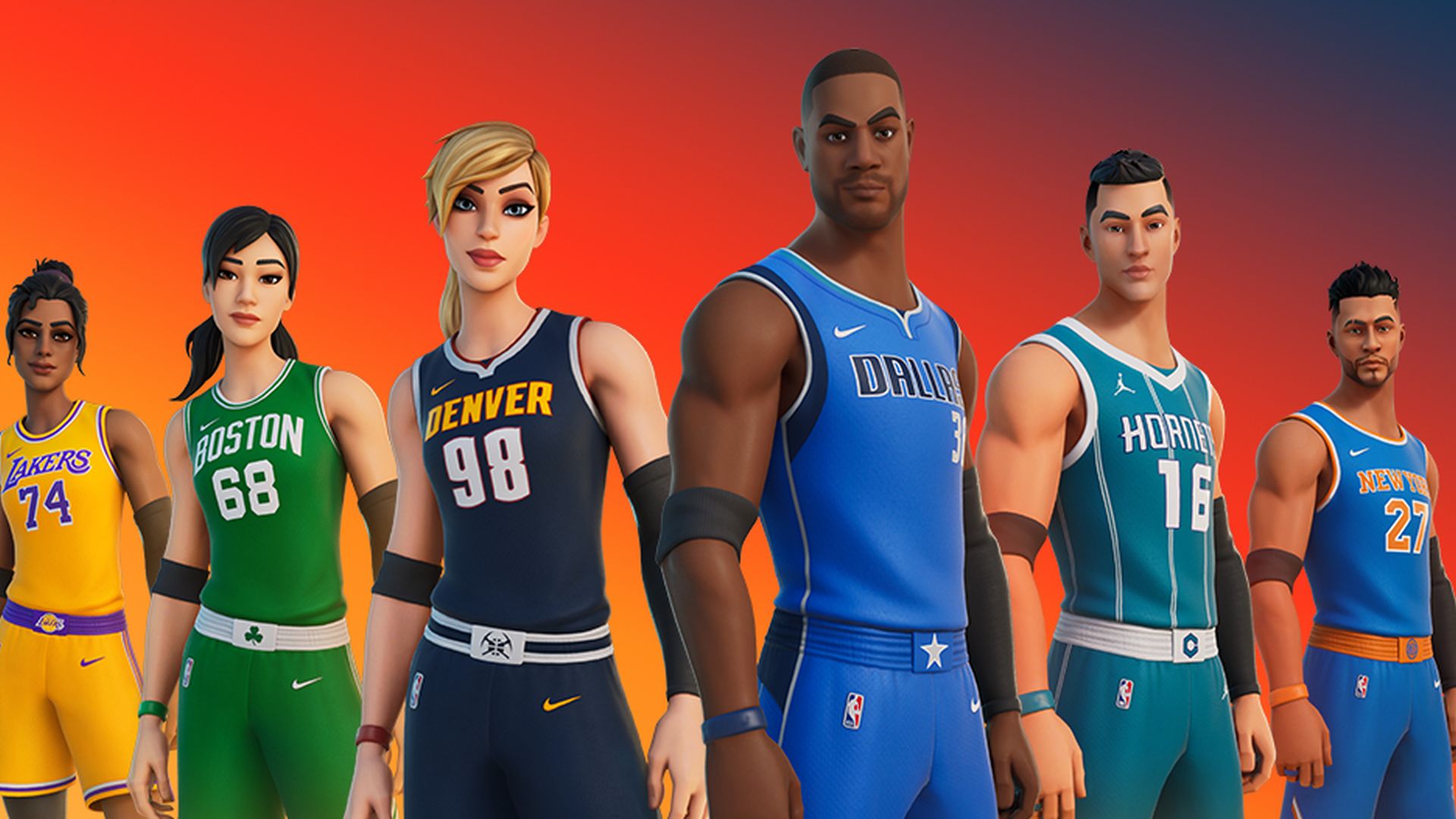
Result: The Los Angeles Lakers won the five-day Team Battles, ahead of the Chicago Bulls and Brooklyn Nets, in what Atlas Creative calls Fortnite's largest Team Battles tournament. The Lakers were the first club to fill their 15,000-member roster, on 19 May 2021, and all 30 teams were full by 20 May.
Trip Around The Blox — Amazon (2022)
Agency: The Gang (build) · Platform: In-game (Roblox)
A QR code in Amazon's printed Holiday Kids Gift Book sent children to a Roblox camp home to the catalogue's fox, bear, owl and hedgehog. Four mini-games, among them Hedgehog Dash and Rockslide Rally, paid coins to spend in the animals' shops on masks, hats and bags. Clearing all four earned the Boxhead, an Amazon parcel worn as a head anywhere on Roblox. The world ran from 30 September to 30 December 2022.
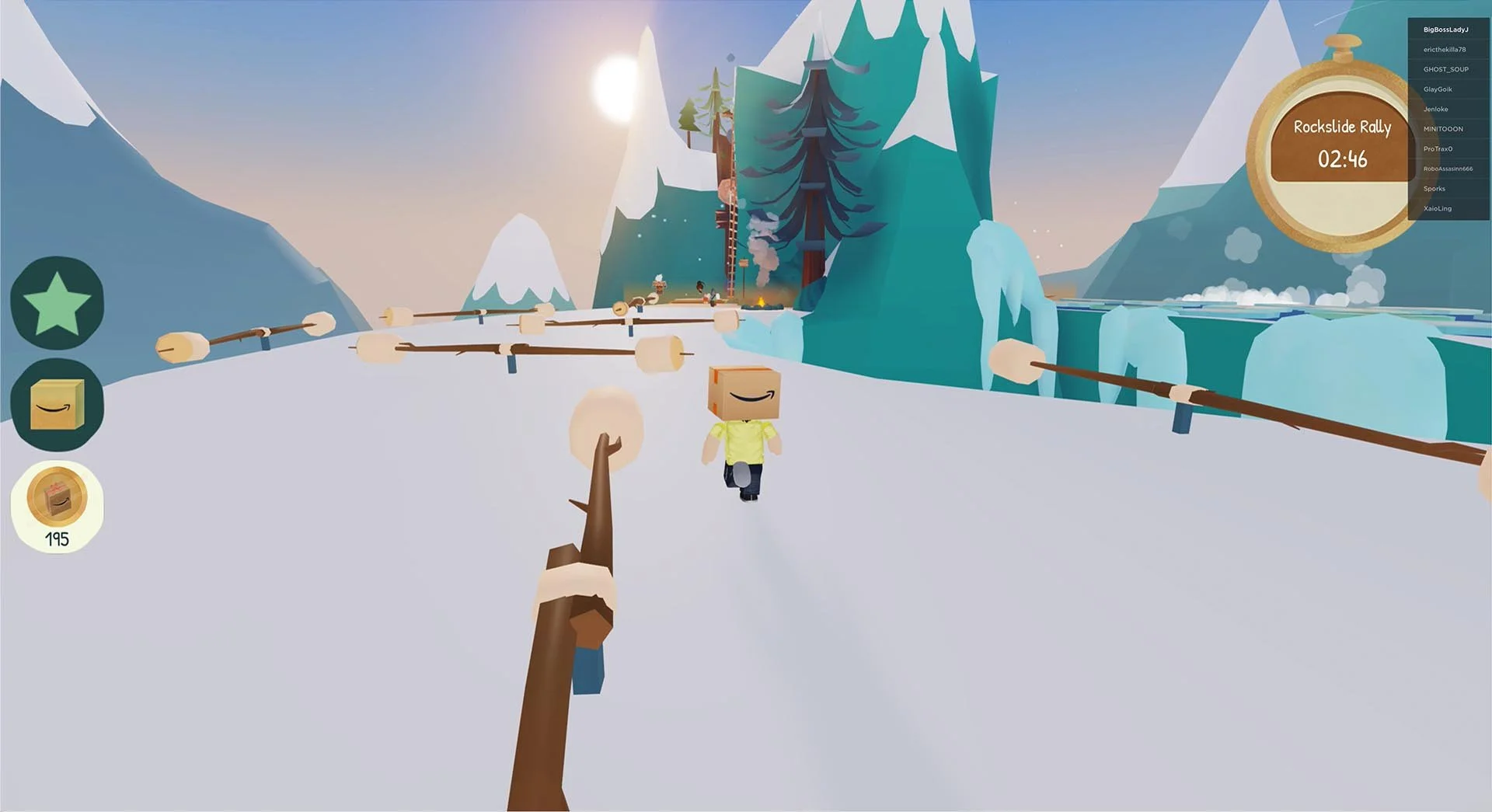
Result: Amazon's team reported more than 525,000 Boxheads claimed and, as a separate figure, an 87% positive rating from users, according to the portfolio of Amazon's senior art director. The tracker Rolimons counts 2,657,631 visits over the three-month run.
McDonald's LAND — McDonald's (2023)
Agency: Digitas, Publicis Play · Platform: In-game (Roblox)
Built for Arcos Dorados, McDonald's franchisee in Latin America, the world floated four islands around a virtual restaurant, one for each item of a McCombo Pro menu. Players climbed a fries volcano dodging ketchup, snowboarded down an ice-cream mountain against the clock and floated down a soda river in a bubble. Coins from the islands bought McDonald's wearables and avatar skins back at the restaurant, and ordering the real McCombo Pro in the McDonald's app unlocked an exclusive skin.
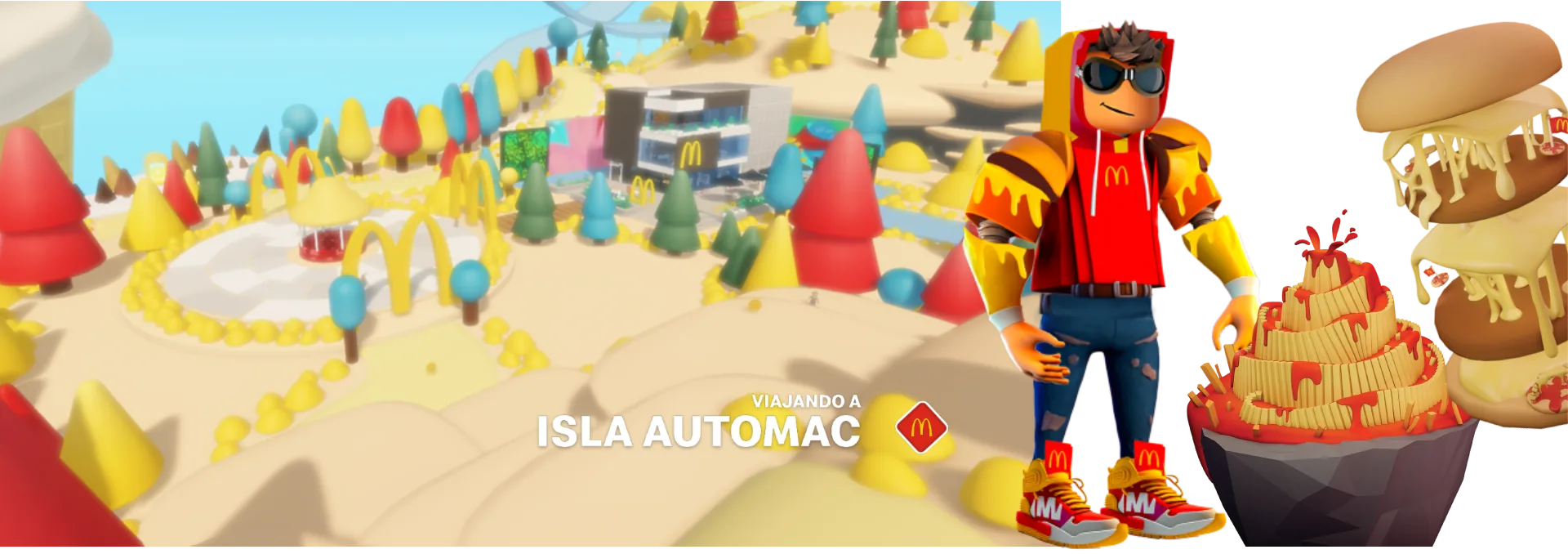
Result: More than 430,000 visits, more than 37,000 orders of the McCombo Pro menu and a 55% increase in sales through the McDonald's app, with players in more than 10 Latin American countries, according to developer DeuSens.
FAQ
What does "skin" mean in gaming?
A skin is an alternative look for something in a game: a character, a car, a weapon or an avatar accessory. Because it changes appearance rather than ability, players also call skins cosmetics. They buy them or earn them as rewards (Wikipedia), and brand campaigns hand them out through codes, putting a kit or a product on players' avatars.
Do skins change how a game plays?
Usually not. In most games a skin changes looks only, and many are handed out for skill or loyalty without any gameplay advantage. There are exceptions: Wikipedia notes that some East Asian online games, such as Tencent's Honor of Kings, sell skins that change how a hero feels to play. For brand work, treat a skin as status, not power.
Can a brand make a skin without a deal with the publisher?
Sometimes. On Roblox a brand can commission its own avatar items, as long as it holds the rights: the Marketplace policy says to sell only items "you have permission to sell" (Roblox). KFC Canada had no paid sponsorship with Street Fighter 6: it built Chef Colonel Sanders in the game's character creator and shared the recipe code, reporting an 8% sales lift (The One Club).