

A location-based game, or geolocation game, uses the player's physical location: the phone reports where it is, usually by GPS, and the game places targets, rivals or rewards on a map of real streets. For brands it turns a city, a route or a store into the playing field, so every visit counts.
How it works
Wikipedia describes a location-based game as one whose gameplay "evolves and progresses via a player's real world location", usually reported by GPS. Early ones ran over text messages and located players through the mobile network. The first geocache was hidden on 3 May 2000, right after the US stopped deliberately degrading civilian GPS, and Pokémon GO took the form to a mass audience in July 2016.
The player opens an app or a web page and allows it to use their location. A map of the surrounding streets shows targets, rivals or prizes. The player walks, runs or rides there, and once in range can catch, collect or check in. Points, a leaderboard place or a prize follow. In chase games the player's own position then goes on the map for others to hunt.
Where brands use it
Several early cases in our library are city-wide chases by car and sportswear brands, MINI's included. New Balance's Urban Dash dropped digital relay batons around New York and made its new Flatiron store the finish line, and Nike's Catch the Flash put 50 runners' live positions on a map of Vienna for one night. Food and drink brands have run hunts: Magnum's Pleasure Hunt Across Amsterdam filled the Nine Streets with virtual bonbons for a week, and Pizza Hut's TMNT: Pizza Power sent players from a pizza box to nearby spots where a Turtle waited. Pokémon GO made shops part of the map: in December 2016 selected Starbucks and Sprint stores in the US became PokéStops and Gyms. Browse adventure and quest and AR in the wild.
When it fits
Use one when the place is the message: a store opening, an event, a city you sponsor, a journey. Urban Dash was built to pull New Yorkers into a new store; Nike's Victory Mode lens pointed Paris teenagers to its events. It suits a launch that can live in one city for a week or so (MINI's chase ran from 31 October to 7 November 2010) and an audience already out with phones: students, fans, runners, families on the road. A browser game opens from a link or QR code; an app suits a game that tracks a long drive. Give people elsewhere a way in: MINI let anyone follow its chase on a website, and Catch the Flash let them set traps on the map from home.
When not to use it
Skip it if your buyers are spread thinly: outside dense centres there may be nothing within walking distance, and people who cannot travel can only watch. An on-screen scavenger hunt or a web game reaches them better. Mind safety: police warned Pokémon GO players about inattentive driving and trespassing, and UK CAP Code rule 8.3 says promoters must do everything reasonable to keep promotions safe. Never ask drivers to play; keep targets off roads, rail and private land. Location is personal data under the UK GDPR, and COPPA counts a child's street-level geolocation as personal information in the US: check with counsel.
Examples from the library
Getaway Stockholm — MINI (2010)
Agency: Jung von Matt, with Monterosa and Suddenly (production) · Platform: iPhone app, on the streets of Stockholm
For the Countryman launch, MINI turned central Stockholm into a week-long game of tag. The app showed a virtual MINI on a live map, along with the player's position and every other hunter. Getting within 50 metres let a player grab the car, and from that moment their own location went live to everyone else. Whoever held the virtual car when the week ended won a real MINI Countryman.
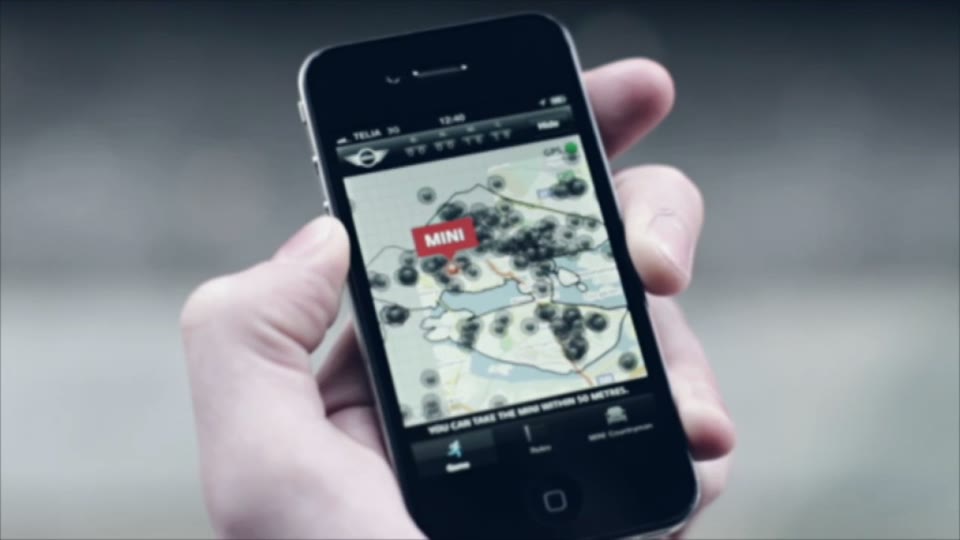
Result: According to Jung von Matt's Guldägget entry, 11,413 players took part over the week, moving the virtual car nearly 1,500 km around the city, with an average play time of 5 hours 6 minutes each, and followers from 90 countries watched online. The agency's case study reports a 108% rise in MINI's Swedish sales in the first quarter after the campaign.
Quest To LEGOLAND — LEGOLAND (2017)
Agency: VML, with MediaMonks (production) and Google's The Zoo · Platform: Mobile app, on the road
LEGOLAND Florida Resort made the drive to the park part of the trip. A parent entered the starting point and travel date; the child picked a minifigure theme such as Pirate or Beach. According to The Drum, the minifigure moved on the map only while the car did, and GPS brought up nearby parks, rivers and landmarks with trivia. Milestones on the route opened quizzes, mini-games and story chapters.
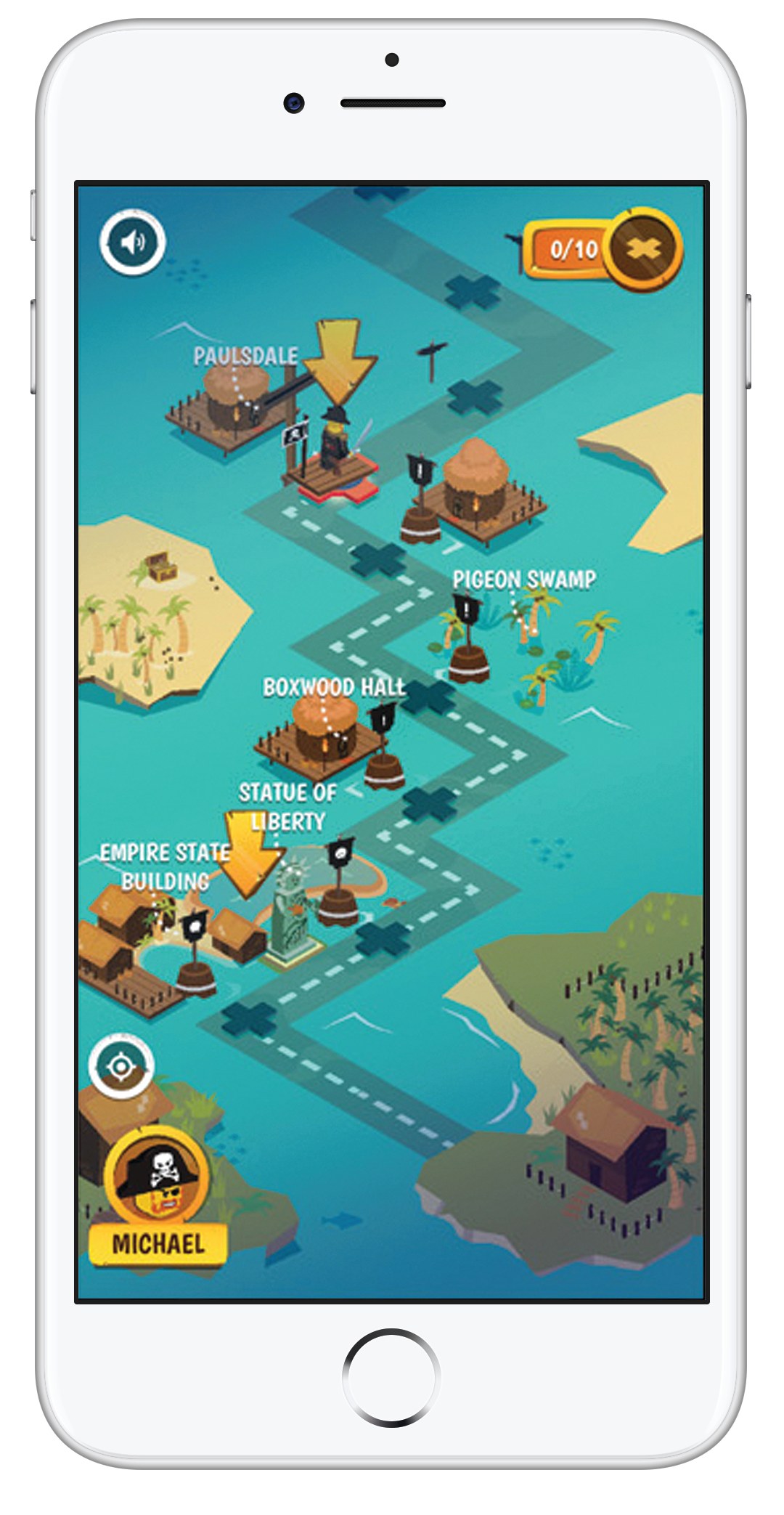
Result: In the four months after launch, 912 families used the app, generating 36,385 landmark milestones, 23,296 pieces of trivia read, 9,866 quizzes taken and 1,422 games played over 785 hours of travel time, according to Communication Arts.
Victory Mode — Nike (2024)
Agency: Arcadia, Snapchat's AR team · Platform: Snapchat lens, across Paris
During the summer of 2024, players opened the lens and looked up: the sky over Paris became the board, with a beacon showing the direction and distance to the nearest Nike event or participating store. Arriving there opened an AR dome with a live city-wide leaderboard and an arcade of basketball and football challenges. Tapping Nike icons at other marked spots around the city added bonus points.
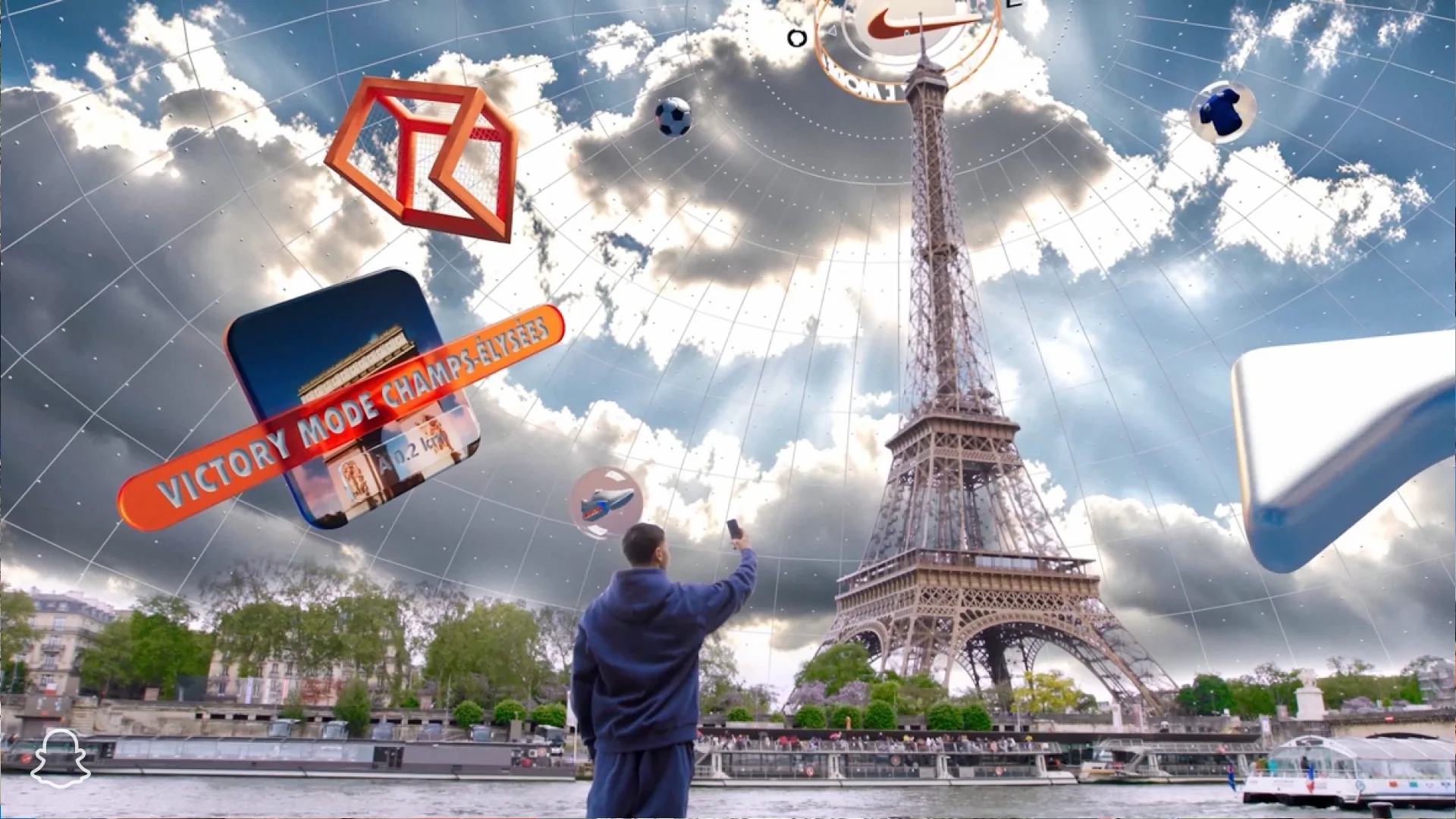
Result: 23 million paid impressions, 383,000 organic impressions and 642,000 Snap Star impressions, according to Snapchat's Shorty Awards entry, which also notes that only 9% of Paris has fields for play.
FAQ
What is the game where you have to guess the location?
Usually GeoGuessr, designed by Anton Wallén in 2013: players study Google Street View imagery and guess the spot on a map, scoring up to 5,000 points a round. It is a map game rather than a location-based one, since it ignores where you are. Philips' Hideouts (2012) used a similar mechanic: players pinned on Google Maps where photos of hidden TVs were taken.
Is a location-based game the same as an AR game?
No. A location-based game needs your position; an AR game needs your camera. Getaway Stockholm used only a map. Victory Mode used both: location to send players to events, AR to stage the game once they arrived.
Do location-based games need an app?
No. A mobile web page can ask for the player's location through the browser's Geolocation API; MDN notes that the user must grant permission and the page must run over HTTPS. Pizza Hut's TMNT game opened in the browser from a QR code on limited-edition pizza boxes; our QR code games guide covers that route. Quest To LEGOLAND, which followed a family's whole drive, was an app.