

An on-pack promotion is an offer carried on a product's packaging: a code, a QR code, a prize message or a coupon, printed on the pack or hidden inside it. It turns the pack into the campaign's media, and when the code opens a game, each purchase becomes a reason to play.
How it works
The UK advertising regulator describes promotions as incentives that add a benefit, usually on a temporary basis. On a pack, the shopper first sees a specially marked "promo pack" that says what is on offer and how to take part. The code itself sits on the label, under a cap or peel-off sticker, or inside the box.
The buyer types or scans it online, and it opens extra levels, a new character, an instant win, prize-draw entries or a piece in a collection. McDonald's first ran Monopoly in the US in 1987, with game pieces printed on packaging; for the 2025 US return, physical pieces still had to be redeemed in the app to count. Codes can also add up nationally: under-the-cap codes for Lipton Brisk's Star Wars game Brisksaber let fans collectively unlock new characters and lightsabers.
Where brands use it
The library tags 91 games as pack- or QR-led. Most come from food and drink brands, because the pack reaches every buyer, and they aim mainly at engagement, then awareness and sales. Fast-food packaging works the same way (see fast-food games), and our QR code games roundup covers the scan itself.
Codes can also open rewards inside other games. In the UAE, a code on a Chupa Chups wrapper unlocked a limited avatar item in its Roblox world, Candyland Paradise. For its 2026 Fanta and Xbox special editions, sold in more than 60 markets, Coca-Cola tied QR codes on the packs to Xbox-themed challenges; clearing one let players claim an in-game item such as Halo armour.
When it fits
Choose it when a product sells in volume and the pack is the one medium every buyer holds. It suits briefs about repeat purchase or trying the range: each new pack brings another code, character or property in a set, or another card in a collectible card game. Unique codes also prove a purchase, tying play to sales; M&M's took the pack barcode plus the receipt.
A code can run for six weeks or stay put: Pringles put one standing QR code on its can lids for Poptopia. As retail moves to 2D barcodes under GS1 US's Sunrise 2027, one code may serve both the till and the game; see QR code game. Plan for demand: UK promoters must be able to show a reasonable estimate of the likely response (CAP Code rule 8.10).
When not to use it
Skip it when packs for your launch window are already printed; a QR code on shelf displays or a playable ad moves faster. For rarely bought products, one code means one play and no habit; put the game where people return, such as an app or a loyalty programme.
Treat codes and winning pieces like cash. A security employee at a McDonald's subcontractor stole top-prize Monopoly pieces, and his associates won almost all top prizes from 1995 to 2000; the US game was halted in 2001.
In the UK, significant conditions, including the closing date and proof of purchase, must appear on the outside of the pack (CAP Code rule 8.17). Check purchase-linked draws against sweepstakes rules in each market with counsel; for children's packs, check COPPA before collecting data.
Examples from the library
Postopia — Post Cereals (2001)
Agency: Scient, Razorfish (2004 rebuild), Skyworks Technologies (production) · Platform: Web, from cereal boxes
Children arrived from a cereal box or TV spot and picked one of four lands of short browser games: races, sports, puzzles, dress-up and virtual pets. A Postoken, a password found in Post cereal boxes, unlocked extra levels, cheats or features in games they already played, so every new box added something. The portal closed in 2011; the codes no longer work.
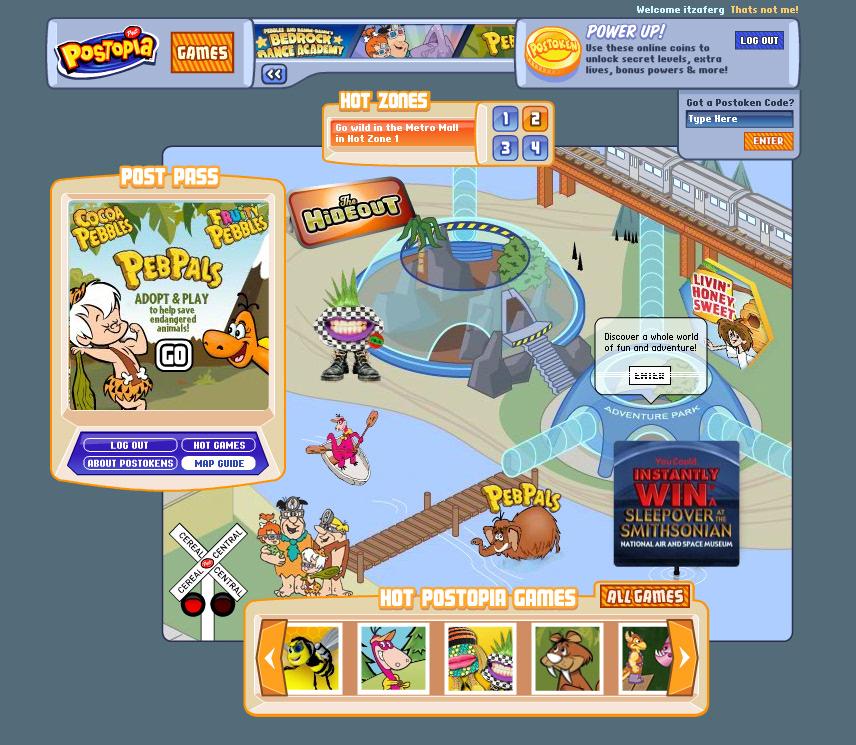
Result: According to Wikipedia, the first version appeared in more than 17 million Post cereal boxes, and a June 2001 Nielsen survey counted 260,000 unique users under 12. After Razorfish rebuilt it in 2004, two million unique users visited each month.
Take Home The Fun — M&M's (2019)
Agency: Chaos Theory Games, Traffik · Platform: AR app, Australia
Players pointed a phone at a table or floor, and an M&M's piñata appeared in mid-air; tapping hit it until it burst, and scores went to a shared leaderboard. Past the free attempts, entering the barcode from an M&M's pack plus the receipt unlocked more rounds, and each purchase-linked play was a chance at a random instant-win prize.
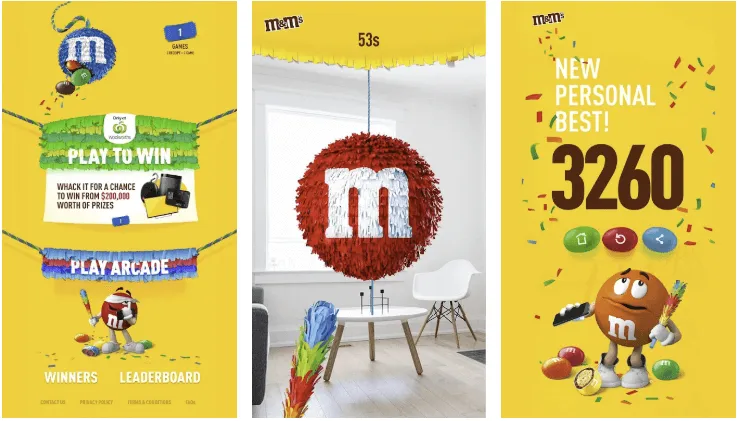
Result: According to Chaos Theory Games, the six-week campaign logged 12,000 game sessions, 49,000 piñatas broken and 521,000 piñata hits, and players redeemed 6,600 barcodes from a range of M&M's products.
Tough Cookies: The Game (Umami's Revenge) — IGA (2022)
Agency: Sid Lee · Platform: Mobile web, from tattoo sheets sold at checkouts
Here the product carries the code. At IGA checkouts in Quebec, shoppers bought sheets of temporary tattoos showing characters designed by young cancer survivors. The QR code on the back opened a browser platformer set in a world of flavours. Each sheet bought unlocked its matching character, so more sheets meant more to play. The money went to paediatric cancer research.
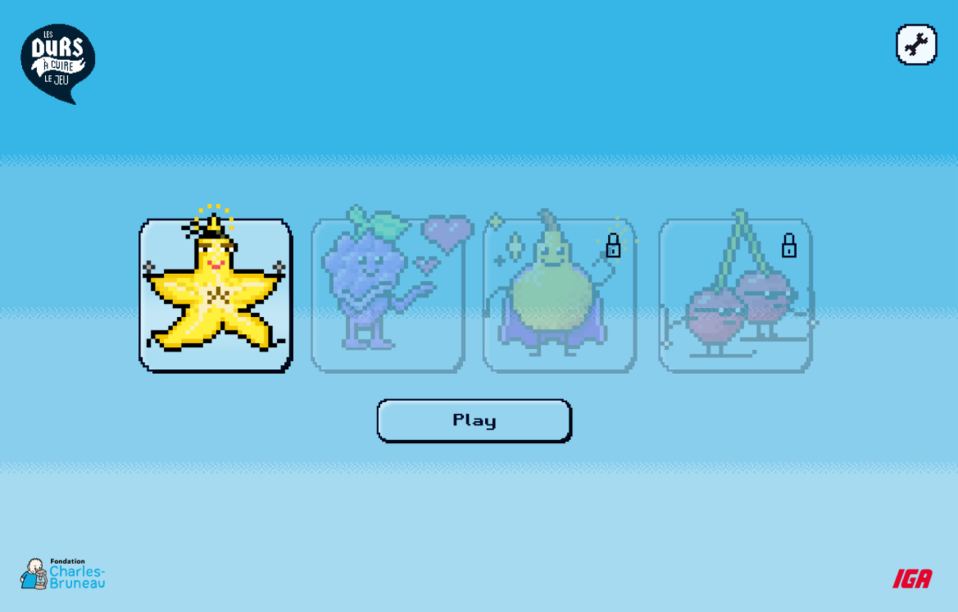
Result: According to Sid Lee, the 2022 game drew more than 20,000 players, who cleared over 4,000 levels. Across four yearly editions, the tattoos raised more than $1.7 million for paediatric cancer research.
FAQ
What is a promo pack?
A promo pack is a specially marked version of a product that carries a promotion: a code, a free gift, a prize offer or a bonus pack with more product for the same price. The UK CAP Code calls them promotional packs and expects any limit on their availability to be clear.
Is an on-pack promotion the same as a price promotion?
No. A price promotion cuts what the shopper pays, for example with a discount marked on the pack. An on-pack promotion can do that, or add value without discounting: a code that opens a game, a chance to win or a reward inside another game. The price stays intact, and the buyer gets something to do after buying.
What is the difference between on-pack and in-pack?
On-pack sits on the outside, where shoppers see it before they buy: a label, a sticker or a QR code. In-pack sits inside: a code under the cap, a card in the box or, in the 1990s, a whole game on CD-ROM in cereal boxes (see advergame). Either way, UK advice says significant conditions belong on the outside.