
Postopia
- Brand
- Post Cereals
- Year
- 2001
- Objective
- Engagement
- Industry
- Food & Drink
- Mechanic
- Mini-Games
- Platform
- Web
- Agency
- Scient
- Agency
- Razorfish
- Production
- Skyworks Technologies
- Published
- Checked

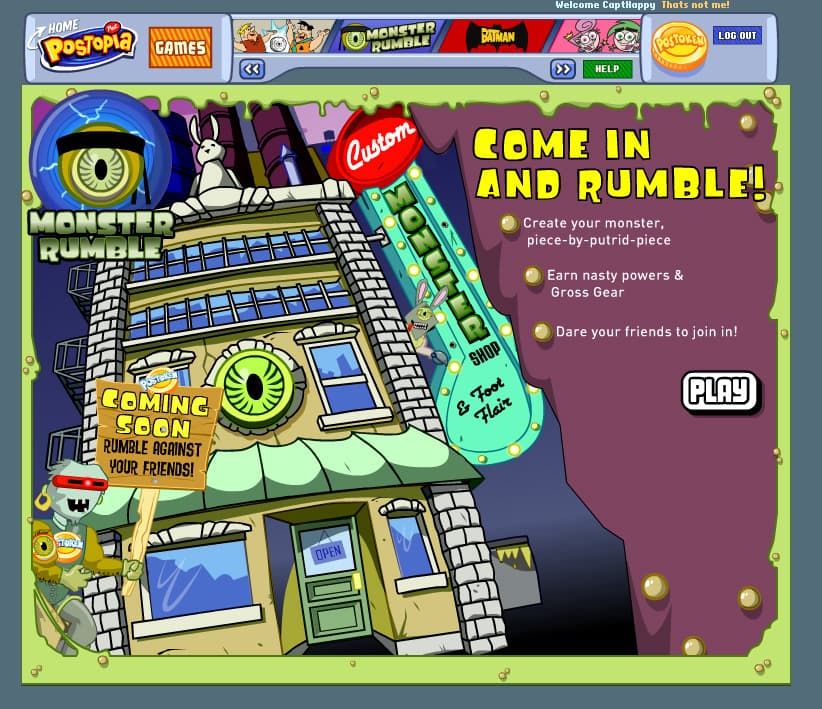
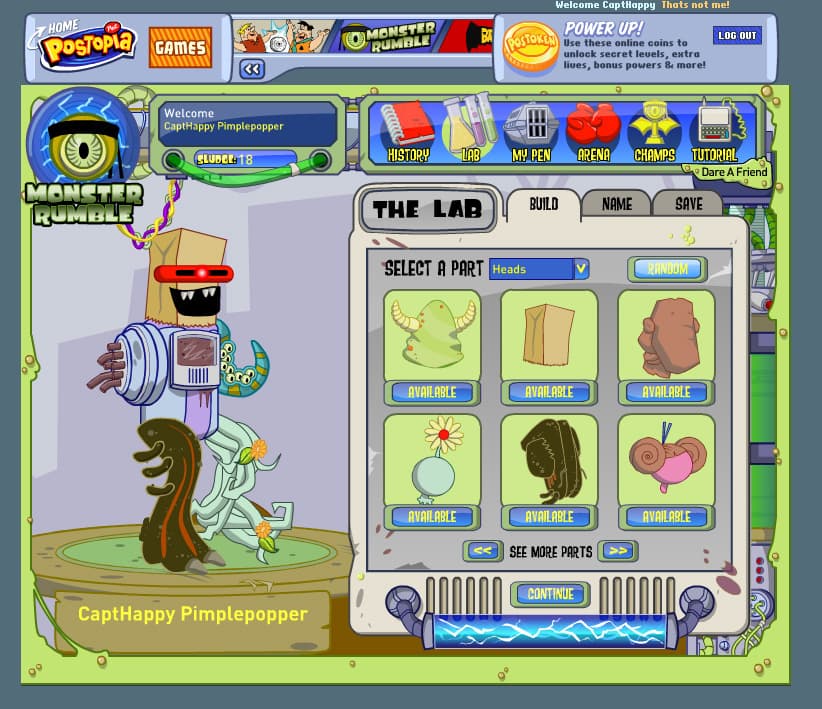
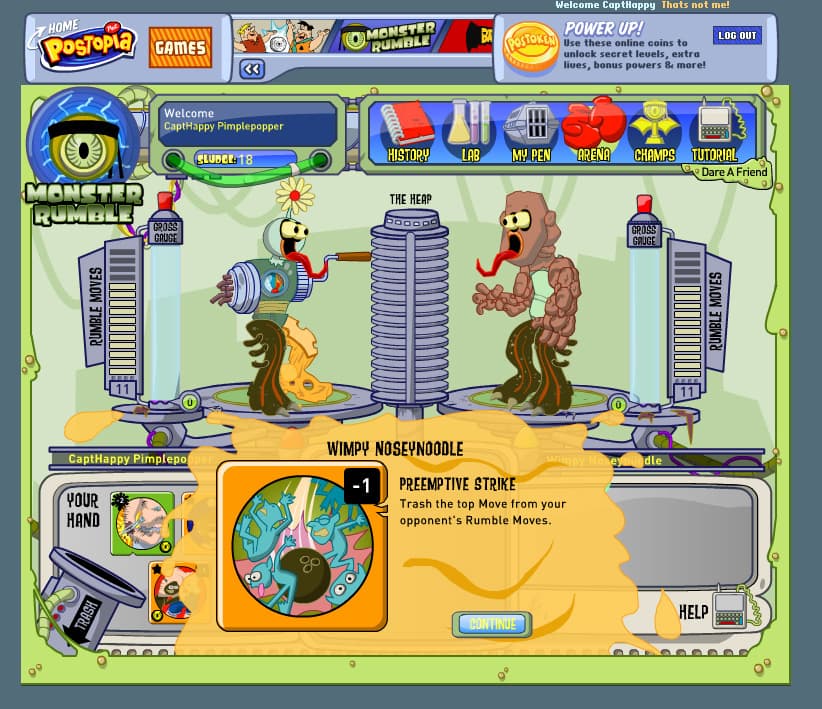
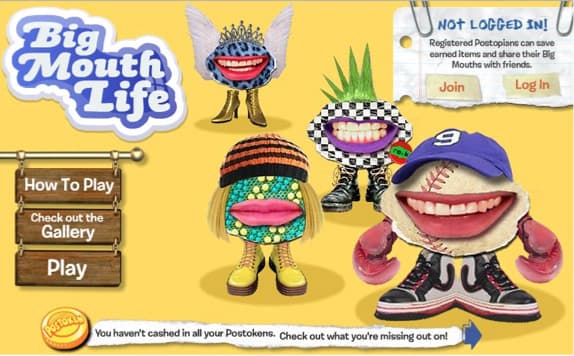
- 1
A child reaches postopia.com from a national TV ad or from a promo code printed on a Post cereal box, and opens the site; a small-print notice at the bottom of the homepage discloses that it carries commercial advertising for Post products. Registration is optional and the site can be played without an account.
- 2
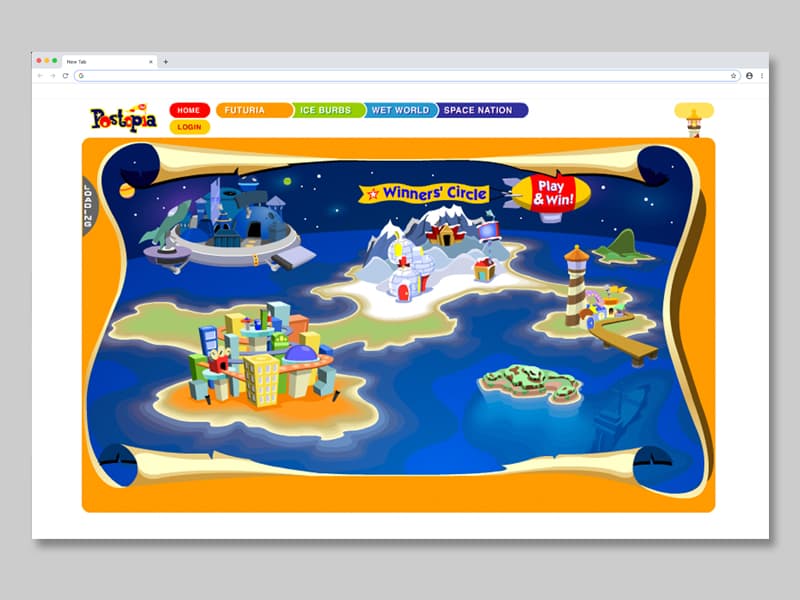
The player picks one of four themed "countries," each with its own leader character and its own genre of mini-games: Futuria (robots and gadgets, led by Zander), Ice Burbs (dress-up and winter arcade games, led by Kiki), Space Nation (space-flight and shooting games, led by Chelsea), and Wet World (water-sports and underwater quests, led by Nick).
- 3
Players who want backstory can visit the Info Booth in Hangout Harbor to read Country Stories and Character Stories, separate pages profiling Zander, Kiki, Chelsea, and Nick.
- 4
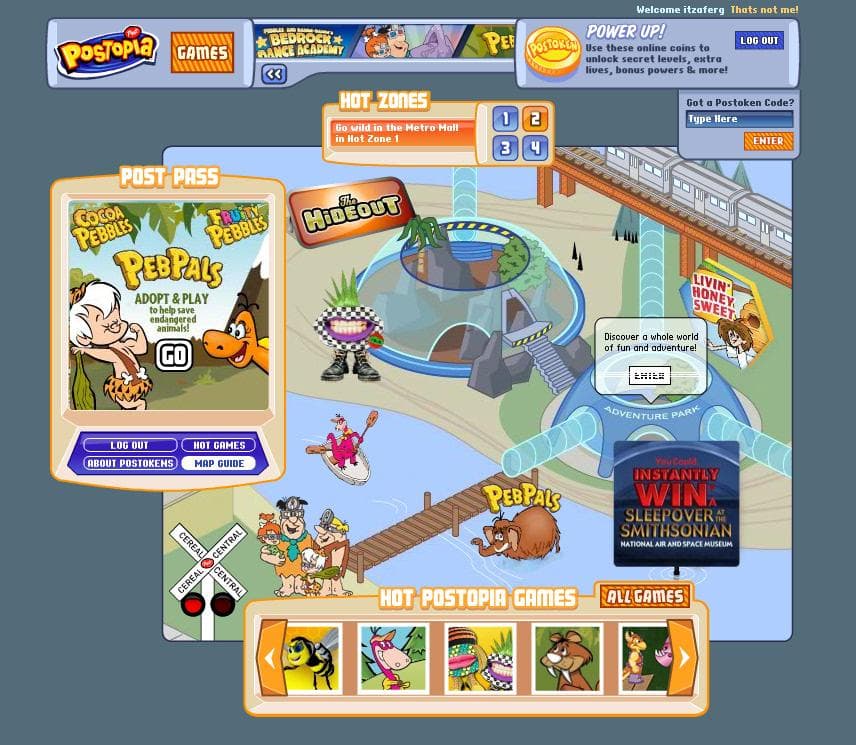
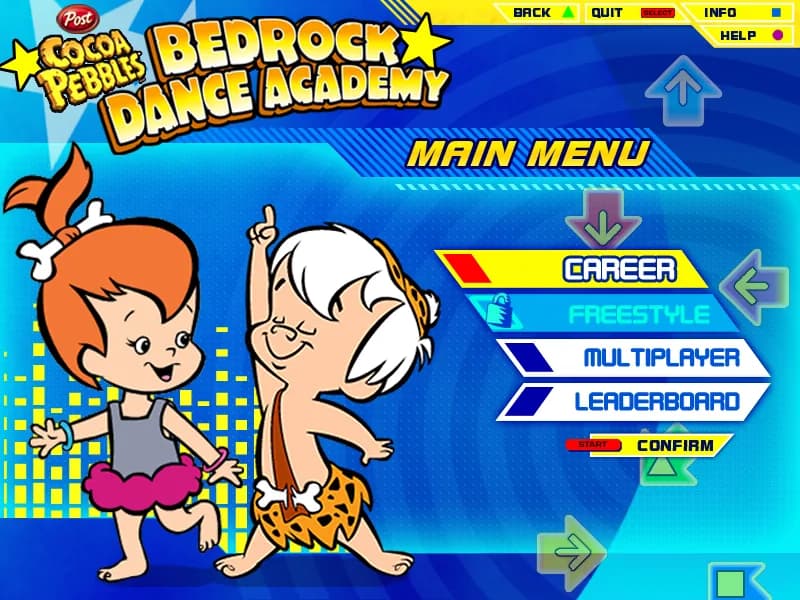
Outside the four countries, players can also browse mini-games by cereal brand mascot: Craver for Honeycomb, Waffle Boy for Waffle Crisp, and Fred and Barney (from The Flintstones) for Pebbles.
- 5
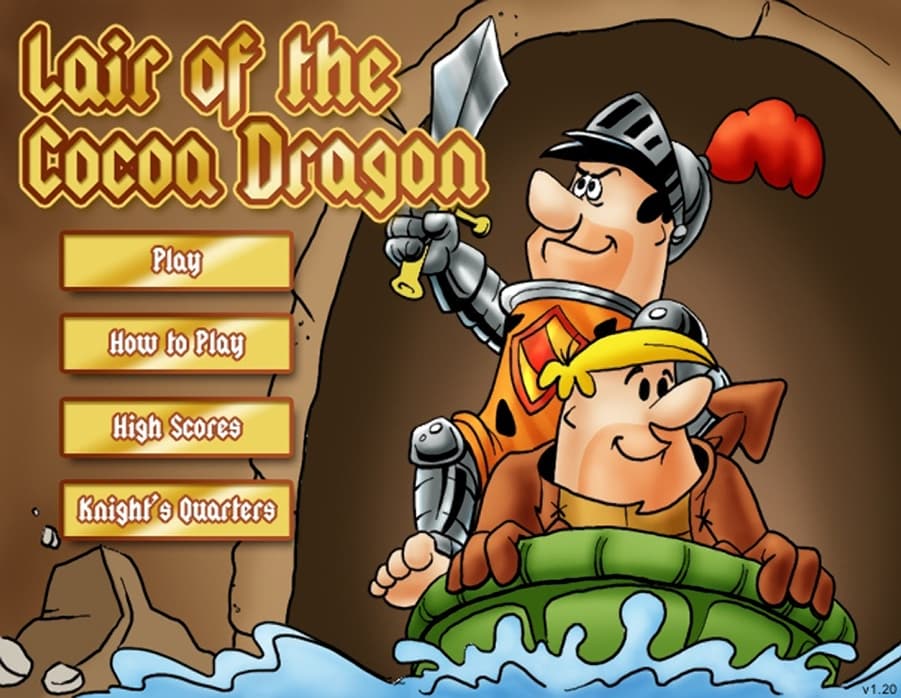
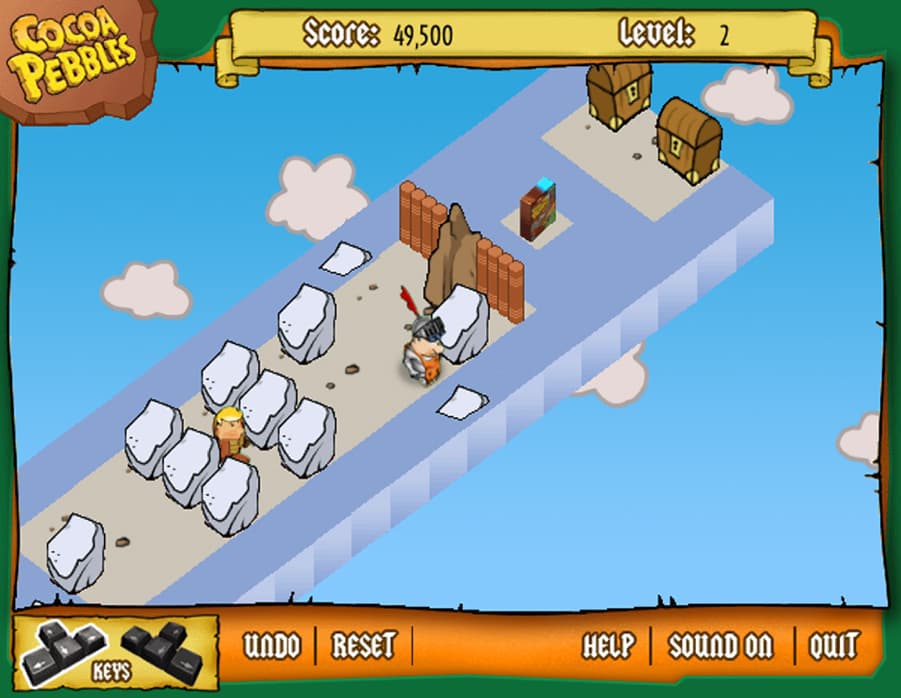
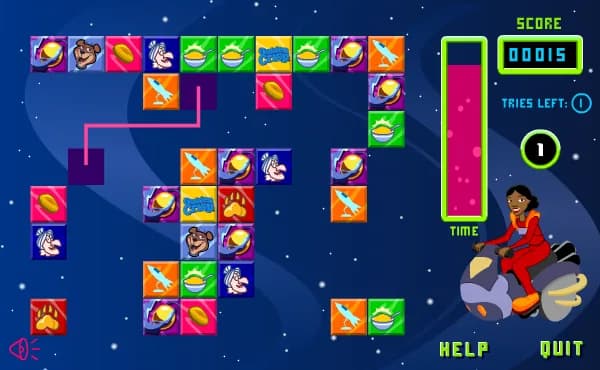
Picking any game loads a short browser-based arcade, sports, or puzzle title that tracks a score and unlockable achievements, such as guiding Fred and Barney through the kingdom of Cocoalot in Lair of the Cocoa Dragon.
- 6
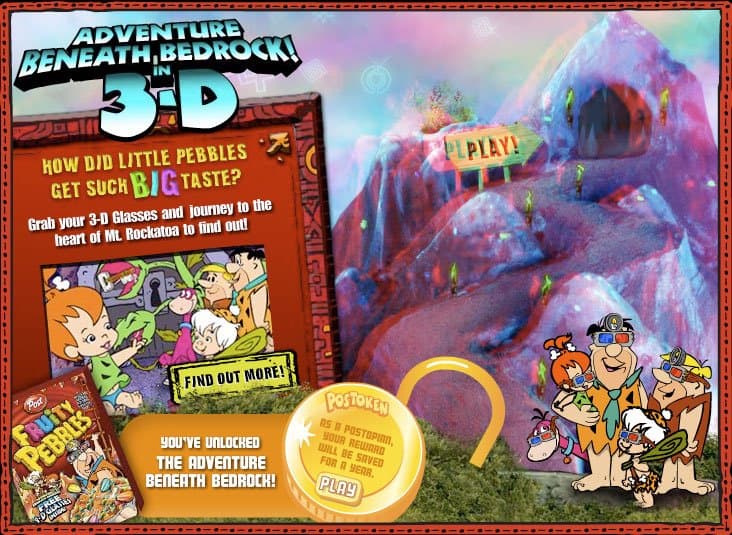
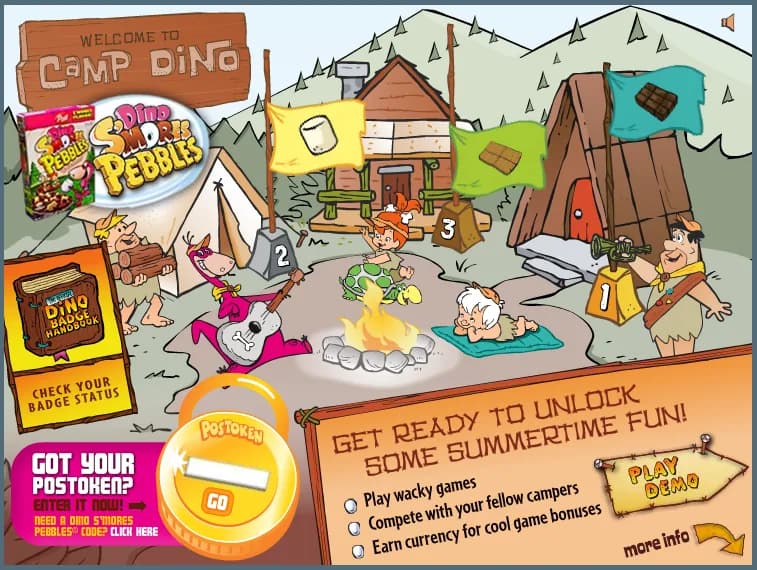
Players progress by finding a Postoken code printed on a specially marked cereal box and entering it on the site; a valid code unlocks extra levels, cheats, or features within a game the player already knows, such as deeper levels of Lair of the Cocoa Dragon for Cocoa Pebbles buyers.
- 7
Licensed tie-in promotions use the same code mechanic through a different entry point: in the Justice League promotion (April–May 2004), a box insert card for one of seven DC heroes carries a Postoken that the player enters on postopia.com.
- 8
The Justice League code unlocks a comic-builder tool where the player assembles an original Justice League story from available heroes, villains, action scenes, and plots; collecting more codes expands the pool of elements available to build with.
- 9
A session ends with the player emailing the finished comic to friends or posting it to the site's gallery; the site separately offers downloadable ecards (such as Postopia Food Fling and Bedrock Snowball Bash) and other licensed specials like Teen Titans Lost Episode, Batman Training Academy, Xiaolin Showdown, and The Polar Express Train Adventure that players return to try.
- 10
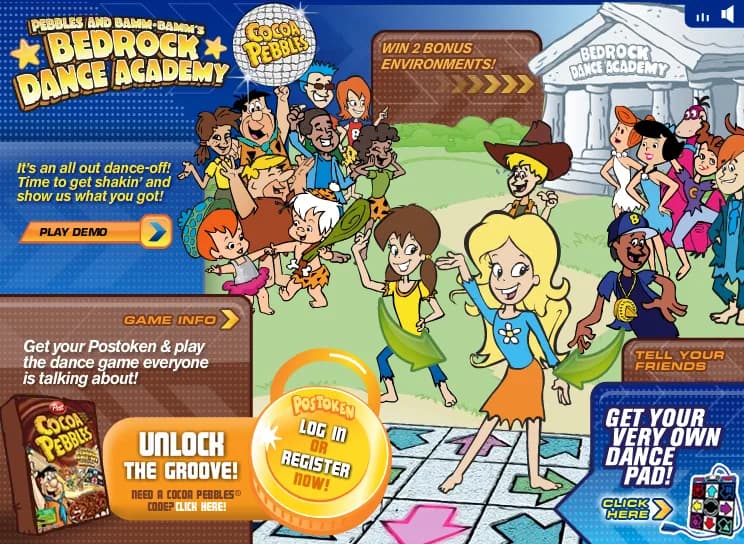
From November 2005, dance mini-games could also be played with a USB dance mat ordered through the sister site NabiscoWorld, instead of the keyboard.
Objective
Post wanted to pull kids away from Saturday-morning TV spots and into a branded world they'd return to daily, turning cereal-box codes into a reason to keep buying. Rather than a one-off promo, Postopia gave the company's kids' cereal lineup — Pebbles, Honeycomb, Golden Crisp, Waffle Crisp, Oreo O's — a shared playground where mascots were the stars and the box itself unlocked more to play.
Solution
Kids landed on Postopia from a cereal box or TV ad and picked one of four lands to explore: Futuria, a gadget-filled city led by Zander; Ice Burbs, a snow-and-fashion district led by Kiki; Space Nation, an orbiting station led by Chelsea; and the underwater Wet World, led by Nick. Each land had its own roster of short browser games — races, sports, puzzles, dress-up and room-design toys, virtual pets — plus a hub where kids could read up on the characters and chat with other players. Typing in a Postoken, a password printed on the cereal box, unlocked extra levels, cheats, or features inside a game the kid already knew; during tie-ins like the 2004 Justice League promotion, a code instead unlocked a comic-builder tool, and the finished comic could be sent to a friend or posted to the site's gallery. A session ended whenever the kid closed the game, with no save required to come back and keep leveling up with a new code next time.
Results
- 2M
- regular site users
- 1M+
- kid visitors in four months
- 264.7K
- average monthly visitors
A June 2001 Nielsen survey counted 260,000 unique users under 12, according to Wikipedia; at launch TV ads and the backs of 17,000,000 cereal boxes promoted the site. In June 2004 the Seattle Times reported that the Razorfish-built site drew up to 2 million regular users, who spent an average of 30 minutes per visit. More than 1 million kids visited between April and July 2006. The 2004 Justice League tie-in placed Postoken codes in 15 million boxes across eight Post kids' brands, with an estimated $3–5 million promotional budget. In October 2009 TIME reported an average of 264,700 visitors a month. Its executive game producer says he launched more than 100 games in his ten years on the project.
Can you still play it?
Postopia can't be played today: the Postopia portal closed in December 2010, its replacement PebblesPlay is also gone, and the Postoken codes from cereal boxes no longer work since the verification server is dead. Some of its 100-plus games survive piecemeal in preservation — Waffle Boy's Mountain Adventure was recovered in the Flashpoint Archive, with fuller files restored in 2021 by the original programmer.