

Phygital, a blend of "physical" and "digital", describes an experience in which something real (a place, a product, the player's own body) drives what happens on a screen. For brands it turns a store visit, a pack or a street corner into a game: people play, then leave with a prize, score or video.
How it works
Vocabulary.com defines the word as combining in-person and online experiences, in retail or any other activity; TechTarget calls it a marketing term for blending digital experiences with physical ones. Amazon Ads credits the coinage to Chris Weil of the agency Momentum Worldwide, in 2007.
In a phygital game the player does something physical and the game answers on a screen. They run on a treadmill and an avatar runs with them. They point a phone at a crisp can and the can becomes the pitch. The link is a sensor, a camera, a QR code or a code printed on a pack. The session ends with something the player keeps: a leaderboard place, a video, a prize collected at the till, an unlocked character. That is also our test for the library: people take part, there is a digital layer, and they leave with a marketing outcome.
Where brands use it
Brands with their own shops put the game where the product is sold. The telecoms operator Free hung QR-code posters for a spin-the-wheel game in 240 of its shops, and winners collected prizes at the counter. Car makers use it to rethink the test drive: in Audi's Enter Sandbox, visitors shaped a track in real sand, then drove it in VR. Food and drink brands start from the pack. Kinder's Applaydu app brings the toy from each egg to life on screen, a project The Drum describes as turning the eggs into phygital experiences. Event teams build games for stands and stations; see our guide to trade show booth games. Browse 77 games under Installation or the Installations collection.
When it fits
Phygital suits a brief where the product has to be felt, held or seen in a real place, and a game gives people a reason to do that properly. Nike wanted shoppers to feel the cushioning of its React sole before buying, not take a few aimless steps around the shop floor. It fits product launches, store footfall, test drives, event stands and on-pack promotions where the pack is the entry ticket. Keep sessions short, because others are waiting: Nike's treadmill run lasted three minutes. Distribution is the place or the product, so you reach whoever walks past or buys. A shareable video or an online leaderboard carries the game further; Audi streamed its model-car races on a microsite for anyone outside Toronto.
When not to use it
Skip it when the audience you need is national and the game sits in one place. Nike's Reactland ran for a month in four stores and one pop-up, according to Wieden+Kennedy. Throughput is the hidden limit: a single station running three-minute sessions serves fewer than 20 players an hour. Hardware needs staff and spare parts. A QR code that leads to a landing page, or an AR filter with no score, is a touchpoint, not a game. TechTarget warns that phygital can feel intrusive when customers are uneasy about the data a brand uses, so ask only for what the prize needs. For reach without travel, run a QR code game or a playable ad; for a public screen with nothing to build, look at DOOH.
Examples from the library
Quattro Experience — Audi (2012)
Agency: Thinkingbox · Platform: Installation in Toronto, driven from iPads
To launch the 2013 A4, Audi built a 140-square-foot model track in Toronto's financial district, with hairpins, snowy mountain passes and a miniature dealership. Players drove 1:32-scale A4 slot cars from an iPad that streamed a live view from a camera inside the car, racing up to three others. Every lap went onto a live leaderboard, the fastest lap won a real Audi driving experience, and drivers left with a video of their race to share.
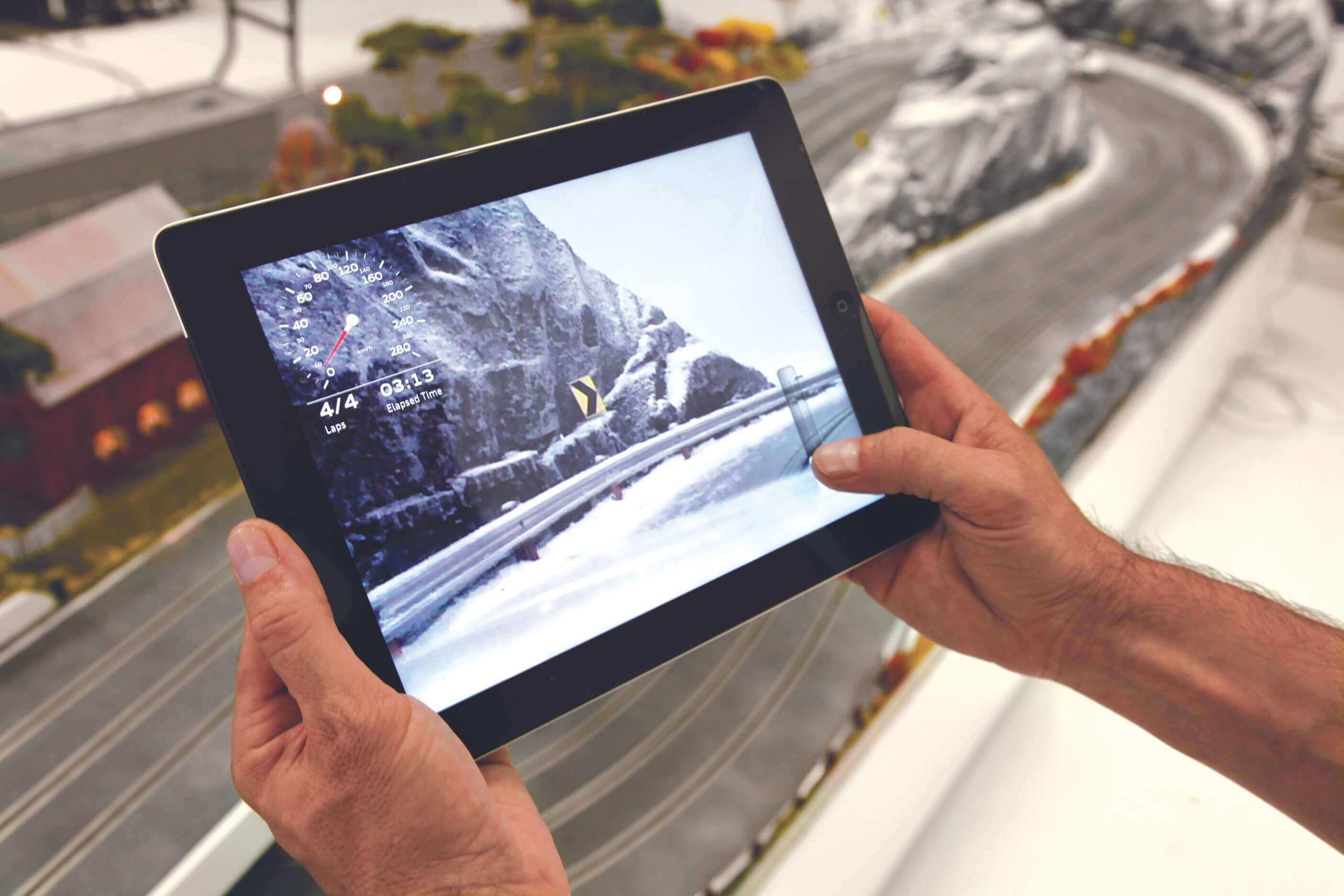
Result: Over two weeks 3,932 people drove. Creative director Jon Webber's case study puts that at 4,525% more than the average number of test drives a top dealer might expect in that time, and says the campaign contributed to a 30% sales increase for September to December 2012 against the same months of 2011.
Reactland — Nike (2018)
Agency: Wieden+Kennedy, UNIT9 · Platform: Installation in Nike stores in China
Shoppers had their face turned into a pixel-art avatar in front of a green screen, laced up a pair of Epic React shoes and stepped onto a treadmill facing a big screen. Running speed pushed the avatar through a side-scrolling city, and a handheld button made it jump over obstacles and climb buildings. The three-minute run ended with a leaderboard place and a 10-second highlight video to share.
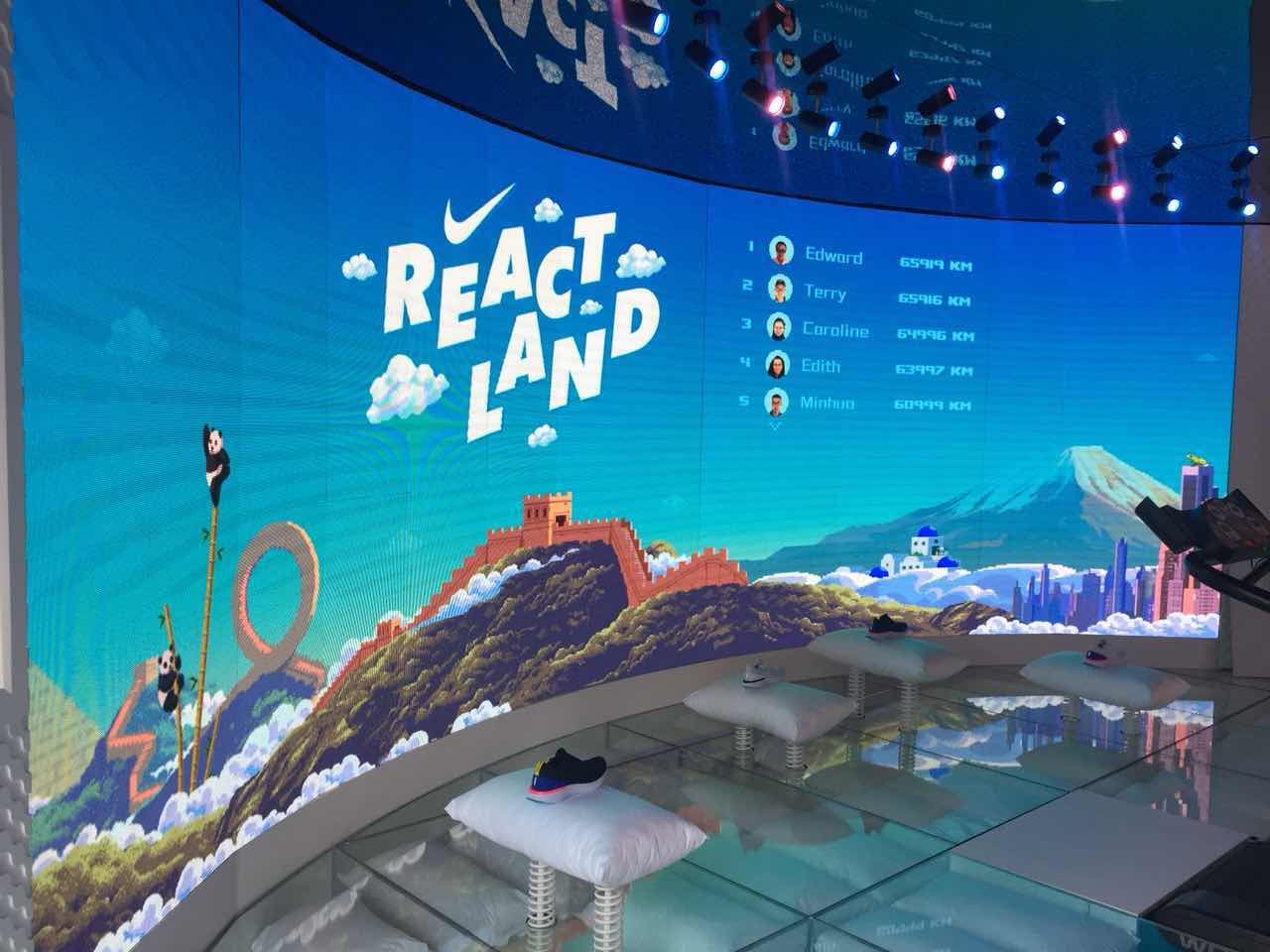
Result: 48% of players bought the shoes after playing, according to Wieden+Kennedy. Nike later reused the format in Taiwan, Berlin and Dubai.
AR You Ready?! — Pringles (2022)
Agency: ACNE, Demodern · Platform: Web AR from a QR code on the can
Scanning the QR code on a Pringles can opened the game in the phone's browser, no app needed. The camera turned the real can into the playing field: the player shot at the label against the clock, chipping away the printed shell until one of six footballer characters, one for each best-selling flavour, broke free. Collecting all six meant buying all six flavours, and an unlocked character could be entered in a draw for a 3D-printed figurine of it.
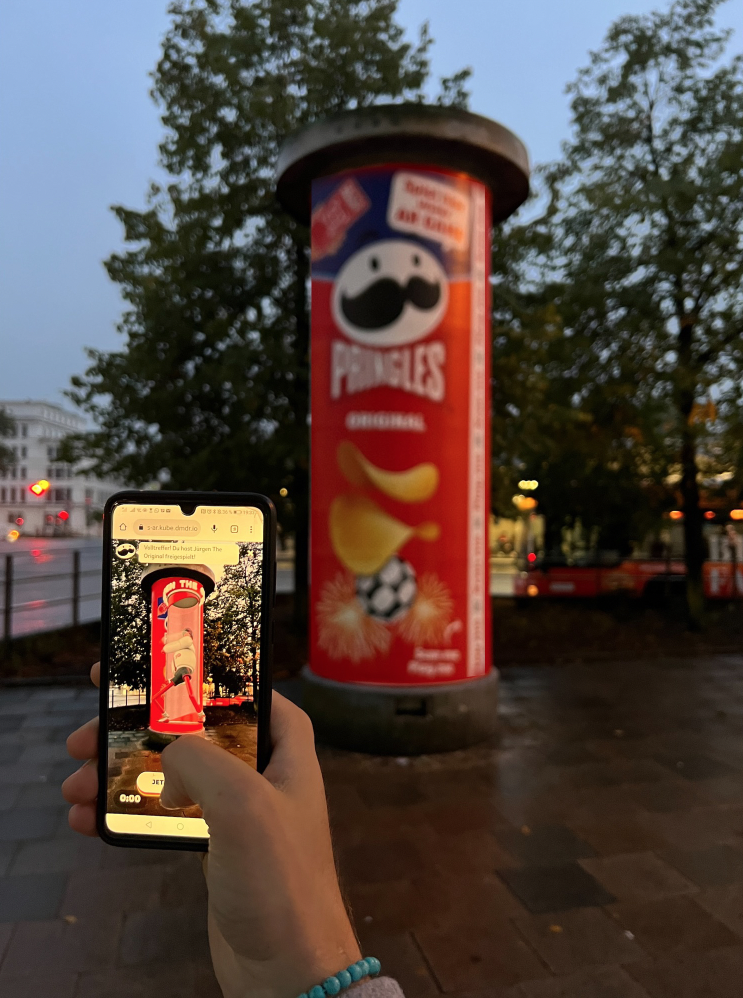
Result: Sales rose 32% during the campaign, which ran in Germany around the 2022 World Cup, according to Demodern. The agency adds that game starts and engagement ran significantly above target.
FAQ
How do you pronounce phygital?
Say it "FIJ-uh-tuhl", so it rhymes with digital. Vocabulary.com gives the pronunciation as /ˈfɪdʒətəl/ and explains the spelling: the start of "physical" joined to the end of "digital". The "ph" is said as an f, and the "g" is soft, as in "digital".
What are phygital products?
Physical products with a digital layer printed on or built in: a QR code, a printed code, a toy the camera recognises. Scanning opens content, a service or a game tied to that item. In brand games the pack is often the entry ticket: scanning a Kinder egg or its toy unlocks a character in Applaydu. Our guide to QR code games covers the pack-to-phone route.
Is phygital the same as omnichannel?
They overlap, and many people use them loosely. TechTarget notes that phygital is sometimes called an omnichannel customer experience, and Vocabulary.com gives buying online and collecting in person as an example. For games we use the narrower sense: one moment in which the physical and the digital act on each other, such as a treadmill driving an avatar.