

An AR lens is a camera effect that lays digital graphics over your face or the room around you in real time, inside apps like Snapchat or TikTok. Brands sponsor lenses to get into the camera people already use; when a lens adds a score, a goal or a prize, it becomes a game.
How it works
"Lens" is Snapchat's word, from its selfie Lenses of September 2015; TikTok and Instagram say "effect", and many people call them all AR filters. You open the camera and swipe through the Lens carousel, or scan a Snapcode on a cup or bottle. Snap splits them into Face Lenses, which change how you look, and World Lenses, which change the world around you and bring characters into it. The phone tracks your face or surfaces, so graphics move with you.
A lens becomes a game when the camera is the controller and there is something to beat. Snap launched lens games as Snappables in April 2018, played with touch, motion and facial expressions, and in 2025 added leaderboard templates and turn-based play to Lens Studio. Rounds are short: in UOB's Instagram game Cheese It, each lasted 15 seconds and ended on a score players posted to their Story.
Where brands use it
Food and drink brands made the largest share of the lens games in our library, mostly for engagement and awareness. Tic Tac's Chew & Play read the player's jaw, so chewing pushed an 8-bit runner forward. McDonald's printed Snapcodes on cups to open Big Mac Hero, and Fanta's Vampire AR Game used the bottle label as its trigger. A lens can also carry a live event to people who can't attend: Nike staged its Game of Go treadmill race in Los Angeles and offered the same race as a Snapchat lens. On TikTok, IKEA UAE's Swedish Test scored players saying product names out loud. Browse more in AR in the wild and the AR and VR and social facets.
When it fits
A lens game suits a brief for teens and young adults who already live in the camera: a launch, a seasonal moment, a burst of awareness. Snap says its users play with AR Lenses billions of times per day on average. It works best when the product action is the control, like chewing gum or winking for an eye test, and the result is worth sharing: every recorded play is user-generated content. A daily prize or a leaderboard brings people back. Reach is paid or physical. Snap sells lens placements, and its Lens Web Builder charges no creative fees for its 3D assets but has a daily minimum spend; cups and bottle labels can carry the code that opens the lens, as in QR code games.
When not to use it
Skip a lens for data capture. The game lives in someone else's app, so sign-ups and prize claims move to a separate page, like the codes Doritos players redeemed on the Triangle Tracker site; a QR code game on your own site keeps the whole funnel. You also rent the platform: when Meta shut down Meta Spark on 14 January 2025, every AR effect built by brands and outside creators was withdrawn from Meta's apps. Snapchat is closed to under-13s, so children's brands should aim at parents or use a web game. A lens with no score, goal or prize is a filter: fine for selfies, not a game we list. For long sessions, try a Roblox experience; for app installs, a playable ad.
Examples from the library
Eyecatcher — Dynoptic (2022)
Agency: Inhalt und Form · Platform: Instagram and Facebook
Tapping an Instagram or Facebook ad opened the game in the front camera. Cartoon eyes fell down the screen, and the only way to catch one was to wink. Grabbing a pair of glasses tripled the score; an onion brought on virtual tears and stalled play for a moment. The round ended on an "Eyescore" and sent players on to a free eye test at a Dynoptic optician. Since Meta removed third-party effects, it can no longer be played.
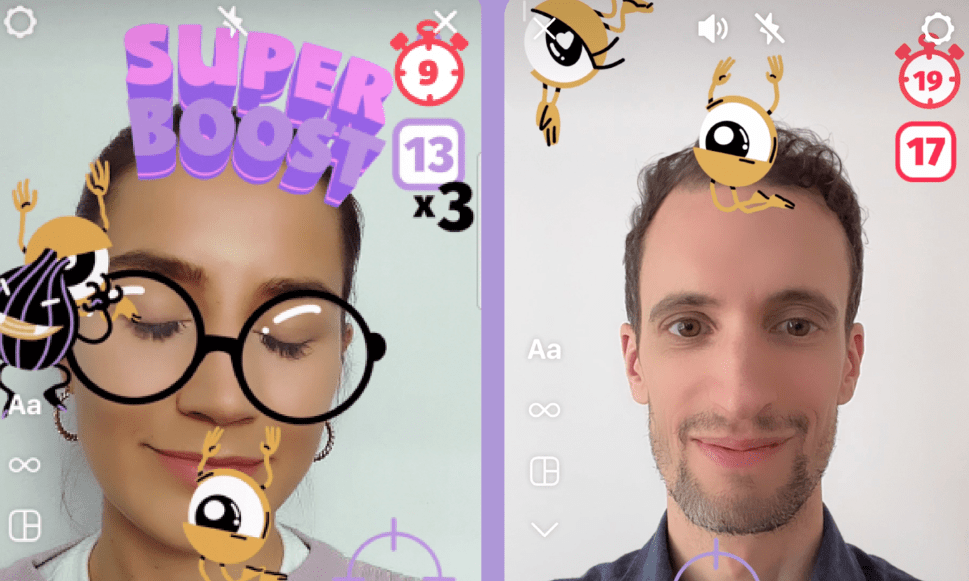
Result: Inhalt und Form's case board reports 2 million people reached, 5.2 million impressions and 180,000 interactions during one month; the agency's entry on Ads of the World gives an average playing time of over four minutes.
BRICKTACULAR — LEGO (2024)
Agency: Arcadia · Platform: Snapchat and Spectacles
The player opens the Lens and points the phone at a real table or floor, or simply looks at it through Spectacles, Snap's AR glasses. Ten LEGO bricks appear on that surface. Players pick them up by hand and click them together; saying a colour out loud brings more bricks of that colour. Free Play sets no brief; Challenges set a model to build against the clock, opening new levels. Builds can be shared straight away.
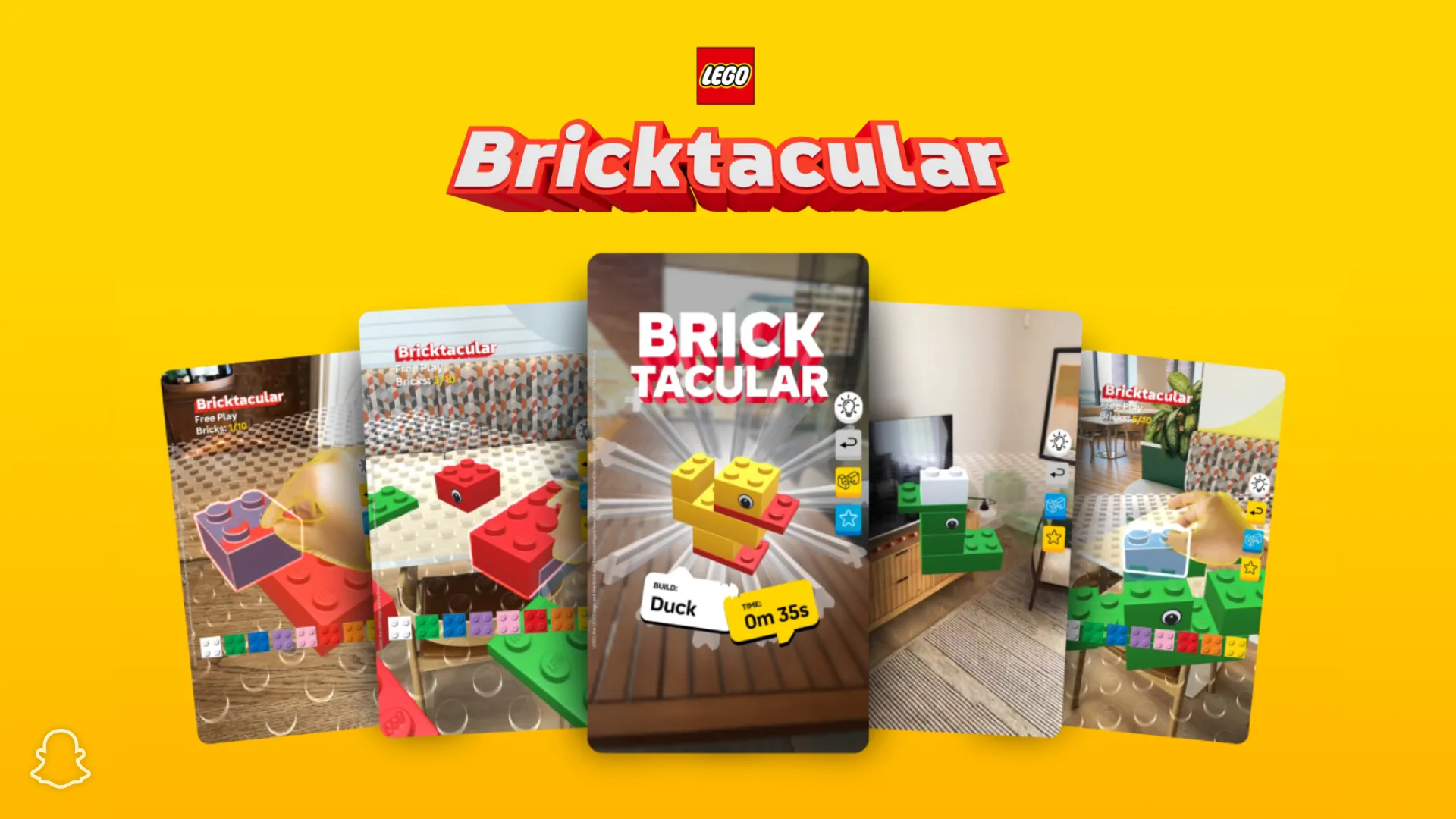
Result: Snap's Shorty Awards entry reports over 1 million unique creations and more than 8 million minutes of play, and Arcadia says the game premiered in 14 countries. It won the 2025 Webby People's Voice award for Best Use of Filters/Lenses.
McDonaldland Map — McDonald's (2025)
Agency: We Are Social · Platform: Snapchat
The Map Lens dropped the player's Bitmoji onto a 3D McDonaldland beside Grimace, the Hamburglar and Birdie. Tapping a character opened a mini-game: steer Grimace downriver collecting shakes in Grimace Island Dash, with a global leaderboard; tap Fry Friends popping up in your room in Fry Frenzy; or fly as Birdie. A second lens transformed the room inside nearly 14,000 McDonald's restaurants and pointed everyone else to the nearest one. Snap says its AR studio Arcadia designed the lenses.
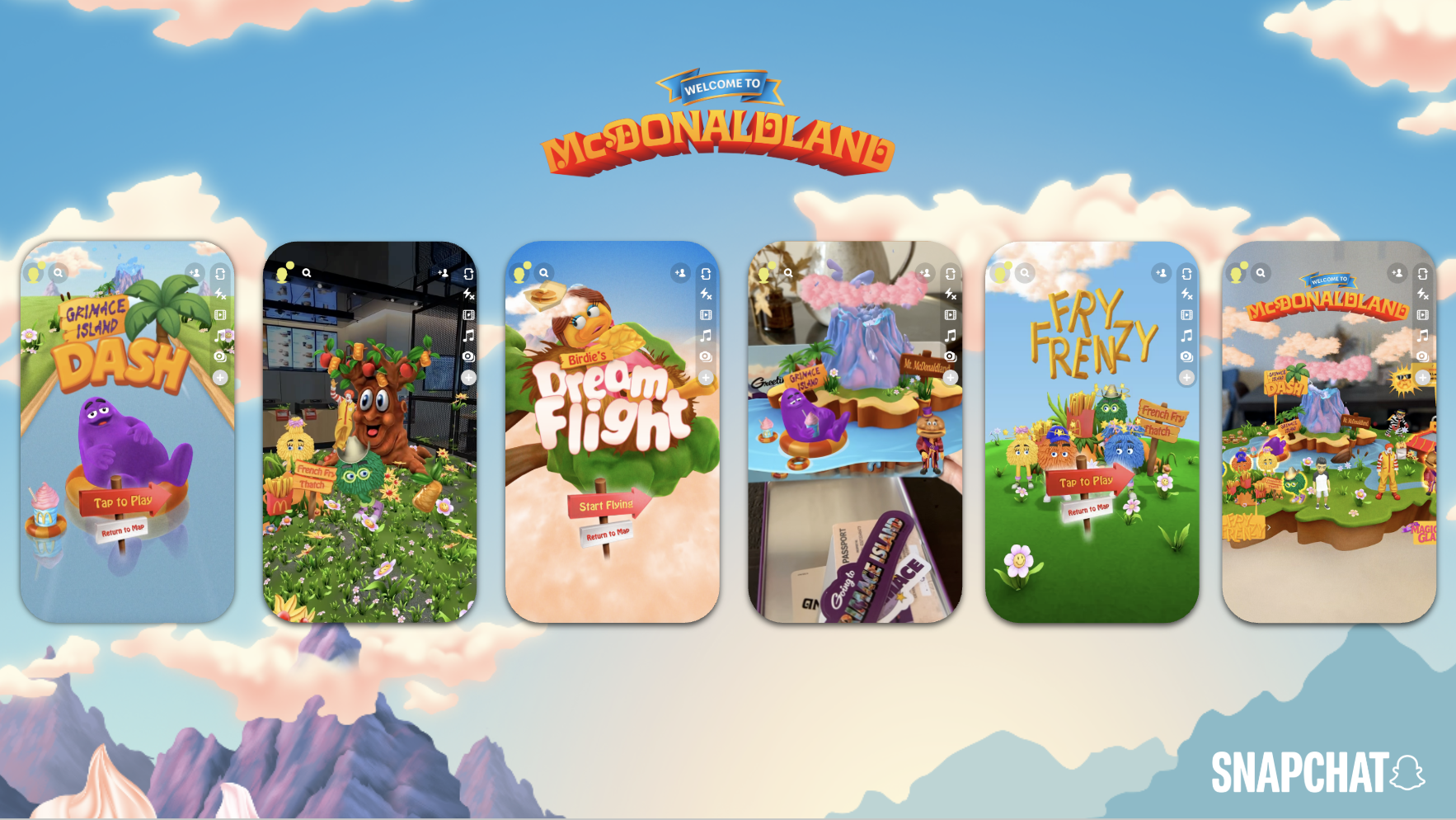
Result: For its four-city tour and social work, We Are Social reports 7.2 million social impressions and 17.5 million organic and experiential earned social reach; its Snapchat AR mirror engaged 4,000+ fans and 2,000+ videos were captured.
FAQ
What is the difference between a Snapchat filter and a Lens?
A Lens works live in the camera before you take a Snap and changes how you look or the world around you. A Filter is a design overlay added on top of a Snap after it is taken. Snap's ads keep the same split: a pre-capture Lens carousel and a post-capture Filter carousel.
Is Snapchat Lens Studio free?
Yes. Snap calls Lens Studio its free AR development platform; lenses built in it can go to Snapchat, Spectacles, the web and other apps. Running a lens as an ad costs media money: even Snap's simpler Lens Web Builder, free of creative fees for its 3D assets, applies a daily minimum campaign spend.
Can brands still make Instagram filters?
Not custom AR ones. Meta closed Meta Spark on 14 January 2025, and AR effects built by third parties, brands included, stopped being available across Meta's apps; only Meta's own effects remain. Brands that want a face or world effect can build for Snapchat or for TikTok, whose Branded Effects can be made with creators from TikTok's Effect House.