

A hyper-casual game is a mobile game stripped down to one mechanic, such as tap to jump, stack or dodge, that starts instantly and plays in rounds of seconds. For brands it is one of the quickest games to grasp: a product, a score and a button to go again.
How it works
You open it and you are already playing, with "no loading, no level select, and no resume", as AppLovin's Johannes Heinze put it in a 2017 PocketGamer.biz series on what he called hyper-casual games. One mechanic carries the whole game. AppsFlyer sorts them into timing, agility, swerving past hazards, stacking falling objects and quick puzzles, and traces the genre back to Flappy Bird (2013). The screen is nearly wordless, so nobody needs a tutorial. A mistake ends the round, the score appears and the next try starts at once.
Where brands use it
Brands rarely chase app charts; they put a hyper-casual mechanic where their audience already is, casting the product as hero, obstacle or pickup. Coca-Cola's SnapSkate ran inside Snapchat Stories for the Zero Sugar launch in Germany: a tap just before the skater fell cut the Story to a clean landing. Red Bull Racers, a Facebook Instant Game with one button for speed and a can for boost, logged more than 8 million games across 140+ activations, according to EPIC. In our library most sit under arcade and action; many are endless runners. In loyalty apps the format can bring members back daily: Adidas's Beat The Goalie gave adiClub members in Mexico five timed penalty swipes a day through the 2026 World Cup, and three goals earned points.
When it fits
Choose it when the brief is reach and repeat contact with a broad, phone-first audience, and the message fits in a character, a colour or a pickup. The rules explain themselves, so it works for people arriving cold from a QR code, a Story or a banner. Rounds are short but replays stack up: Lauv's fans averaged 27 plays per session. A browser game opens from a link with no install; a standalone app needs media to drive downloads, which KFC bought for Original Fake Games with influencers, posters and digital ads, Campaign Middle East reports. A score also justifies a login, turning play into contacts or reward points, as MSI did. Add a leaderboard for a contest over days.
When not to use it
A one-tap game can carry a logo but rarely an argument. If players must learn about the product, a trivia game or personality quiz explains more. Nor does it hold players for long: hyper-casual titles have a short shelf life and high churn, AppsFlyer notes. For return visits over months, look at a game inside a loyalty programme or a Roblox experience. Reflex games favour the nimble; if everyone should feel they can win, an instant win game is fairer. Players have also learned to distrust mobile-game ads showing gameplay the game lacks, Contagious reports, so the game must deliver whatever the promo shows.
Examples from the library
Original Fake Games — KFC (2025)
Agency: TBWA\RAAD, Eterna · Platform: App
One free app for iPhone and Android held four mini-games, each a playable version of a mobile-game ad that promised more than the real game delivered, with Colonel Sanders in the lead. In The One with the Giant Pin players pulled pins so fried chicken met gravy and landed in a bucket; in The Trapped King One they matched burger, fries and cola symbols against the clock.
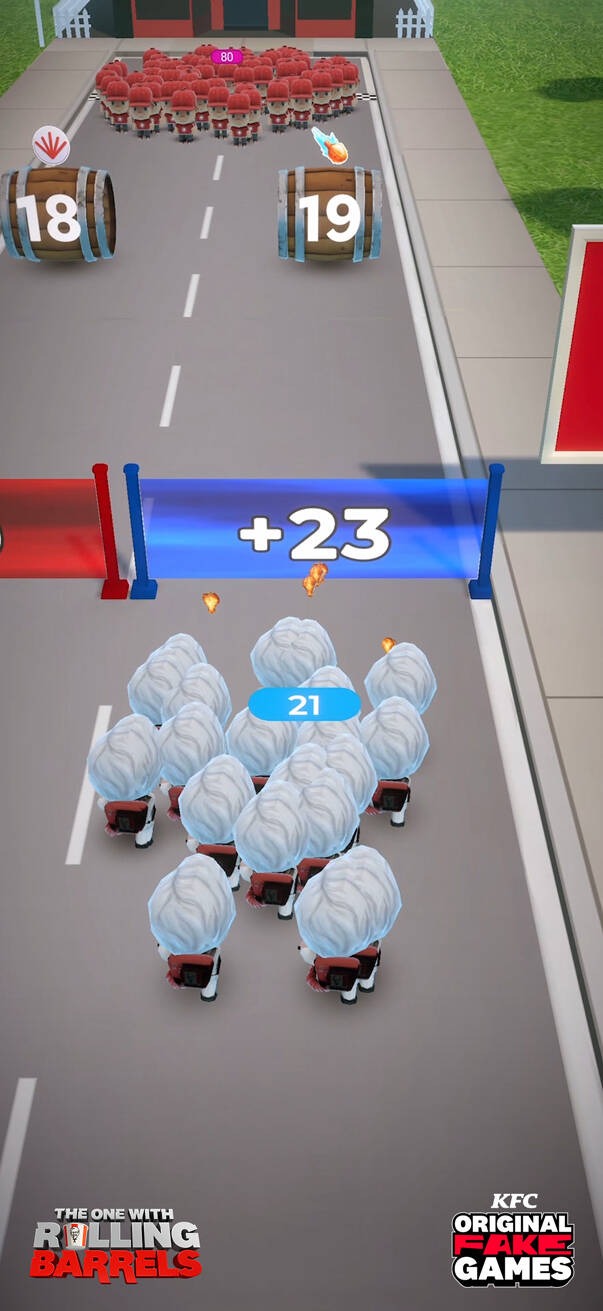
Result: In a launch phase of a little over a week, downloads ran 300% above what KFC expected, and a brand survey placed KFC as the number one quick-service restaurant with its gaming target audience, Contagious reported.
Billy Meets World — Lauv (2019)
Agency: The Creative Corporation · Platform: Web
Fans signed in with Spotify or Facebook, which followed Lauv and started his songs, then guided his real dog, Billy, through gaps between neon pipes lifted from the "Drugs & The Internet" video. One tap kept him airborne. Built on Flappy Bird's core mechanics, the browser game was tuned to be hard enough that fans would share it, says AWAL, whose marketers published it. Reaching a set score unlocked an acoustic video and merch discounts.
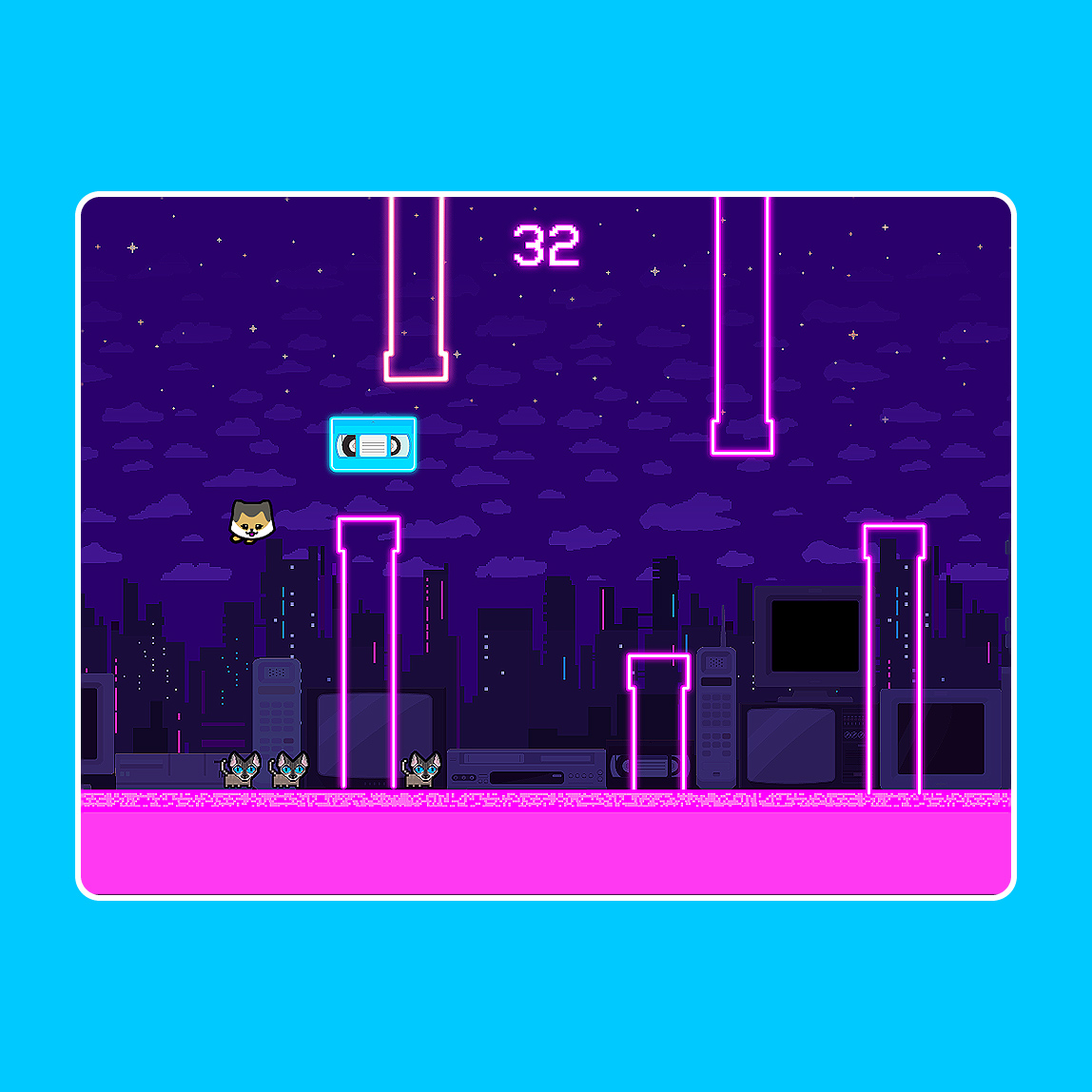
Result: About 90,000 games had been played when AWAL wrote up the campaign, at an average of 27 plays per session and four to five minutes per visit; 1,500 players unlocked rewards, and Lauv gained twice as many Spotify followers per day as he had averaged the month before.
Egg Hunt — MSI (2023)
Agency: Merci-Michel · Platform: Web
A robot rabbit runs down an endless track of blocks, and a single click or tap makes it dash between the rocks; time it right and it scoops up a golden egg. One click on the MSI logo restarts it, so runs follow each other without a menu. During the promotion, eggs fed the player's MSI Reward account, 25 points per finished run and a 100-point bonus at 30 eggs, spent on entries to a Grand Raffle.
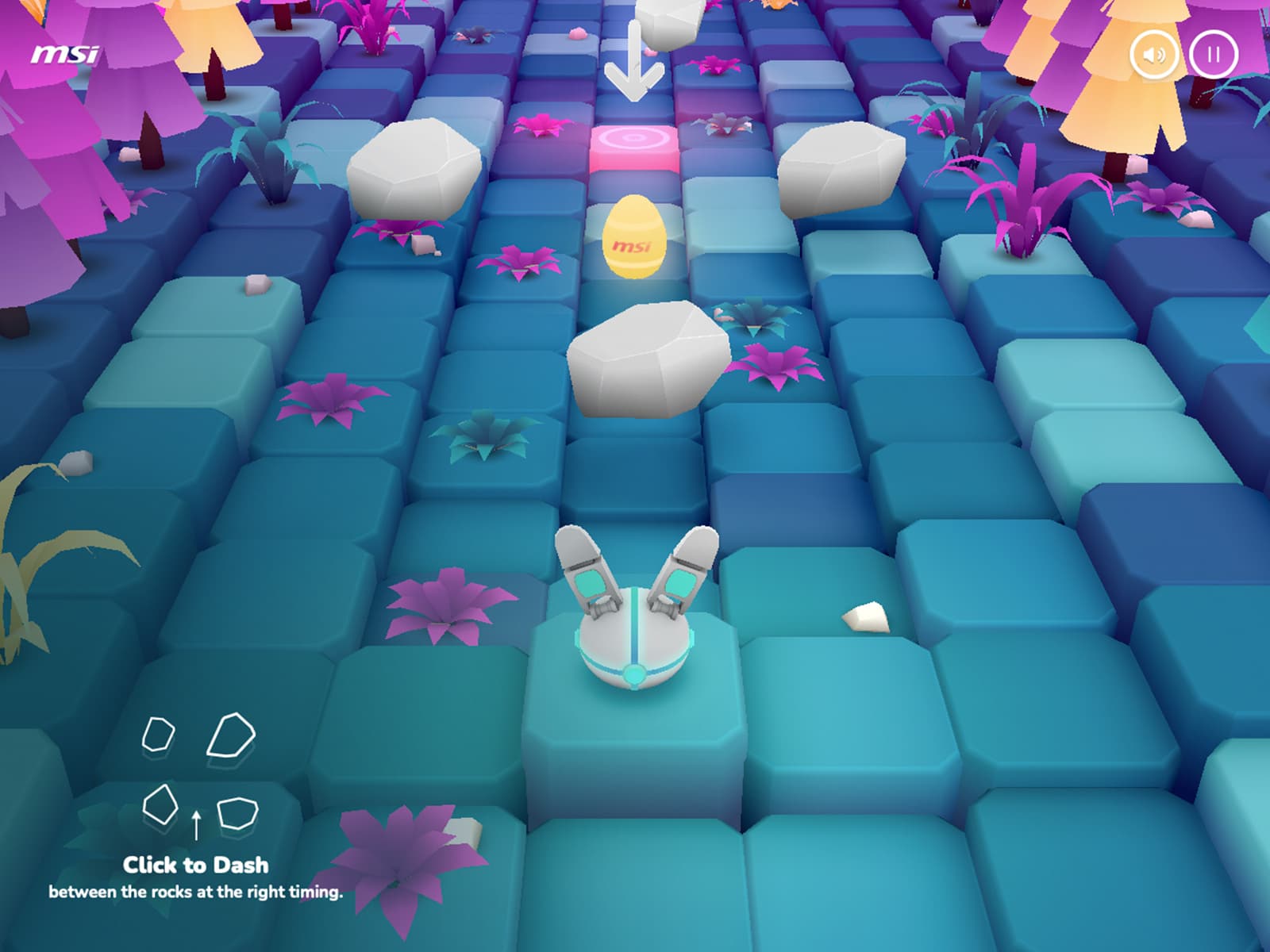
Result: 41,000 players took part and left 22,000 contacts, with an average session of five minutes.
FAQ
Is a hyper-casual game the same as a casual game?
No. Casual games such as match-3 sagas are easy to learn but build deeper loops, levels and in-game economies. Hyper-casual is the stripped-down end: one mechanic, an instant start, almost no interface, paid for mainly by ads. Hybrid-casual sits between them, keeping the simple core and adding those deeper loops, as Unity's ironSource team defines it.
How do hyper-casual games make money?
Commercial ones earn mostly from advertising: interstitials between rounds, banners, and rewarded videos that trade an extra life or coins for a view, per AppsFlyer. A branded one usually shows no ads at all: the brand owns and pays for it, and the return is the campaign result, such as sign-ups, redemptions or sales. Our guide to advergames vs in-game advertising compares the two models.
Are hyper-casual games still popular?
Yes, though less dominant than they were. Sensor Tower data reported by PocketGamer.biz shows hyper-casual still topped the download charts in 2022, while its downloads fell 15% that year and hybrid-casual downloads reached five billion. For a campaign the slowdown matters little: an instant start and a single gesture still suit a QR code or a Story.