

A mini-game is a short game built around one task, usually one of several inside a bigger game or experience. For brands it is the building block of an app, a Roblox world, an advent calendar or an event stand: learned in seconds, easy to swap, and a fresh reason to come back.
How it works
Wikipedia defines a minigame as "a short game often contained within another video game", also called a subgame or microgame. Party games such as Mario Party are built from them.
In a brand campaign the player first meets the container: a town map, a Roblox lobby, a calendar grid or an app's games tab. Picking a game brings up a one-line instruction, and a round lasts seconds or a few minutes. The score, coins or tickets it pays go back to the container, where they open more games, avatar items or prize entries. The container holds the progress and the brand's world; each mini-game holds one mechanic.
Vendors also use the word for a light stand-alone game: Peek & Poke describes mini-games as "lightweight, often template-based" experiences.
Where brands use it
Kids' cereal portals of the 2000s were built on them: on Postopia, passwords printed in Post cereal boxes opened new levels or features in games children already played (Wikipedia). Today the hub is often a Roblox world, as in Amazon's 2022 Trip Around the Blox, built on "free-for-all-style mini games" (Chris Lumain). Loyalty apps rotate them by season: Enerwave's app has run a memory game at Easter, a scratch card for Greek theatre week and an advent calendar in December (Drimify). Packs lead to them too: QR codes on Coca-Cola's Year of the Tiger cans opened family games inside WeChat (UNIT9).
The library files 103 games under mini-games, stand-alone scratch cards and prize wheels among them. Food and drink and entertainment brands commission the most, mostly for engagement.
When it fits
Choose mini-games when the brief is repeat visits over weeks to a place you own or can fill: an app, a loyalty programme, a Roblox world, a seasonal calendar. A new game gives people a reason to return without rebuilding everything around it, and a weak one can be swapped out.
Mixed audiences suit the format, because each game explains itself in a line. Coca-Cola's WeChat games for the whole family were designed to be "easily played and understood by everyone" (Campaigns of the World).
The games are short, but visits need not be. Google Play's three-level Zedd In The Park playground averaged seven-minute sessions, according to Phantom, and Millsberry's young visitors stayed nearly 24 minutes (below).
When not to use it
Skip the hub for a one-off burst with one message: a single hyper-casual game or trivia game is one build and easier to share. Each extra game adds design and testing but no audience; a hub without media or existing users stays empty. Peek & Poke rates template mini-games "low to moderate" for engagement, with "short sessions with limited replay value"; for depth, look at a tycoon game or an adventure.
Take care with children. In 2009 Yale's Rudd Center reported that cereal makers relied on sponsored websites and advergames, and that the least healthy cereals were "most frequently and aggressively marketed directly to children" (Yale News). In the US, COPPA imposes requirements on sites and services directed to children under 13 (FTC); check with counsel.
Examples from the library
Millsberry — General Mills (2004)
Agency: not credited · Platform: Web
Children signed up free, built an avatar called a Buddy and moved around a cartoon town. The arcade, the park and branded factories held short games such as Reese's Puffs Cereal Snowboard Slalom, which paid Millsbucks and raised the Buddy's fitness, civics or intelligence. Between games, players fed the Buddy branded cereal and decorated its house, and a daily login bonus brought them back. General Mills closed the site on 31 December 2010.
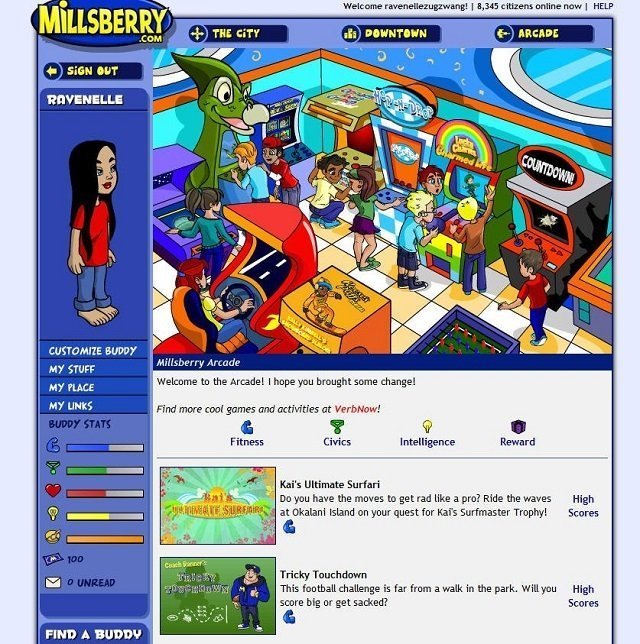
Result: In 2009, Yale's Rudd Center found that Millsberry.com averaged 767,000 unique young visitors a month, who stayed an average of nearly 24 minutes per visit (Yale News). The figures come from a report critical of cereal marketing to children.
Dumb Ways To Die 2: The Games — Metro Trains (2014)
Agency: Millipede Creative Development · Platform: App
A train carries the player around a cartoon map to sports arenas, each stop a quick reflex mini-game: playing goalie against an angry penguin, sprinting hurdles with scissors, riding a dolphin rodeo. At the stations between arenas, a bonus game about safe behaviour on the platform and in the carriage adds a Safety score. Clearing arenas opens new games and characters, and a Kids Mode drops ads and in-app purchases.
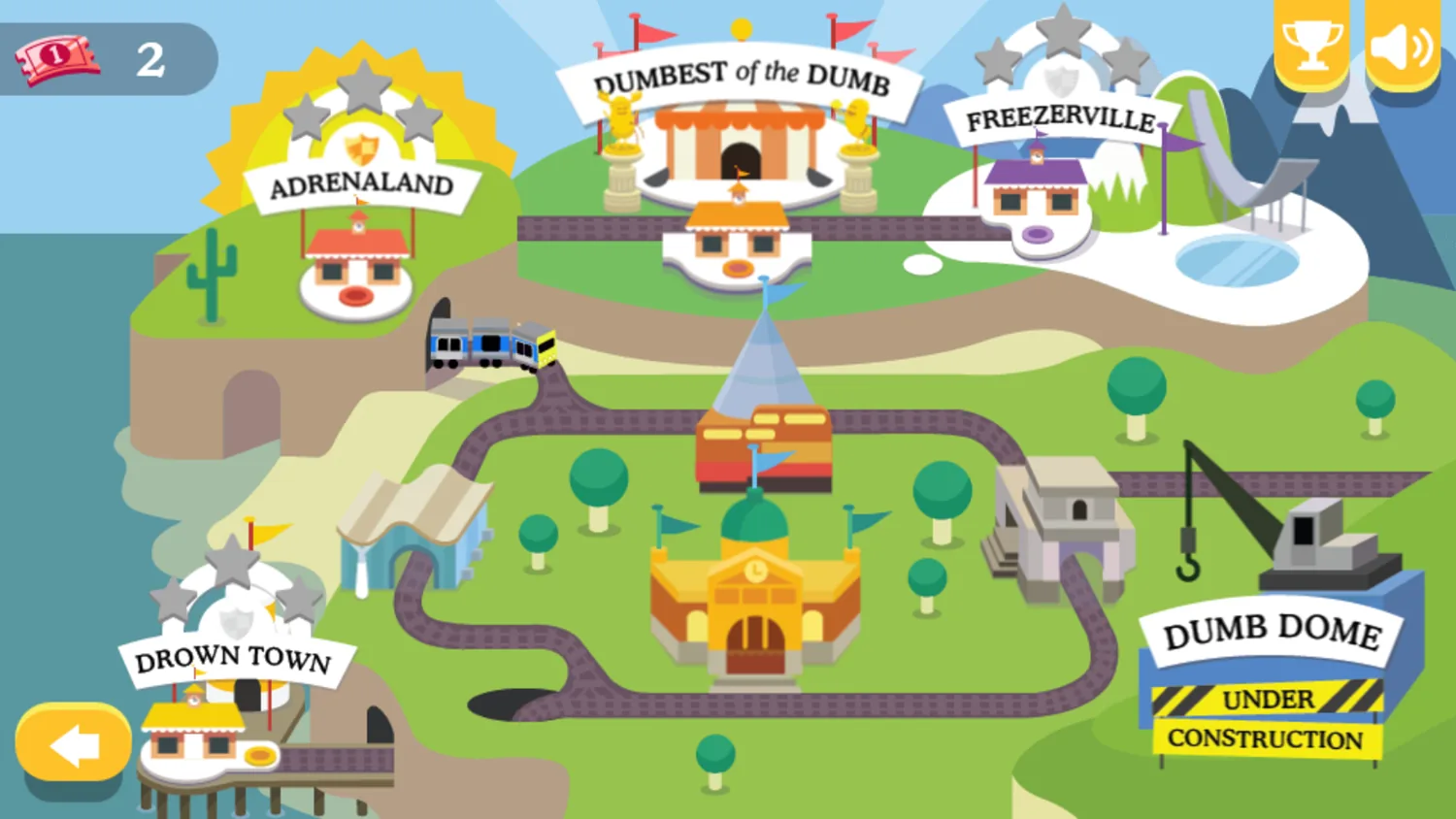
Result: WARC's June 2017 summary of the case, filed under the Creative Effectiveness Lions, says the app was downloaded over 108 million times and played over 5.88 billion times.
Squid Game: The Final Games — Netflix (2025)
Agency: The Gang · Platform: Roblox
Players wait in a dormitory lobby, spend in-game Won on abilities and cosmetics, then queue into a match of four elimination rounds from the show: Red Light Green Light, Mingle, Rock Paper Scissors and Hide and Seek. Between rounds, survivors vote to cash out a small payout or play on for the full prize. Netflix described it as "featuring mini-games from each season", with over 20 official avatar items and emotes.
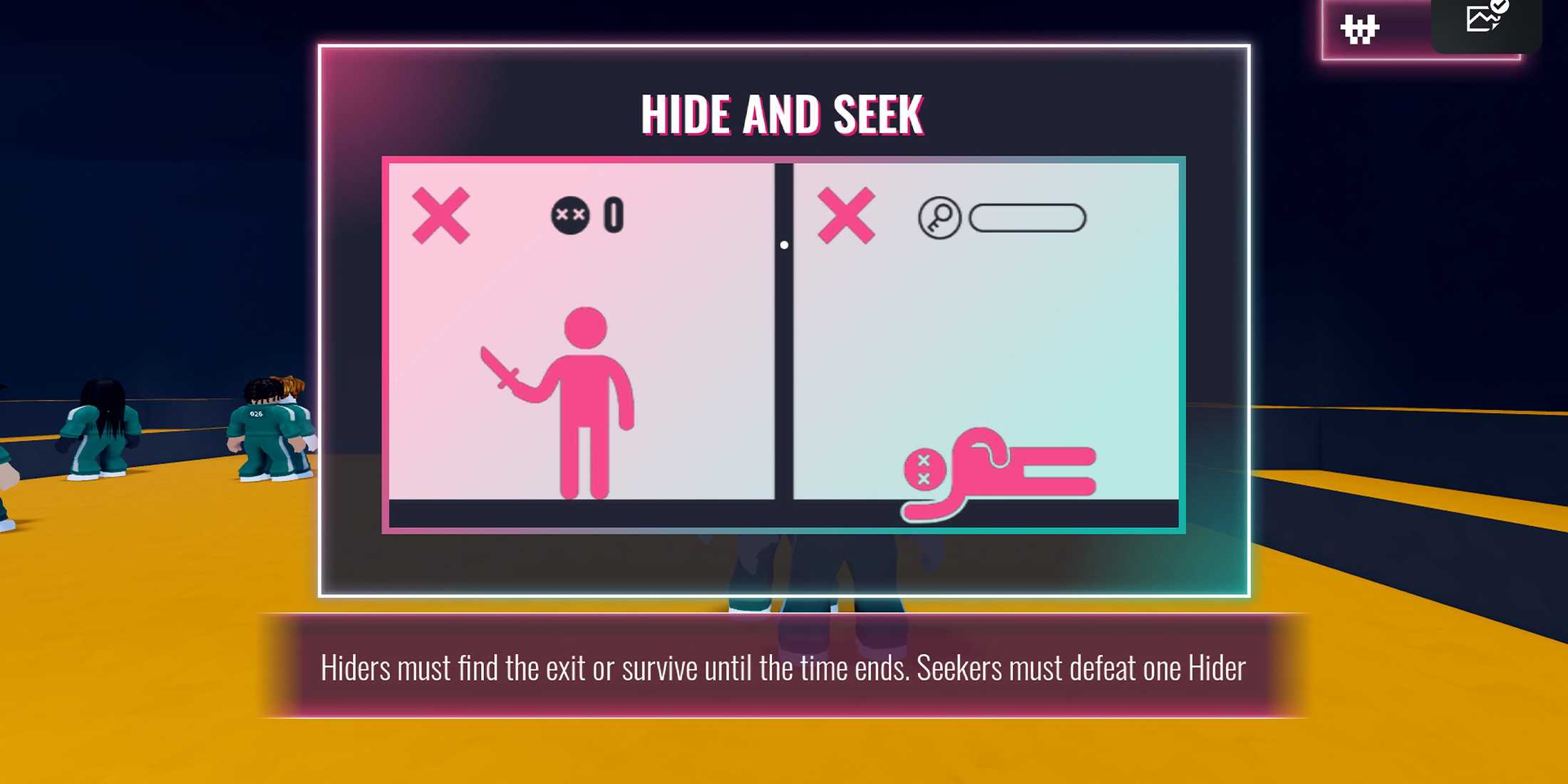
Result: By October 2026 the Roblox tracker Rolimons counted 32,262,315 visits, 90,898 favourites and an 88.6% approval rating. Concurrent players peaked at 18,890 on 27 June 2025, the day season 3 premiered.
FAQ
Is a mini-game the same as a hyper-casual game?
Not quite. A hyper-casual game is a stand-alone mobile game built on one mechanic. A mini-game is defined by where it sits: one short game among several inside something bigger. Many brand mini-games borrow hyper-casual mechanics such as tapping, dodging or timing.
What are WeChat and TikTok mini games?
On those platforms, "mini games" are games that run inside the app itself. WeChat launched them on 28 December 2017 (Game Developer), and TikTok gives developers a Mini Games SDK. Brands can buy space in popular ones: Nike and McDonald's were the first advertisers in WeChat's one-touch Jump Jump, where landing on a sponsored surface such as a Nike shoebox scored more (Sixth Tone, March 2018).
How long does it take to build a mini-game?
It depends on whether it starts from a template. The studio Peek & Poke quotes 1 day to 4 weeks for a mini-game, 2 to 12 weeks for a white-label game and 3 to 36 months for a bespoke one. A hub of custom mini-games, like the examples above, is bespoke work.