

A platformer is a video game in which you steer a character through levels by running, jumping and climbing across platforms, gaps and enemies to reach the exit. For brands it is the natural home of a mascot: the character is the hero, the logo is what you collect, the product is the power-up.
How it works
You guide a character from the start of a level to its end. In Wikipedia's definition the core objective is moving between points, over uneven ground and floating platforms that need jumps and climbs. Donkey Kong (1981) was the first game to let players jump over gaps, and Super Mario Bros. (1985) became the archetype. The usual moves are running, jumping, attacking and climbing; you collect items and power-ups, and a fall into a pit can kill your character.
A brand platformer keeps those rules and recasts the parts. A mascot or film hero becomes the character you control. Pickups carry the brand: health comes from Coca-Cola cans in Coca-Cola Kid, and in Horlicks' NutriQuest power-ups named Tall, Strong and Sharp repeat the drink's claims. The level becomes the brand's world, such as the Cdiscount warehouse in Jumping Max.
Where brands use it
The library tags 49 branded platformers, most of them arcade and action games. Food and drink brands came first. Their mascot platformers of 1989 to 1994 appeared when platformers were console gaming's most popular genre, according to Wikipedia. Domino's had Avoid The Noid, McDonald's M.C. Kids, Cheetos Chester Cheetah and 7 Up Cool Spot; most were licensed games. For more from the 8- and 16-bit years, browse classic advergames or read our advergames history.
Later the format moved to browsers, phones and Roblox: film tie-ins such as The Boxtrolls' Slide 'N' Sneak, Tommy Hilfiger's 8-bit game for a fashion drop (below), and Care Bears' Caring Quest, where players run, jump and glide around Care-A-Lot.
When it fits
Choose a platformer when you have a character people like and want them to spend time with it: a mascot, a film hero, or the player's own avatar in your collection. It suits people who grew up on console games; Q-Jump was planned as a nod to 1990s games such as Super Mario, according to the designer's Contra portfolio. Tie play to a purchase: a QR code on bags of Trolli gummy worms opened a hidden browser game (Marketing Dive), and Deliciously Dark Escape held its 30,300 players for an average of 10 minutes 2 seconds, the full length of a level's timer. Plan for a real production: Virgin agreed to deliver a McDonald's game within six months (Wikipedia).
When not to use it
Precise jumping is a skill, and a pit in the first level ends the visit for people who rarely play games; if a prize is at stake, add a draw for every finisher or use an instant win game. On phones, the variant that found success is the auto-runner, which needs few controls, often a single tap to jump (Wikipedia): consider an endless runner. Finished levels give little reason to return; Tokyo Fury's team added extra modes for that reason, says its case study. A platformer can also bury the brand: Global Gladiators had little to do with McDonald's beyond the branding, and executives visiting during development asked where the restaurants and Ronald McDonald were (Wikipedia). In the shipped game Ronald appears only in the opening and closing cutscenes and at each level's exit. For food brands and young players, read our brand mascot page first.
Examples from the library
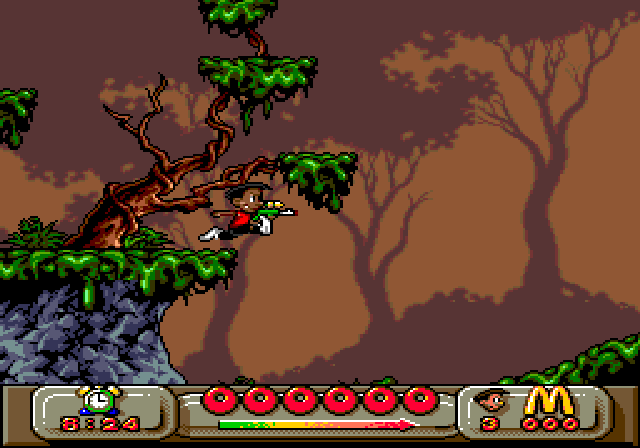
Global Gladiators — McDonald's (1992)
Agency: Virgin Games (developer and publisher) · Platform: Sega Genesis, later Master System, Game Gear and Amiga
Players pick Mick or Mack, the heroes of McDonald's earlier M.C. Kids, and run and jump through four worlds, from Slime World to Arctic World, blasting polluting monsters with a slime gun whose kickback can push a careless hero off a ledge. Golden arches are the collectibles: gather enough and the exit opens; gather more and a bonus stage asks you to sort falling rubbish into three bins.
Wolverine Tokyo Fury — V Energy Drink (2013)
Agency: Soap Creative Australia · Platform: Web, on V's site and browser-game portals
V Energy made it with 20th Century Fox for The Wolverine and its new Graphite flavour. You play Wolverine across Tokyo rooftops, running, jumping, sliding and climbing while slashing through ninjas, in a story mode or open-ended endless and survival modes. Hidden V boosts trigger a Fury mode. Codes on special-edition Wolverine cans entered a draw for a Ducati and upgraded Wolverine's stats, and the top five players in each mode could win weekly prizes.
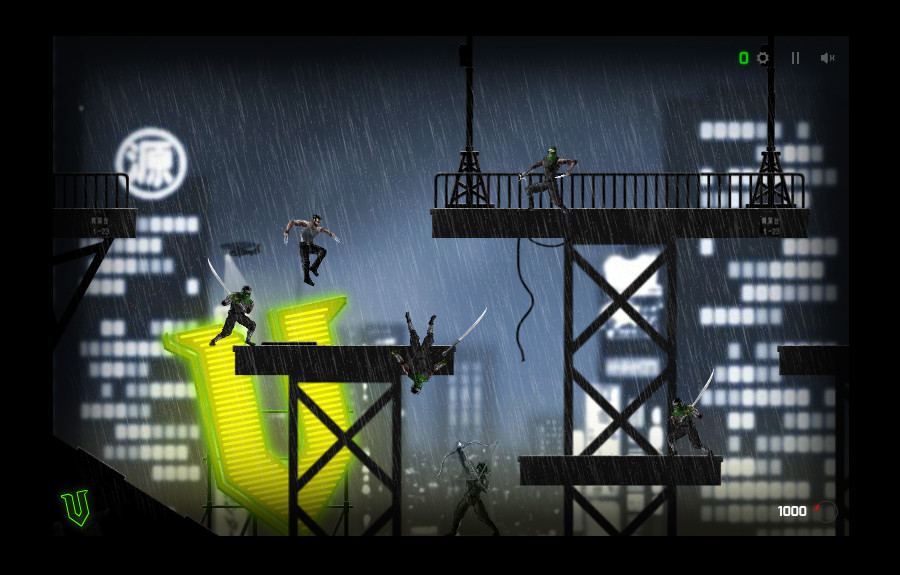
Result: 4.4 million gameplays during the eight-week campaign, with fans overseas posting walkthrough videos, according to a campaign case study.
Q-Jump — Tommy Hilfiger (2023)
Agency: Something™ · Platform: Web, desktop and mobile browsers
For the Tommy Jeans x Aries drop, fans played to skip the overnight queue. A pixel avatar in pieces from the collection runs and jumps across rooftops and vent ducts above the people waiting below, grabbing coins on the way to the store, with a secret level and a 1990s-style hip-hop soundtrack. Coin totals went to a leaderboard, and signing in to Tommy's membership programme brought pre-sale access and a chance to win pieces.
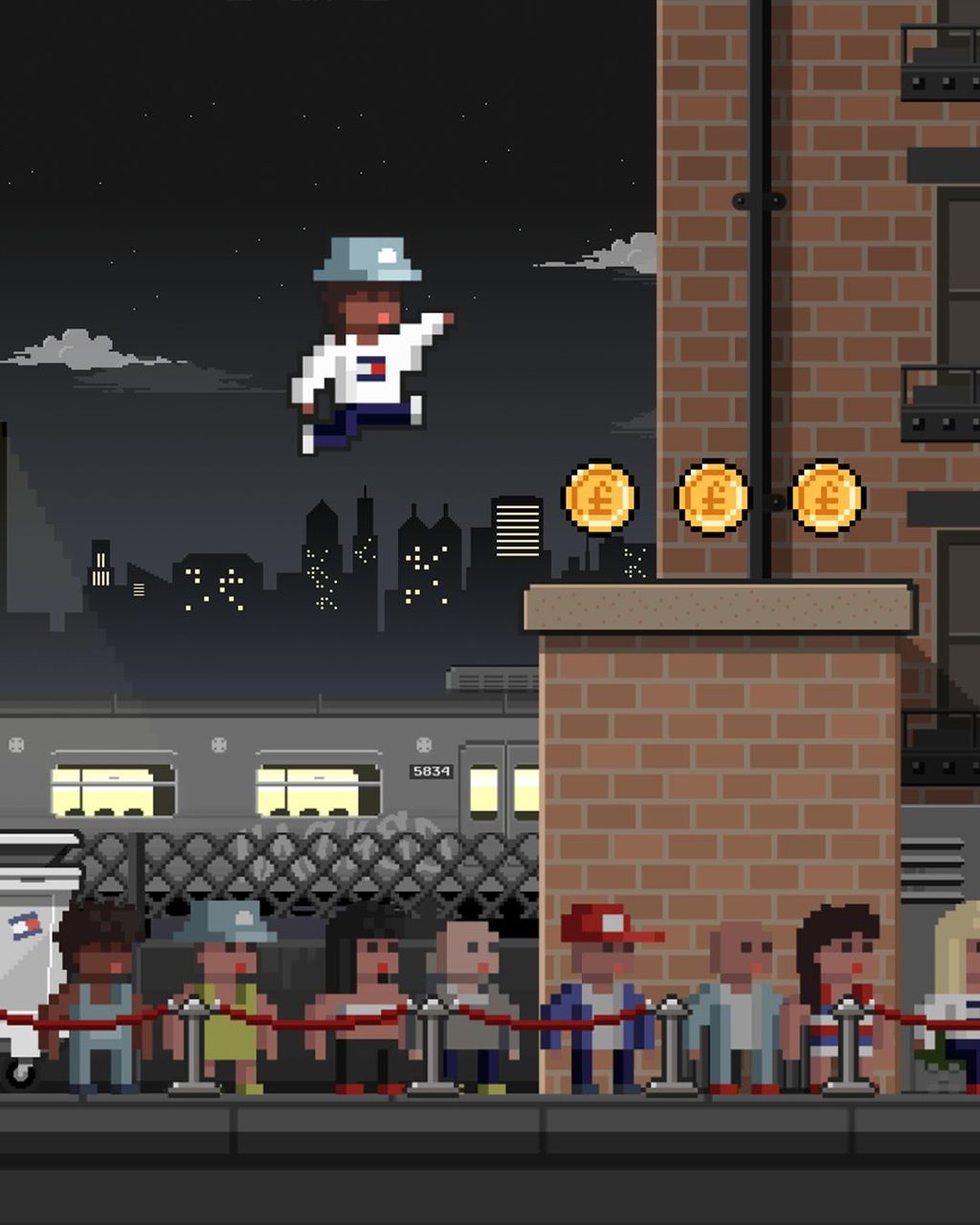
Result: 135,000 plays in two weeks and 10 million people reached across Europe, according to the agency's case study, which framed the brief as driving new membership sign-ups.
FAQ
What does it mean for a game to be a platformer?
It means getting the character through the level is the main challenge, and jumping is how you do it. Wikipedia describes uneven terrain and suspended platforms that need jumps and climbs. Shooting or puzzles can be added, as in run-and-gun and puzzle platformers, but the route remains the game.
Is Super Smash Bros. a platformer?
Not in the usual sense. It is a fighting game, the series that defined the platform fighter subgenre, according to Wikipedia. Fighters jump across floating platforms too, but the aim is to knock opponents out of the arena, not to reach the end of a level.
What is the difference between a platformer, an endless runner and an obby?
In a platformer you set the pace and each level ends. In an endless runner the character moves on its own and the course never ends; Wikipedia treats it as a platformer subgenre. An obby is Roblox's obstacle course, and Roblox's genre guide files it under "Obby & platformer" with classic, runner and tower variants.