

An endless runner is a game in which the character runs forward on its own and the player only jumps, dodges or steers, surviving as long as possible for a higher score. There is no finish line. For brands it is a quick, replayable format that suits phones, product cameos and leaderboards.
How it works
The character sets off by itself and, in Wikipedia's definition, could in principle run forever while you avoid obstacles. In Canabalt (2009), the game credited with popularising the form, a single button makes the runner jump between rooftops, and each run is scored in metres. Temple Run (2011) uses swipes to turn, jump and slide. The pace rises the longer you last, the course is often generated as you go so runs rarely repeat, and a single mistake often ends the run. Then comes the score screen and a button to go again; that is the hook. The hero need not be on foot: cars and submersibles follow the same loop.
Where brands use it
Brands got there early: Wikipedia cites Pepsi's 1999 PlayStation game Pepsiman as a 3D endless runner that predates the mobile boom (more in our advergames history). The library counts 144 branded runners, most of them arcade and action games. Fashion brands dress the runner in the collection: Ralph Lauren sent a ball boy or ball girl in Polo kit down an endless court in Playfully Wimbledon, then held a gaming tournament for it in its Regent Street store. Automotive brands swap legs for wheels; Nissan's drivers set the bar on the leaderboard of its Electric Racer Tokyo. In loyalty apps, each run of McDonald's France's Rösti Fall costs a token earned by buying the product or converting points (more on fast-food games).
When it fits
Choose an endless runner when the goal is time with the brand and repeat play rather than a message to read. Runs are short, so people go again, as the Peugeot example below shows. It suits broad, phone-first audiences arriving from an ad or a social post: the rules need no explaining and the game can open in a browser with no install. Put the product where the eye goes: the character, the vehicle or the pickups. For a contest over days or weeks, add a leaderboard and dated prizes; Peugeot refreshed its high-score list daily to name winners. Its brief gave six weeks to devise and roll out the activation, according to eGuide.
When not to use it
The player watches the next obstacle, not your copy, so a runner carries product detail, an argument or a lesson badly; a trivia game or personality quiz explains more and collects answers on the way. Reflex difficulty also filters people out. If everyone should feel they can win, a chance format such as an instant win game or a prize wheel is fairer. Valuable prizes on a score table invite cheating: Yuga Labs had to validate Dookey Dash scores, and Rösti Fall's anti-cheat system screens sessions against more than 30 criteria. And the genre is crowded. A clone with a logo on the runner gives nobody a reason to remember the brand; tie the setting, obstacles and pickups to the product instead.
Examples from the library
Run Puma Run — PUMA (2012)
Agency: Viget · Platform: Web
Visitors to puma.com picked one of PUMA's evoSPEED athletes from five sports, redrawn as an 8-bit sprite, and set off along an endless side-scrolling track. A tap on a phone or a key on desktop jumped hurdles and grabbed medals until the player clipped one. The game filled the browser while PUMA's store menus stayed on top, so playing never meant leaving the shop. The brief: an Olympics-season game that could not mention the Olympics.
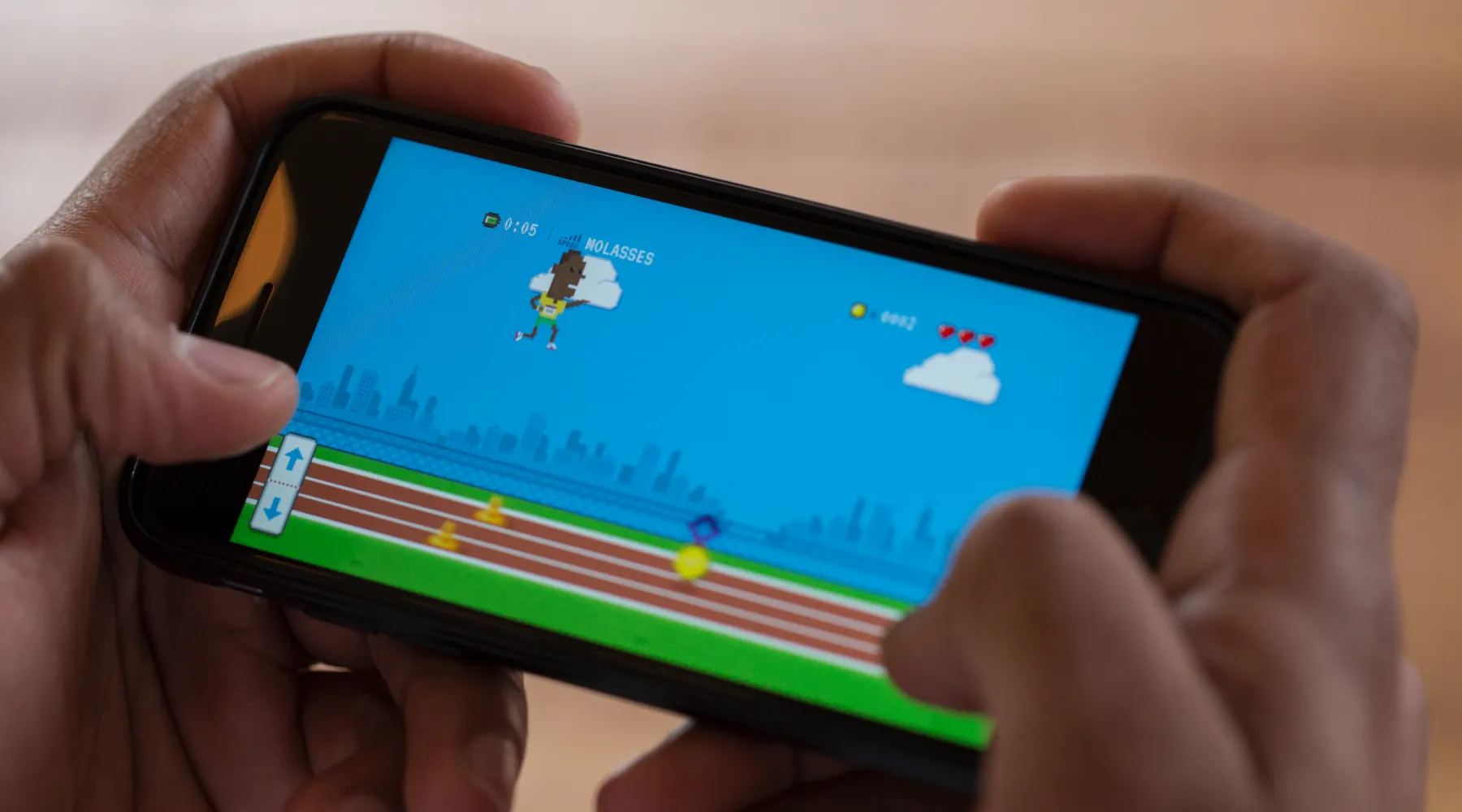
Result: More than 120,000 plays, and visitors averaged 17 minutes 6 seconds on the site during the first five days after launch, according to Viget.
GTi Legend The Game — Peugeot (2014)
Agency: DPDK · Platform: Web
Players drove the limited-edition 208 GTi 30th across a frozen lake that gave way behind the car while missiles rained down. There was no finish line: some objects added points, others ended the run, and the pace built the longer the car stayed ahead of the ice. A counter showed the metres covered. On desktop the TV commercial flowed straight into the start screen, and the controls adapted to touch or keyboard and mouse.
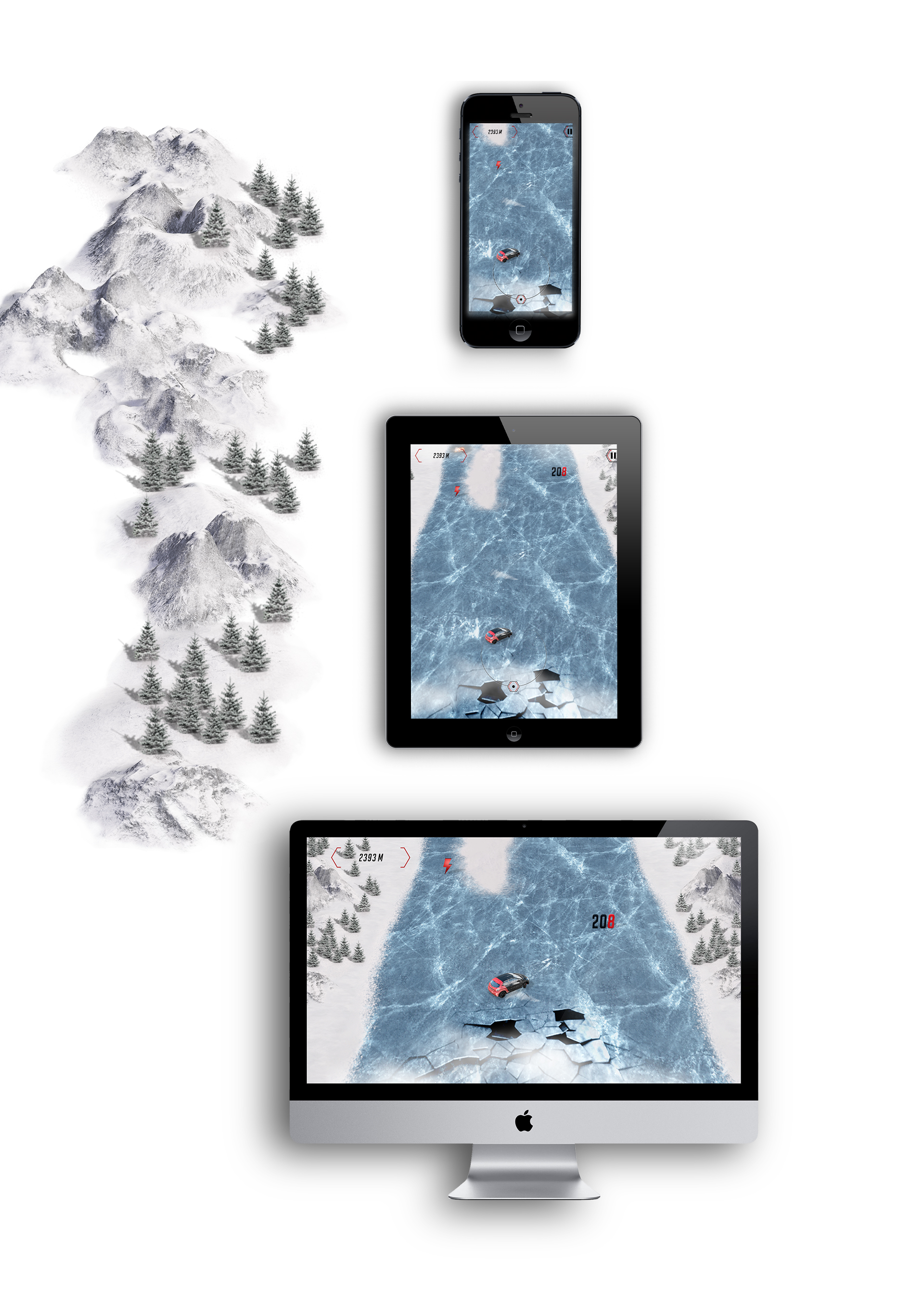
Result: Played more than 75,000 times. eGuide reports about five plays per person on mobile and tablet, about eight on desktop, and average visits of just over three minutes; Peugeot Germany later took the campaign over.
Dookey Dash — Yuga Labs (2023)
Agency: Makemepulse · Platform: Web
Holders of Yuga's Bored Ape family of NFTs minted a free Sewer Pass, connected a wallet and dropped into a sewer tunnel behind a submersible vehicle, steering left and right to dodge obstacles and scoop up glowing fragments. Runs were short and unlimited, each one landing on a live leaderboard, and 2 ApeCoin bought a ten-minute score booster. After three weeks the board froze and rewards followed final rank, with the top score taking a single key.
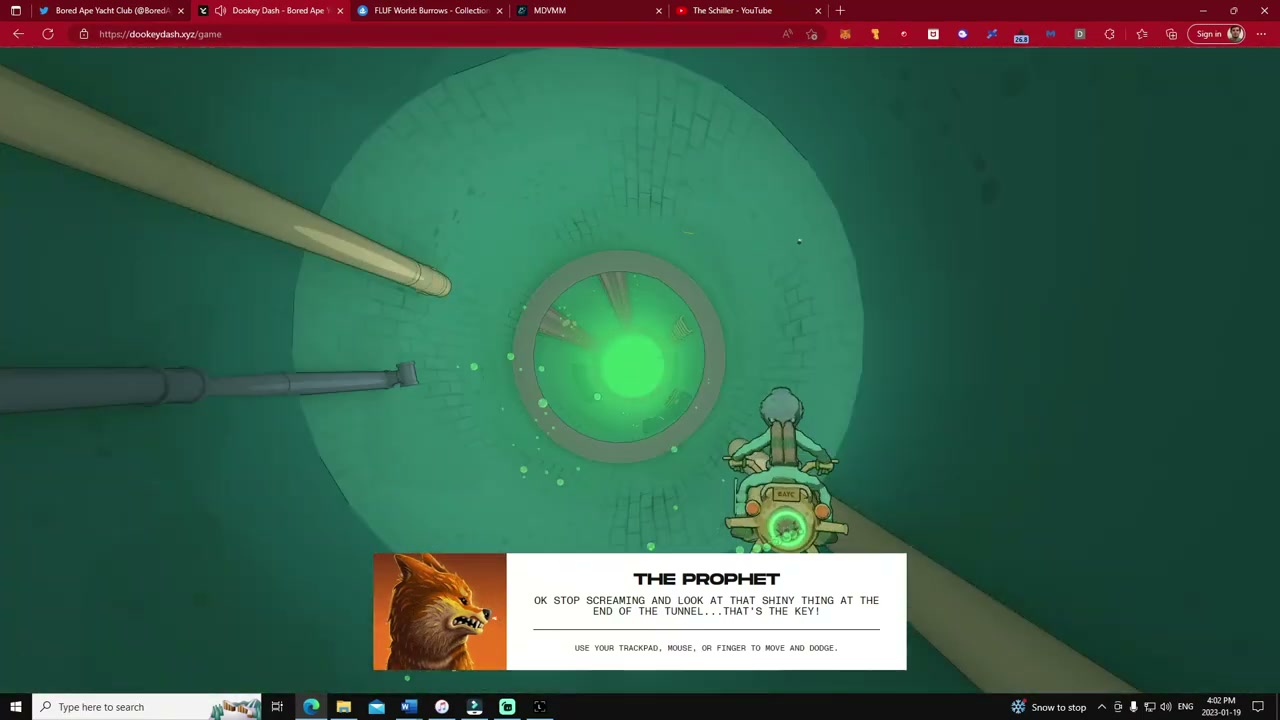
Result: Almost 26,000 pass holders played about 7.5 million runs between 19 January and 8 February 2023, nearly 28 hours each on average, and more than 8,000 players spent about 425,000 ApeCoin, roughly $2.2 million at the time, on boosters, CoinDesk reported.
FAQ
Is endless runner a genre?
Yes. Wikipedia files it as a subgenre of the platform game, also known as infinite runner or auto run. Structure, not setting, defines it: the character moves forward automatically, the course never ends, and the score is distance or survival time.
Where can I play endless runner games online?
Portals keep whole categories of them, such as itch.io's endless runner tag. Branded runners come and go with their campaigns, so many in our library are no longer playable. Two still listed as playable are MSI's Egg Hunt, a one-tap dash for reward points, and Nissan's Electric Racer Tokyo; the still playable collection gathers more.
Does an endless runner need a leaderboard?
No. Beating your own best already drives replays. A leaderboard adds a reason to come back over days or weeks, but once prizes hang on it you need published rules, a reset schedule and a way to catch impossible scores.