

A personality quiz is a "which X are you" quiz with no right or wrong answers: the player's choices match them to one of a fixed set of types, characters or products. Brands use it to get people talking about themselves, spread a branded result and learn what their audience prefers.
How it works
The player opens the quiz from a social post or an ad, often with no sign-up. In the library's examples they answer between six and fifteen questions about taste and habit rather than facts: pick a door, an airline seat, an out-of-office message. Behind the screen, each answer is linked to one or more results. In quiz builders such as Interact, every link adds one point and the result with the most points is shown.
The reveal is the payoff: a type name, a portrait, a few flattering lines, sometimes a "most compatible" type, then buttons to share, retake or shop. What turns a questionnaire into a game is the play around it: a countdown on each choice, filmed scenes between questions, cards to swipe, a character to share and a reason to try again for a different result.
Where brands use it
The "which character are you" format is familiar from media sites: BuzzFeed became known for user-made quizzes that match readers to pop-culture characters, as Wikipedia notes. In the library, film tie-ins such as X-Men's mutant power quiz (now offline) sit beside employer brands using quizzes for recruitment, travel brands matching people to trips and Acura, which matched people to a car. Fashion and retail brands turn the format into a product finder for sales. Copenhagen label Masai's body-shape test drew over 160,000 participants and 60,000 new marketing permissions, according to Playable. More in quiz campaigns and quiz and trivia games.
When it fits
Use a personality quiz when the brief is about identity: helping people see themselves in a brand, a job, a destination or a product range. It needs no skill and takes a few minutes on a phone, so it suits broad audiences, and it spreads socially because the result card is what people post. It is also a light way to collect zero-party data: every answer is a stated preference. Masai's cost per lead was 50% below the previous year's non-gamified campaign, and an average of seven days passed before a purchase was made, Playable reports. Plan the step after the reveal first: each result should lead to something the brand offers, such as a product, a job family or a bookable trip.
When not to use it
Don't use it to judge people. The Myers-Briggs Company, which publishes the MBTI, says type results should not be used to select or limit anyone; a branded quiz has far less validation, so in hiring let it attract and inform, never screen. Don't ask for social logins or data you don't need. The FTC alleged that the GSRApp, which asked users personality questions, collected Facebook data from 250,000 to 270,000 US users and 50 to 65 million of their friends. Avoid questions that hint at health, beliefs, politics or sexuality: the ICO says inferring them means processing special category data. To teach product facts, a trivia game with right answers does the job better; for return visits, build a deeper branded game.
Examples from the library
Go Places — Heineken (2016)
Agency: Cloudfactory, Superhero Cheesecake, Wefilm · Platform: Web
The jobseeker walks through a white door into a filmed job interview with Heineken. The Curator of Choices runs twelve rounds of paired options, such as "world famous" or "strong roots", with a few seconds to click each time; hesitating counts too. Local time and beers on screen change by country. He finally reappears dressed as one of eight profiles, which the player can share or attach to a LinkedIn application. The site is now offline.
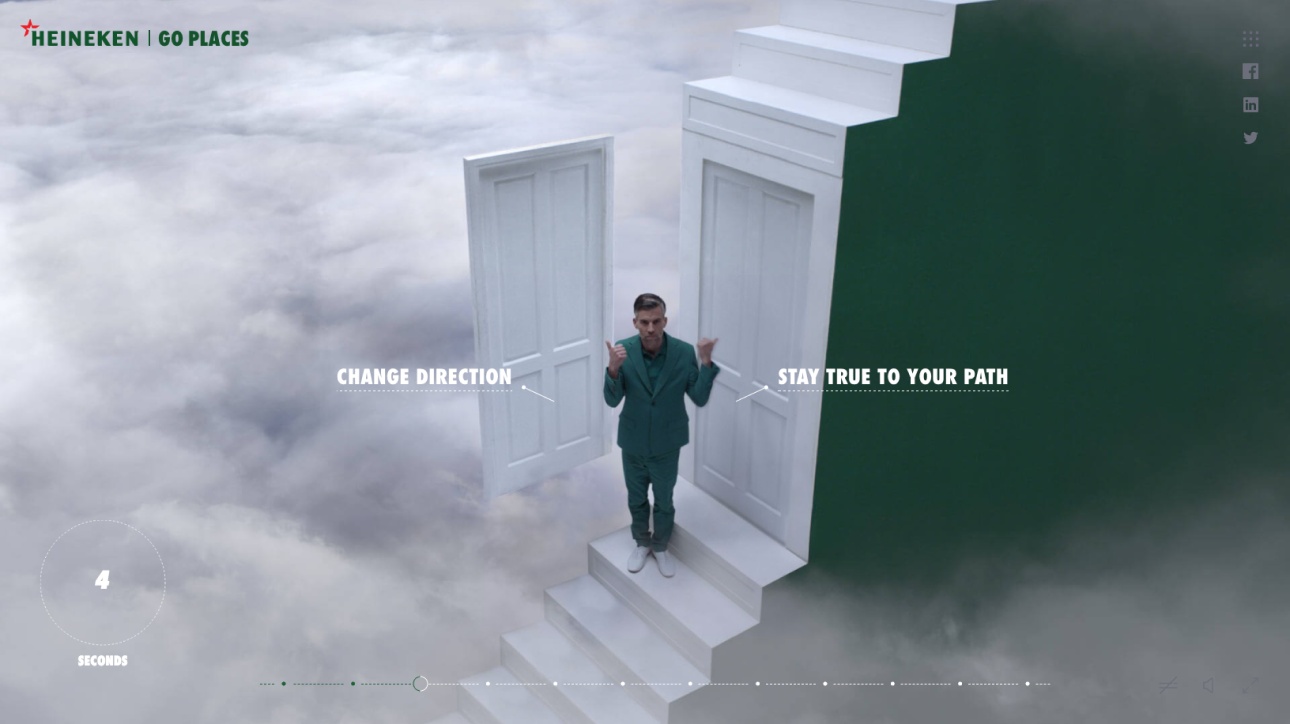
Result: Heineken received over 300% more job applications via LinkedIn than in previous years, and average time on the site was more than five minutes, reports The Drum.
Creative Types — Adobe (2019)
Agency: Anyways Creative · Platform: Web
Made for the Adobe Create magazine, the quiz opens on the first of 15 questions, each with two answers written in abstract, image-led language. Every tap plays a short filmed scene shot on built sets, with a skip link. The last answer lands the player on one of eight creative types, from Artist to Visionary, drawn as a 3D character with strengths, a biggest challenge and an ideal collaborator, plus a PDF to save or share.
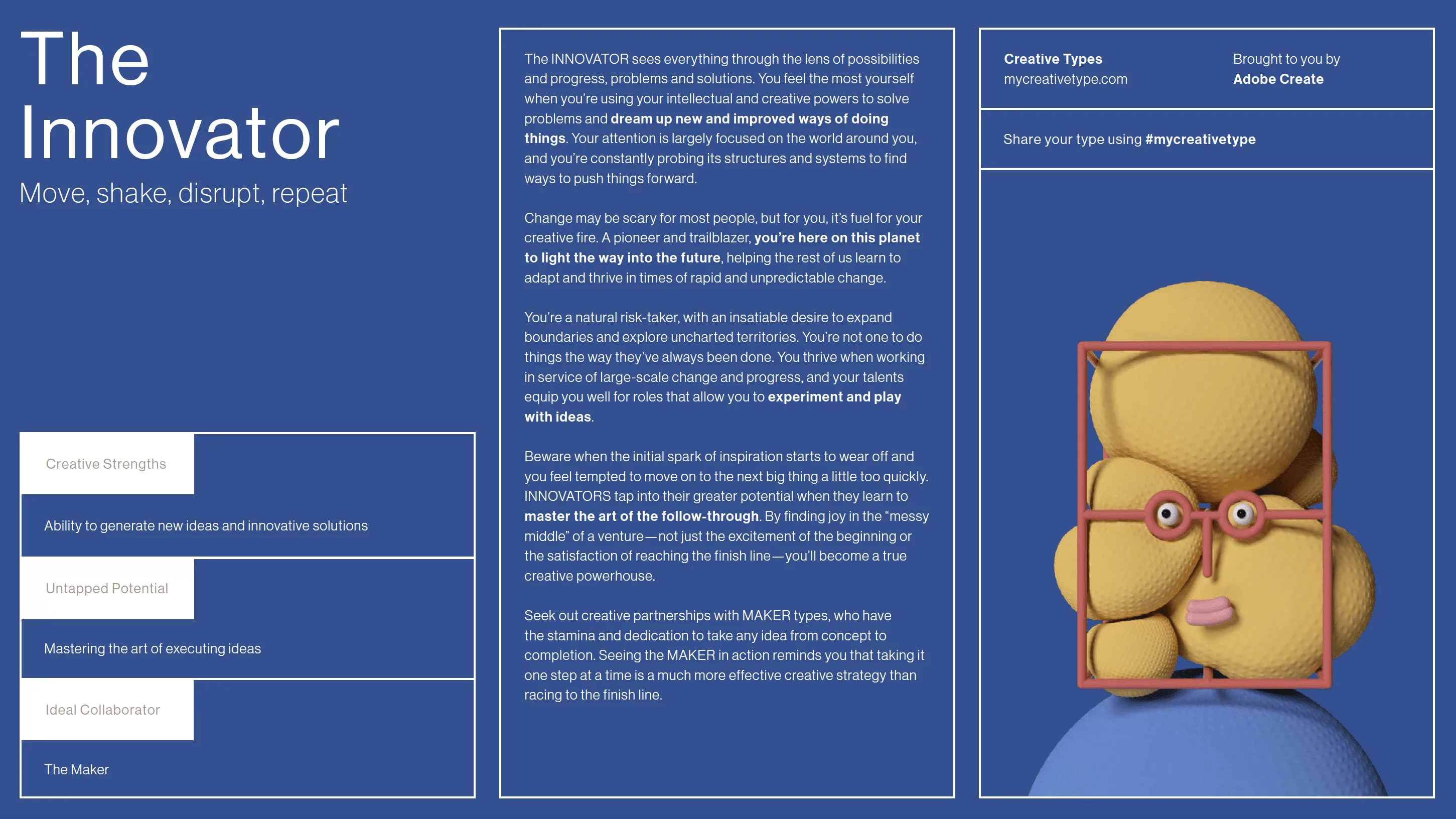
Result: Over three million people worldwide took the test, generating 56 million page views and 425,000 hours spent on Creative Types, according to D&AD.
The Best You — Klook (2025)
Agency: Unseen Studio · Platform: Web
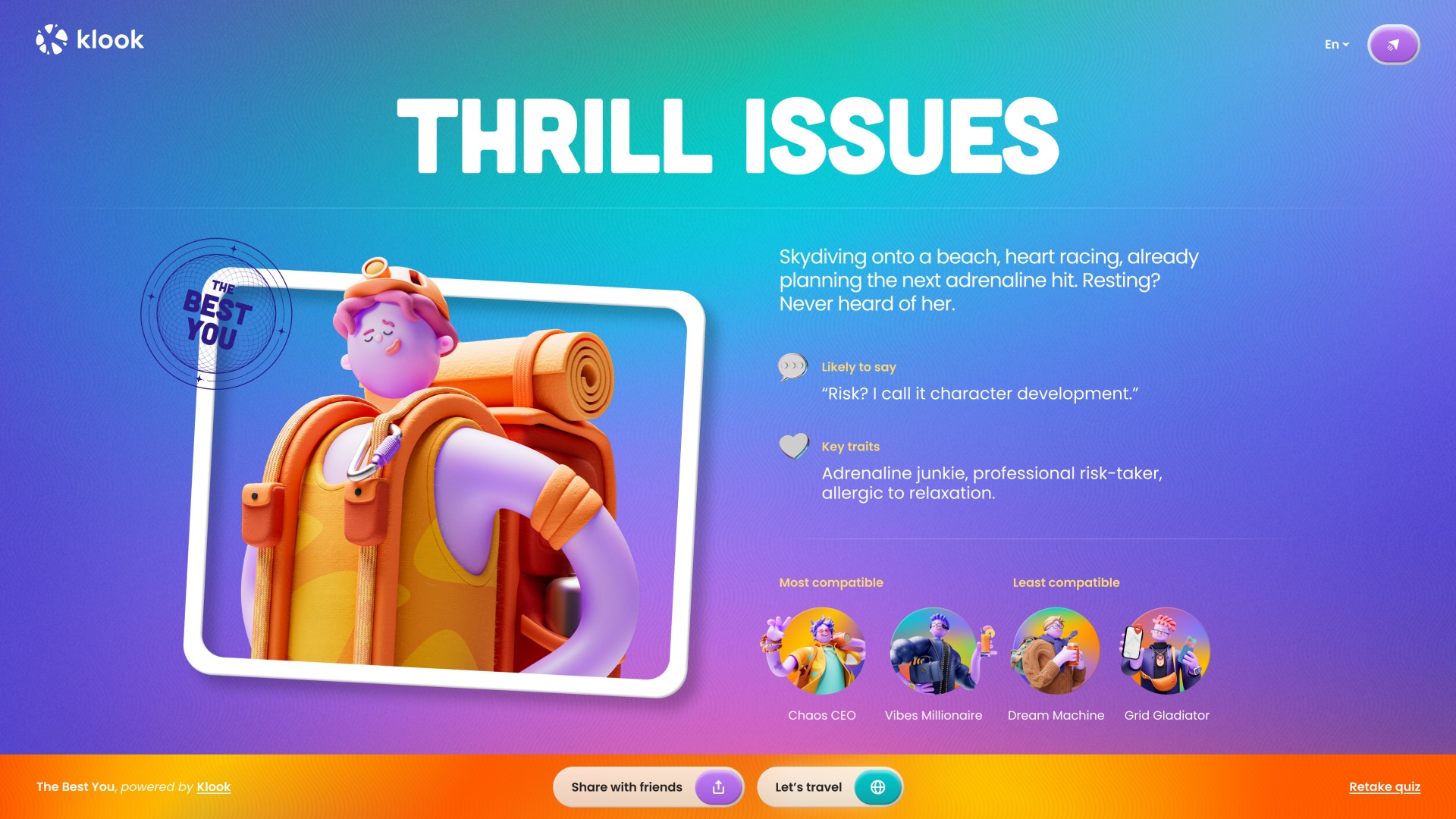
The quiz anchored Klook's first global brand campaign. With no login, the player moves through ten scenes, such as setting an out-of-office message or choosing an airline seat, swiping between cards to answer and dragging open a suitcase. The reveal is one of eight travel personas, such as Thrill Issues or Chaos CEO, with a 3D character, key traits and the most and least compatible personas. Players can share, retake or go on to Klook. The quiz is still online.
FAQ
Is a personality quiz the same as a personality test?
Not quite. Psychometric tests are built and checked for reliability and validity against population norms, and even established ones face criticism, as Wikipedia's overview of personality tests sets out. It also notes that unscientific type quizzes are a common form of entertainment. A brand quiz belongs there: write results to be playful, never as a diagnosis.
How is a personality quiz different from a trivia quiz?
A trivia game has right answers and a score, so it tests what players know and suits product education and leaderboards. A personality quiz has no wrong answers: it sorts players into a type. Trivia rewards knowledge; a personality quiz rewards self-expression, so its result is something people post about themselves.
Why do personality quiz results feel so accurate?
Partly because of the Barnum effect: people rate vague, general descriptions of their personality as highly accurate. In Bertram Forer's 1948 experiment, 39 psychology students rated the same generic sketch 4.30 out of 5. Good brand quizzes add specific detail on top: a name, traits, compatible types.