

Lead generation is the work of turning a stranger's interest into a contact a business can follow up: a name, an email, sometimes a job title or a stated need. Games help because people trade those details for a score, a result or a prize, and finishing a game signals real interest.
How it works
The US Federal Trade Commission describes lead generation as "the practice of identifying or cultivating consumer interest in a product or service" (FTC). The lead is what that interest leaves behind: contact information and, in some cases, demographic details (Wikipedia). Sales teams then sort leads by readiness; Salesforce splits them into qualified, unqualified and warm.
In a game, the player meets a short form at one of two points. Before play, it is the ticket in. After play, it guards something the player now wants: a place on the leaderboard, a prize draw, a personal result or a discount code. A good form asks for an email, one or two qualifying questions and, in a separate box, permission for marketing. The game also filters: anyone who finished DigiCert's crossword was "clearly a highly relevant and interested user", according to Drimify.
Where brands use it
B2B teams use games for leads because one qualified contact can become a sales meeting. In tech and telecom, Cisco made a product demo into a game (below) and DigiCert ran a crossword for its World Quantum Readiness Day webinar. Exhibitors put game installations on their stands to give visitors a reason to stop (see trade show booth games). Sponsors use it too: Comcast Business ran a shot-prediction game at THE PLAYERS Championship, and leads from THE PLAYERS enterprise site grew 3.2x year on year, according to the case study in The Drum. Consumer brands run prize games to grow email lists, and employers collect candidates the same way (recruitment games). The library holds 34 games under Lead gen & recruiting.
When it fits
It fits a brief that asks for named contacts plus a fact or two about each, from a brand that already knows what happens next. The audience is either gathered in one place (a stand, a webinar, a fan zone) or reachable through owned channels. Keep the session short: DigiCert's crossword averaged about two minutes a player. Keep the form brief too: Drimify kept the one in Bilstein's memory game at the Goodwood Festival of Speed short and targeted, and its case study notes that each extra field can cut engagement by up to 7%. Pick a prize only your buyers would want, such as DigiCert's escape-room board game for a security audience. And measure cost per lead against your usual channels: Masai's personality quiz brought its cost per lead 50% below the previous year's non-gamified campaign, according to Playable.
When not to use it
If the brief is reach, a form is friction; an open advergame or a playable ad lets anyone play. A generic prize such as cash or a phone appeals to anyone, so it cannot tell buyers from bargain hunters. Consent is the hard limit. In the UK, the ICO says consent should not be a condition of a service unless it is necessary, and that details given to enter a prize draw do not cover marketing. Ask separately. Somfy kept its newsletter box optional and still gained 10,000 opt-ins from 34,000 leads, according to Drimify. Prize rules apply too (see sweepstakes). And if nobody will follow up within days, don't collect the data at all.
Examples from the library
Mars Network Challenge — Cisco (2017)
Agency: The1stMovement · Platform: Web
Cisco built the game to launch DNA Center, its network-automation software. Players signed up as engineers defending humanity's first base on Mars. Each base opened tower-defence levels against sandstorms, solar wind and intrusions, and clearing them led to a hands-on Base Challenge in DNA Center: build a network fabric, assign a policy, quarantine a rogue device. Scores went to a global leaderboard, with Cisco Live passes and certifications among the prizes.
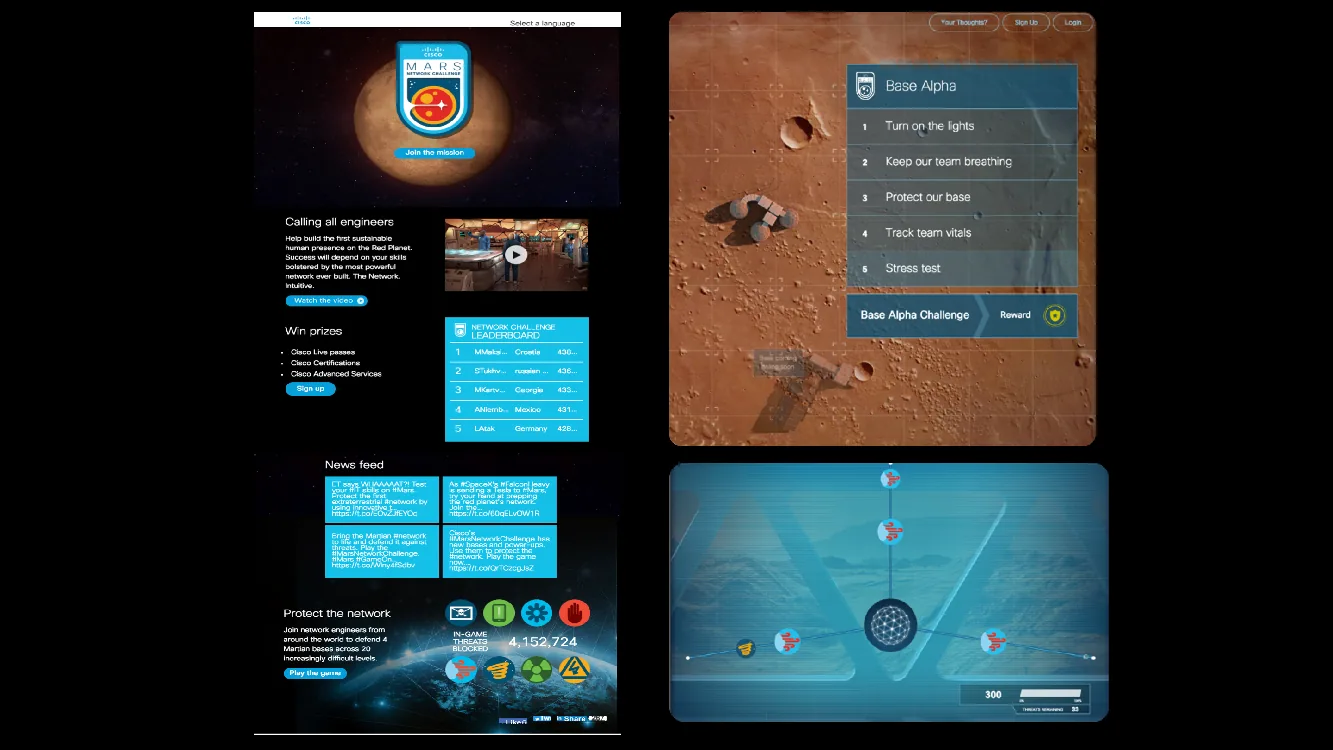
Result: The game drew more than 100,900 unique visitors, 4,000 registrations and more than 8,000 demos, according to the campaign's Shorty Awards entry, which lists building "measurable sales leads" among its objectives. The challenges were self-service demos of the software.
Kraken Chaser — Williams Racing (2024)
Agency: Drimify · Platform: Installation (arcade game in the Williams Racing fan zone, London)
The crypto trading platform Kraken presented Williams Racing's week-long London fan zone before the British Grand Prix and put this retro arcade game in its area. Players steered the Kraken octopus through a Pac-Man-style maze, eating bitcoins and dodging chasing fiat currencies. Scores went up on a leaderboard shared with the zone's other activities. Anyone who passed 3,000 points won a Williams F1 cap, collected from a Kraken ambassador, and the end screen sent players to Kraken's website.
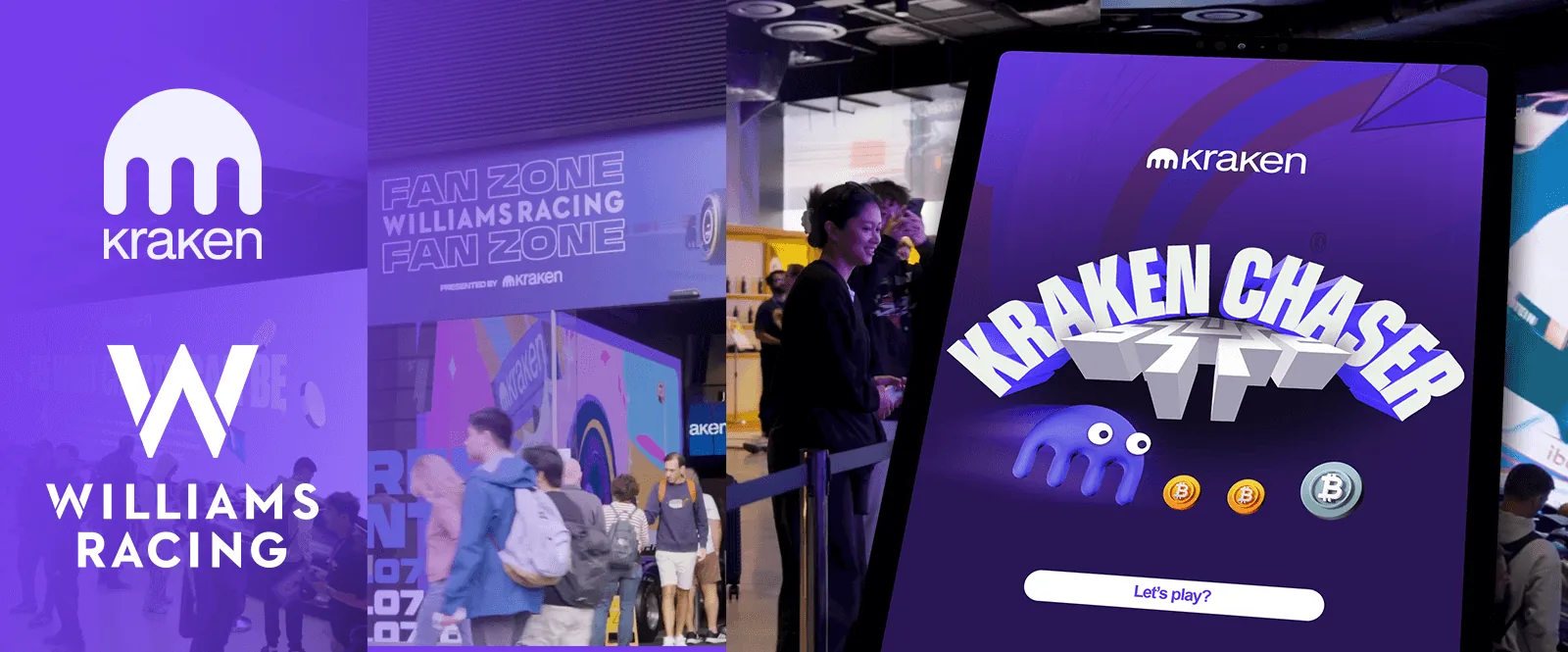
Result: 1,139 leads collected in one week and a 99% completion rate, according to Drimify. The case study does not say how the leads were captured.
#OceanTurns5 Summer Digital Sweepstakes — Ocean Casino Resort (2023)
Agency: Drimify · Platform: Web
For its fifth birthday, the Atlantic City resort ran a three-month online sweepstakes. Players left an email and pulled the handle of a branded slot machine, which told them on the spot whether they had won one of roughly three small prizes given away each day, such as a wine tumbler or a bottle of limited-edition Hank Sauce. Players were also eligible for bigger draws: three #OceanTurns5 experience packages and a $2,000 grand prize.
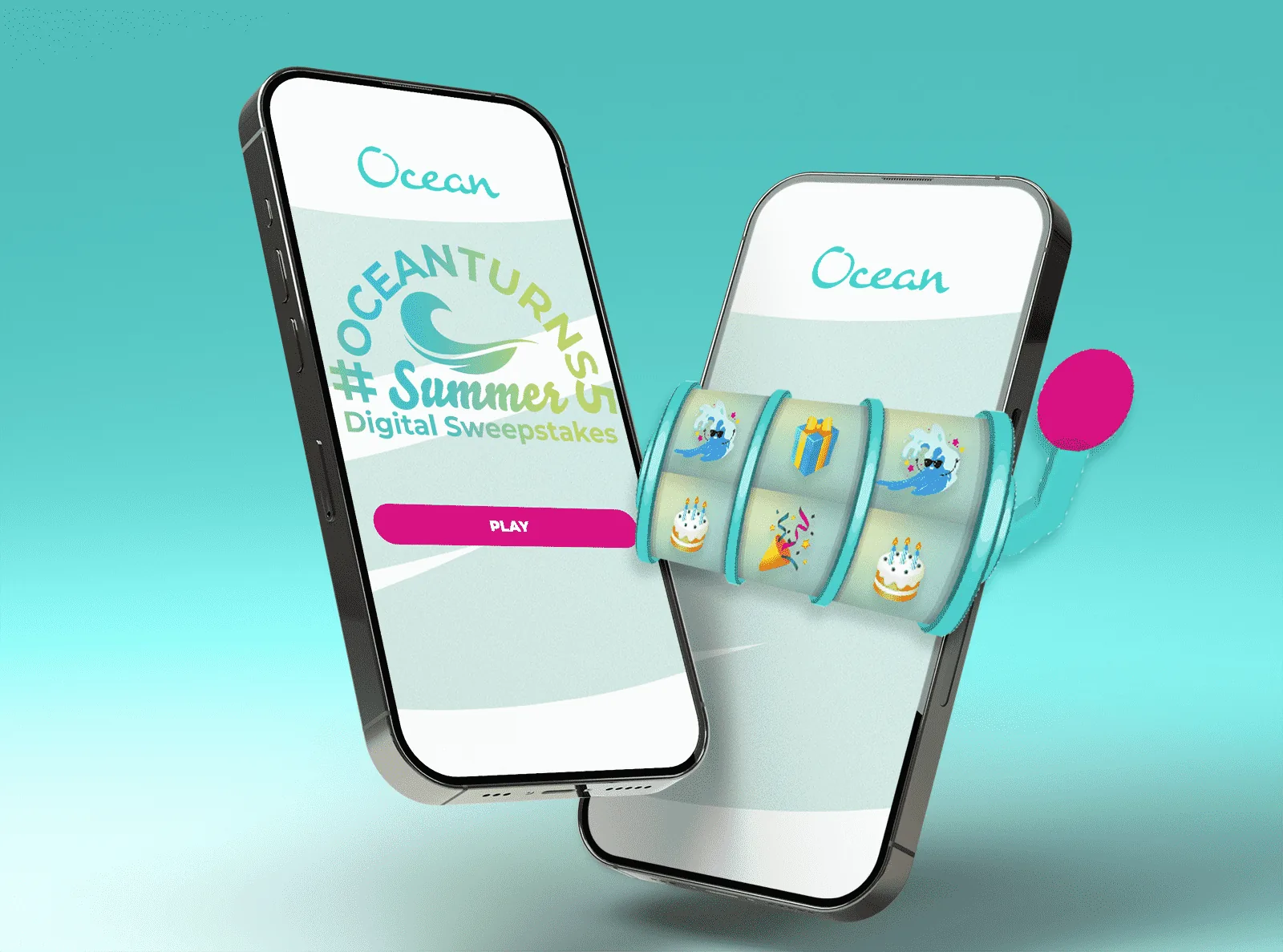
Result: 466,688 participants, 265,549 emails collected for the resort's CRM database, a 75% engagement rate and about half a million visitors sent to the resort's website over the three months, according to Drimify.
FAQ
What is lead generation in B2B?
The same task with a longer road. ActiveCampaign says B2B lead generation collects leads from other businesses rather than consumers, and usually involves longer sales cycles and several decision-makers. B2B games tend to teach the product: Cisco's Mars challenges were demos of its software.
What is the 5 minute rule for leads?
The advice to contact a new lead within five minutes. The figure usually cited for it comes from the Lead Response Management study, run with MIT's James Oldroyd on InsideSales.com data from six companies, which found a 21-fold drop in the odds of qualifying a lead when the response took 30 minutes instead of 5. For a stand game, plan the follow-up before the event opens.
Is lead generation the same as prospecting?
They overlap. Salesforce describes prospecting as the process of finding potential customers, either by reps reaching out first (outbound) or by content that draws prospects to make contact (inbound). Lead generation is the part that turns that interest into contacts. A game sits on the inbound side: the player chooses to play and to leave details.