


Recruitment gamification uses a game's rules, scores and challenges to attract job candidates, let them test themselves or turn interest into applications. This guide covers nine recruitment games, from IKEA's Roblox store to the Swedish Armed Forces' team test, with sourced results, and explains how they differ from assessment software and when a game is the wrong tool.
The examples come from the library's Lead Gen & Recruiting section and other employer campaigns. Each was commissioned by an employer, made the player act and pointed to an actual hiring route. Unsourced figures are left out.
How is gamification used in recruitment?
In three ways: games attract people to overlooked jobs, let them select themselves by trying the work, and convert interest through a short, playable application.
How do recruitment games attract candidates?
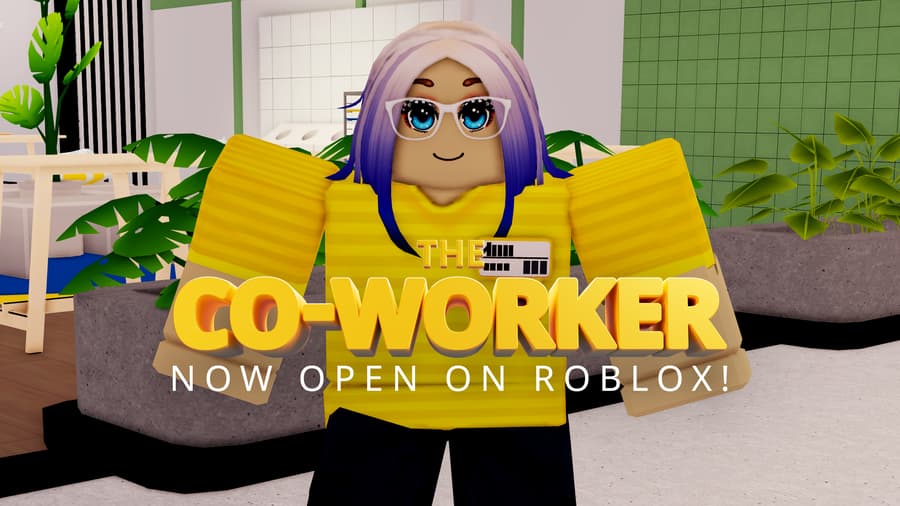
The Co-Worker — IKEA (2024)
Agency: Mother, The Gang · Mechanic: Simulation & Strategy · Platform: Roblox (In-Game)
Players walk into an IKEA store rebuilt in Roblox and clock in at a department, each a mini-game based on a real co-worker task. XP earns promotions, and switching departments keeps your progress, which is how IKEA wanted its careers seen. The hook sat outside the game: ten paid virtual roles at £13.15 an hour for over-18s in the UK and the Republic of Ireland, with applications open for two weeks from 3 June (IKEA).
Result: over 178,000 applications for the ten roles (IKEA). According to the agency, the game drew 6.7 million visitors and real-world job applications rose 50% (The Gang). More in our IKEA case study.
Let's Reveal The Possibilities — Groupe BPCE (2022)
Agency: Drimify · Mechanic: Quiz & Trivia · Platform: Web
The banking group behind Banque Populaire and Caisse d'Epargne recruits more than 6,000 people a year, yet its companies were barely known to jobseekers. For three weeks a new mini-game went out every Monday, Wednesday and Friday, mainly on LinkedIn: treasure-hunt quizzes whose answers sat on the group companies' websites, and arcade rounds such as Pac-Man, separated by short screens about the group's jobs. Prizes included iPads and gift cards, with weekly giveaways and a final draw among the top 100 scorers (Drimify).
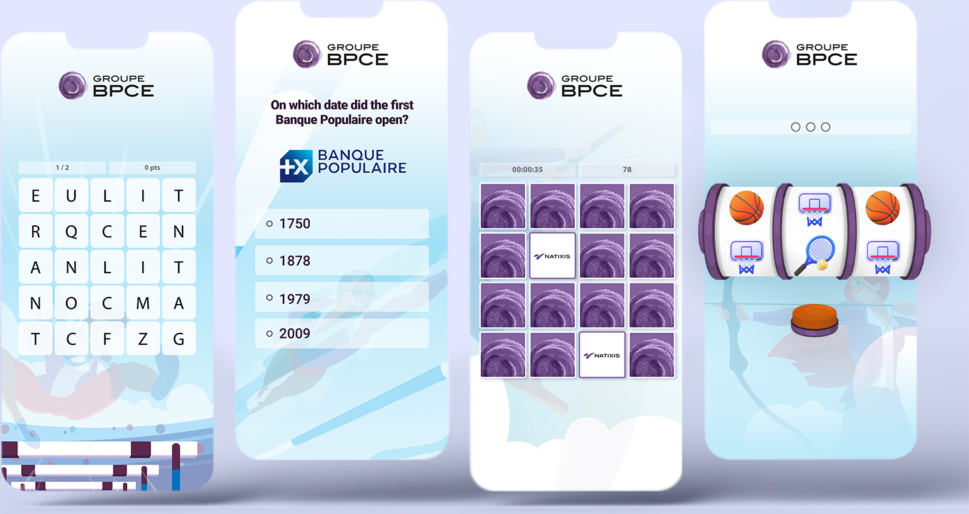
Result: more than 5,000 engagements, 554 qualified candidates who completed every step and 98% completion among starters, according to the platform that built it (Drimify). More bank and insurer campaigns are in our guide to gamification in banking.
The Calm & The Storm VR — U.S. Air Force (2021)
Agency: Wildlife · Mechanic: VR combat simulation · Platform: AR & VR
The U.S. Air Force turned a Special Warfare recruiting film into a touring VR booth, Activate: Special Warfare. Visitors put on a recoil vest, picked up a rifle-shaped controller and fought through the film's convoy ambush for a little over two minutes. The system scored them against real operators, and a recruiter outside took it from there. More on the booth in trade show booth games.
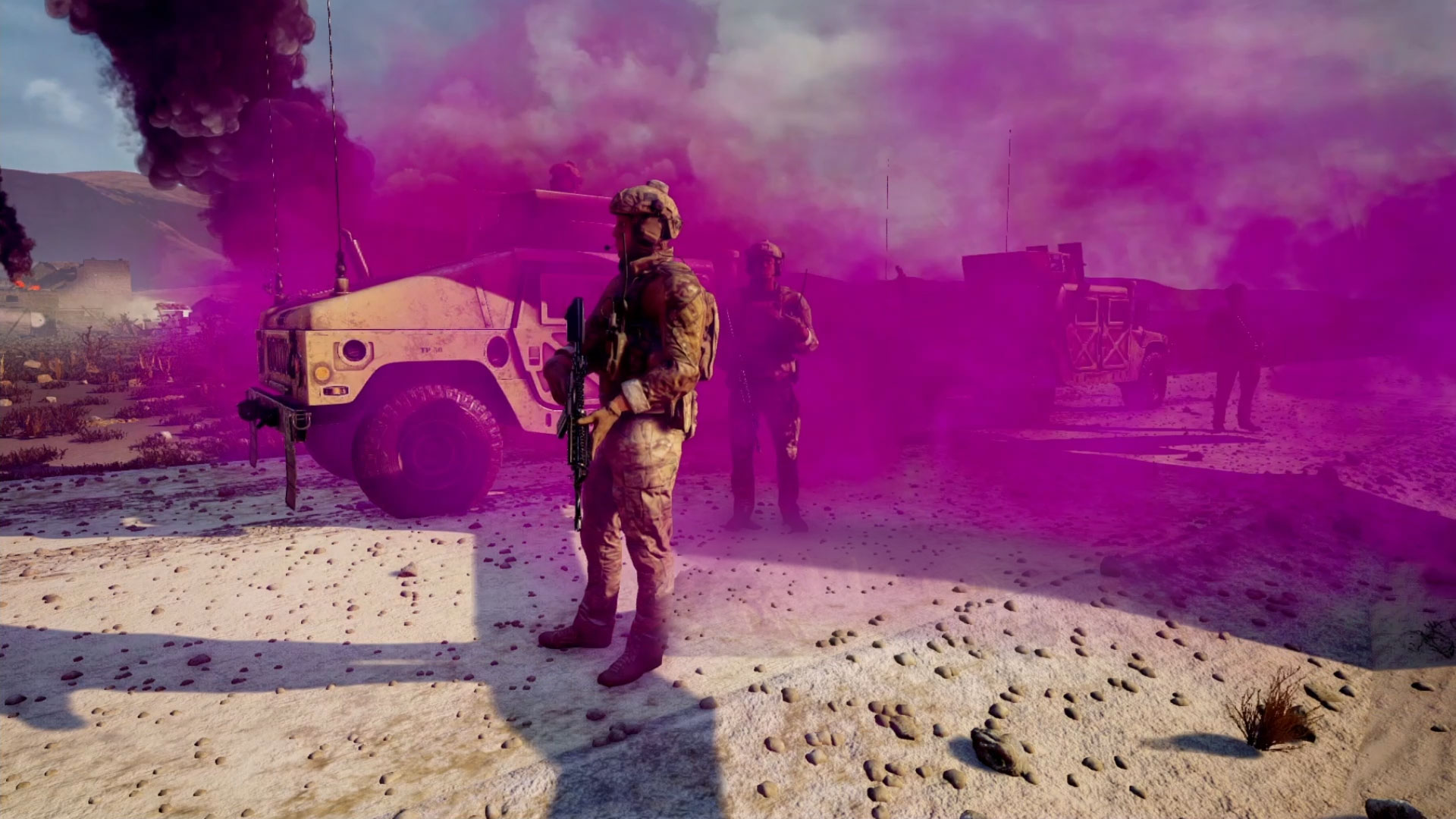
Result: by November 2021 the tour had visited 23 events in 15 states; more than 12,000 people lined up to play, 5,282 opted in to learn more and 1,453 became leads (ClearanceJobs).
Zoll Campus — Zoll (2025)
Agency: Demodern · Mechanic: Mini-games · Platform: Roblox (In-Game)
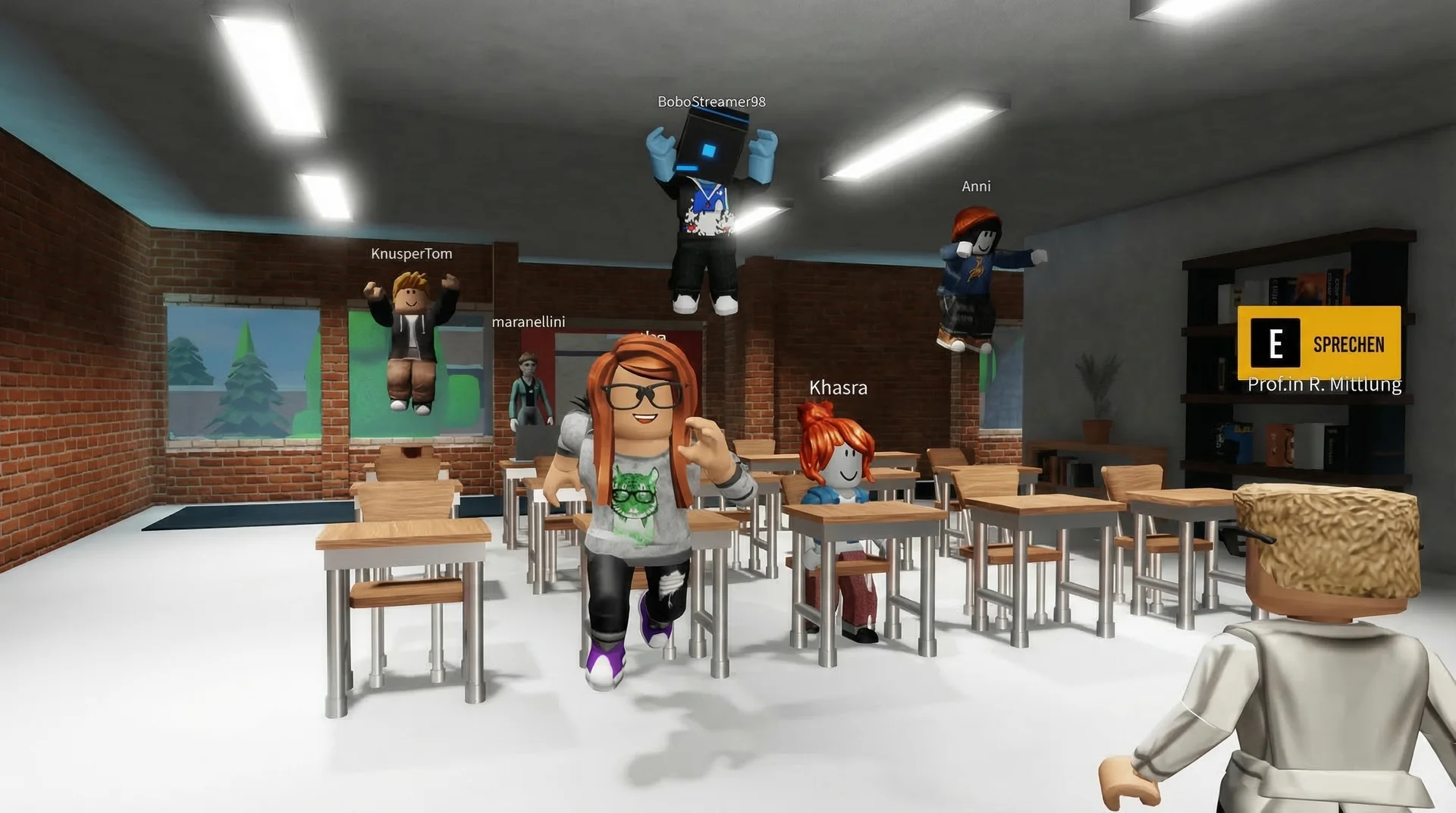
Germany's customs service needed trainees that brochures and careers fairs no longer reached. On its Roblox campus, players start as customs newbies, talk to students and professors, then play three mini-games based on real customs work: a contraband hunt through airport luggage, a tax decision game and an IT fault-finding challenge. Progress earns levels and limited avatar items. More campaigns on the platform: brands on Roblox.
Result: the campus went live in September 2025, drew more than 25,000 visitors in its first month, and all 3,000 limited items were gone within a few days, according to the developer (Demodern).
Can a game select candidates?
Mostly by letting people select themselves: the game shows the job, and those who enjoy it keep going.
The Team Test — Swedish Armed Forces (2010)
Agency: DDB, ACNE Production, Dinahmoe · Mechanic: Puzzle · Platform: Web
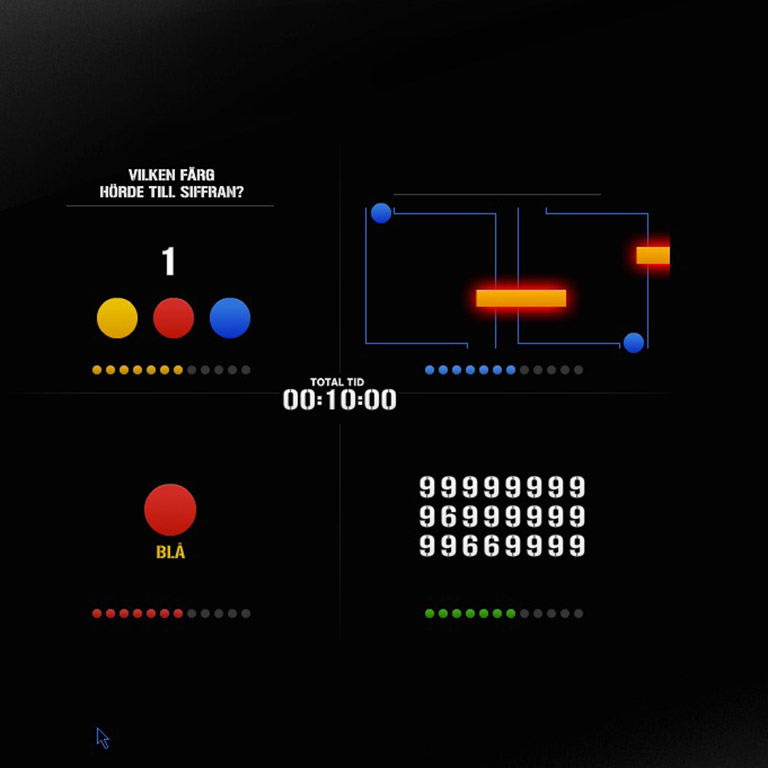
The Swedish Armed Forces had run solo tests since Do You Have What It Takes? in 2007. The Team Test made a different point: no one passes alone. A visitor was matched with three strangers on a four-quadrant screen, and tasks got harder each round. Success rewarded teammates and failure penalised them, so the team lasted only as long as all four kept up.
Result: over 100,000 tests completed in the first two weeks, and more than 75% of applicants classified as "attractive", according to a case write-up (Direct New Ideas).
Cryptaris Mission — U.S. Army (2015)
Agency: McCann, MRM, Tool, Plan8, UM · Mechanic: Puzzle · Platform: Web
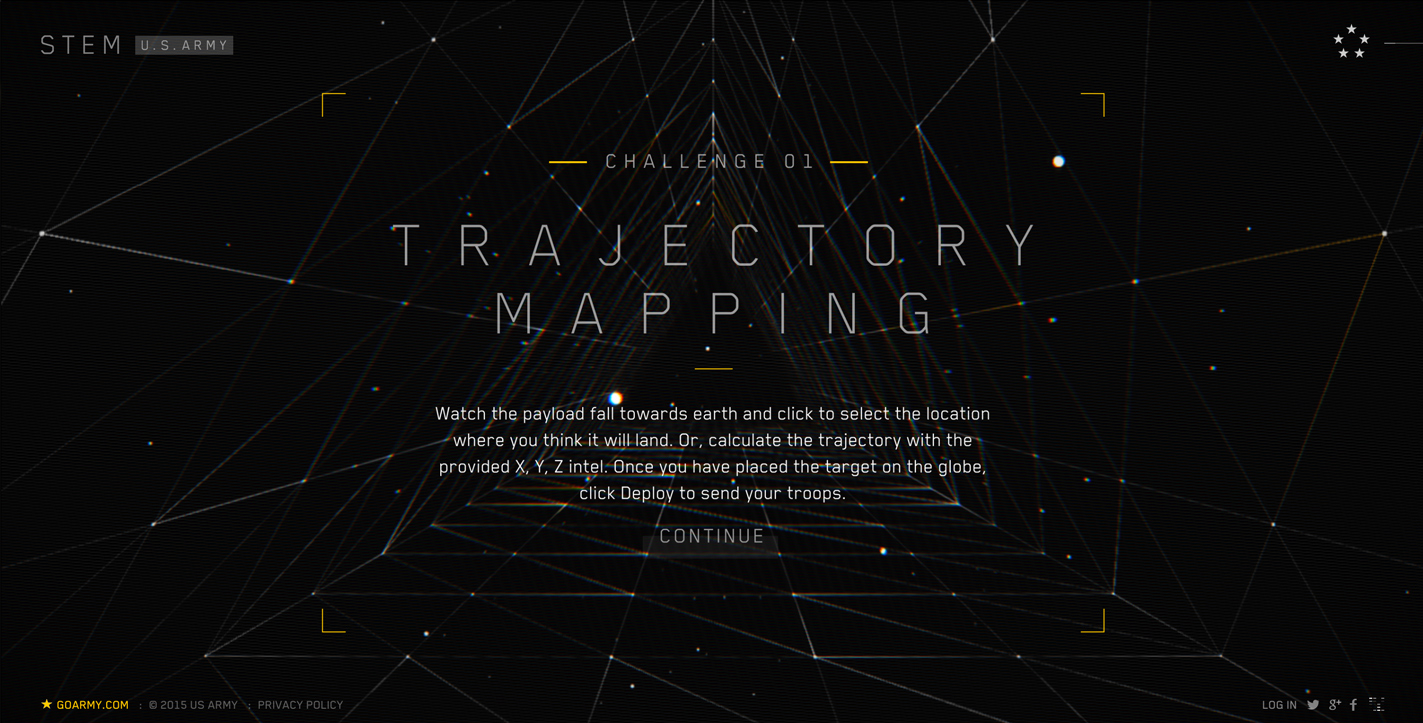
The U.S. Army wanted to reach engineering-minded recruits who saw the Army as low-tech. Cryptaris set seven browser missions modelled on real Army tasks, from plotting a payload's trajectory to piloting a drone, each harder than the last. It was built so that only 5% of players could finish (MediaPost); finishers were sent to the Army's STEM job openings on goarmy.com.
Result: only 0.15% of players completed all seven missions, and the site link was shared more than 4,000 times on Facebook (MediaPost).
The Game — Houthoff Buruma (2010)
Agency: Ranj Serious Games · Mechanic: Simulation & Strategy · Platform: Installation
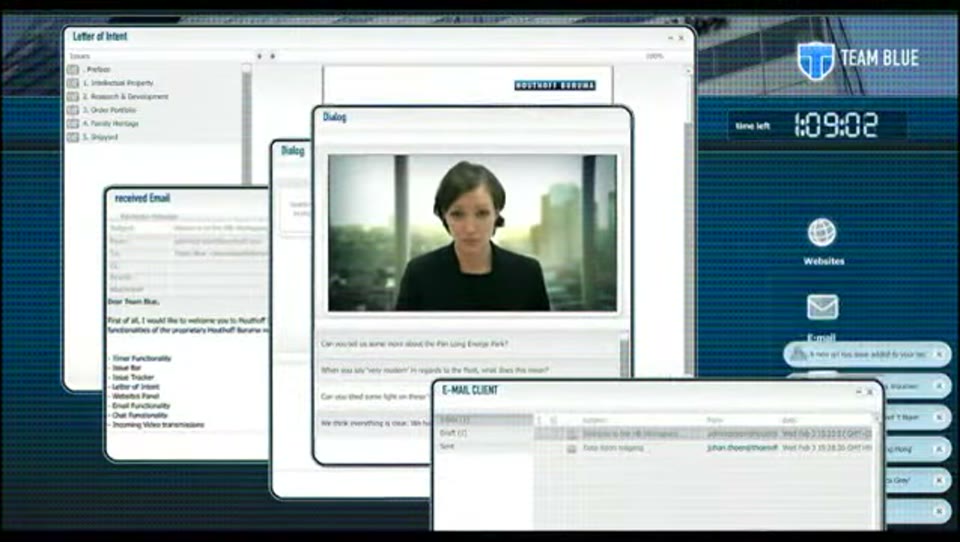
The Dutch law firm wanted to see how graduates handle pressure, which grades do not show. Teams of up to five sat at dedicated computers in its offices and had 90 minutes to represent a Chinese state-owned company bidding for a Dutch family business. They worked through news flashes, chats, emails and more than 100 fictional documents, then explained their decisions (ABA Journal).
Result: about 600 Dutch law students played in 2010, against roughly 800 law graduates a year in the Netherlands (ABA Journal).
Engineers' Challenge 3 — SNCF (2016)
Agency: TBWA, DAN Paris, Else, Marie-Laure Cruschi · Mechanic: Adventure & Quest · Platform: Web
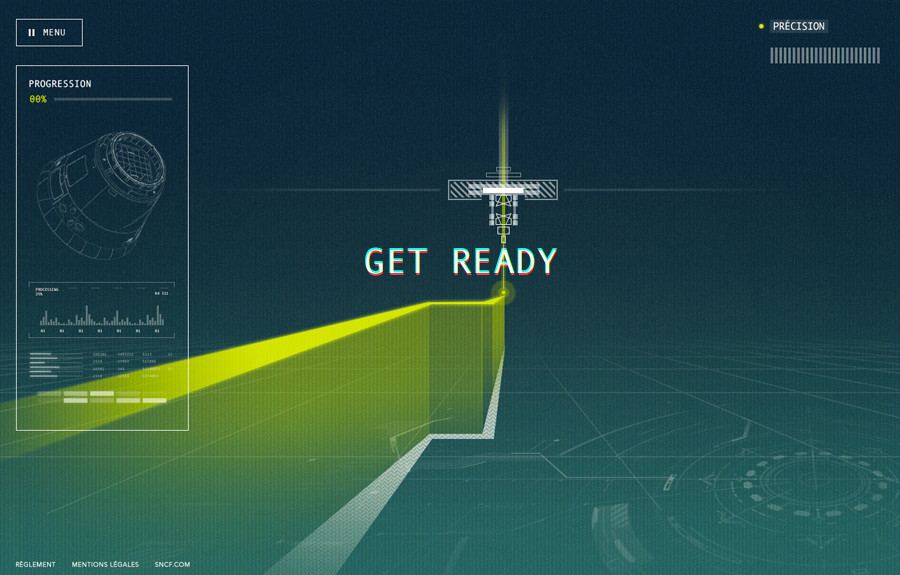
In 2012 SNCF needed 1,000 additional engineers and managers every year (Frenchweb, 2012), and its Défi Ingénieurs made that a contest between engineering schools. Season three set five challenges from real SNCF engineering work, such as managing passenger flows in stations, and a smartphone could serve as the controller (LADN). Scores fed individual and school leaderboards.
Result: 180 schools were set to compete online until 18 April, with a live final for the five best schools and trips and GoPro cameras for the top 50 players (LADN).
Is a recruitment game the same as a game-based assessment?
No. The games above are marketing: most are open to anyone, and the score is at most a nudge. Game-based assessments are HR software from vendors such as Arctic Shores, Pymetrics and Knack, used as a formal test in the application process. LSE Careers says they can measure traits such as attitude to risk, names PwC, Deloitte and Unilever among employers using them, and warns that reaction-time scores can depend on the device (LSE Careers). The library does not list them.
Can the game be the application?
Go Places — Heineken (2016)
Agency: Cloudfactory, Superhero Cheesecake, Wefilm · Mechanic: Quiz & Trivia · Platform: Web
Heineken recast the job interview as a film with a host. Candidates answered 12 questions, with three to five seconds for each, and got an Enneagram-based profile to send with their CV when applying on LinkedIn (HRKatha). This light format, a personality test with a clock, worked because it was short and ended at a real application.
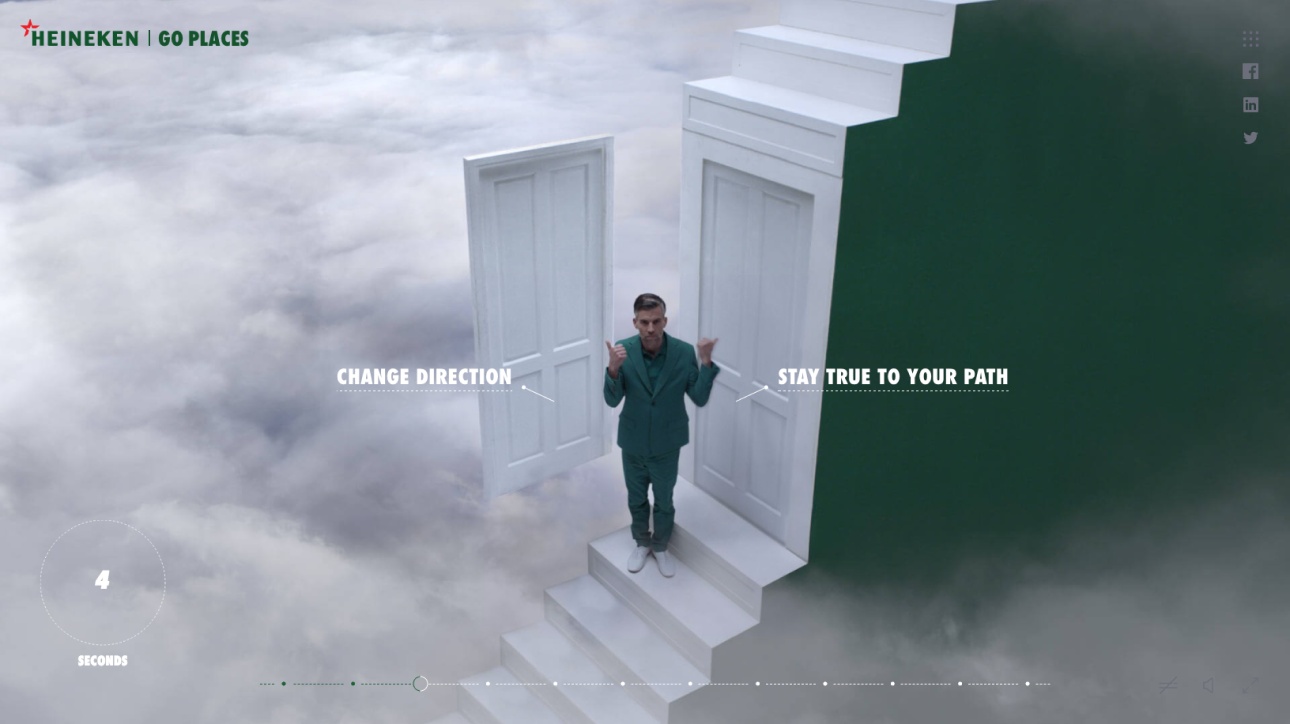
Result: over 300% more job applications via LinkedIn than in previous years, with average time on site above five minutes, according to a Dutch Digital Design case piece (The Drum).
Knowit Experience in Oslo went further with Apply Or Die (2022), where the retro arcade front end is the application form. It can still be played at applyordie.no.
Can games help with onboarding?
Rarely as campaigns. Onboarding games are internal tools, and the library holds none. The nearest public format is the job preview: Carrefour's back-to-school 2026 Fortnite map for students and young professionals turns four jobs into mini-games, from a courier racing the clock to a department manager keeping shelves in order while rivals mess them up (J'ai un pote dans la com). A preview sets expectations before day one.
Recruitment gamification examples at a glance
| Game | Brand | Year | What it did | Result |
|---|---|---|---|---|
| The Co-Worker | IKEA | 2024 | Roblox store, ten paid roles | 178,000+ applications |
| Let's Reveal The Possibilities | Groupe BPCE | 2022 | Three weeks of mini-games | 554 qualified candidates |
| The Calm & The Storm VR | U.S. Air Force | 2021 | Touring VR mission | 1,453 leads |
| Zoll Campus | Zoll | 2025 | Roblox customs campus | 25,000+ visitors in month one |
| The Team Test | Swedish Armed Forces | 2010 | Four-player teamwork test | 100,000+ tests in two weeks |
| Cryptaris Mission | U.S. Army | 2015 | Seven hard STEM missions | 0.15% finished |
| The Game | Houthoff Buruma | 2010 | 90-minute deal simulation | About 600 students |
| Engineers' Challenge 3 | SNCF | 2016 | Contest between schools | 180 schools |
| Go Places | Heineken | 2016 | 12-question timed interview | 300%+ more LinkedIn applications |
What do the strongest recruitment games have in common?
A real job at the end. IKEA's game came with ten paid roles, Cryptaris ended at the Army's STEM openings and the Air Force booth at a recruiter. Ending at a careers homepage wastes the attention.
The mechanic is the job description. The Team Test is about teamwork because the job is. In the U.S. Air Force's Airman Challenge (2012), players had to staff each mission with the right specialists, so they learned what the jobs were by playing (Gamification Co).
Short, unless the audience is small. The Air Force mission lasted a little over two minutes; Houthoff could ask for 90 minutes because its pool was about 800 law graduates a year.
Leads, not plays. Count what BPCE and the Air Force counted: 554 qualified candidates and 1,453 leads. Almost no case publishes hires; ask for that figure before copying a format. Across the whole library, fewer than one in ten games report a sales or redemption figure (playable marketing statistics).
When is a game the wrong tool for hiring?
When you hire a handful of people. A big game buys reach; for five roles a year, a clear ad and a fast reply, or at most a light playable application like Apply Or Die, do more.
When the score decides. A game that filters people is a selection tool, with heavier duties. The EU AI Act lists AI systems used for recruitment or selection, including to evaluate candidates, as high-risk (AI Act, Annex III). New York City has enforced bias audits and candidate notices for automated employment decision tools since 5 July 2023 (NYC DCWP). In November 2024 the UK ICO found some AI recruitment tools inferring gender and ethnicity from names and keeping data indefinitely, and asked for clear privacy information with a retention period (ICO). Our advice: keep a campaign game's score out of the hiring decision, and tell players so.
When candidates don't game. Speed and dexterity tests can shut out people with disabilities, older phones or no interest in games. Cryptaris's 0.15% finish rate made good marketing; as a filter it would be useless. Always offer a plain route to apply.
When a lighter format will do. For a quick self-check before applying, a short timed quiz like Go Places may be enough, with no need for a bigger build.
FAQ
What is gamification in hiring?
Gamification in hiring applies game elements such as rules, scores, levels and time limits to recruitment. Employers use it to attract candidates, as IKEA did with The Co-Worker; to let people test themselves, as in the Swedish Armed Forces' Team Test; or to make the application playable. The term also covers game-based assessments, a kind of HR testing software.
What are the elements of gamification in recruitment?
The strongest campaigns combine six: a challenge built on real job tasks, a score or rank, a time limit, progression such as levels, a reward, and a clear next step to a vacancy or recruiter. Zoll Campus uses most of them: customs mini-games, levels and limited avatar items.
Which stages of recruitment can a game cover?
Games work best at three early stages: attraction, self-selection and the application itself. Interviews, offers and hiring decisions stay with people, and onboarding games are rarely published. The Lead Gen & Recruiting section has examples of each early stage, from Cryptaris Mission to Apply Or Die.
Does recruitment gamification work?
It can, when it ends at a real job. IKEA received over 178,000 applications for ten paid Roblox roles (IKEA), and Go Places brought Heineken over 300% more LinkedIn applications than in previous years, per a Dutch Digital Design case piece (The Drum). Most published figures come from agencies or award entries, and few report hires.
For more employer games, browse Lead Gen & Recruiting and in-game worlds, and send us any recruitment game we have missed.