




The Team Test
- Brand
- Swedish Armed Forces
- Year
- 2010
- Objective
- Lead Gen & Recruiting
- Industry
- Other
- Mechanic
- Puzzle
- Platform
- Web
- Agency
- Dinahmoe
- With
- ACNE Production
- With
- DDB Stockholm







Objective
Försvarsmakten needed young Swedes to see military service as teamwork rather than solo heroics, and to filter for recruits who could cooperate under pressure. The test was designed so the mechanic itself made the point: no one passes alone.
Solution
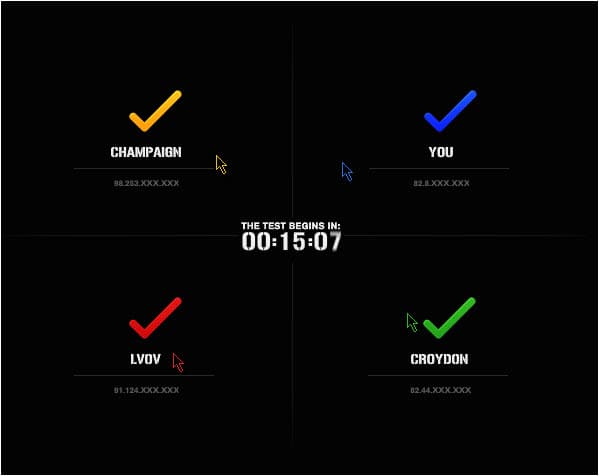
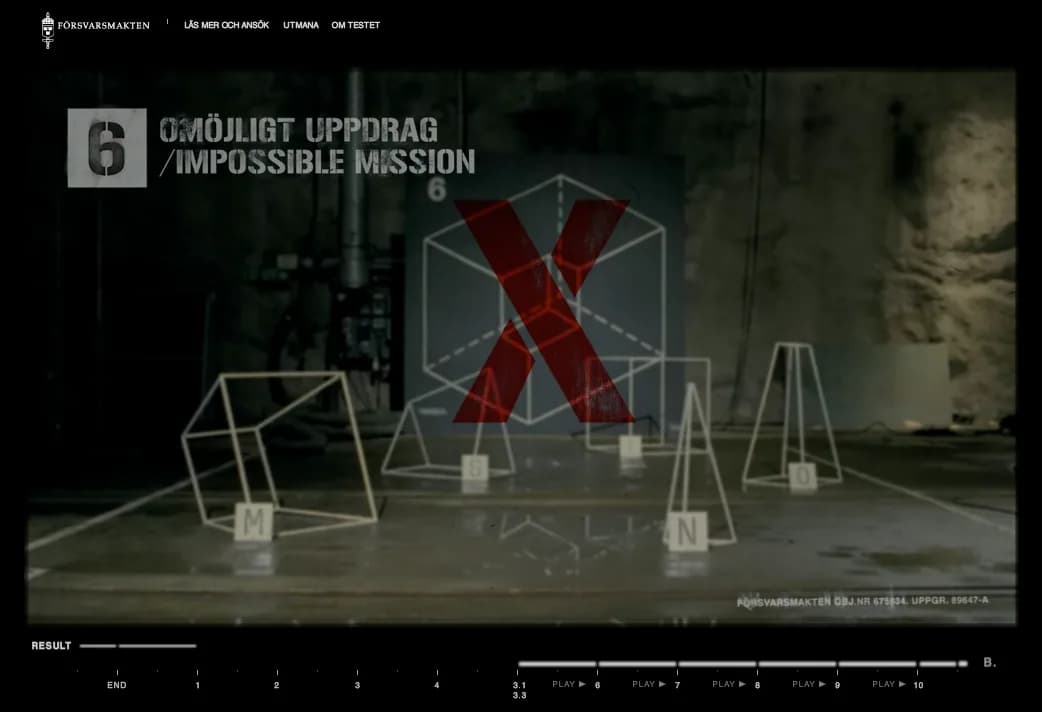
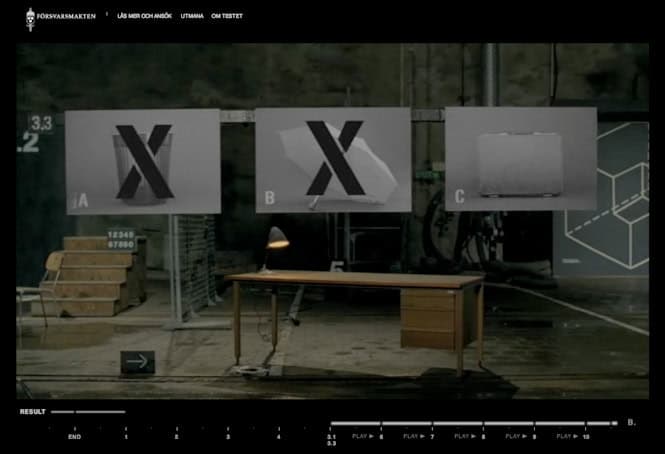
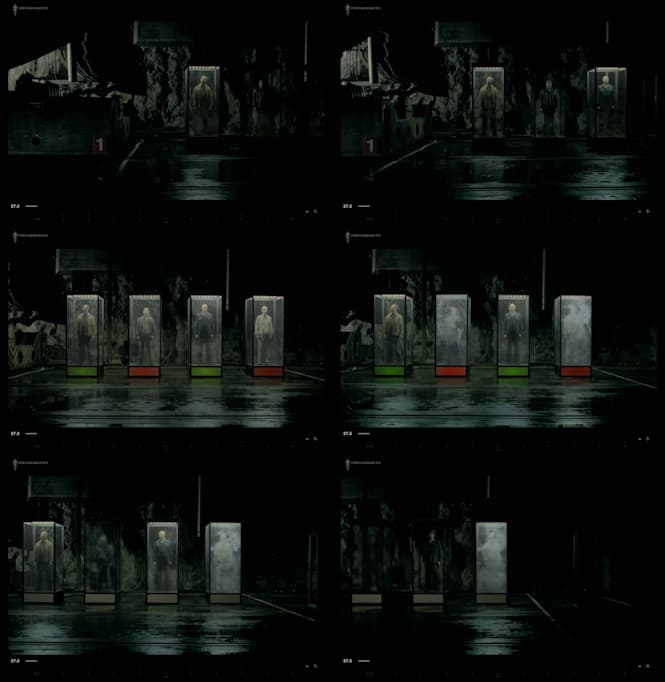
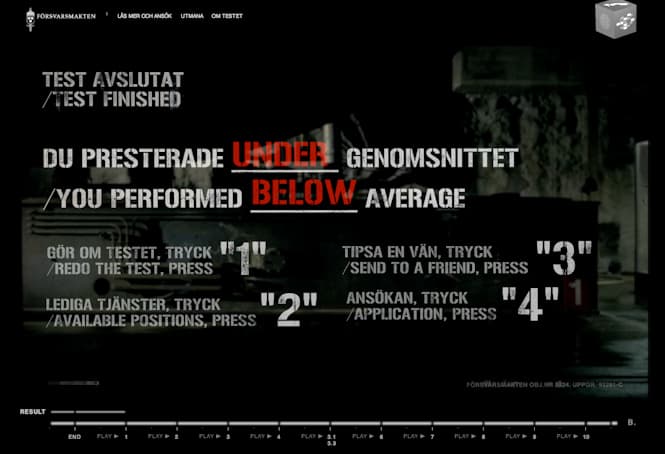
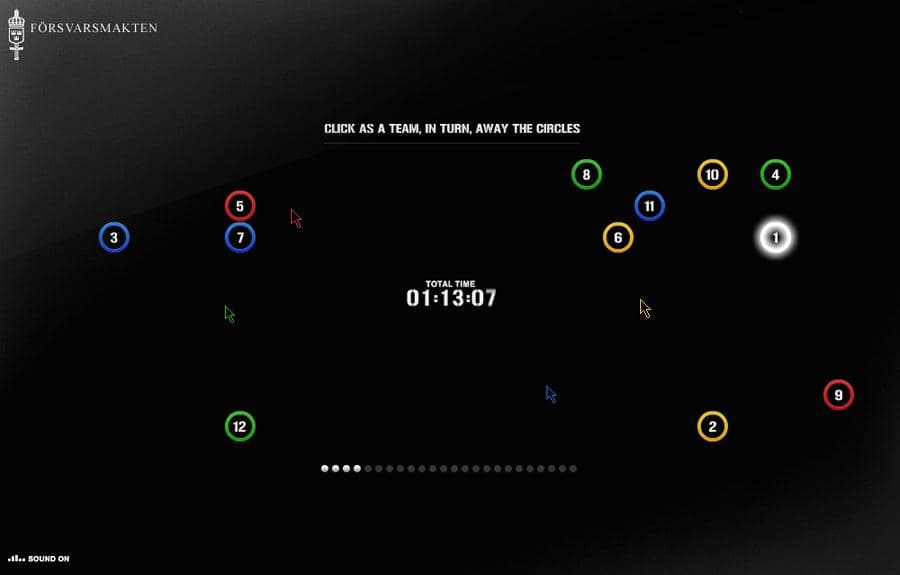
A visitor lands on team.forsvarsmakten.se, joins a waiting room, and is matched with three strangers — or invites friends via a private link. The screen splits into four colour-coded quadrants, one per player, so everyone sees everyone else's moves as a voiceover runs the test through a string of tasks that get harder each round. Completing a task adds time to a teammate's clock, not your own, so success only compounds if the whole group keeps up; a mistake costs the team. The four try to last as long as possible — most runs end around 2.5–3 minutes, with strong teams pushing past 4 — and finish with a scored verdict on how the team performed.
Results
Over 100,000 test sessions were logged during the two-week campaign, and more than 75% of the resulting applications were classified as attractive candidates, with recruitment targets exceeded.
- 1
The player opens the browser-based test on its own domain and reaches a minimal black-and-white start screen, where a voiceover explains that this is a test of teamwork.
- 2
The player chooses to be matched with random strangers or to invite friends via a private room link, then waits while the system fills the four-person team; a room cannot start, and offers no way back to the main menu, until all four slots are filled.
- 3
Once the team is complete, each player is assigned a color and a screen quadrant, so everyone can see their own task alongside the other three players' progress.
- 4
A voiceover states the core twist: points and time earned by solving a task go to a teammate rather than to the solver, while a failed task deducts points from a teammate instead of the player who failed it.
- 5
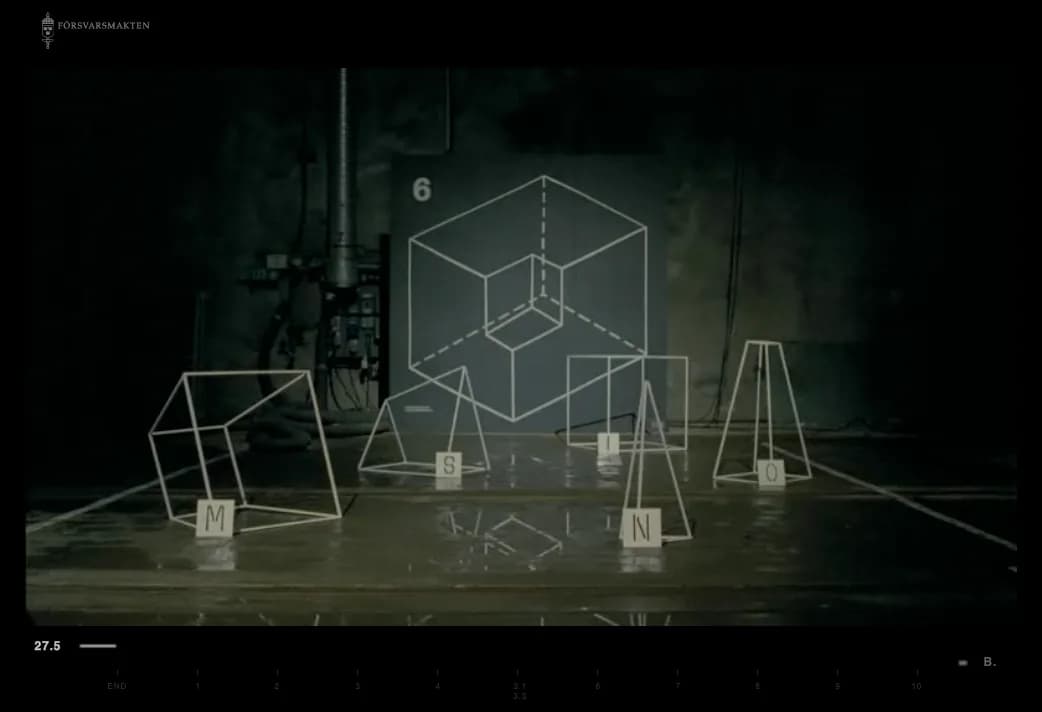
In their quadrant, players race a timer through short challenges testing memory, attention, multitasking, and self-control, hearing both their own interface sounds and the muffled sounds of teammates' actions.
- 6
Tasks chain together and escalate in difficulty and pace, and the round ends once the team's shared time runs out, typically after two-and-a-half to five minutes depending on team performance.
- 7
The session closes with a team result and a relative rating against other teams, alongside animated indicators showing how each individual player performed.