

A leaderboard is a ranked list of players and their scores, updated as people play. In a brand game it turns a one-off session into a contest: players come back to beat friends, climb a weekly table or qualify for a prize, so the brand earns repeat visits rather than a single play.
How it works
You finish a run, the game submits your score, and the board shows where you stand: the leaders at the top, your own position, often the friends just above you. Dictionaries still tie the word to golf: Collins defines it as "a board displaying the names and current scores of the leading competitors, esp in a golf tournament". In games the board is software. Google Play Games Services keeps daily, weekly and all-time versions of every leaderboard and can rank the lowest number first, as a racing game ranks finish times. Apple's Game Center separates classic boards, which keep scores until deleted, from recurring ones that reset on a schedule, and tells players when a friend passes their score. Campaigns add prizes on top: for first place, for the weekly top ten, or for anyone who beats a target score.
Where brands use it
441 games in the library carry our leaderboard-and-tournament tag, most often with an engagement objective. Three patterns recur. Food and drink brands tie the board to the pack: Coca-Cola let codes from cups and packs push players up a weekly leaderboard, and Chupa Chups turned wrapper scans in India into games with a monthly leaderboard. Loyalty apps run weekly contests: McDonald's France built Rösti Fall around a weekly national leaderboard with rewards for top players, and Sephora's pinball posts every score to a board while reaching a target score earns a discount code. Live moments use a board to make a crowd race at once, from TV ad breaks to installations and trade-show stands.
When it fits
A leaderboard earns its place when the goal is repeat play over a set period: a campaign of a few weeks, a loyalty programme, a sports season. It needs a skill game with a score people can compare, such as an endless runner, a rhythm game, an arcade round, a race or a timed quiz. Match the reset to the campaign calendar. In a 2023 experiment, players shown a high place on a board went for easy points rather than the task itself, and the authors suggest refreshing boards regularly to keep leaders interested. Split prizes so casual players stay in: Coca-Cola rewarded the weekly top eight and drew eight more winners at random. Friends' boards suit social audiences; Oreo's mobile game showed a Facebook ranking after each round.
When not to use it
Skip the board when most players will only see themselves near the bottom, as in a mass campaign where a few practised players take the top places in the first days. A 2023 systematic mapping of gamified education software found leaderboards among the elements most often linked to negative effects, with cheating also often reported. If everyone should feel they can win, an instant win game or a sweepstakes draw is fairer; a target score anyone can reach keeps the skill without the ranking. Don't hang a valuable prize on scores you cannot check; Google offers tamper protection and score limits for this reason. The UK CAP Code expects a competition to state its judging criteria and mechanism before or at entry, so write anti-cheat rules before launch.
Examples from the library
Snowball Effect — Coca-Cola (2011)
Agency: Leo Burnett, Ted Perez And Associates · Platform: App
Players linked Facebook and threw virtual snowballs at their friends' photos. A bigger snowball, and a higher place on that week's leaderboard, came from checking in at a 7-Eleven or entering codes from Coca-Cola packs, Slurpee and Big Gulp cups. Each week the eight highest cumulative scores won an iPad, eight more iPads were drawn at random at the end, and the top overall score won a trip to the Arctic.
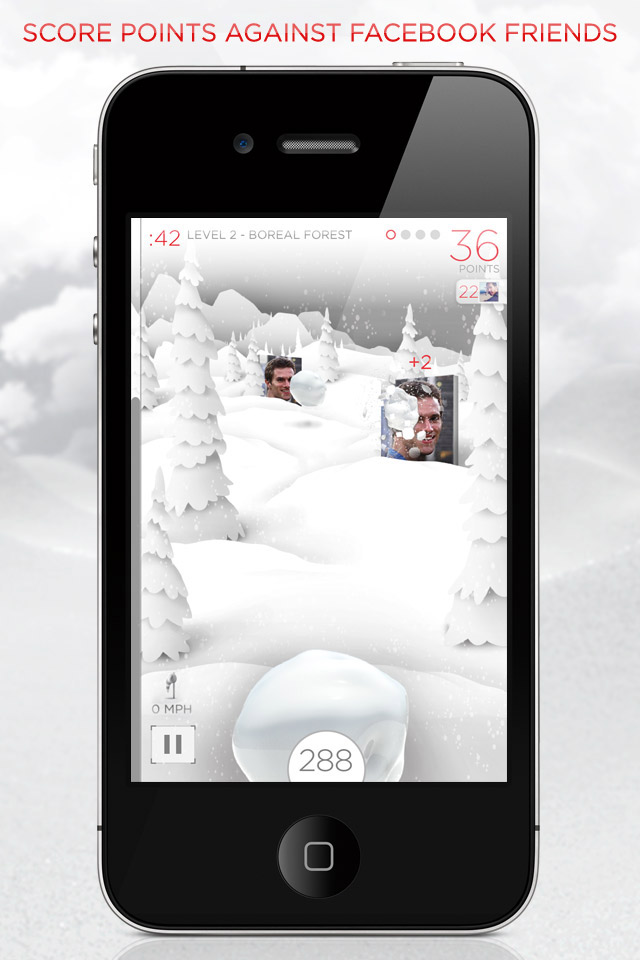
Result: Coke sales at 7-Eleven rose 20%; in nine weeks, more than 50,000 snowball fights reached an estimated 6.5 million Facebook friends; and the campaign helped raise $700,000 for Arctic Home, according to the campaign's One Show entry.
Golf Ad Break Championship — Volkswagen (2021)
Agency: DDB, Art of Play, PHD · Platform: Web
A QR code in the first ad of a TV break opened a browser race on the viewer's phone. The championship track was open only for the length of the break, about three minutes, and everyone who scanned raced at once while a shared leaderboard updated their position. Beating a qualifying time entered players for a chance to win a Golf GTI. Practice tracks, reached through QR codes on billboards, bus stops and print ads, stayed open between breaks.
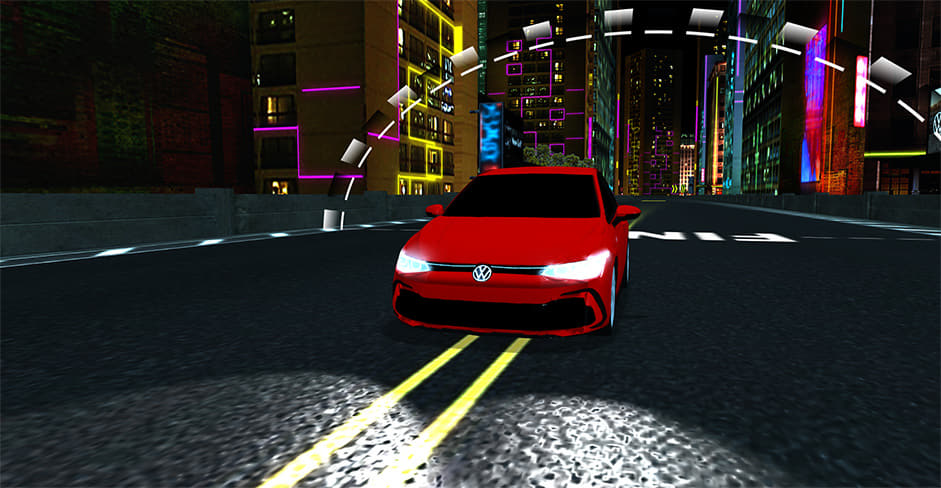
Result: According to the agency's Spikes Asia entry, which won the Direct Grand Prix in 2022, the game drew over 70,000 plays and more than 5,000 hours of active play; test drives rose 725% and Golf sales 55% in the active campaign period.
Dookey Dash — Yuga Labs (2023)
Agency: Makemepulse · Platform: Web
Holders of a free Sewer Pass steered a vehicle down a sewer tunnel, dodging obstacles and collecting fragments. Runs were unlimited and each landed on a live leaderboard from 19 January to 8 February 2023. Rewards followed performance, with the top score taking the single key prize. After the board closed, Yuga still had to validate it to weed out players who cheated or tried to hack the game, CoinDesk reported.
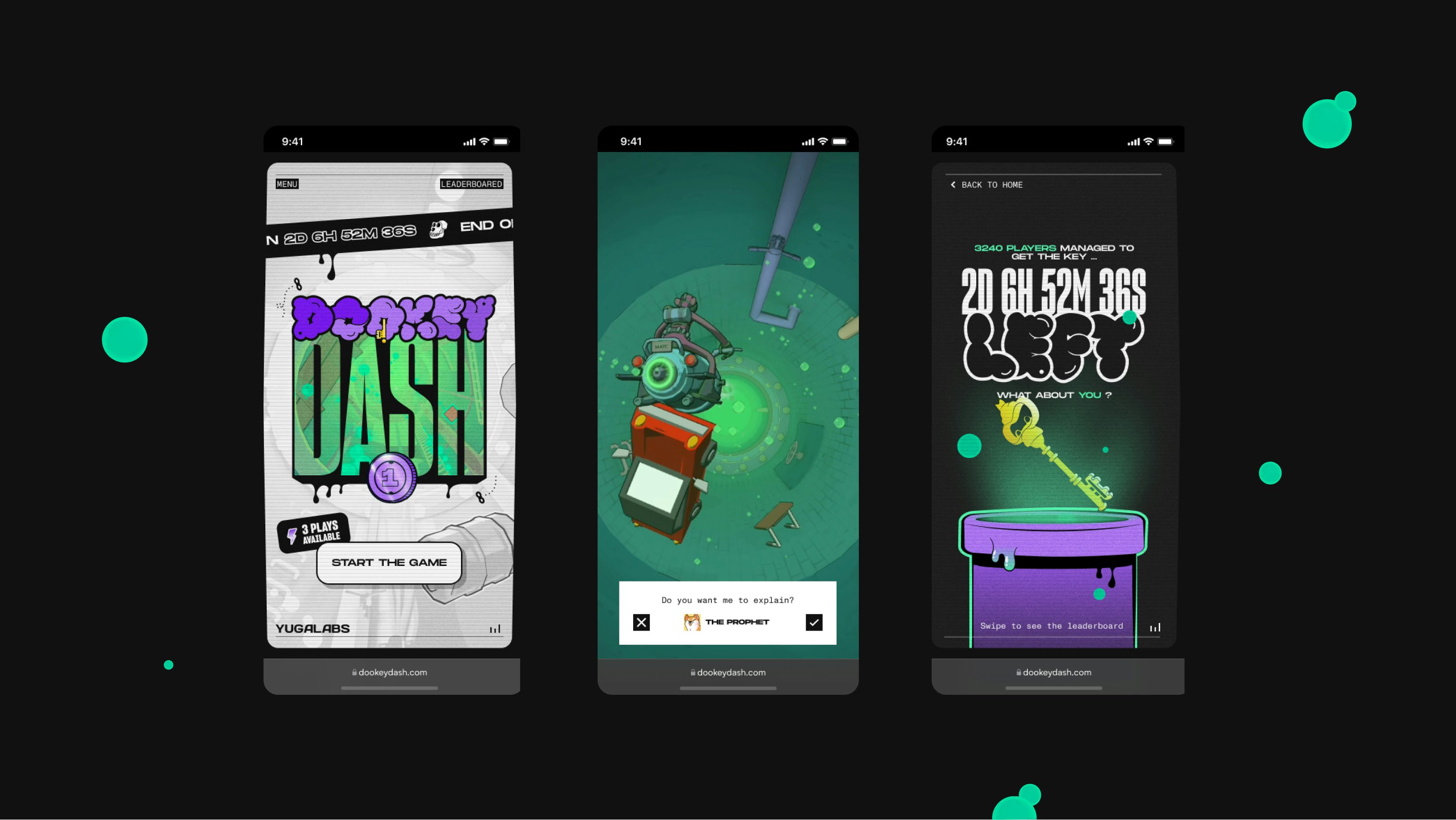
Result: 25,525 pass holders logged 7,487,850 runs and 706,436 hours of play, an average of 27.7 hours per player, according to Makemepulse; CoinDesk reported that players spent about 425,000 ApeCoin, roughly $2.2 million at the time, on in-game boosters.
FAQ
Is "leaderboard" one word or two?
One word. Dictionary.com lists it as leaderboard, citing Collins. Marketers meet the word in a second sense too: in display advertising a 728x90 banner is also called a leaderboard. That ad unit has nothing to do with ranking players.
Are a leaderboard and a scoreboard the same?
No. A scoreboard displays the score of a single game or match. A leaderboard ranks many competitors against each other, usually across many games and often across days or weeks. A brand game can have both: a running score during play and a ranking once the round ends.
How do you create your own leaderboard?
For a campaign game, the developer stores each score on a server and sorts it; app games can use Google Play Games Services or Game Center, and Roblox experiences a built-in board in the player list. Before building, decide the ranking order, the reset period, who sees the board (friends or everyone), which display names appear, and how you will catch impossible scores.