

An Easter egg is a hidden surprise inside a game, website, film or ad: a joke, reference, secret level or small reward that people find only by looking closely or trying something unexpected. For brands it is a way to reward the most curious players and give them something to talk about.
How it works
The Cambridge Dictionary defines it as a hidden surprise or extra feature in a game, software or a film, there for people to find and enjoy.
Nothing on screen says it is there. You notice a detail that does not belong, such as a familiar logo in a crowd, a door that should not open or a phone number in an ad that looks real, and you try it. Brand Easter eggs come in three common kinds. References and cameos reward people who know the brand. Secret inputs, such as the Konami code, switch on a hidden feature. Hidden areas, levels or prizes reward people who explore. The egg is never needed to finish: the main game works without it. The reward is the find itself, and the story people tell when they share it.
Where brands use it
Entertainment marketers hide clues for fans in the campaign itself. HBO's Dig Deeper asked True Blood fans to find 60 clues hidden in a 30-second trailer, and Lionsgate's Get Your Cut tucked 32 Knives Out mysteries into trailer frames, posters and social posts. Ads carry them too: in 2014 over 1,000 people called a real phone number written down in an Old Spice Super Bowl commercial, and the first caller won two tickets, BuzzFeed News reported. Ubisoft hid the Konami code in its Happy Holidays runner, and Chobani filled the lobby of its Roblox race, one of many games played inside other games, with Easter eggs. Marks & Spencer and the Bank of Canada have hidden the same code on web pages, Wikipedia notes.
When it fits
An Easter egg suits a brief aimed at people who already care: fans of a film, a game, an artist or the brand, who enjoy spotting references and like being first to post them. It serves engagement, return visits and word of mouth rather than reach. It is a layer, not a campaign, so add it to a game, site or Roblox world people will explore anyway: Google's 2023 Search playground surrounded its 25 trends with more than 1,700 figures and scores of Easter eggs, Google wrote. Plan how the first egg gets found: drop a hint on social or tell a few fans. Eggs add minutes for explorers and nothing for one-time players, so the main game must stand on its own.
When not to use it
Hide the spot, never the rules: prices, terms and how to win belong in plain sight. An egg with a prize is a promotion. In the UK, CAP Code rule 8.17 requires promoters to communicate significant conditions where leaving them out is likely to mislead, which can include how to take part and the number and nature of prizes. Nor do eggs deliver reach: most active players of Google's Paris 2024 playground never tried its secret mini-games. If finding things is the whole game, build a scavenger hunt; for a clue-led story over weeks, an alternate reality game; for fast entries, an instant win game. Keep eggs out of software people must trust, such as a banking app: Microsoft has not allowed hidden or undocumented code since 2002, Wikipedia notes.
Examples from the library
Most Searched Playground — Google (2023)
Agency: Google Brand Studio · Platform: Web, opened from the Google homepage doodle
Clicking the doodle opened a hand-drawn park to pan and zoom. Tiles listed the most-searched people, places and moments of Search's 25 years; each gave a clue and a compass pointing to the figure hidden in the crowd, and finding it revealed a fact from Search. Around the main hunt sat Easter eggs from Google's own history, such as an Android logo and the Chrome dinosaur, plus a separate hidden hunt for Taylor Swift fans.
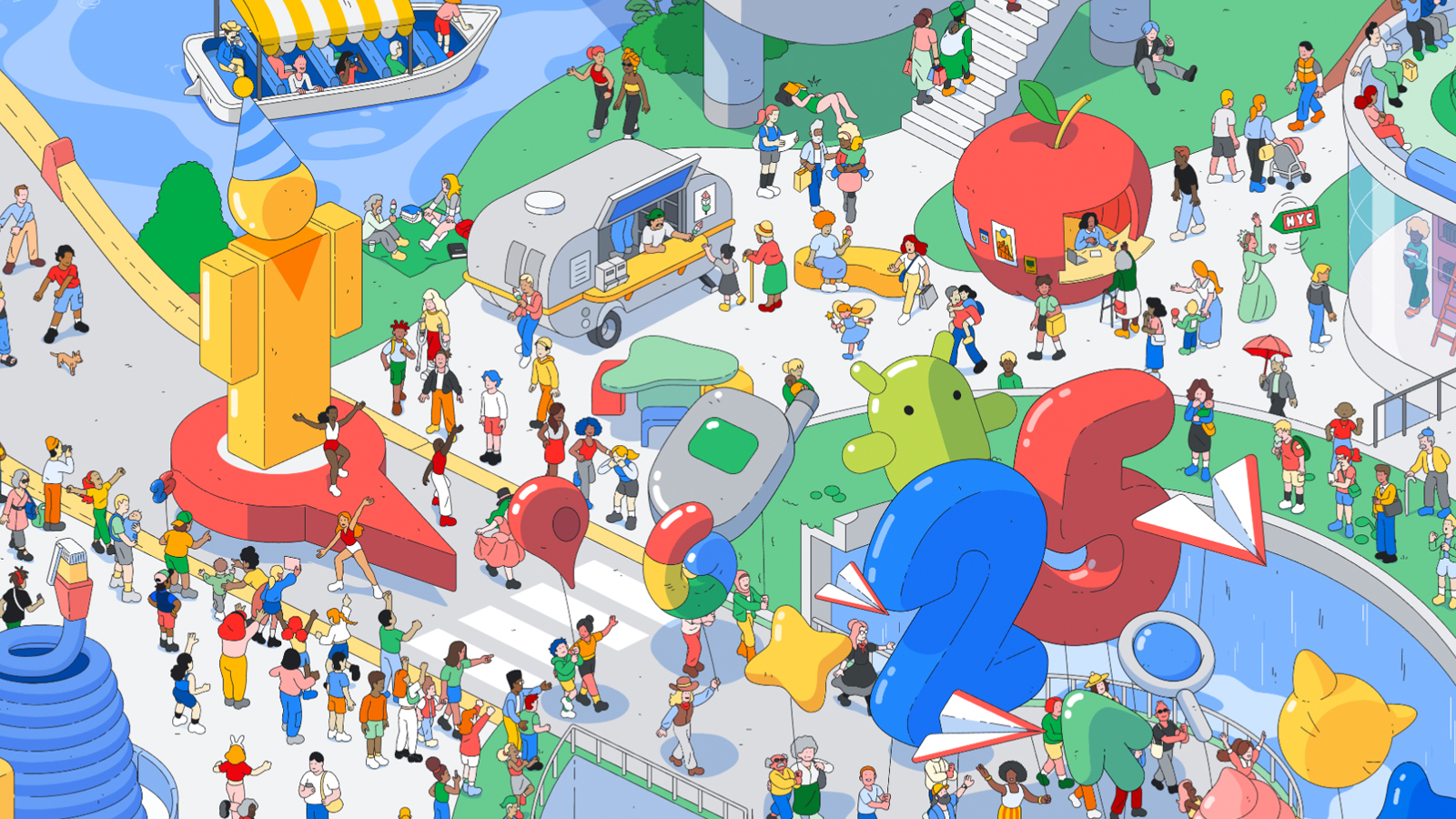
Result: The Paris 2024 edition drew 55 million+ people, 2.2 times the first playground. Of its 17.8 million active players, more than 600,000 tried at least one of the secret Sports Side Quest mini-games, according to its Shorty Awards entry.
The Run — Montblanc (2024)
Agency: Merci-Michel · Platform: Web, on desktop and mobile
Interparfums, Montblanc's fragrance licensee, commissioned this browser race for the launch of Legend Blue, Merci-Michel posted. The player steers a blue ball stamped with the Montblanc emblem down a looping track with the arrow keys; staying on the white line builds a boost. The finish shows your time against your best, with a leaderboard. Typing the Konami code on the start screen brings up a QR code for steering the ball with a phone.

Result: One game lasts 45 seconds, but the average playing time is 3 minutes 30 seconds, Merci-Michel told Communication Arts: roughly four or five runs a visit.
The Amazing Journey Contest — Mentos (2015)
Agency: Cossette · Platform: Web, alongside a TV sponsorship of The Amazing Race Canada
Players picked one of five real places, from Paris to Vancouver, and landed in a Google Street View panorama dressed with Mentos packaging. Packs of gum were hidden in the scenes, and every find opened a trivia question about the place. Easter eggs and "fresh passes" were added to make the hunt more challenging, the case study says. Only three packs could be claimed a day, so players came back on following days, building entries toward three trips.
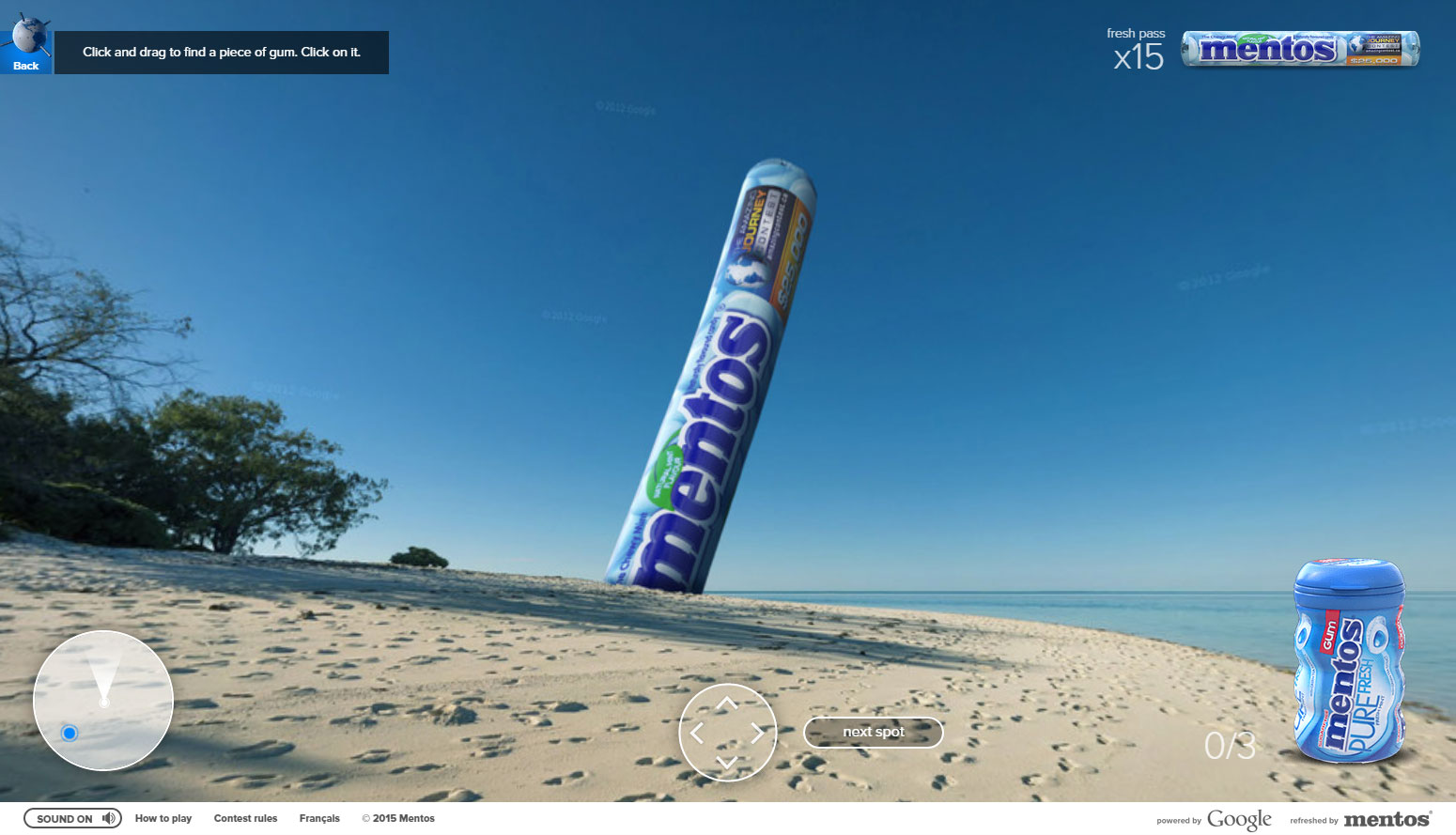
Result: The site drew 412,168 visits and 141,794 unique participants, averaging 5 minutes 4 seconds a visit, and 65% of visitors came back. Mentos gum sales were up 31% in the month after the show finished airing, according to the Strategy awards case.
FAQ
What does it mean to leave an Easter egg?
It means hiding a reference, joke, message or bonus that only attentive people will notice. Creators leave them as signatures or nods to fans; brands leave them as rewards. The first one ever found was in Atari's Adventure, where programmer Warren Robinett hid his name because Atari did not credit individual developers, Dictionary.com explains.
Why is it called an Easter egg?
Because finding one feels like an egg hunt. Atari manager Steve Wright liked hidden surprises in games and compared them to hunting for Easter eggs on Easter morning, according to Dictionary.com. The game sense has nothing to do with chocolate: a seasonal egg hunt is a kind of scavenger hunt, not an Easter egg in this sense.
Is the Konami code an Easter egg?
It began as a cheat. Kazuhisa Hashimoto created it while porting Gradius to the NES because he found the game too hard to finish in testing, and it gave the player a full set of power-ups, says Wikipedia. The sequence (up, up, down, down, left, right, left, right, B, A) became so famous that websites now hide it as an Easter egg trigger, as Montblanc's The Run does.