
An alternate reality game (ARG) is a game that presents its story as real, spreading it across websites, phone lines, posters, packs and social accounts for players to piece together by solving puzzles, often as a crowd. Brands use ARGs to build a committed core audience before a film, series or product launch.
How it works
The Science Fiction Encyclopedia describes ARGs as games that deny being games, usually start unannounced and are run by hidden designers, the puppetmasters, who react to what players do. The best-known early one, The Beast, promoted the film A.I. in 2001; its mantra, "This is not a game", appeared in a trailer that June, ARGNet recalls.
Play starts at the rabbit hole, the standard term for the entry point: a phone number at the end of an ad, a code on a shop's flavour strip, a cryptic letter to a blogger. Behind it waits a fictional website, a character who replies, a code to crack. Each answer leads to the next clue, on another site, in a shop or in a voicemail. Players pool findings on forums, Reddit and Discord. The reward is the next piece of the story, sometimes a prize, and finally the brand's reveal.
Where brands use it
In our library, ARGs come mostly from film, TV and game publishers, filed under entertainment and aimed at awareness or engagement. Showtime's Game On kept Dexter fans busy between seasons, and Cinemax's Byzantium Tests posed as the careers site of a spy series' fictional security firm. AMC's New Noology Network had 5,000 players before Dispatches from Elsewhere was even announced, and more than 100 of their own videos went into the finale, TheWrap reported. Activision hid codes on a Warzone map in Rebirth From The Ashes. Food and drink brands have used ARGs to launch new flavours, putting clues on packs and in stores so that play starts with the product. Most sit under puzzle or adventure and quest.
When it fits
An ARG suits a launch with a date and a world worth exploring: a series, a film, a game season, a limited flavour. It is built for a devoted core of fans and puzzle solvers who then talk about it in public. Doritos chose the format after research showed its audience of 16- to 24-year-olds indexed high on ARGs, Chief Marketer reported, and Tap Joint targeted hard-core gamers its agency saw as thought leaders for that crowd, according to ClickZ. Runs last from days to months. Budget for live operations: writers, community managers and puppetmasters who answer players in character. Clues placed in ads, packs, stores and social posts carry the reach.
When not to use it
Skip an ARG if you need mass reach or data fast. Only a fraction of an audience plays: Adweek described Scoop Snoop's players as a smaller subset of Stranger Things fans. For entries in seconds, an instant win game or sweepstakes is quicker; for a story played in one sitting, an escape room. Expect players to beat your schedule: Tap Joint's final code fell in nine days, less than half the time its makers expected, so keep spare content ready. The UK CAP Code says marketing must be obviously identifiable as such and make its commercial intent clear where that is not obvious from the context, so plan when and how the brand is revealed. Keep physical clues where people can go safely and legally.
Examples from the library
The Quest — Doritos (2008)
Agency: Davie Brown / The Marketing Arm, RED Interactive Agency · Platform: Web, with clues on packs and in-store displays
The player bought a black bag that did not name the flavour, tasted a chip and went online to guess it. A right guess opened a run of puzzles released in stages. Clues were printed in the triangle patterns on the bags, on in-store displays that varied by city and on partner websites. A tracker showed each player's progress against everyone else's. The three fastest solvers went to Las Vegas to compete for a golden artefact worth $100,000.
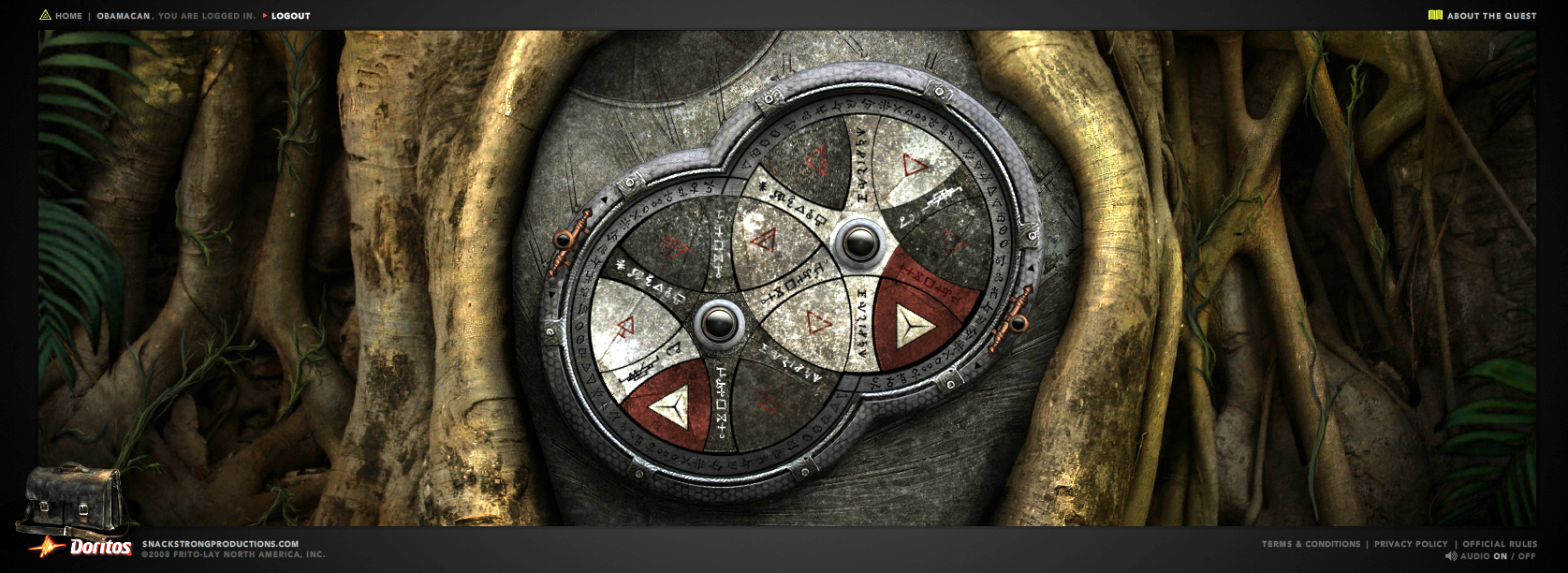
Result: 70,000 active players logged more than 6 million minutes, and sales rose 200% over the previous year, according to the campaign's 2009 PRO Awards write-up in Chief Marketer.
Tap Joint — Yahoo (2012)
Agency: B-Reel, Pereira & O'Dell, Plan8 · Platform: Web, with clues on Twitter, in banner ads and in mail
Tapjoint.com carried no Yahoo branding. Players sat at an antique telegraph, received messages in tap code and decoded them against a cipher key into the story of a city, its people and a coming revolution. More clues surfaced in banner ads on gaming sites, on a Twitter account and in anonymous letters to bloggers. Cracking the puzzle together opened a preview of Electric City, Tom Hanks's animated series for Yahoo.
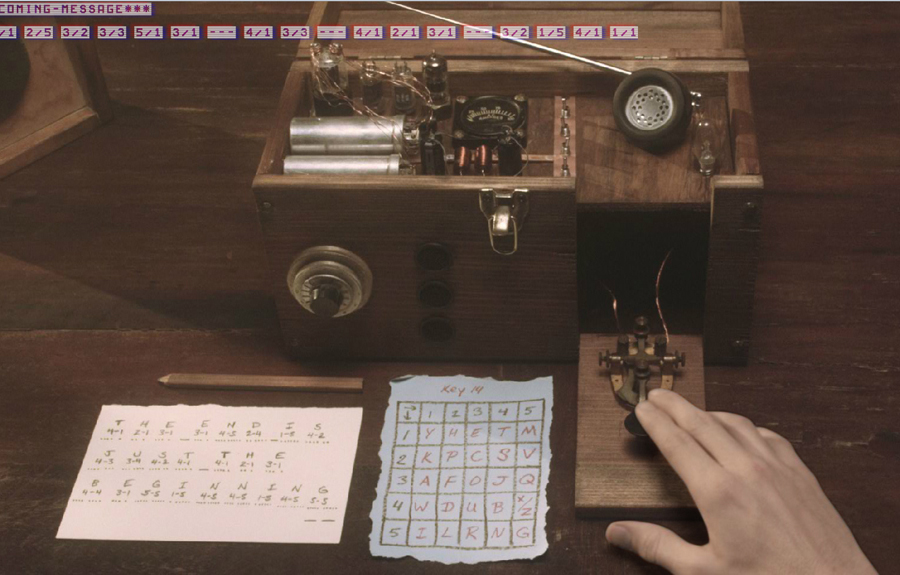
Result: By mid-June 2012 the site had almost a million page views and more than 300,000 unique visitors, according to Yahoo, and returning visitors spent an average of 30 minutes on it, ClickZ reported. Players cracked the final code in nine days.
Operation Scoop Snoop — Baskin-Robbins (2019)
Agency: 22squared, m ss ng p eces · Platform: TV, phone, in-store and a command-line terminal
A midnight TV spot with two Stranger Things actors announced the USS Butterscotch flavour and flashed a phone number. The call sent players into a Baskin-Robbins store, where Morse code on the flavour strip gave a second number and a password, then an SSH address. In a text-only, 1980s-style terminal a handler bot called SHPION7 issued a mission a day for ten days. The top players faxed in the final answer for prizes.
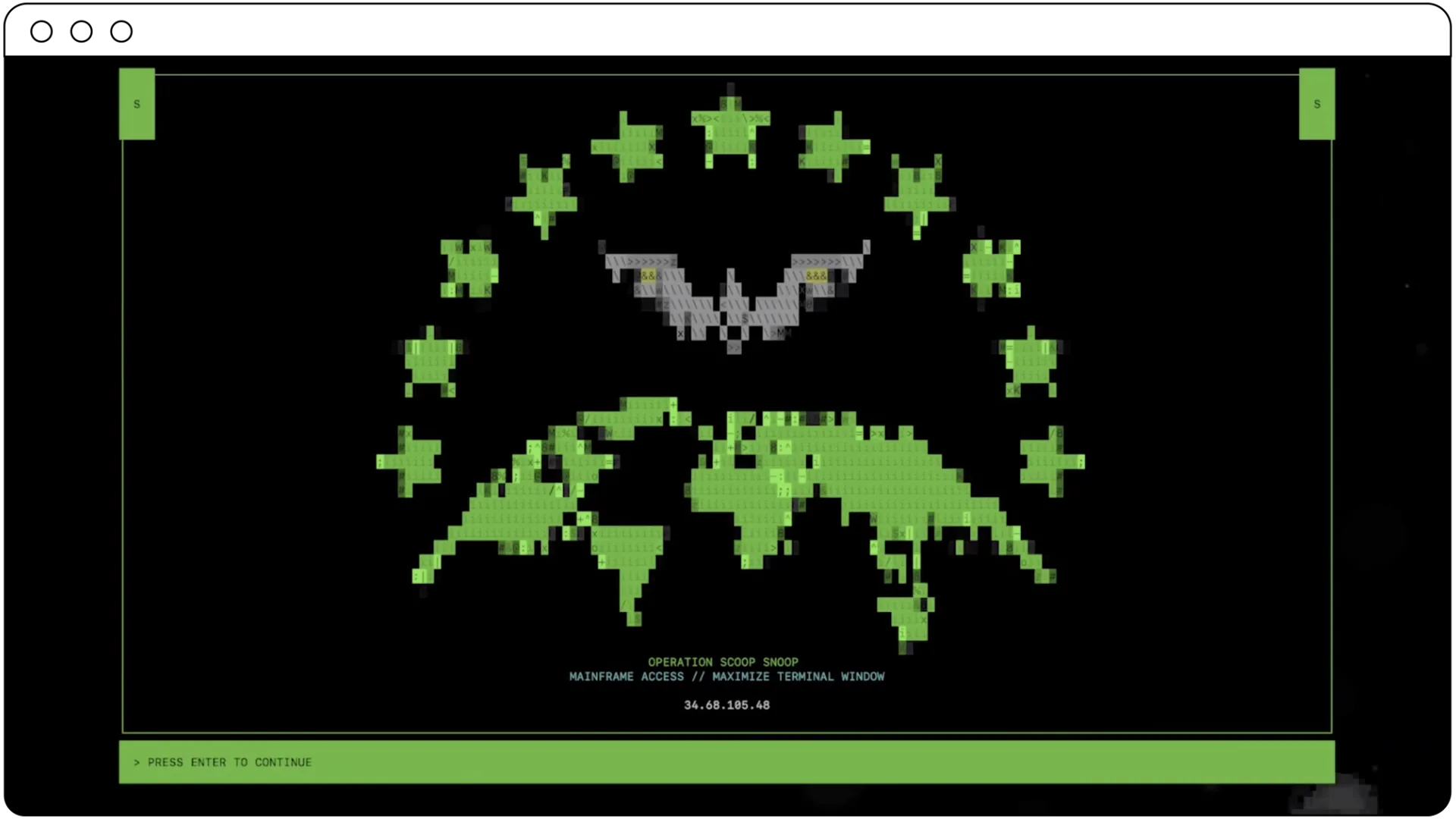
Result: 4 billion earned impressions and an 11% nationwide sales lift, according to m ss ng p eces. The game ran from 4 to 14 July 2019.
FAQ
What does ARG mean in horror?
The same as anywhere else: alternate reality game. Horror suits the format because an ARG presents its fiction as real. Showtime's Game On had players investigate a killer who secretly ran a sleep-therapy site, and AMC's game began with a flyer for a sleep study that never mentioned AMC. For other brand games built on horror, see our guide to Halloween brand games.
Is an ARG the same as a puzzle hunt?
They overlap. A puzzle hunt is a set of puzzles to solve, often for a prize; an ARG adds a story told through fictional websites, characters and real-world channels, and often hides who is behind it at first. ARGNet, which covers the genre, described Salesforce and MrBeast's Million Dollar Puzzle as a puzzle hunt. A search for places or objects is a scavenger hunt.
How long does an alternate reality game run?
From days to more than a year. Operation Scoop Snoop ran ten days and Dexter's Game On eight weeks. The Beast ran three months, and Why So Serious, for The Dark Knight, ran 15 months and drew players in 177 countries, according to Wikipedia. Long runs need new content every week.