
A licensed game is a video game built on a character, story or brand that someone else owns, made with the owner's permission, usually for a royalty. Film tie-ins are the best-known kind. Unlike an advergame, the money flows to the brand: a publisher pays to use your mascot in a game it sells.
How it works
For the player, a licensed game looks like any other game in the shop: you pay, and a character you know from elsewhere is the hero. The brand often stays in the background, as in Yo! Noid.
Behind the screen sits a contract. The character's owner, the licensor, lets a publisher, the licensee, use it; the publisher builds and sells the game and pays the owner royalties, usually a rate on net sales. Wikipedia defines a licensed game as a tie-in to a franchise from another medium, such as a film.
Publishers sometimes reskinned games they already had. Yo! Noid is Capcom's Japanese platformer Kamen no Ninja Hanamaru, localised for the US to promote the Noid, with its mechanics unchanged. The Game Boy version of M.C. Kids became a 7 Up Spot game outside Europe, according to Wikipedia.
Where brands use it
In the early 1990s, food and drink brands licensed their mascots to console publishers: Domino's Noid to Capcom, 7 Up's Spot and the McDonaldland cast to Virgin Games, Cheetos' Chester Cheetah to Kaneko, Ronald McDonald to Sega. Most sit under food and drink and awareness; our history of advergames covers the era.
Today the licence usually flows into a game that already has players. In January 2025 Call of Duty ran Squid Game modes with a premium pass for 1,100 COD Points and paid bundles, Newsweek reported. Roblox launched its License Manager in July 2025 with Netflix, Lionsgate, Sega and Kodansha as its first partners; rights holders set a revenue share of 0% to 95%. More crossovers sit under in-game projects.
When it fits
Licensing fits when you own a character or world people would pay to play with, and a game company wants it for its own audience. The publisher carries the cost and the risk; you approve the work and earn a royalty. It suits long-lived mascots and entertainment properties better than a single campaign, because the partner sets the schedule.
If you want a game on sale but on your own terms, there is a middle route. Burger King commissioned three Xbox games from Blitz Games and sold them for $3.99 with a Value Meal, shifting more than 2 million in four weeks, QSRweb reported.
When not to use it
Skip a licence when you need control. You approve the work, but the licensee decides design, schedule and quality, and your character takes the reviews. Atari's E.T. was rushed out in five weeks for Christmas 1982 and helped bring the company down, according to Wikipedia.
It is the wrong tool for data, leads or direct sales: the publisher owns the sale and the player. Commission an advergame or an instant win game instead. To appear inside a hit game you may not need a deal at all: KFC Canada built a Colonel Sanders fighter with Street Fighter 6's own character-sharing tool rather than pay for an official partnership, Contagious reported. In-game advertising is the paid route.
Examples from the library
Yo! Noid — Domino's (1990)
Agency: Capcom (publisher), developed by Now Production · Platform: NES
You guide the Noid, Domino's red-suited mascot, through 14 levels of a cartoon New York, knocking out enemies with a yo-yo and switching to a skateboard, pogo stick or gyrocopter on some stages. Each stretch ends not in a boss fight but in a pizza-eating card duel. Domino's stays in the background: its name on the title screen, pizza boxes in house colours and a $1 coupon at the back of the manual.
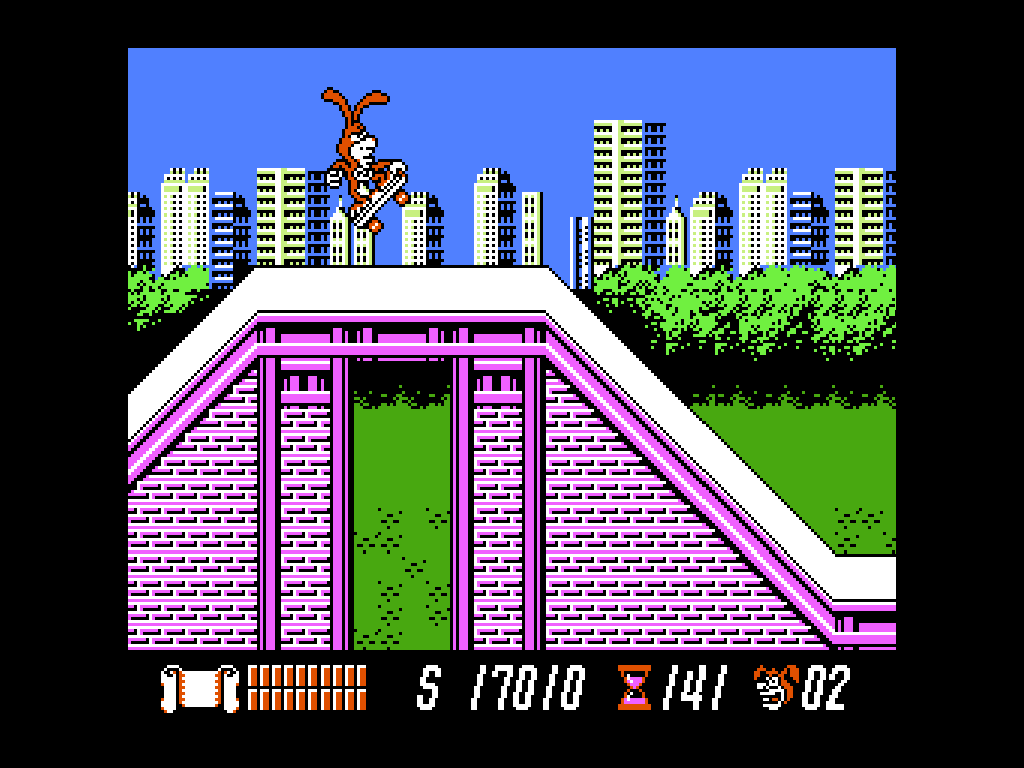
Result: Half a million copies shipped to shops, retailing at $40, according to NintendoPlayer, which quotes Domino's director of marketing telling Advertising Age that the chain would receive an undisclosed percentage of wholesale sales as a royalty.
Cool Spot — 7 Up (1993)
Agency: Virgin Games (developer) · Platform: Sega Genesis, Super NES and five other systems
Spot, the red dot from 7 Up's ads, wears sunglasses and fires soda bubbles across a beach, a pier, a toy shop and a model railway blown up to giant scale. In each level you collect enough small red dots to free a caged friend before the clock runs out, while Spot's health is his own face peeling away. Bonus stages inside a giant 7 Up bottle each hide a letter; in the US versions the letters spell UNCOLA, while European versions, which drop 7 Up, spell VIRGIN (Hardcore Gaming 101).
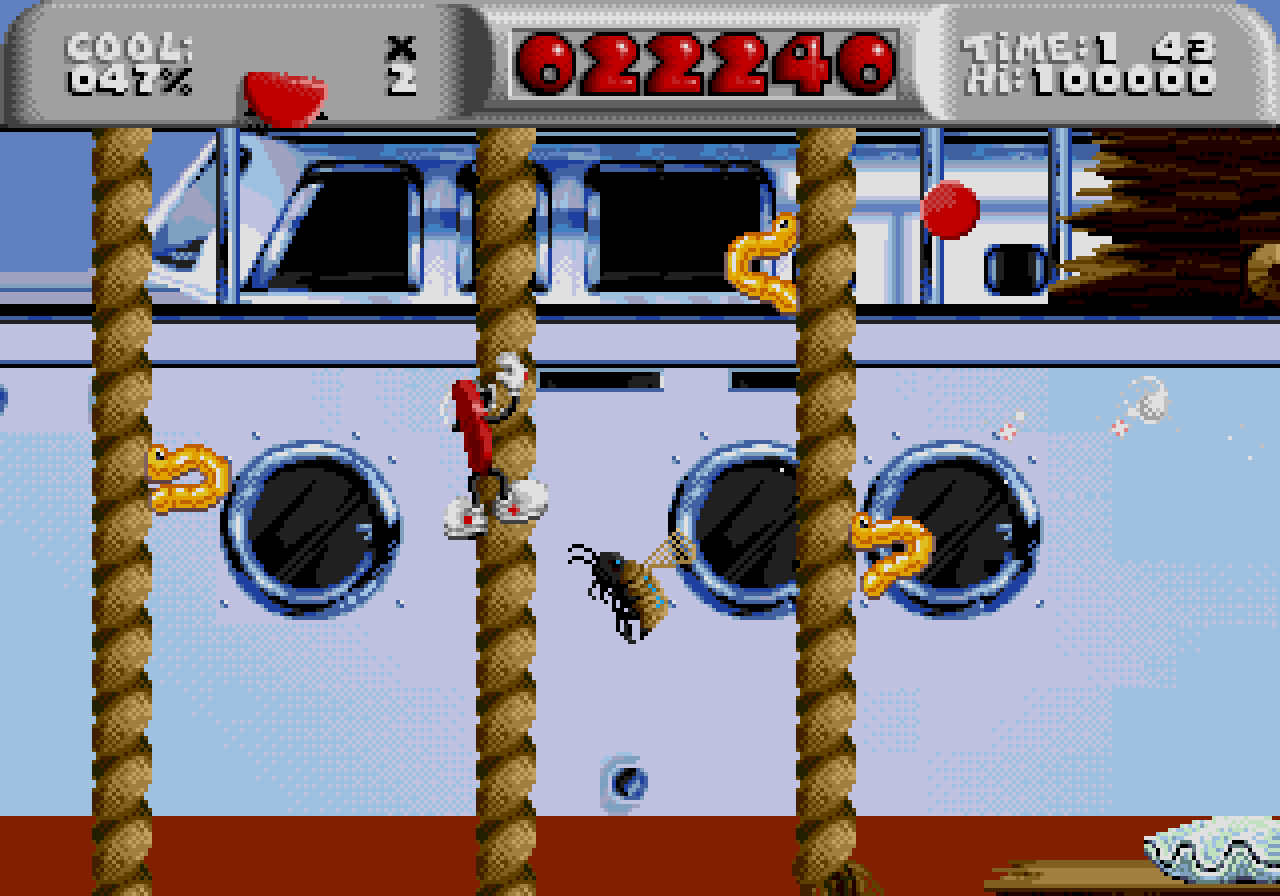
Result: The game sold one million copies, according to a Virgin Interactive vice-president interviewed by Sega-16 in 2006, as cited by Wikipedia.
Treasure Land Adventure — McDonald's (1993)
Agency: Treasure (developer), published by Sega · Platform: Sega Mega Drive / Genesis
Ronald McDonald follows a treasure map through a magical forest, town, sea and moon, three stages each. He fires a sparkling magic shot, swings his scarf onto hooks to cross gaps and spends gold bags in shops on jewels, stronger magic and extra lives, while Grimace, Hamburglar and Birdie turn up as guides. Bosses fall only when tricked into swallowing one of Ronald's jewels.
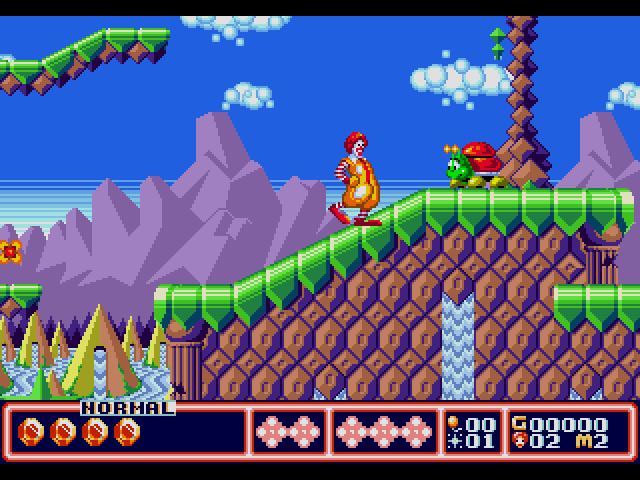
Result: The game was promoted in 1,000 McDonald's restaurants in Japan and Sega forecast sales of more than 500,000 copies, according to Wikipedia, which gives no final sales figure. Critics at release counted it among the better licensed games of the 16-bit era.
FAQ
Is a licensed game the same as an advergame?
No, the money flows the other way. In a licensed game a publisher pays the owner for the right to use a character or brand, and sells the game to players. An advergame is commissioned and paid for by the brand and is usually free to play. Burger King's 2006 Xbox games sat in between: commissioned by the chain, but sold in its restaurants.
Does Steam license games?
Yes, in a different sense. Steam's Subscriber Agreement says its content is "licensed, not sold": buying a game gives you a non-exclusive right to use it, not ownership. That licence runs between store and player; in this glossary, the licence runs between the owner of a character or brand and the company that makes the game.
Why do licensed games have a bad reputation?
Mostly because of film tie-ins rushed to meet a release date. Wikipedia notes that licensed games were long seen as weaker than original ones, and that fewer big-budget games are licensed today, while licensed titles turn up more often on mobile. Some brand mascot games were well received, such as Treasure Land Adventure.