

A brand collaboration is a partnership in which two brands, or a brand and a film, game or creator, make a product, campaign or game under both names, sharing each other's audiences. In playable marketing it often means a game set in a partner's famous world, or a brand appearing inside a popular game.
How it works
Each partner brings what the other lacks: an audience, a famous world, a product people buy, a channel. A contract sets who pays, who approves what, how long the joint name runs and who keeps the customer data.
Who pays depends on the deal. In a licensed game a publisher pays the owner to use its character; on Roblox, rights holders license IP to game creators through the License Manager at a revenue share they set between 0% and 95%.
The player sees both names on one screen and a reward that only makes sense because of the pairing: a soft-drink can that leads to Halo armour, an Angry Birds slingshot that cracks pistachios, an avatar dressed in the joint collection.
Where brands use it
Food and drink brands pair packs with film and game worlds. In 2012 codes under Brisk caps unlocked characters in the Star Wars app Brisksaber, made with Lucasfilm (PepsiCo). Wonderful Pistachios called its Rovio-made game the first fully branded custom Angry Birds game in the US (Wonderful). In 2026 QR codes on Fanta's Xbox cans led to challenges with in-game rewards for five franchises (Xbox Wire). Kinder Joy's Stranger Things eggs, part of a tie-in with Netflix and Funko, each hid a QR code to a puzzle (shots).
Studios go the other way: Amazon MGM Studios put a Red One raid into the Roblox game Anime Defenders. The library holds 106 film tie-ins; for crossovers, browse brands inside other games.
When it fits
A collaboration fits a brief to reach people you don't already talk to, quickly, with a reason to be there. It works best around a date the partner already promotes: a film release, a drop, an anniversary. The partner's channels carry the game too; the Doritos portal game could be reached from more than 135 cinema screens (Adformatie).
Tie it to something people buy, such as limited packs with codes (on-pack promotion), and it becomes a sales tool. Keep the game short and the reward specific to the pairing. Timelines can be tight: Q-Jump's designer says the game was designed and coded within eight weeks (Contra).
When not to use it
Skip it when the fit is forced. A famous partner can win attention that never attaches to your brand, and you share its reputation: Wikipedia's co-branding entry lists loss of control and a partner's later bad image among the risks.
Collab content often ends with the deal: the free A Minecraft Movie packs were delisted on 31 December 2025. For an asset you own, with its player data, commission a branded game; for reach alone, buy in-game advertising (see our comparison guide).
Paid creator collaborations bring disclosure duties. The US Federal Trade Commission tells influencers to disclose any financial, employment, personal or family relationship with a brand and to avoid vague terms such as "collab". Check each market with counsel.
Examples from the library
Q-Jump — Tommy Hilfiger (2023)
Agency: Something™ · Platform: Browser game for phone and desktop
Built for the Tommy Jeans x Aries drop, Q-Jump turned the overnight queue outside a shop into an 8-bit platformer. Players ran and jumped across rooftops as a pixel avatar dressed in the collection, grabbing coins to beat the queue below. Scores went onto a leaderboard; signing in to Tommy's membership programme gave pre-sale access to the drop and a chance to win pieces from it.
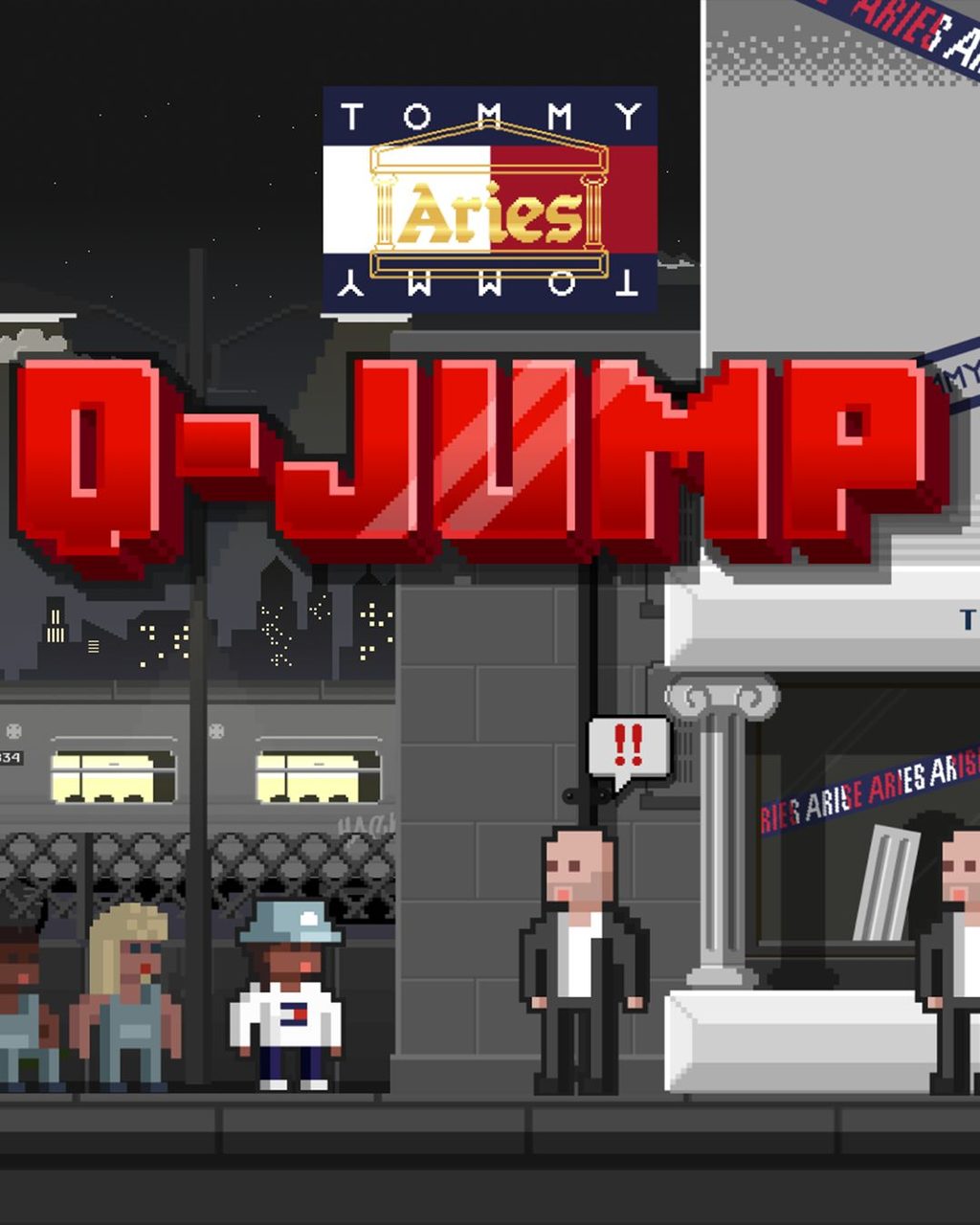
Result: 135,000 plays in two weeks and 10 million people reached across Europe, according to the agency's case study (archived copy).
Enter The Nether Lands — Doritos (2025)
Agency: Fitzroy Amsterdam (concept), with Livewall (web game) and Beyond (portal and immersive design) · Platform: Mobile browser game, launched from a portal installation
Made with Warner Bros. for A Minecraft Movie, the game played on the joke that the Netherlands sounds like the Nether. From 28 March 2025 a life-size portal stood on Amsterdam's Museumplein; scanning it opened a browser game in which players mined blocks, crafted a weapon and sabotaged a bridge to stop the piglins. Finishing entered a draw for an 18-karat gold Doritos chip worth €1,000.
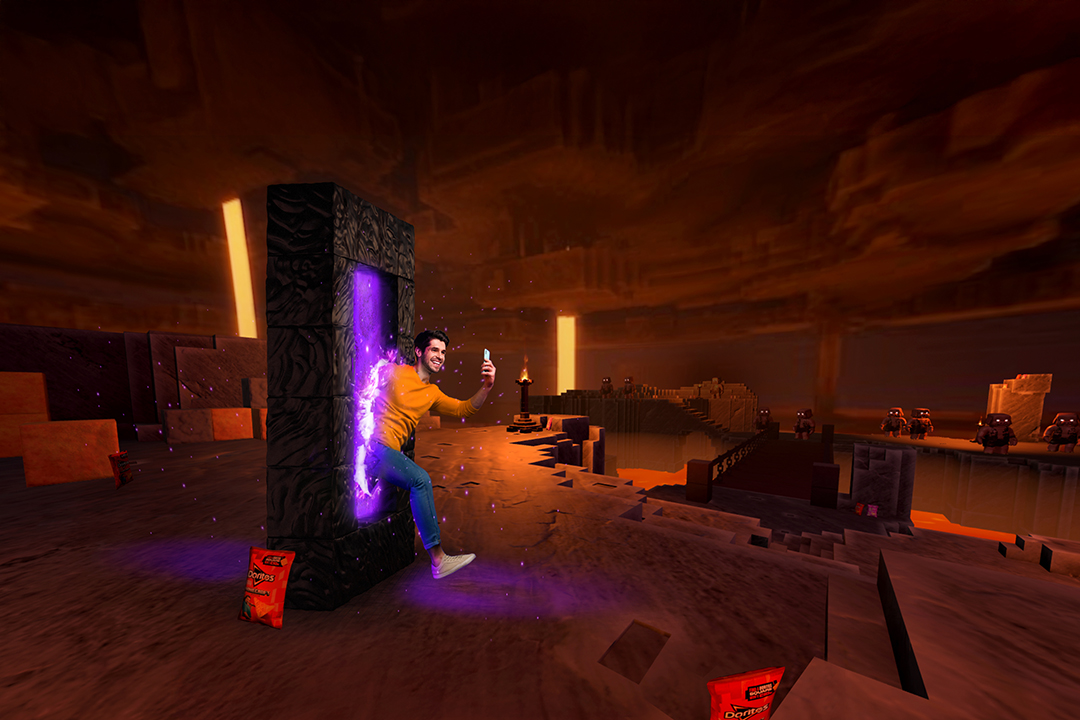
Result: 400,000 unique interactions, 42.5 million impressions, a 185% increase in association with movie nights and a 27% uplift in brand preference, Marketingreport reported, without a period or baseline.
The Million Dollar Puzzle — Salesforce (2026)
Agency: none credited (production: Caviar; puzzles: Lone Shark Games) · Platform: Web, with a custom Slackbot
Salesforce's Super Bowl LX spot with MrBeast ended on a QR code (ARGNet). Players registered and worked in a Slack-style chat with a custom Slackbot, chasing clues in the ad, pinned comments, other creators' videos and billboards. Slackbot nudged but never gave answers; the first correct vault code won a shot at $1,000,000. It was a creator collab run as a puzzle hunt, a close cousin of the alternate reality game.
Result: Over the eight-week event, 276,000 players solved more than 100 puzzles, with 2.7 million Slackbot messages; the making-of documentary drew 419 million views and the campaign 1 billion impressions, according to Salesforce's D&AD entry.
FAQ
What does collab mean?
Collab is an informal short form of collaboration, as a noun or a verb (Wiktionary). In marketing it means two names behind one product, drop or campaign, such as Tommy Jeans with Aries. On social media it often means a paid post with a creator, which the FTC says needs a clearer label than "collab".
Is a brand collaboration the same as co-branding?
Co-branding is one kind: in Wikipedia's definition, more than one brand name on a single product or service, such as a snack pack or a clothing line. Collaboration is the looser everyday word, also used for licensing, creator partnerships and crossovers inside games.
Which fashion brand collaborations became games?
Gucci turned its capsule with The North Face into Gucci Camp, an endless runner in the Gucci app where players first dress their character in capsule pieces. Tommy Hilfiger's Q-Jump did the same for the Tommy Jeans x Aries drop. See fashion and beauty for more.