

Viral marketing is marketing designed to be passed on. People share a message, video or game with friends, who share it again, so reach grows beyond what the brand paid for. Games carry it well, because a score is something to beat and a result is something to show.
How it works
Wikipedia defines viral marketing as a business strategy that uses existing social networks to promote a product, named after the way a virus passes between people. In 1997 Tim Draper and Steve Jurvetson used the term for Hotmail's practice of appending advertising to its users' outgoing mail, so every email sent also promoted the service.
Games build that loop into play. The end screen offers to post your time. A head-to-head mode needs a second player. A personal result, such as your flavour, your character or your rank, is something people like to show. Each post or link is an invitation; when a friend opens it and plays, the game has spread one step. Teams count those steps with K-factor and share rate, and the coverage they bring as earned media.
Where brands use it
Games have passed from player to player since the email-attachment era. Johnnie Walker's Moorhuhn (below), one of our classic advergames, spread so widely around 2000 that consulting firms warned of lost working hours. Unilever launched Magnum Infinity in 26 markets at once with Pleasure Hunt 2, on a brief that leaned on the first game's viral run instead of media bought market by market. Talenti set a sharing target for Flavorize Me and reached about 10,000 posts, twice the goal. Sometimes the game is the second act: Metro Trains Melbourne's Dumb Ways to Die began as a 2012 music video with more than 350 million YouTube views (Wikipedia), and games such as Dumb Ways To Die 2 kept its audience playing. All four sit under awareness or engagement.
When it fits
It fits a brief for reach on a small media budget, aimed at people who already talk to each other, such as fans before a tournament or teenagers on Roblox. Studying three months of New York Times articles, Jonah Berger and Katherine Milkman found positive content was shared more than negative, and high-arousal emotions such as awe, anger and anxiety made it more viral, while sadness made it less so. For a game, that means a short session, a result worth showing and a link that opens straight into play. Plan the first push. Studying a billion diffusion events on Twitter, Sharad Goel and colleagues found popularity was largely driven by the size of the largest single broadcast. A creator, a press story or a platform feature can supply one.
When not to use it
Don't make a launch depend on going viral: the Twitter study found structural virality typically low, however big the event. Budget for paid reach, such as a playable ad or in-game advertising, and treat sharing as a bonus. A closed audience, such as staff or visitors to an exhibition stand, has no wider network to pass a game on to. Shares also reach people who won't buy: Blendtec's blender videos, Wikipedia notes, went viral mainly among teenage boys. A hit can outgrow its brand: Moorhuhn's ad-free release dropped the Johnnie Walker logos in December 1999. If posting earns a prize or entry, the FTC expects the post to say so, for example with "contest" or "sweepstakes" in the hashtag; Meta's limits on "share to enter" are under K-factor. Check with counsel.
Examples from the library
Moorhuhn — Johnnie Walker (1998)
Agency: Vorwerk & Buchholz, Hamburg (concept); commissioned by Bochum's Art Department, renamed Phenomedia in 1999; developed by Witan Entertainment · Platform: PC, first on laptops in bars, then a free download
A Scottish moor scrolls as you move the mouse, and the cursor is a shotgun sight. Cartoon moorhens dart over the hills, worth 5, 10 or 25 points, more the farther away they are. Eight shells, 90 seconds, then your score and the urge to beat it. Promotion staff first carried the game on laptops through bars and cafés, and the small file then spread by email from player to player, SRF reports.
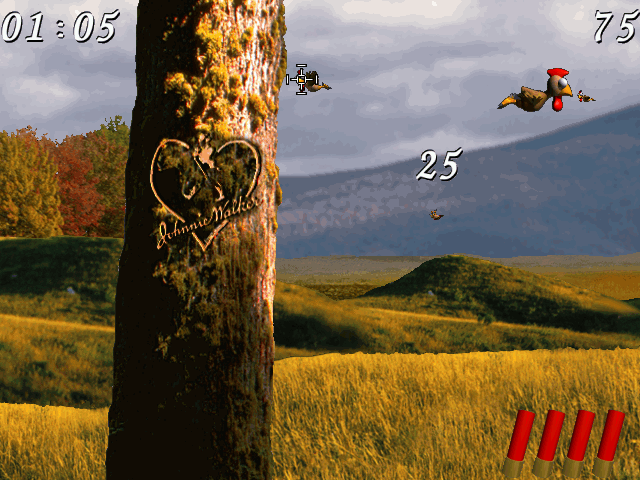
Result: The Hamburg ad agency V und B counted about 600,000 downloads from johnniewalker.de alone, and an estimated two million Germans had played, according to a March 2000 press release. The Johnnie Walker version is no longer officially distributed; a brandless remake is sold on Steam.
Fast or Fail — adidas (2014)
Agency: Iris Worldwide with MediaMonks · Platform: Web, desktop and mobile
You play Lionel Messi in adizero f50 boots, sprinting down a low-poly pitch towards Rio de Janeiro past faceless defenders. The more Messi was mentioned on Facebook, Twitter and other social channels while you played, the faster you ran. The end screen offered to tweet to go faster or to share your time, and the fastest times went into a draw for a trip to the 2014 World Cup.
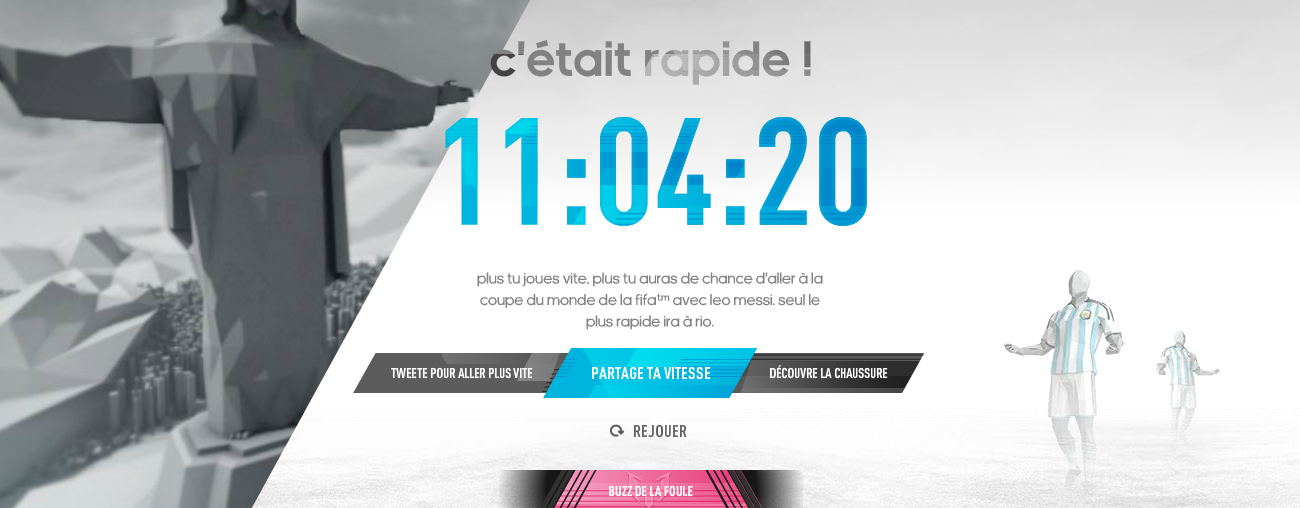
Result: Over 400,000 fans played more than one million minutes and completed 250,000+ games, generating 14,000 Messi mentions, 50,000 shares and over 80 million reach impressions, according to the Shorty Awards entry, which also reports a 20% social sharing rate.
Caring Quest — Care Bears (2024)
Agency: Exclusible · Platform: Roblox
You load into Care-A-Lot as a Care Bear with its own power, then run, jump and glide across open zones collecting Seeds of Caring, which unlock more bears and companions. There are puzzles to solve and characters to rescue but no game-over screen, so younger players can explore freely. A Team Battle mode adds short matches to play with friends.
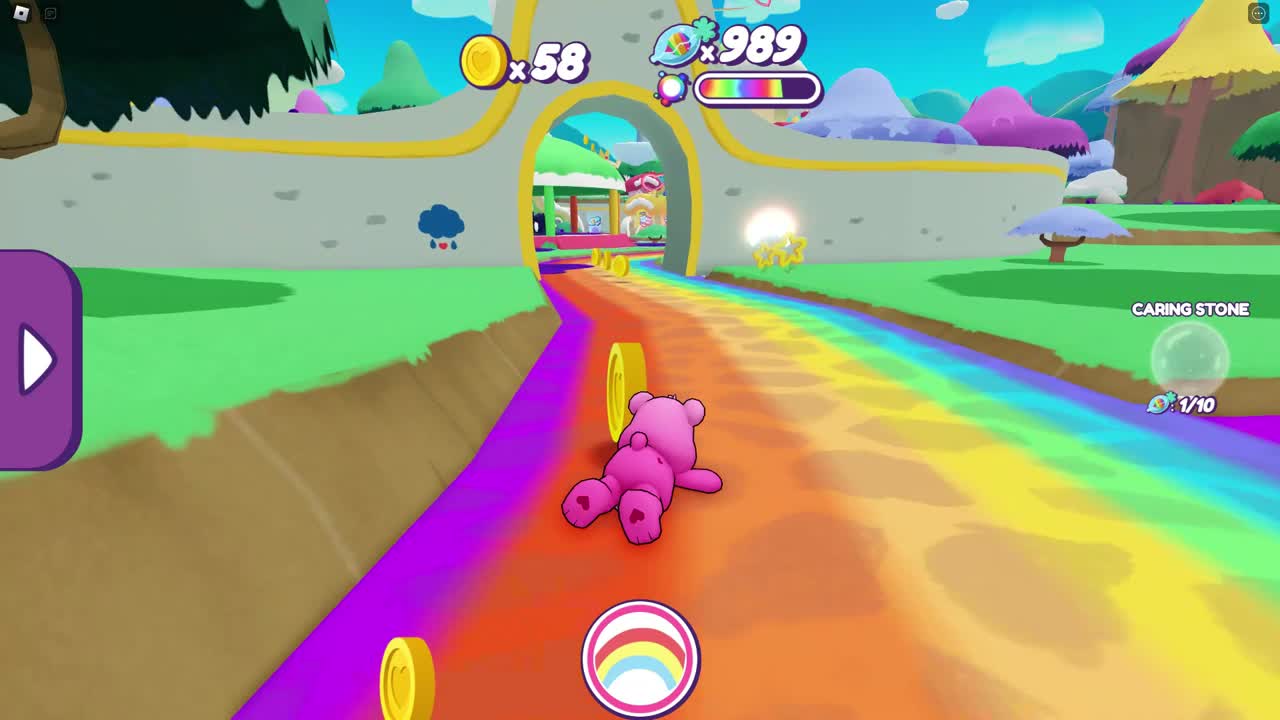
Result: The game passed one million visits in nine days "without paid media or artificial boosts", was featured ten times in Roblox's Today's Picks, and drew more than 100 YouTube videos and hundreds of TikToks, according to Exclusible. Features like these can act as the large single broadcast the Twitter study describes. By August 2026 it had passed 21.6 million visits, and it is still playable.
FAQ
What is viral marketing and how does it work?
A brand makes something worth passing on, such as a video, a challenge or a game with a score, and seeds it with an audience; each person who shares it brings in new people. It works best when sharing takes one tap, the content flatters the sharer and an early broadcast gives it a push.
What does virality mean?
Virality is how widely and quickly something spreads from person to person. Researchers separate popularity, how many people took it up, from structural virality, how far it spread through many generations of sharing rather than one big broadcast; Goel and colleagues found popularity was driven largely by the single biggest broadcast, not by long chains of sharing. In growth metrics, virality is measured with the K-factor.
Is viral marketing the same as word-of-mouth marketing?
They overlap. Wikipedia describes word-of-mouth marketing as consumers talking about a product, sometimes encouraged by marketers through seeding or rewards, and lists viral marketing among its techniques, one that uses pre-existing social networks. Word of mouth also happens offline; viral marketing usually means something built to be forwarded.