
Moorhuhn
Virtuelle Moorhuhnjagd
- Brand
- Johnnie Walker
- Year
- 1998
- Objective
- Awareness
- Industry
- Food & Drink
- Mechanic
- Arcade & Action
- Platform
- In-Game
- Agency
- Witan Entertainment
- Added
- October 2026
- 1
A promoter dressed as a hunter brings a laptop into a bar or pub and invites a patron to play one short round for a prize.
- 2
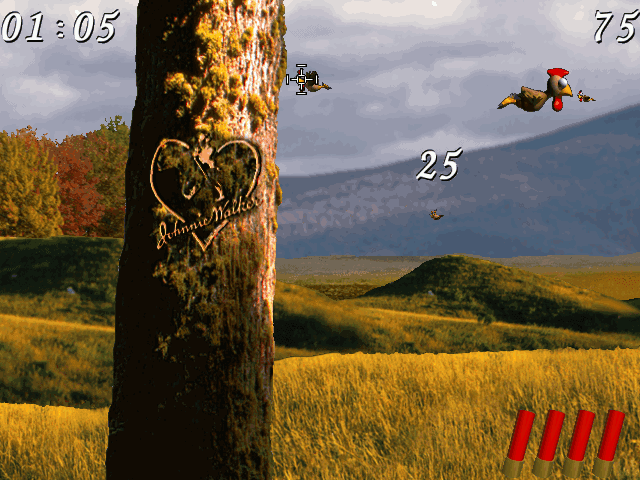
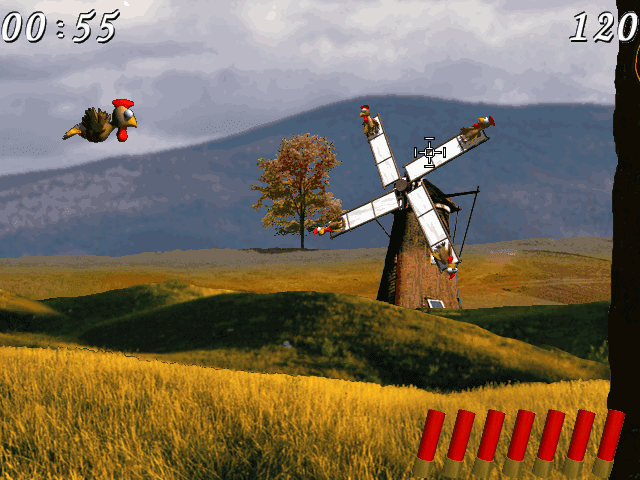
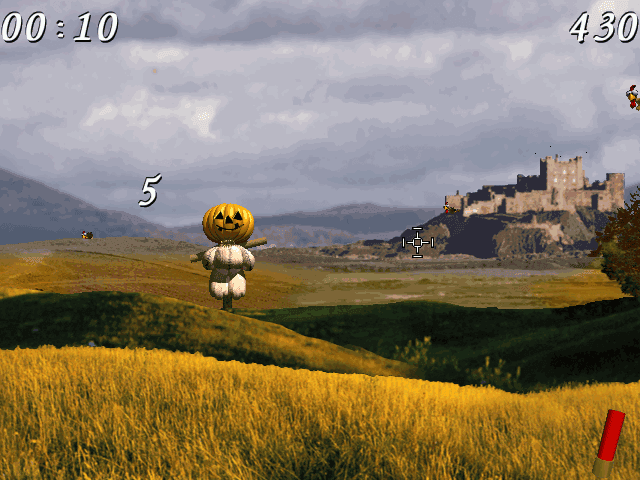
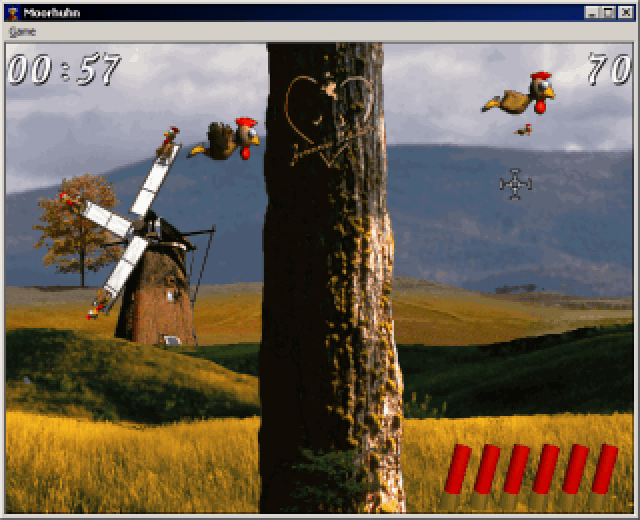
Each round drops the player into the same single level, a Scottish highland scene with hills, a windmill, a scarecrow and a signpost, under a 90-second timer.
- 3
The mouse cursor acts as a gun sight; moving it to the screen edges scrolls the scene left and right to scan for targets.
- 4
Cartoon, bug-eyed moorhens fly across the landscape at varying distances, and the player aims and fires with the left mouse button, scoring 5, 10 or 25 points depending on how far away the bird is.
- 5
The gun holds eight shots; once empty, the player must reload with the right mouse button, and this reload pause is the main limit on firing speed.
- 6
Players can also shoot scenery objects, such as the scarecrow's hat, the windmill blades, the signpost and a passing balloon, for bonus points or penalties; in the original ad-funded version these same objects carried a Johnnie Walker logo, so the brand appeared wherever the player aimed.
- 7
When the 90 seconds run out, shooting stops and the game displays the round's final score.
- 8
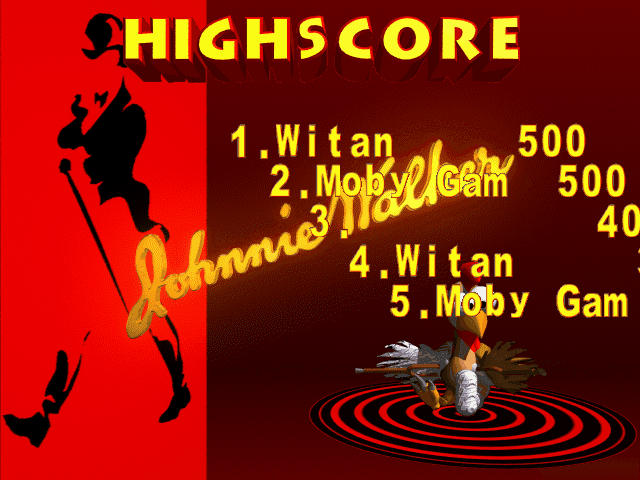
The player replays the same short round to beat their own score and compete against others at the table, with high-score rivalry driving repeat play.
- 9
Winners in bars received a copy of the game on floppy disk, and from 1999 the same build was also available as a free download from fan sites and later officially from Art Department and Johnnie Walker's German website.
Objective
Johnnie Walker wanted a way to meet drinkers on their own turf and refresh its image, trading the brand's stuffy reputation for something playful and young without putting a game on retail shelves. The approach leaned on Scottish shooting-party imagery — heather moors, grouse on the wing — to connect whisky with the Glorious Twelfth hunting tradition, delivered as a bar-room activation rather than a media buy.
Solution
The screen shows a Scottish highland moor that scrolls left and right as you move the mouse, with the cursor doubling as a shotgun sight. Cartoon, bug-eyed moorhens dart across the landscape and you shoot them with the left mouse button — the farther the bird, the more it's worth: 5, 10, or 25 points. Your magazine holds eight shells, and the right mouse button reloads it. Scattered among the birds are bonus and penalty objects — a scarecrow's hat, a windmill's sails, a signpost, a passing hot-air balloon — that add or subtract points if you hit them. The whole round lasts 90 seconds, after which your score appears and the only thing left to do is play again and beat it; in the original bar version, Johnnie Walker branding sat right in the scenery, printed on the balloon, two trees, and the signpost.
- 10M+
- game downloads by late 2000
The bar-promo build fed into a free download from johnniewalker.de that drove roughly 600,000 downloads by March 2000, with an estimated 2 million people in Germany having played the game by that point. Once picked up by the Computer Channel portal, downloads passed 10 million by late 2000, and the eventual retail spin-off, Die Original Moorhuhnjagd, reached about 12 million downloads total. The IP owner, Phenomedia, went public in late 1999 and reached a market value of up to €1 billion, and the franchise the ad game spawned grew to more than 30 titles, with the original becoming Germany's most popular PC game of the early 2000s.
Can you still play it?
Yes — as a brandless remake, "The Original Moorhuhn Hunt," sold on Steam since June 2025 for €2.99, with versions on Switch, PS4 and PS5; the original 1998 Johnnie Walker-branded build isn't officially distributed anywhere. No closing date for the Johnnie Walker promotion is on record; the brand's logos were simply dropped when a commercial, ad-free release came out on 23 December 1999.