

A loyalty program (loyalty programme in British English) rewards customers for coming back with points, member tiers, perks or prizes, tied to an account, card or app. For the brand, members are an audience it already knows and can reach; a game gives them a reason to open the app between purchases.
How it works
Wikipedia describes a loyalty program as a marketing strategy that encourages customers to keep shopping at, or using the services of, one or more businesses. The building blocks: points earned per purchase and spent on rewards; tiers such as silver, gold and platinum; coalitions, where one scheme rewards customers of several unrelated businesses; paid memberships; cashback. Members show a card or an app to collect and redeem.
A game can sit at four points in that loop. It can earn points: Domino's gave 10 Piece of the Pie Rewards points to players who beat all six levels of its 2018 app game, a sixth of the 60 points needed for a free medium pizza (Domino's). It can spend them, when points buy game tokens. It can be a tier perk, such as early access. Or it can be the door: no membership, no play.
Where brands use it
The 22 games under our loyalty objective come most often from food and drink, then from retail and from travel and hospitality; other games for loyalty schemes sit under engagement, sales or product launch. Fast-food chains put games where orders are frequent and the app is already installed (more on fast-food games). Airlines and hotels use games to reach new members: Singapore Airlines doubled the prize-draw odds for players who added a KrisFlyer number in its Grand Prix quiz, and Marriott built Marriott Bonvoy Land in Fortnite to show younger travellers how its hotel brands relate to Marriott Bonvoy. Retailers gate games to members: IKEA Spain's The Community opened only to players who entered an IKEA Family card number. More in the loyalty collection.
When it fits
Put a game inside a loyalty program when the brief is frequency among people you can already reach: more app opens and orders, fewer dormant members. Games need a schedule: in 2022 Virgin Red gave members at least five games a week, built from a set of 30 game concepts it could reskin (The Drum). Tie play to the purchase you want: each run of Rösti Fall, below, cost a token earned by buying the promoted burger range or converted from points. A game tied to the scheme also recruits: Domino's, IKEA and Singapore Airlines each sent non-members to sign up. Partners can help fund prizes, as American Airlines, Lowe's and Best Buy did for McDonald's Monopoly in the US. Measure active members, sign-ups and redemptions, not plays alone.
When not to use it
A game cannot rescue a scheme whose rewards are not worth having. In a 1997 MIT Sloan Management Review article, Grahame Dowling and Mark Uncles called loyalty programs surprisingly ineffective for their popularity and argued they must add to the product's overall value. Fix the rewards first. Skip a loyalty game when customers buy rarely, as with cars or mortgages: a branded game or a lead generation game does more. A members-only gate shuts out strangers; when reach is the goal, open the game to everyone. Keep points rules plain and stable: in 2024 the US CFPB reported complaints that cardholders did not get promised rewards, including devaluation and revoked rewards. Prize draws tied to a purchase have their own rules (see sweepstakes); check with counsel.
Examples from the library
Rösti Fall — McDonald's (2026)
Agency: Razorfish France, with Makemepulse (creative studio and build) · Platform: App
Rösti Fall ran inside McDo+, McDonald's France's loyalty app, from 5 May to 1 June 2026. Each run cost a token, earned by buying an item from the returning 280 Rösti range or converted from loyalty points. Players picked a Fry Friend, could spend extra tokens on power-ups, then steered it left and right as it fell, dodging obstacles. Scores went to a weekly national leaderboard, and each week a new Fry Friend was unlocked. The game has ended.
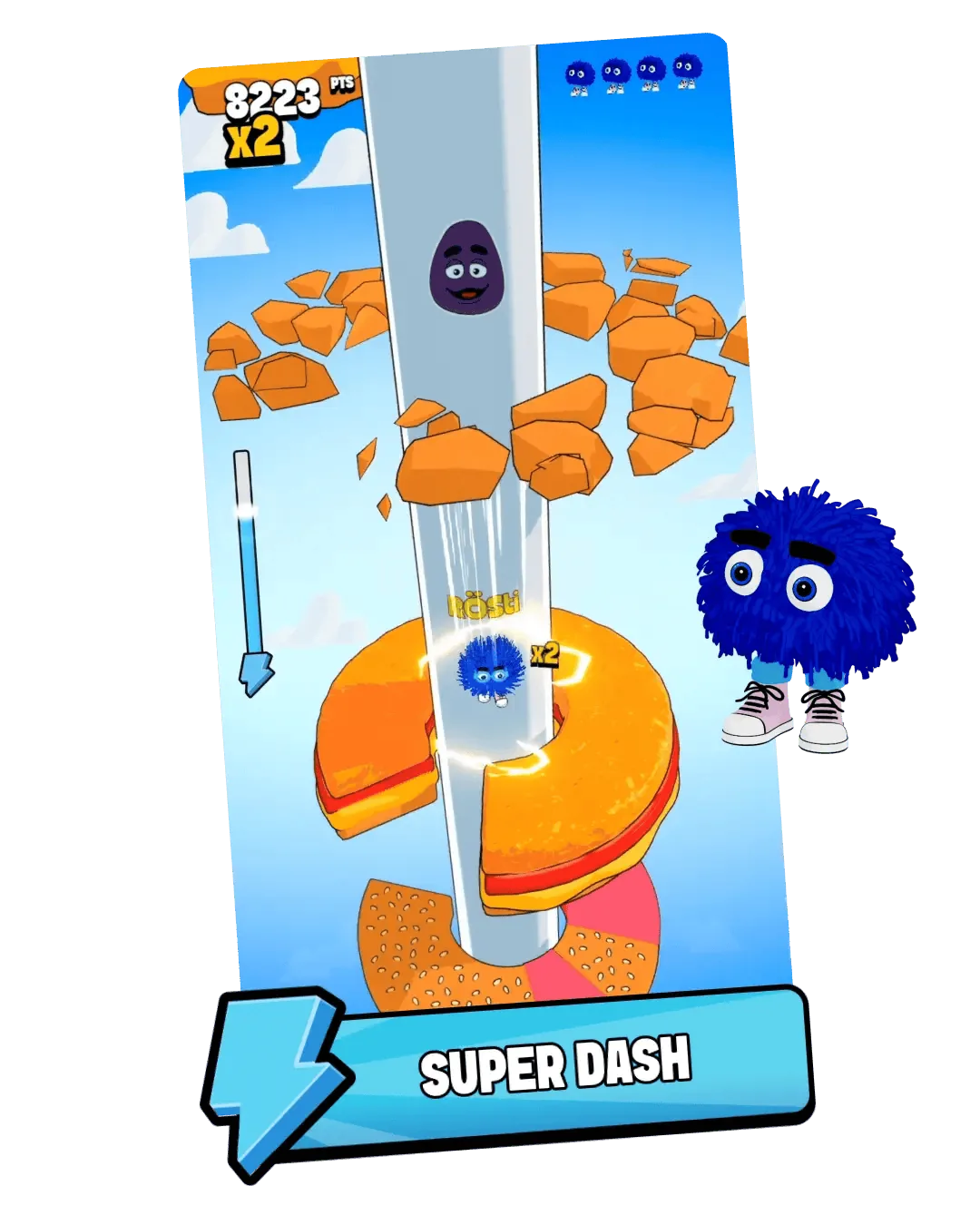
Result: By launch, McDonald's France's games in the app had built an audience of 1.6 million "McGamers", 11% of the app's audience, with more than 6.2 million games played across earlier activations, according to Makemepulse, the studio that built the game.
Diamond Valley — Google Play (2023)
Agency: Phantom · Platform: Web
Google Play built Diamond Valley for members of Play Points, its loyalty program, in Korea, Japan and Taiwan. Players made a pixel-art avatar in the browser and walked a small town, hunting hidden diamonds in quests and mini-games. Diamonds bought entries into draws for bonus Play Points and Pixel devices. In its 2025 US run, Gold members and above got early access, 500 bonus diamonds and a VIP zone (Google). It closed in January 2026.
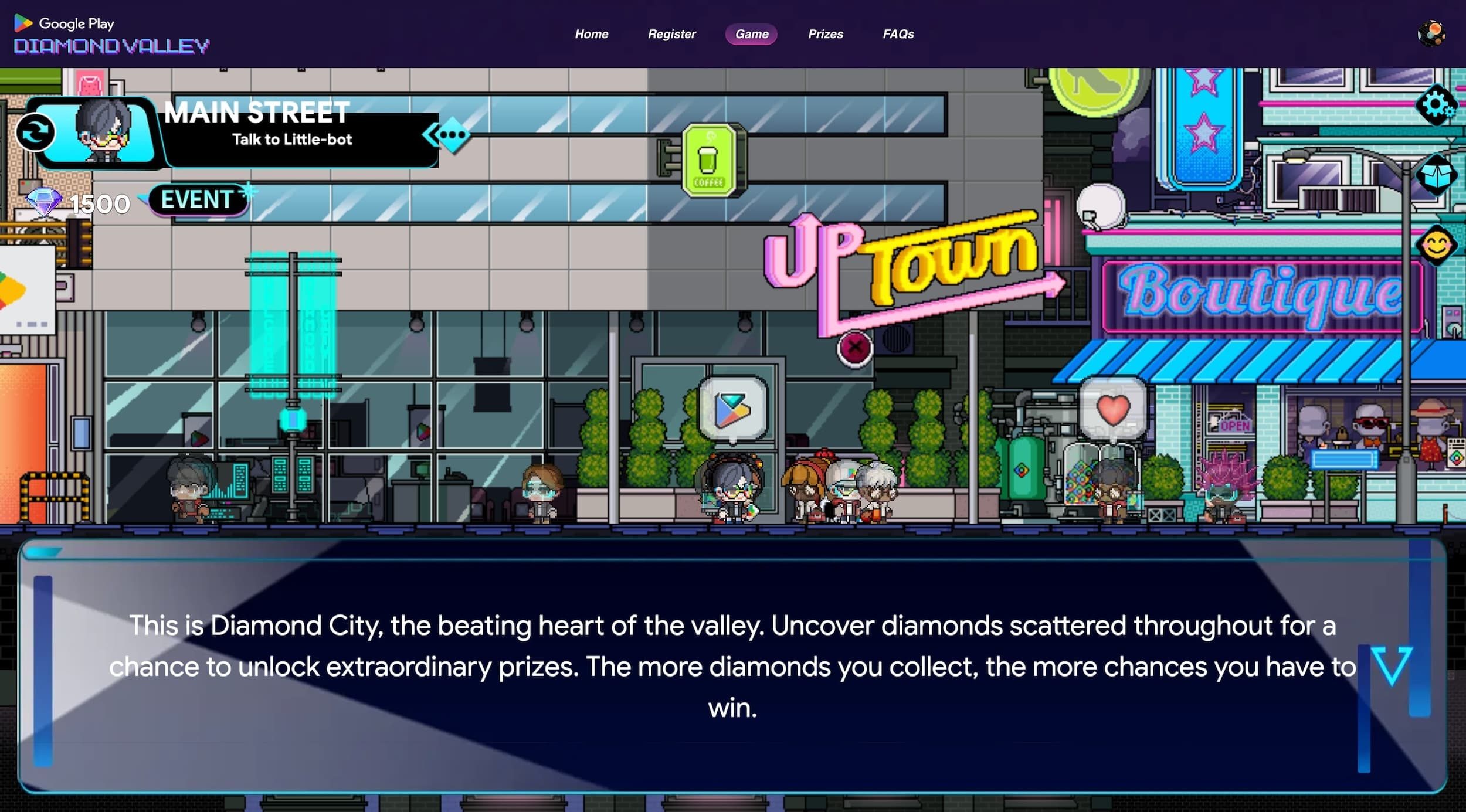
Result: 172,664 registrations and more than 1.4 million completed plays in the Asia-Pacific rollout, beating Google Play's benchmarks and targets, according to the agency, Phantom.
Virgin Red — Virgin Red (2022)
Agency: Playable · Platform: App
Virgin Red is a rewards club where members earn Virgin Points with Virgin companies and spend them on rewards. Each weekday the app and site offer a new game of a minute or two, such as a quiz, a memory match or a catch-the-falling-items round, played for a chance to win points. In February 2022 the slot became a recruitment drive for Virgin Voyages: play, register and enter a draw for a cabin on Valiant Lady's first sailings.
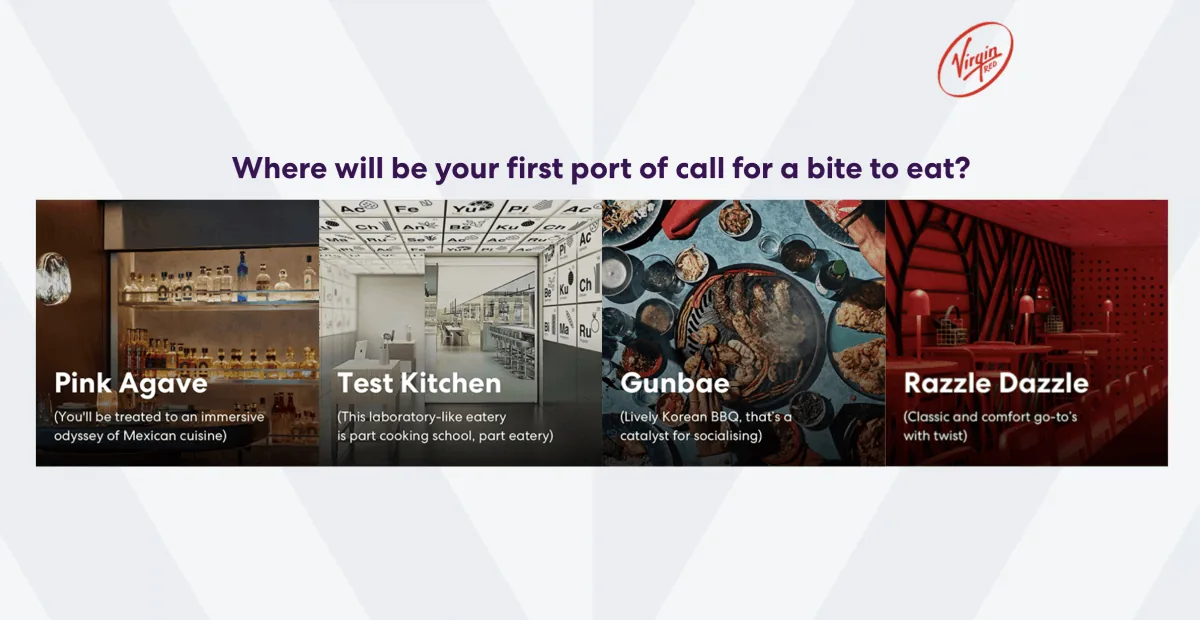
Result: The Virgin Voyages competition drew 131,000 entries and 3,500 new Virgin Red members, and reached five million views with no marketing spend, giving the lowest cost per acquisition in Virgin Red's history; eight Virgin companies took part, according to the agency, Playable.
FAQ
What are the four main types of customer loyalty?
One common split comes from Philip Kotler, as Wikipedia summarises it: hard-core loyals buy the brand all the time; split loyals are loyal to two or three brands; shifting loyals move between brands; switchers show no loyalty. Dick and Basu add that real loyalty pairs a strong attitude to the brand with repeat buying; repeat buying out of convenience or for lack of alternatives is spurious loyalty.
Is a loyalty program the same as a rewards program?
In everyday use, yes. Wikipedia treats "loyalty program" and "rewards program" as one term; Domino's calls its scheme Piece of the Pie Rewards, and Virgin Red calls itself a rewards club. Some schemes go beyond earning and redeeming points, adding tiers, paid membership or partner coalitions, all types Wikipedia lists.
What is a gamified loyalty program?
A loyalty scheme with game elements or small games on top of earning and spending: points for playing, tokens bought with points, daily rewards, streaks, leaderboards and instant wins. KFC UK and Ireland, for example, turned orders over £3 (€5 in Ireland) linked to its app into a chance to win free food in its Rewards Arcade. Our gamification page covers the wider technique.