

Product placement is when a brand pays, in money or in kind, to have its product, name or logo appear within someone else's film, TV show or video game rather than in an ad break. In a game, the product can sit in the background or become something players drive, use or visit.
How it works
The owner of the film, show or game decides where the product goes and what it may do; the brand pays in money, products or content. UK law, written for television, calls it product placement when a product, service or trade mark is included for a commercial purpose in return for payment or other valuable consideration (legislation.gov.uk).
Players meet it in two forms, a split from David Edery and Ethan Mollick's 2008 book cited by Wikipedia. Peripheral placement is seen in passing: a billboard, a logo on clothing. Highly interactive placement makes the product integral to the game. V Energy built its own instead of buying space: in its free Fallout 4 mod Wasteland With A V, a can of V from a vending machine gave your character a temporary boost, and the machines were stamped "Property of Shameless Product Placement Inc."
Where brands use it
Film and television made the format famous; in games, cars are the natural fit. After almost a year of working together, Renault and Electronic Arts put the Mégane Coupé into Need for Speed: Undercover (autoevolution), and Renault built the web game Agent M09 around it. Mobil 1 put its name on a Forza Motorsport circuit, "Mobil 1 Presents Maple Valley", for a run of monthly rivals events.
The placements on this page come from automotive, food and drink and retail brands; all three examples below had an awareness brief. Browse brands inside other games or the in-game platform; many there are brand-built worlds rather than placements.
When it fits
Choose placement when your audience already gathers in one game and your product has a real job there: a car in a driving game, tools in a building game, storage in a game where players hoard loot. IKEA's Skyrim quest answers about 15 years of player jokes about the carry-weight limit.
It also skips the hardest part of running your own game: finding players. The Home Depot went into an existing Roblox role-play town; citing Roblox's earnings in 2023, Adweek put the platform at 66.1 million average daily active users. The host gains too: Free Fire's producer said such collaborations give current players something new and can draw in newcomers (Garena). Tie the placement to something you can count, such as a code or a store visit.
When not to use it
Skip it when you need sign-ups, a prize draw or player data: players and their accounts belong to the host, so build a branded game or advergame you own. If the product has no job in the game, a logo is better bought as in-game advertising. Expect less control: the host decides where the product goes, what it can do and when it leaves.
Take care with children. UK law bans placement in TV programmes made mainly for under-16s (legislation.gov.uk). In 2023, US Federal Trade Commission staff advised marketers not to blur advertising in children's content; where a whole section of a virtual reality world is essentially an ad, they suggested a watermark-type disclosure that reappears or stays in view (FTC). Check with counsel.
Examples from the library
Ace The Field (McLaren X Free Fire) — McLaren Racing (2021)
Agency: none credited · Platform: Garena Free Fire, mobile
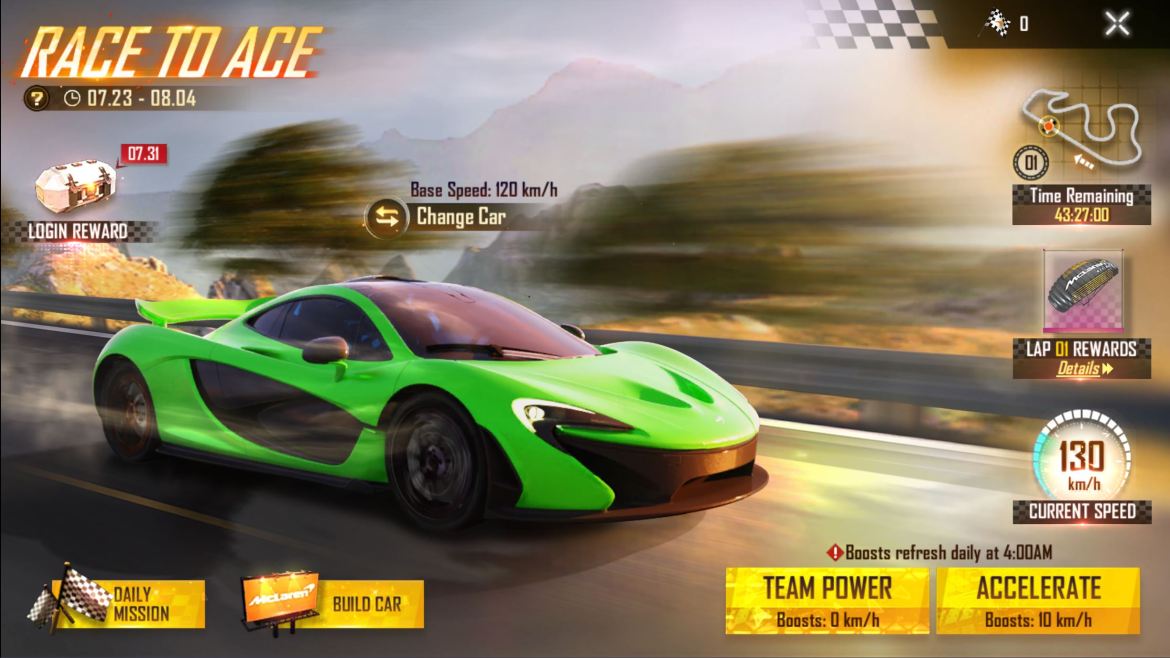
McLaren Racing wanted a mobile audience its Grand Prix broadcasts could not reach. In matches on the Bermuda, Kalahari and Purgatory maps, players could drive a road-going McLaren P1 or the MCLFF racer, and test both on a Training Island track. In the Race to Ace event, daily tasks earned chequered-flag tokens that pushed a P1 through the event, and players could wear papaya and blue racing suits. The cars and cosmetics left the game after early August 2021.
Virtual Kids Workshops — The Home Depot (2023)
Agency: BBDO with IF7 · Platform: Roblox, inside Redcliff City RP
To mark 25 years of its free in-store Kids Workshops, The Home Depot opened a store inside Redcliff City RP. A virtual employee in an orange apron offers a bird house, a flower garden or a two-seater car to build. Players gather lumber and paint, measure, cut and hammer, then carry the piece round the city. Children who went to a real in-store workshop could also get a code to redeem in the city, an optional extra rather than a way in. Screens in the build area read "This is an advertisement for The Home Depot."
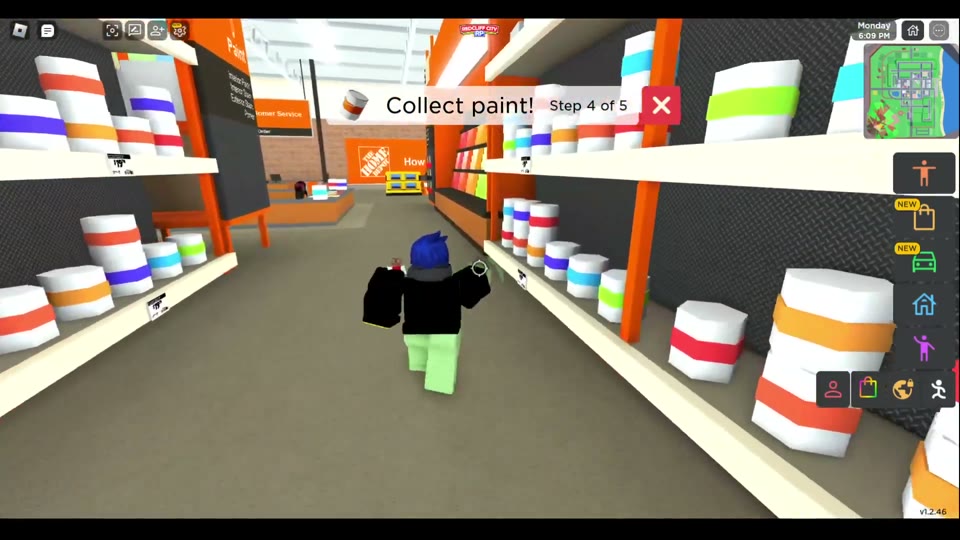
Result: By July 2023 the retailer had drawn 7 million users to its activation in Redcliff City, reported Adweek.
KALLAX Storageborn — IKEA (2026)
Agency: Mother with mod studio Kinggath Creations · Platform: The Elder Scrolls V: Skyrim Special Edition, PC and Xbox
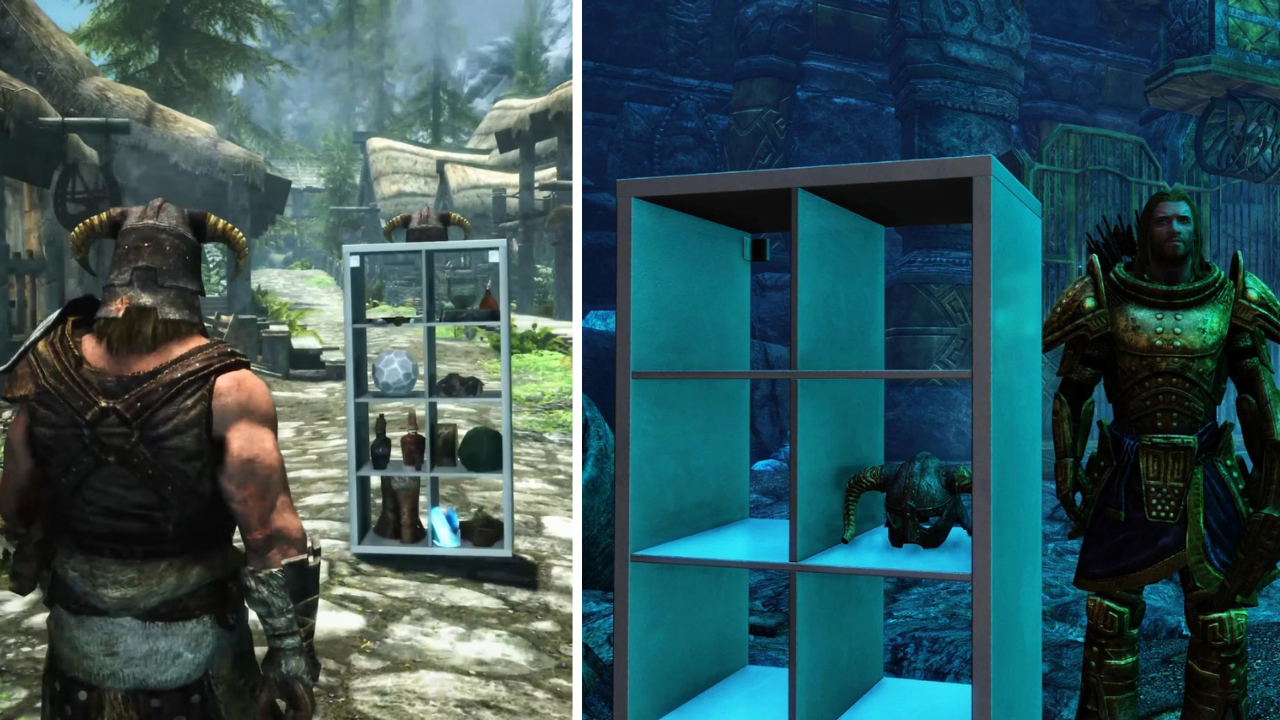
IKEA built its storage fix into the game. Overload your character with loot and an emissary sends you to a hidden Dwemer furniture store, where you assemble a KALLAX shelf that comes to life, voiced by Matt Berry. It follows you, gathers loot and tidies your homes, and a new Dragon Shout that sounds like "IKEA" summons it. A second quest ends in a fight with a Clutter Golem. It is still free in Skyrim's Creations menu.
FAQ
What is the definition of product placement?
A marketing technique in which references to specific brands or products are worked into another work, such as a film or TV programme, with a promotional intent; much of it is done by lending products, especially costly ones such as vehicles (Wikipedia). Legal definitions add payment: under UK broadcasting law, a product supplied free and of no significant value is a prop, not a placement.
Is product placement the same as in-game advertising?
Partly. In-game advertising covers every paid ad in a game the advertiser does not own, including rewarded videos between rounds. Product placement is the part inside the game world. Wikipedia likens static in-game ads, coded into a game and fixed after release, to placement in film (Wikipedia). A game the brand owns is an advergame, not a placement; our journal compares the formats.
Do product placements in games have to be disclosed?
Rules differ by market and medium. UK broadcasters must signal placement at the start and end of programmes they make or commission, and after each ad break, but that law covers programmes, not games (legislation.gov.uk). In May 2023 the US Children's Advertising Review Unit (CARU) found Roblox had not adequately disclosed to children when ads appeared in experiences (BBB National Programs). Check with counsel.