

Cause marketing is marketing in which a company ties its brand or sales to a charity or social cause, often pledging a gift for each purchase or action. The cause gets money or attention; the brand earns goodwill. In a campaign game, play is the action: points, steps or finished matches become donations.
How it works
The classic form is transactional: the customer acts, the company gives. In 1983 American Express promised one cent per card purchase to the Statue of Liberty restoration and raised $1.7 million (Wikipedia). The sum is simple: donation = rate × qualifying actions, up to a cap.
A game moves the trigger from the till to play, so the qualifying action can be a match, a score or a dance step instead of a purchase. In Loot for Good, Activision pledged $1 for each Warzone DMZ match in which a player extracted at least $30,000 of in-game cash, up to $10 per player and $1 million in all (Call of Duty). Desperados' Rave to Save started at €1 per 1,000 steps danced and matched direct gifts up to €30,000 per event (We Are Pi).
Where brands use it
The library tags 51 games with a charity or social cause, most of them built for awareness. Many come from charities themselves; the cause-marketing ones pair a company with a cause. Food and drink brands lead: Chobani pledged $75,000 to Hunger Free America once its Roblox racers reached a points target (Marketing Dive), and High West pledged $1 to American Prairie for a run of Prairie Dash, once per player a week, up to $50,000. In retail, Target pledged $1 to St. Jude for every game of Bullseye's Playground, up to $1 million (Target). Game makers back causes inside their own worlds: Mojang has given The Nature Conservancy money through several Minecraft campaigns, which the charity files under cause marketing.
When it fits
Use it when the brand has real standing in the cause and wants people to help with little effort: the goal is reputation, trust or favourability, sometimes sales, so plan a brand-lift study from the start. The best fits link product, play and cause. A carmaker made stopping at the line the winning move for road safety; a grocer sold a game about taste to fund children's cancer research (both below).
Tie it to a moment the audience already cares about, such as an Olympics or a holiday, or go where they play (see brands on Roblox). Show the running total on screen so every player sees their part. Settle the partner agreement, the rate per action and the cap before launch, and plan to publish the final total.
When not to use it
Skip it when the cause has no link to the brand, or when the brand's own conduct contradicts it. A 2009 essay in the Stanford Social Innovation Review calls it "consumption philanthropy" that turns collective problems into individual shopping choices, and notes that London's Observer had found children in Indian sweatshops making clothes for Gap, a (RED) partner.
Don't launch if you can't say exactly what the cause gets; the UK rules below demand it. Green pledges such as trees planted can also make an environmental claim, which the UK CMA's Green Claims Code says must be truthful, accurate and substantiated. If the aim is to teach or change a habit, build a serious game; if it is reach and sign-ups, a sweepstakes is simpler.
Examples from the library
Light Up Car Curling — Hyundai (2018)
Agency: INNOCEAN Worldwide · Platform: Web and mobile, live video
In February 2018, as Korea hosted the Winter Olympics, players watched a live feed of a real four-lane crossing where a curling target was painted just before the stop line. While the light was green, they picked the lane whose car would stop closest to it; on red, the feed showed whose call was right. Winning picks earned points that Hyundai turned into donations to Korea's Paralympic curling team.
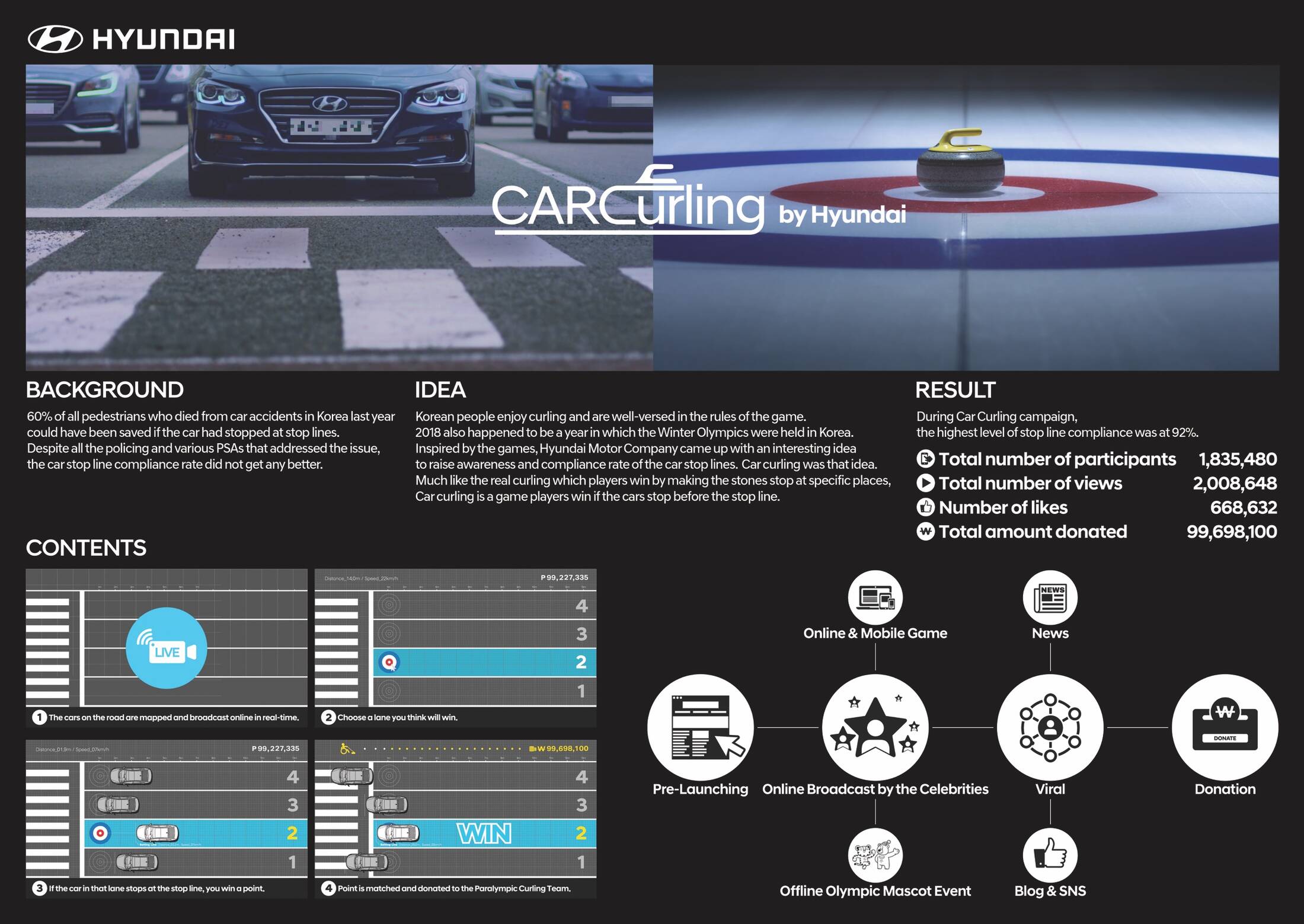
Result: According to the campaign's Spikes Asia entry, stop-line compliance at the crossing rose from 73% on 1 February 2018 to a high of 92% on 18 February. The game counted 1,835,480 participants, and KRW 99,698,100 was donated.
Tough Cookies: The Game (Umami's Revenge) — IGA (2022)
Agency: Sid Lee · Platform: Web
At checkouts of IGA, the Quebec supermarket chain, shoppers bought sheets of temporary tattoos showing characters created by children who had beaten cancer. Scanning a sheet opened a side-scrolling browser game in the world of tastes, where Sweet, Salty, Bitter and Sour face a jealous Umami. The more different tattoos a family bought, the more characters it could play. The money raised funds paediatric cancer research through the Fondation Charles-Bruneau.

Result: The 2022 game drew more than 20,000 unique players and raised over $500,000 for cancer research, according to its One Show entry. Sid Lee says the campaign raised $1.7 million over four years and engaged over 80,000 players in its digital experiences.
Ronald McDonald House In Roblox — McDonald's (2022)
Agency: DDB (Nord DDB); production by Karta · Platform: Roblox
McDonald's Sweden and the Ronald McDonald Children's Charity gave families at the country's five Ronald McDonald Houses a code to a sixth house, built as a Roblox experience. Its rooms come from residents' wish lists, from an aquarium pool to a rollercoaster, and three mini-games keep leaderboards, among them a four-player sled game. Only residents and friends they invite can enter, so the game serves the cause while a wider campaign told the public.

Result: According to the campaign's Guldägget entry, trust in the foundation's work rose 21%, willingness to donate 20% and donations 29%, and more than 2,200 children have played. Karta reports 45,500 visits and an average playtime of 11.27 minutes; a gala auction of three in-game features raised almost 150,000 kronor.
FAQ
Is cause marketing the same as cause-related marketing?
Not quite. Wikipedia treats cause marketing as the broader term: marketing by a for-profit business that seeks both profit and a better society, which need not involve a donation. Cause-related marketing is the narrower case, a business and a non-profit working together for mutual benefit. Both differ from philanthropy, which is usually a specific, tax-deductible gift.
What is point of sale fundraising?
It is asking customers to give at the moment they pay: a set amount, rounding up the bill, giving in an app or tapping to donate (Engage for Good). The customer gives, not the company, which separates it from a per-purchase pledge. Engage for Good's report counted 92 such US campaigns in 2024, which raised over $275 million; the top ones included Taco Bell, PetSmart, Walmart and Petco.
What must a charity-linked promotion tell people?
The UK CAP Code (rule 8.33) says a company's promotion claiming to help a charity or cause must name each one, say exactly what it gets and how that is calculated, state any cap, give totals on request and not urge children to buy. In England and Wales, a commercial participator must also state the amount. In the US, more than 40 states regulate fundraising, each differently; check with counsel.