

Brand lift is the difference a campaign makes to how people see a brand: how many more of those who saw it remember the ad, know the brand, consider it or plan to buy than in a similar group who didn't. For a brand game, it answers what play counts cannot: did playing change minds?
How it works
A brand lift study asks two comparable groups the same survey question: one saw the campaign, the other was eligible but held back. On YouTube, Google shows a short survey to both, and the difference between their answers is the lift. Meta's lift studies likewise assign accounts at random to a test group that sees the ads and a control group that doesn't.
Google reports the difference three ways. Absolute lift is the exposed group's positive-answer rate minus the baseline rate. Relative lift divides that by the baseline rate. Headroom lift divides it by one minus the baseline rate. If 20% of the control group and 40% of the exposed group say yes, absolute lift is 20 points, relative lift 100% and headroom lift 25%. Same study, three numbers, so ask which one a case quotes. Google shows lift only when it is statistically significant and positive.
Where brands use it
Brand lift belongs to awareness and product launch briefs, where the sale comes later or happens offline. It matters most on platforms that report visits and minutes but not opinions, such as the worlds in our Fortnite and Roblox collections. Sky's Sky City reported +3.3% ad recall on Meta, +3% on TikTok and +2.5% awareness, according to The Drum's awards case study. Ad recall is a question about ads, so those two figures most likely describe the paid media around the map rather than play. Banks report brand metrics too: Ally Island saw an 8% increase in aided awareness, according to WARC's case summary. In the library, 15 games report a brand-lift figure of some kind.
When it fits
Use it when the goal is perception: being known, being associated with a category, being on the shortlist. It needs paid reach big enough to fill a survey. Google's setup guide asks for a minimum campaign budget over 10 days, roughly $5,000 to $60,000 depending on country and the number of questions, and lets you measure up to three metrics: ad recall, awareness, association, consideration, favourability, purchase intent or a custom one. Google's results guide says detecting a 1-point absolute lift takes 20,000 to 45,000 responses; a lift above 4 points, about 1,200 to 2,800. Set targets before launch, as Philips did for Body Royale below, and report lift next to sales, sign-ups or redemptions.
When not to use it
Skip it for small audiences. A small Roblox world or an event game with a few thousand players rarely yields enough survey answers; read completion rate, dwell time and redemptions instead. Skip it when the brief is a sale or a sign-up: measure conversion rate or leads directly. Don't treat every survey comparison as lift. Burger King's Craft A Western Whopper compared Swedish 18-to-25s who noticed the campaign with those who didn't and found consideration 83% higher, according to INGO Stockholm's Eurobest 2019 entry; people who notice a burger campaign may like burgers already, which is why platform studies hold back a random control group. A poll of players alone, with no control group, shows how they felt, not what the game changed. And never compare one case's relative lift with another's absolute lift.
Examples from the library
Playfully Wimbledon — Ralph Lauren (2019)
Agency: Lostmechanics · Platform: Web (Facebook Instant Game)
Players picked a ball boy or ball girl dressed in Polo Ralph Lauren and ran down the court, steering, jumping and sliding past umpire chairs and benches while scooping up tennis balls. The game opened straight from a Facebook or Instagram ad or post, with no app to install, and each run ended on a leaderboard with a link to challenge friends. A live tournament followed at the brand's London flagship on the day of the men's final.
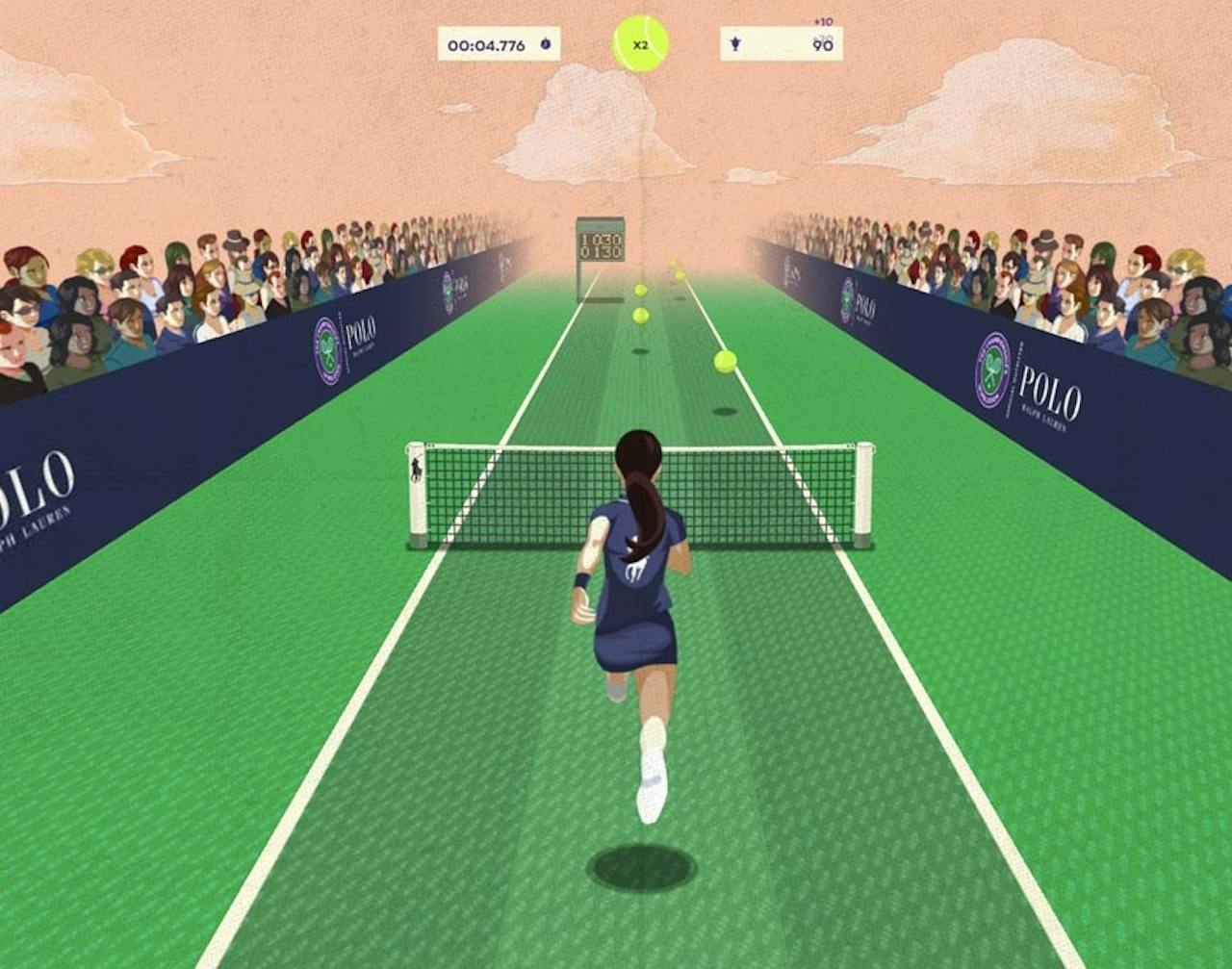
Result: More than 130,000 players completed over 210,000 sessions, and the campaign delivered a 6.3-point lift in purchase intent and a 4.2x return on ad spend, according to an article on Meta's page at The Drum. "Points" signals an absolute lift; the article does not say how it was measured.
Body Royale — Philips (2025)
Agency: Ketchum, Fuse, The Gang · Platform: In-game (Fortnite)
Players drop onto a Fortnite island shaped like a giant, hair-covered human body and carry a blade modelled on the OneBlade razor. Shaving is the core action: cutting hair restores health, reveals shields and power-ups and opens sightlines, while thick patches serve as cover and loose clumps of hair roam as enemies. The last player standing wins. The map launched at TwitchCon Europe 2025 in Rotterdam, aimed at men aged 18 to 30.
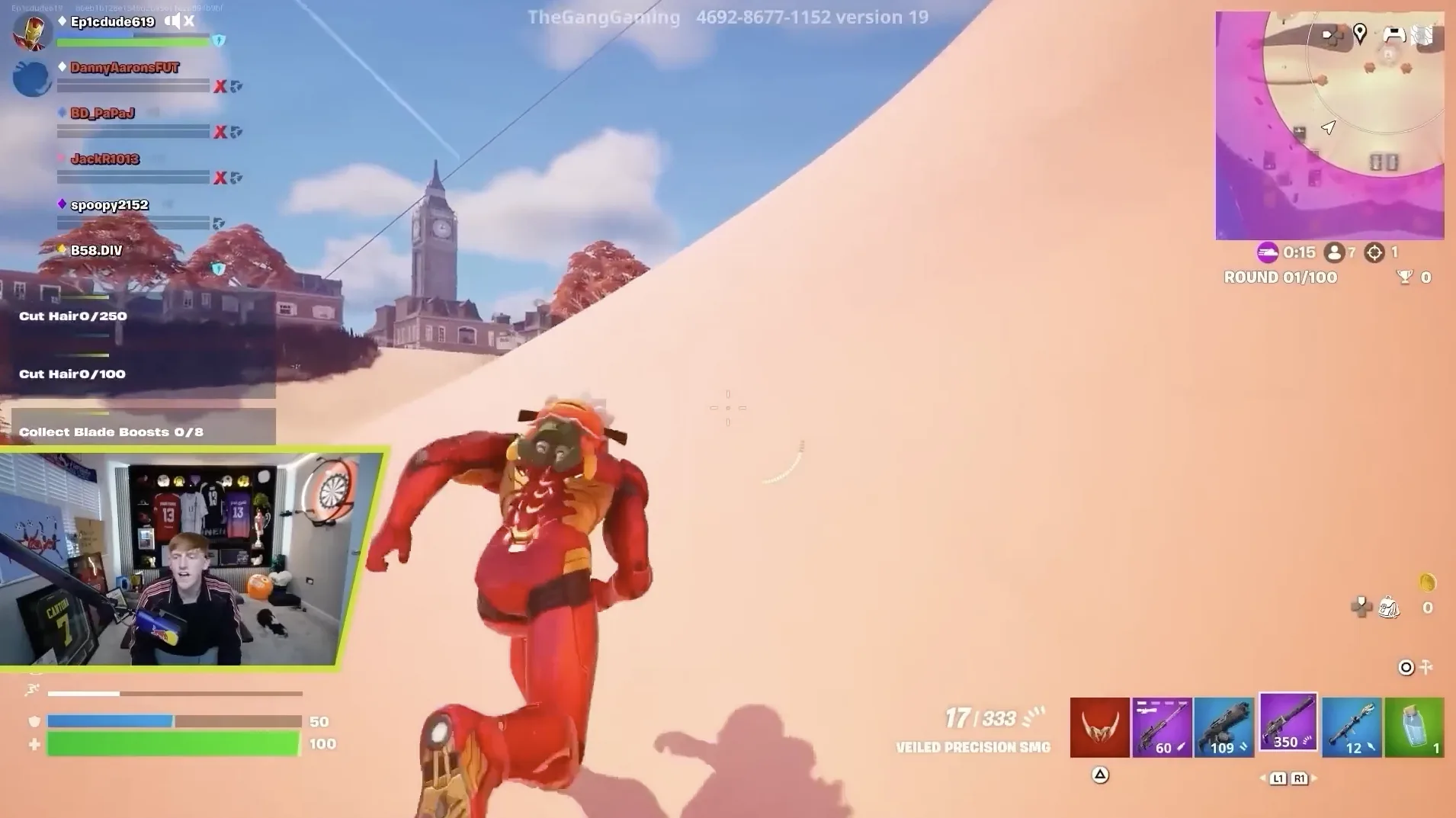
Result: Awareness reached 81% against a 74% target (a level, not a change), consideration rose 11% against a +5% target and preference 5% against +2%, while sales among men aged 18 to 30 grew 28% year on year, according to The Drum's awards case study. Neither it nor Ketchum's case page explains the method, and Ketchum gives awareness as 50% among men aged 18 to 30.
Flavorize Me — Talenti (2015)
Agency: Fallon, UNIT9 · Platform: Web
Visitors signed in with Facebook, Instagram or Twitter and let the site read a year of their posts. Seconds later it returned a taste profile in percentages (sweet, sour, salty, spicy, bitter), an invented gelato flavour and the real Talenti pint closest to it, then prompted them to share. The site is gone.
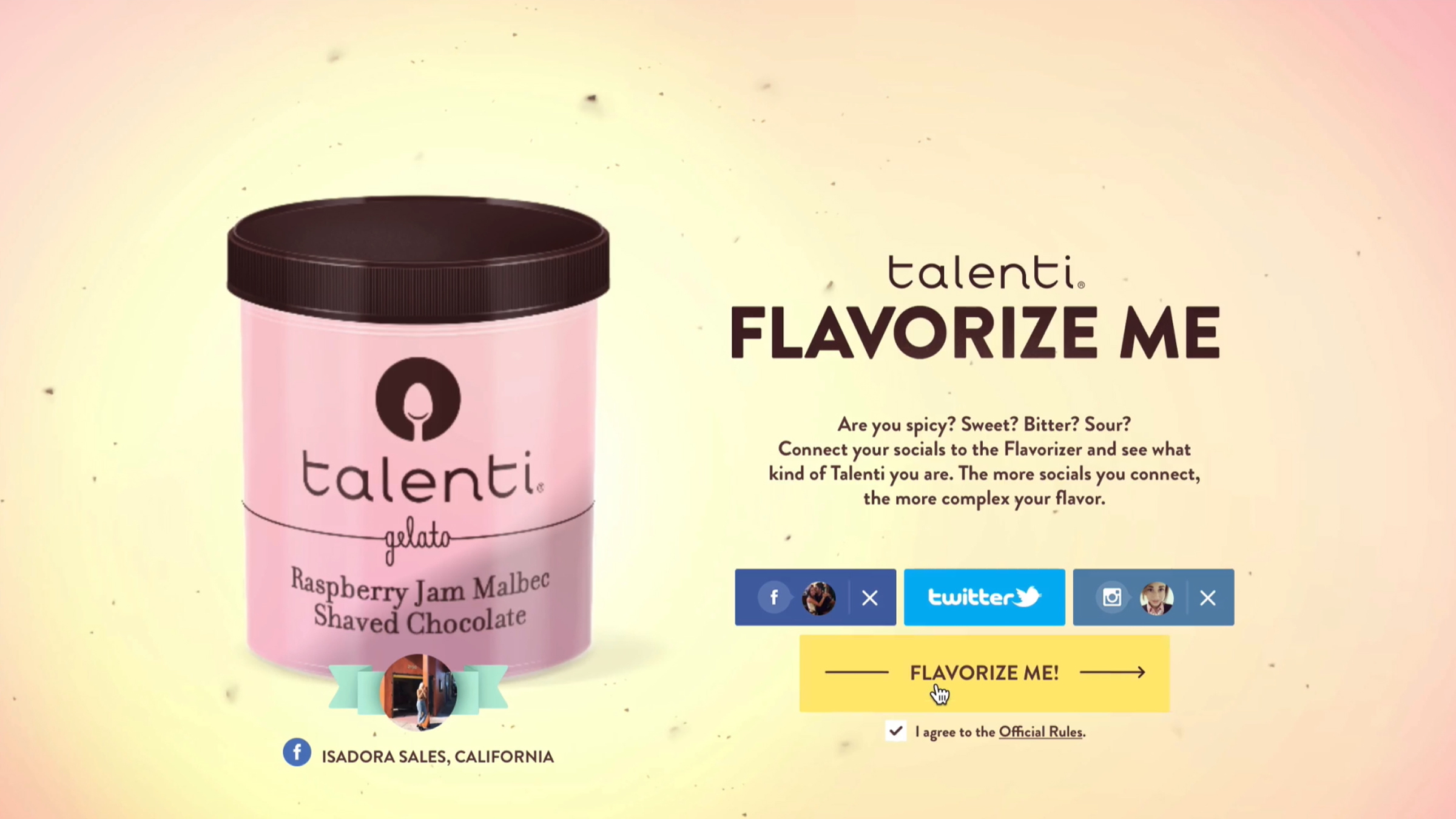
Result: Nearly 120,000 flavours were created against a goal of 46,000, and general market awareness rose 4% over the same period with stated purchase intent up 2%, according to the Shorty Awards entry, which says awareness "wasn't our primary success metric". This is market tracking over a period, so it also counts everything else Talenti did at the time.
FAQ
What is a good brand lift?
There is no universal benchmark we can source: the answer depends on the metric, the baseline and which of the three calculations a case uses. Set your own target before launch, as Philips did with +5% consideration and +2% preference. Most lifts on this page are single digits; Burger King's 83% compares people who happened to notice the campaign. Our playable marketing statistics collect what other brand games report.
Which companies offer brand lift studies?
Ad platforms run them on their own inventory. Google offers Brand Lift for YouTube video and Demand Gen campaigns through an account representative, Meta runs Brand Lift tests, and Sky's campaign reported ad recall lifts from both Meta and TikTok. For a game outside ad platforms, such as a Fortnite island, brands rely on their own brand tracking or a commissioned survey.
Is brand lift the same as brand awareness?
No. Awareness is one metric: the share of people who know the brand. Brand lift is the change in any brand metric, awareness included, that can be credited to a campaign, measured against a group that did not see it. A well-known brand may have little awareness left to gain and aim to lift consideration or association instead.