

Completion rate is the percentage of people who start something and finish it: completions divided by starts, times 100. For a brand game it shows how many players reached the end of a game, level or entry flow, and so how many got to the message, prize or sign-up placed there.
How it works
The formula: completion rate = completions ÷ starts × 100. The work is in defining both. A start can be pressing play, opening the first snap or sending the first message; a finish can be the last level, an end screen, a submitted form or a video watched to the end. Count players or sessions, and say which: replays add completions without adding people.
Analytics tools track it as a funnel of ordered steps. Roblox funnel events show creators where users drop off; Roblox suggests starting with onboarding, where a game is likely to lose the majority of its users. A GA4 funnel exploration counts users only for steps completed in order. Steam shows the share of players who earned each achievement, so one for the final level works as a completion rate. Google Ads counts "Video played to 100%" only once the whole video has been watched.
Where brands use it
Case studies quote it wherever the payoff sits at the end. Lead generation and recruiting games need it when the form or job link comes last (see our guide to recruitment games). Drimify reports a 99% completion rate for U Generations, the instant win TF1 and Coopérative U used to collect more than 410,000 email leads. Level-based app games count who reaches the last level: 14% of players finished all 24 levels of McDonald's Macca's Run, according to Goodboy Digital. Puzzle campaigns report it next to the win rate: Toyota's Second Wordle, whose answer was CROWN, had a 63% completion rate among players who started and a 97% win rate among those who finished.
When it fits
Use completion rate when the thing people must reach is at the end: a product reveal, a prize form, the point a story builds to, a job page. It suits short, linear games with one finish line and a known number of steps, from a five-round quiz to a 20-minute chat story. Log every step as a funnel so you can see where people quit, then fix that level, question or form field. Report starts next to the rate: 76% of 240,000 teens and 30% of a few thousand players are different results. Then pair it with the step after the finish, such as entries, sign-ups or clicks to the brand site, because finishing only matters if something follows.
When not to use it
Don't make it the headline for formats that finish by design. An instant win game is over in seconds, so a 99% completion rate says little; judge it on leads, conversion rate and redemptions. Open worlds on Roblox or Fortnite, idle games and loyalty hubs have no end to reach, so measure retention and session length instead. Don't compare rates across formats: a 20-minute story and a 30-second run are different tests. Don't buy a higher rate by making the game too easy, because a prize everyone wins means less. And a low rate can be the brief. A skill test built to be hard, like the Army's Cryptaris below, is meant to lose most players.
Examples from the library
SnapSkate — Coca-Cola (2017)
Agency: Ogilvy · Platform: Snapchat Stories
Coca-Cola launched Zero Sugar in Germany inside Snapchat Stories on the channels of influencer izzi and Coca-Cola Germany. Each snap showed pro skater Denny Pham rolling towards an obstacle. A tap just before he fell skipped to the next snap, where he cleared it; a late tap meant watching him crash. Chaining taps carried players through several worlds, collecting Coke Coins, to the finish line. Finishers were asked to leave their details for a chance to win one of five pro skateboards.
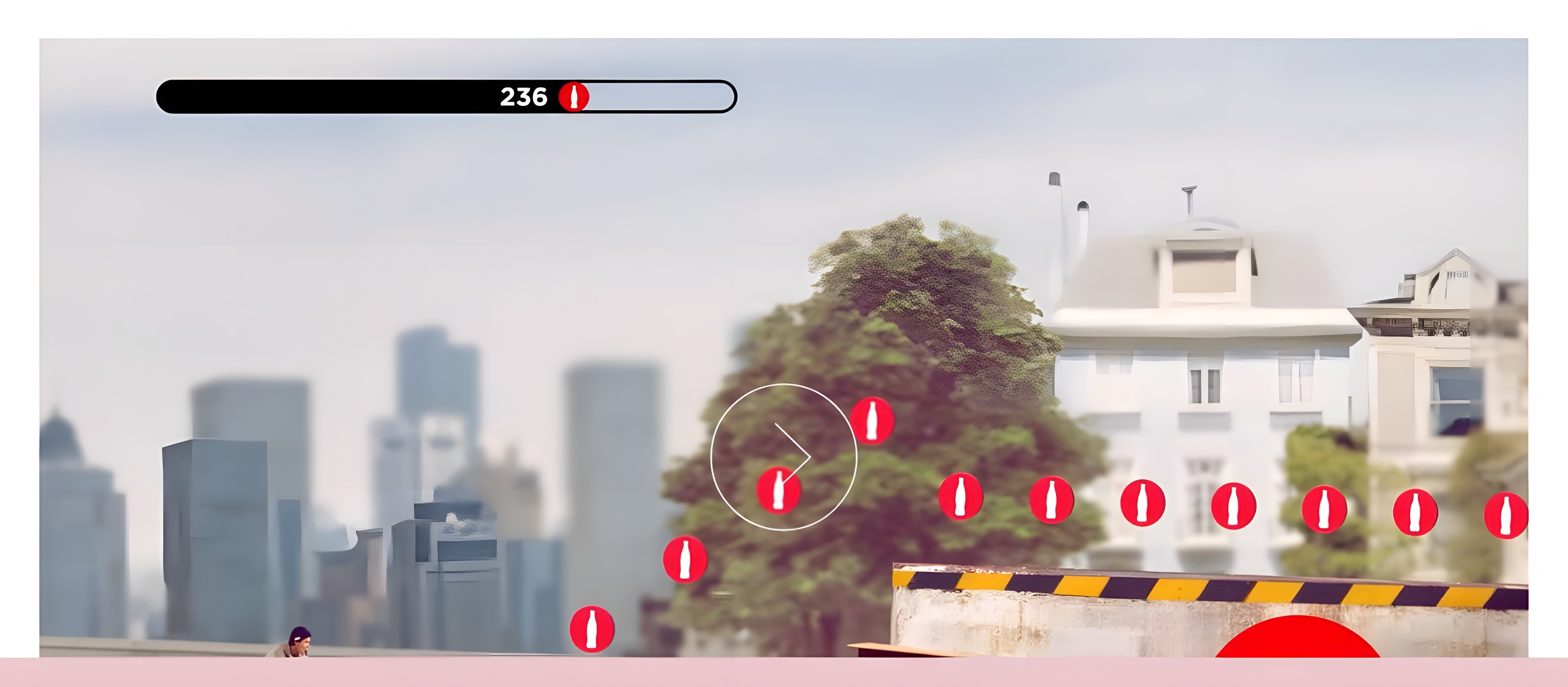
Result: The game ran for three days, 31 March to 2 April 2017 (Horizont). In that time 240,000 teens played, and 76% played all the way to the end, according to its creators' case page. The game also produced 7.5 million views and 8,000 hours spent with the brand.
Tree of Hope: A WhatsApp Adventure — WWF (2023)
Agency: Charles · Platform: WhatsApp
Players scanned a QR code on a billboard or used a landing page to open a WhatsApp chat with WWF Germany, then sent "OPEN GAME". As an EcoNinja guided by the Owl of Protection, they tapped buttons and picked from lists to save a forest in a German nature reserve, while images, voice notes and short videos arrived in the chat. A FOREST INFO button gave real facts about protected areas. Finishers got access to a limited-edition WWF T-shirt in WWF's online shop.
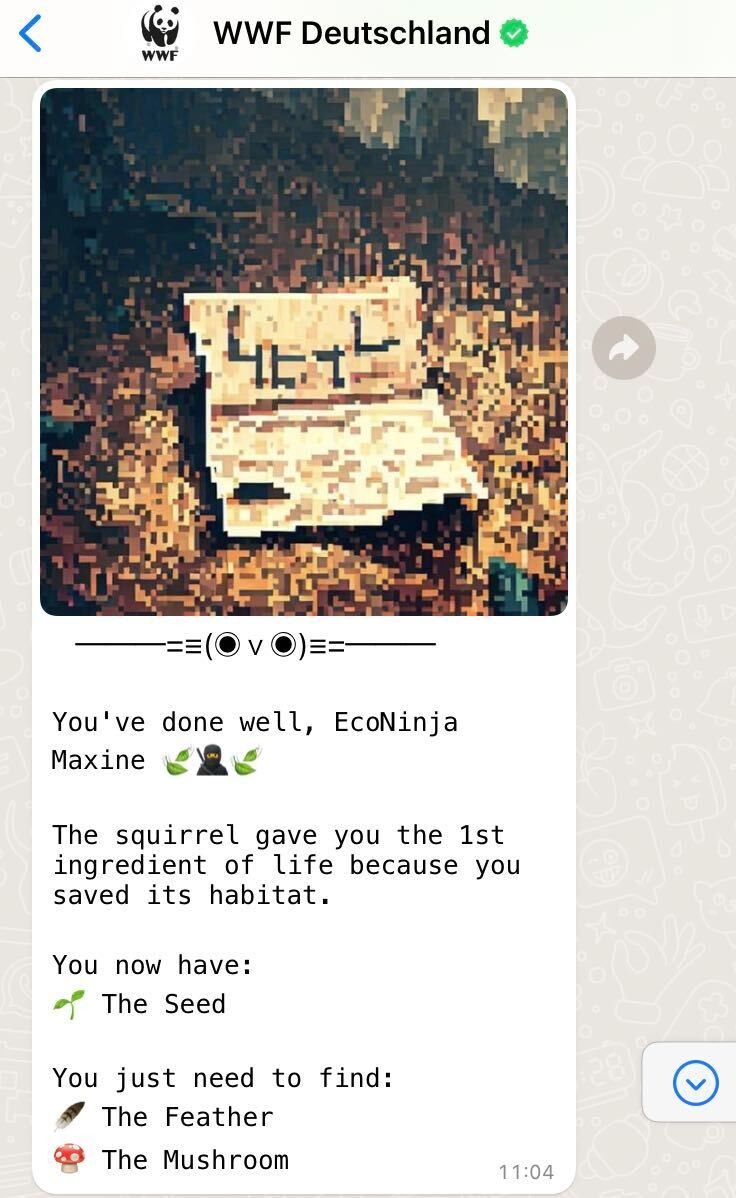
Result: WWF reported a 30% completion rate, which Karl Nowak, head of online business development at WWF Germany, called "outstanding" in The Drum. The D&AD entry describes about 20 minutes of play. By 26 May 2023, interim figures from Charles put the game at more than 130,000 messages sent to roughly 3,000 players.
Cryptaris Mission — U.S. Army (2015)
Agency: McCann, MRM, Plan8, Tool, UM · Platform: Web
The U.S. Army needed recruits with engineering and technical skills, an audience that saw it as low-tech. Players worked through seven browser simulations in a row, each testing a different Army skill, from plotting navigation coordinates to clearing a route or piloting a drone. Every level was scored on accuracy, speed and completion, and the difficulty climbed steeply. Anyone who finished all seven was sent to goarmy.com to browse STEM jobs.
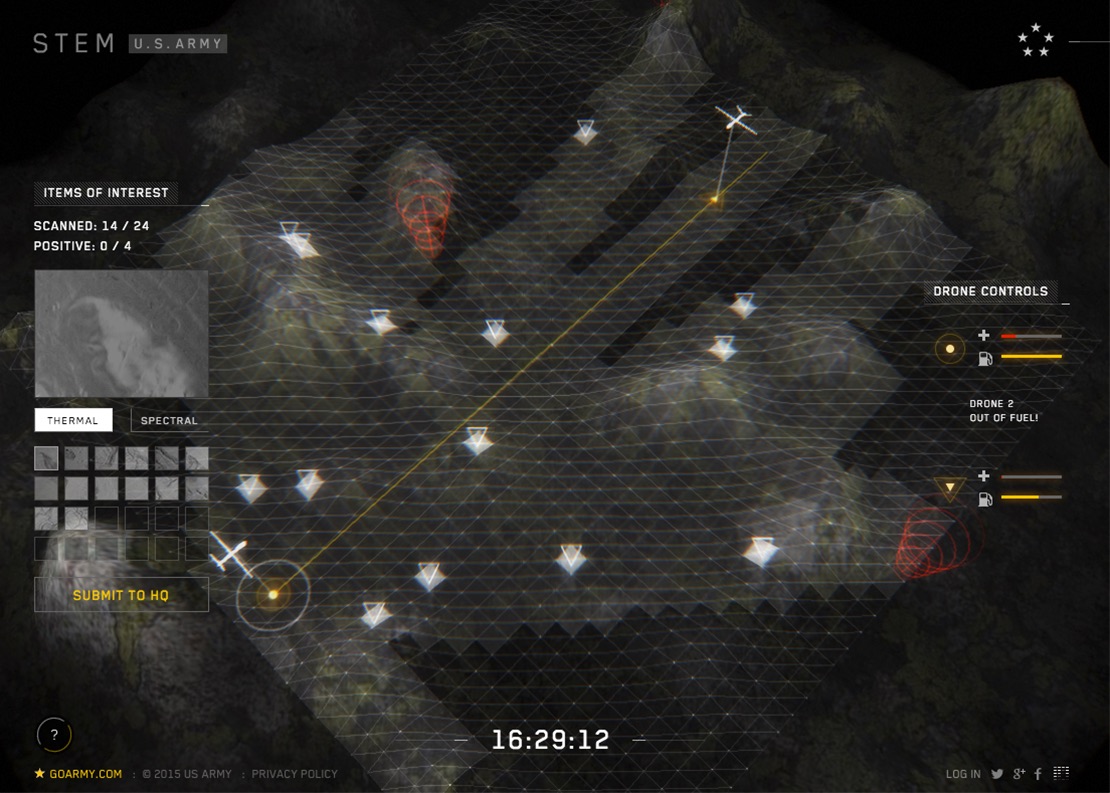
Result: The mission was designed so that only 5% of users could complete all levels. Only 0.15% completed all seven, and over 7,000 players visited goarmy.com to learn about STEM jobs, according to the One Show entry; MediaPost's Effie preview gives the same 0.15%.
FAQ
How do you calculate the completion rate?
Divide completions by starts and multiply by 100. If 4,000 players start a game and 1,200 reach the end screen, the completion rate is 30%. Define the start and the end before launch, count people or sessions consistently, and publish both raw numbers next to the percentage.
What is a 67% completion rate?
It means two in three people who started finished. The figure is familiar from US student aid: colleges set a pace standard for academic progress, such as hours completed divided by hours attempted, and the Federal Student Aid Handbook uses two-thirds in its examples. Hulu's History of the World, Part II set its 84.7% Xbox video completion against an app benchmark of 67% (Shorty Awards).
What is a good completion rate?
There is no universal benchmark; length, difficulty and the reward at the end all change it. On this page, 76% finished a short Snapchat Story game, 30% finished a 20-minute WhatsApp story, a rate WWF called outstanding, and 0.15% finished an Army test built so that only 5% could. Compare against your own earlier campaigns or a test version, not other formats.