

Click-through rate (CTR) is the percentage of impressions that end in a click: clicks divided by impressions, times 100. Around a brand game it is read at two points: the ad or email that invites people to play, and the button that sends players on to a shop, sign-up or donation page.
How it works
The formula is the same everywhere: CTR = clicks ÷ impressions × 100, so in Google Ads 5 clicks from 100 impressions is a 5% CTR. What changes is what each platform counts. In Search Console, an impression is a link to your site shown in results, and a click counts only when it takes the user outside Google Search, Discover or News. Email tools change the denominator: Mailchimp divides clicks by delivered emails.
Interactive ads add a second number. Google Ad Manager reports interaction rate for rich media separately from CTR: interactive impressions divided by rich media impressions. In a playable ad, the tap that starts the game is an interaction; the click-through is the tap that leaves the ad for a store or product page.
Where brands use it
In playable marketing, CTR shows up at both ends of a game. On the way in, it rates the paid social and banners that bring people to play, common in social campaigns and lead generation, and the email or app message that invites existing customers, typical of loyalty programmes and seasonal pushes such as Christmas games. On the way out, it rates the call to action: a shop button, ticket page or donation link, which case studies usually report as a count. Paultons Park's Peppa Pig World Puzzle logged 14,000+ clicks on its "Explore Peppa Pig World" button against 38,000+ registrations in June 2025, according to Playable; divide one by the other for a rough in-game rate. For wider numbers, see playable marketing statistics.
When it fits
Use CTR to judge the invitation and the hand-off, not the game. It is the right lead metric for a traffic brief: an ad or email whose only job is to get people to press play, or a game whose job ends on a shop or donation page. It also suits A/B tests of subject lines, creatives and end-screen buttons.
Write the definition into the brief: which clicks, which denominator (impressions, delivered emails, players who reached the end screen) and whether repeat clicks count. Icelandair's Real vs AI shows why: Playable reports more than 51,500 clicks to the airline's site against more than 46,000 completed playthroughs, so clicks are not simply a share of finishers. Report CTR beside what follows the click: conversion rate, cost per lead or sales.
When not to use it
Don't make CTR the goal of the game itself. A high rate with few sign-ups or sales means the interest was thin, and a prize promise can pull clicks from people who only want the prize. Don't compare across channels: LocaliQ's 2026 benchmarks put search ads on Google and Microsoft at 6.64% and Facebook traffic campaigns at 1.93%, so the same 3% is weak on one and strong on the other. Don't trust every tap: Google counts clicks caused by poor ad placement as invalid and filters them from billing, and a fast tapping game with an exit link nearby invites the same accidents. For awareness, measure brand lift; for play itself, engagement rate and completion rate; if the game captures the lead, cost per lead.
Examples from the library
St. Patrick's Day Wheel Of Fortune — Ooni (2023)
Agency: Playable · Platform: Web, reached from Meta ads in the US and Ireland
The pizza-oven maker's St Patrick's Day ads on Meta led to an invite screen, then straight into the game. Players entered a name and email, then spun a wheel drawn as an Ooni oven, its chimney acting as the pointer, for a $20 or $40 voucher for the Ooni website (Playable's case study gives €20 and €40). The consolation prize was a free recipe e-book by email.
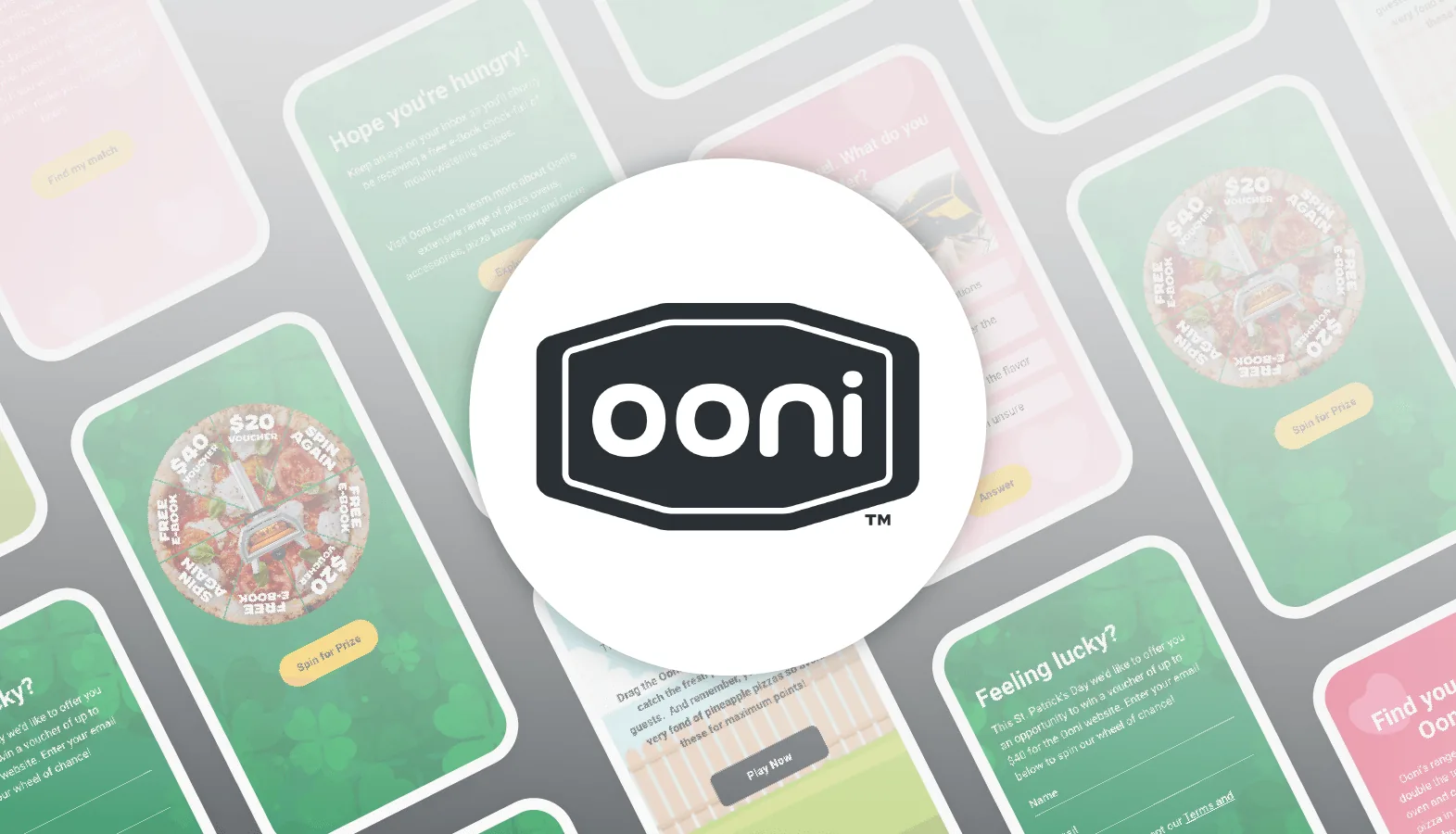
Result: The Meta ads reached a 5.02% CTR in the US and 2.53% in Ireland, and leads cost 20% less than Ooni's benchmark for non-gamified lead-generation campaigns, according to Playable. Playable's comparison is an estimated 0.90% Meta average from an older WordStream all-industry benchmark; LocaliQ's 2026 average for Facebook lead campaigns is 2.70%.
Advent Calendar Drop Game — Blush (2023)
Agency: Playable · Platform: Web
Blush, an Icelandic sexual-wellness retailer, shared the game through its email list and Instagram to sell its physical advent calendar. Players slid a sack along the bottom of the screen to catch falling calendars and dodge socks, which cost points, before the timer ran out. Replays were unlimited until 15 October 2023; the top three on the leaderboard won a calendar, and the end screen linked to the Blush web store.
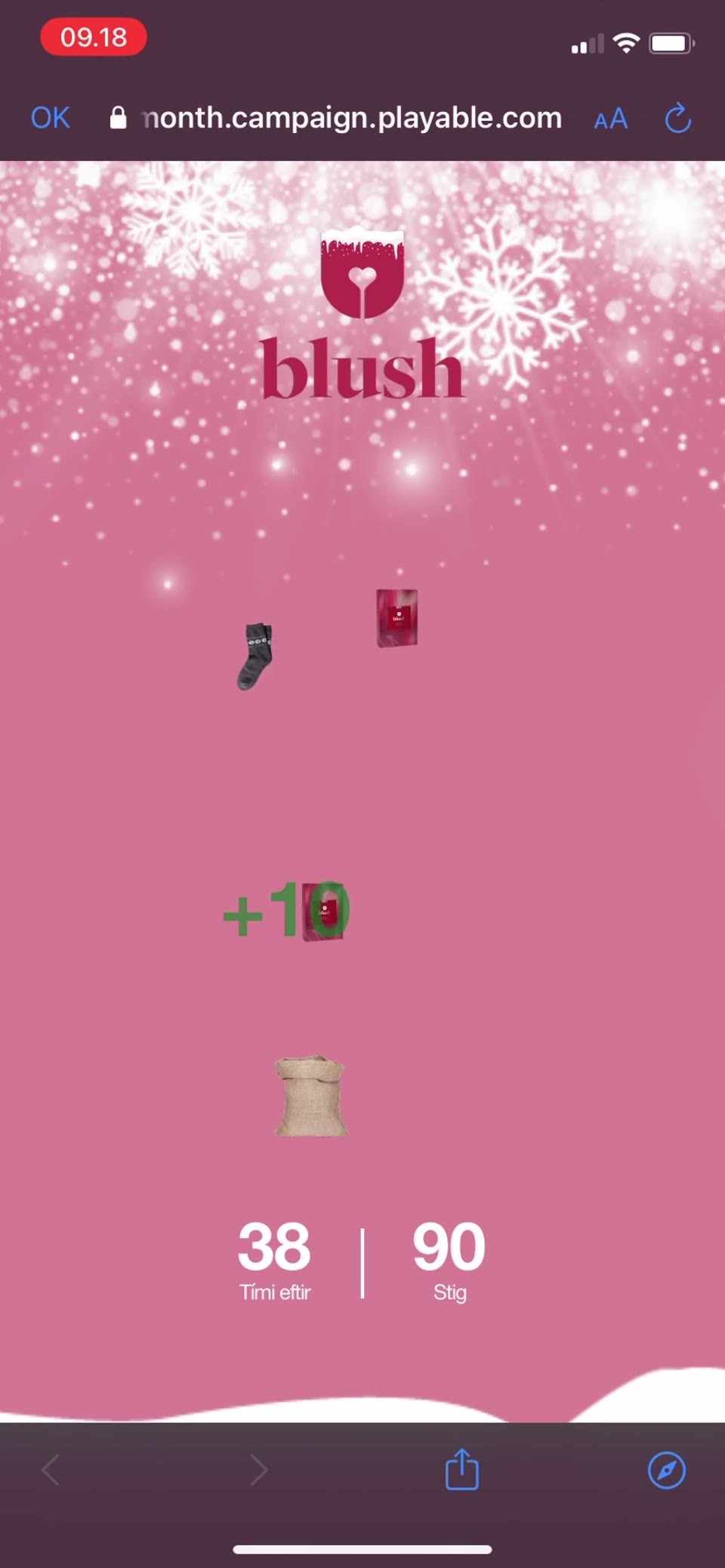
Result: The email to Blush's list had a 59.8% open rate and a 10.5% click rate, and the game sent 5,700 clicks to Blush's website from 8,070+ unique registrations, according to Playable. Playable doesn't say if that rate is per delivered or per opened email; Mailchimp's all-industry average, per delivered email, is 2.62% (data as of December 2023).
Nightmare: Malaria — Against Malaria Foundation (2013)
Agency: Psyop with Establishment for the Greater Good; music by Q Department · Platform: iOS and Android app
Launched on Giving Tuesday, 3 December 2013, the free 18-level game put players in the bloodstream of a little girl bitten by a mosquito. She could not fight, only dodge, hide, collect teddy bears and shelter under a bed net. A level screen set "$3 buys a net" beside a Donate button, and Pocket Gamer noted a prompt to donate every time you died. The apps have since left both stores.
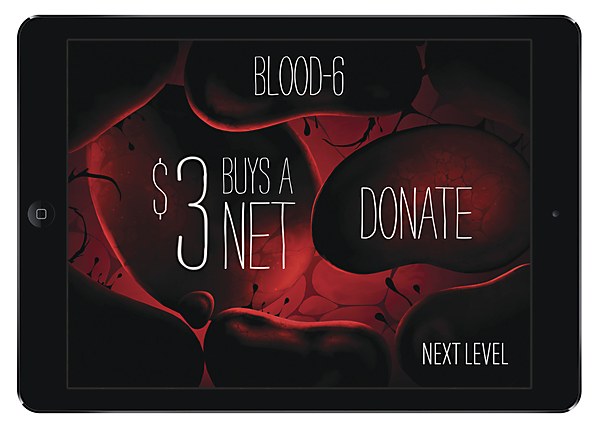
Result: In the first week there were 102,000 players and 145,000 sessions averaging 5 minutes 9 seconds, the project team told Communication Arts; the same answer counts 40,000 clicks through to the foundation, with no period given. With no count of how often the Donate button was shown, no rate can be worked out.
FAQ
What's a good click-through rate for Facebook ads?
LocaliQ's 2026 Facebook benchmarks, produced with WordStream, average 1.93% for Facebook traffic campaigns and 2.70% for lead campaigns. Traffic campaigns ranged from 1.46% in finance and insurance to 2.73% in beauty and personal care. Compare against the same objective and industry, and your own past campaigns.
Is a 2% CTR bad?
Google says a good CTR depends on what you advertise and where. Two per cent is low for search ads (LocaliQ's 2026 average is 6.64%), close to the Facebook traffic-campaign average (1.93%) and a little below Mailchimp's 2.62% email click rate. For a button inside a game, compare with your own earlier games.
What is the difference between click-through rate and cost per click?
CTR measures response: clicks divided by impressions. Cost per click measures price: Google Ads divides the total cost of clicks by the number of clicks. When you pay for impressions, a higher CTR spreads the same spend over more clicks, so CPC falls. On Google Ads, CTR also feeds expected CTR, part of Ad Rank.