

Impressions count how many times content was displayed: an ad served, a post shown in a feed, a thumbnail on screen. One person seeing it three times makes three impressions. Brands use them to size exposure and price media, but an impression proves only that something appeared, not that anyone looked, played or remembered.
How it works
An impression is one display. Google Ads counts one "each time your ad is shown". A plain count records the ad when it is served, whether or not anyone scrolled to it. The Media Rating Council's viewability guidelines set a stricter bar: at least 50% of the ad's pixels on screen for one continuous second, or two for video. YouTube counts a thumbnail only when at least half of it shows for more than a second.
Reach counts people. Impressions divided by reach give average frequency: 1,000,000 impressions across 250,000 people means each person saw the ad four times on average. Display media is often priced per thousand impressions, the CPM.
In a campaign game, impressions come before play: the banner, post or Roblox thumbnail that invites someone in. Roblox's analytics report the share of new users who played after viewing one.
Where brands use it
Display, video and social media are often planned and bought in impressions: the plan fixes a CPM, a frequency and an awareness target. PR teams count earned impressions, the audience of the articles and posts that mention a campaign. The AMEC measurement framework files "Impressions/OTS" (opportunities to see) under outputs, not outcomes. Case films and award entries quote impressions because every channel produces a count, and they may add paid, owned and earned counts into one large total. The Gang reports 16 billion earned media impressions for IKEA's The Co-Worker on Roblox, about twice the world's population. In our library 170 games report a reach-type figure such as impressions, views, followers or press coverage, including in-game and social campaigns. For wider numbers, see playable marketing statistics.
When it fits
Impressions answer one question: how many times was the invitation to play shown? They suit awareness briefs with paid distribution, where you need to know whether the media delivered the exposure it promised. Agree the counting rule before launch (served or viewable, which platforms, paid only or paid plus earned) and set a target. Hulu's History of the World, Part II game reported over 17.5 million impressions, 3 million above expectations, next to 173,000 game launches in its first live weekend, according to its Shorty Awards entry. Report the count split by source, as the Shorty Awards entry for Nike's Victory Mode lens did: 23 million paid, 383,000 organic and 642,000 Snap Star impressions. Then follow each step down: click-through rate, plays, completion rate, sign-ups.
When not to use it
Don't read impressions as players: Ally's game below counted 211 million impressions and 69,000 downloads. Don't add up counts made by different rules. Served ads, platform-counted organic views and the audience of press coverage are different units, and their total describes no one. Don't turn impressions into money. UNIT9 reports 1.37 billion impressions for Twix's Second Screen Staredown and calls the result "the equivalent of $329 million in paid media", but the Barcelona Principles 3.0 state that "AVEs are not the value of communication". Ask whether bots were filtered out; the MRC publishes separate invalid traffic rules. For a closed audience, such as a trade-show stand, count players and dwell time instead. To learn whether people now think differently about the brand, run a brand lift study.
Examples from the library
Rickstaverse — Rick and Morty (2015)
Agency: Carrot Creative for Adult Swim · Platform: Social
The game lived inside Instagram. Each account's photo grid formed a map of a Rick and Morty world, and tapping a photo revealed tags that worked as portals to other accounts. Players collected items, mini-comics and clips from the new season on the way; The Drum counted more than 80 accounts. Every post a fan scrolled past was both an impression and a way into the game. The chain of portals has since broken, so it can't be played today.
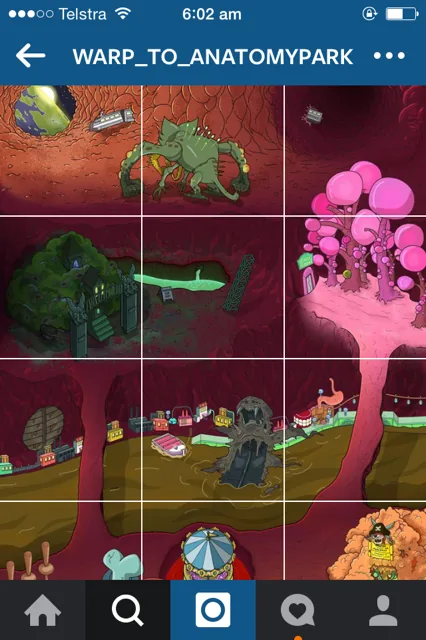
Result: 28 million impressions and more than 78,000 followers within one week, and a 142% rise in average daily mentions of the show, according to the Shorty Awards entry from Carrot Creative and Adult Swim. The entry lists Instagram paid media and influencers among the launch channels; a later expansion with no paid media took the following to 88,300.
The Big Save — Ally Bank (2018)
Agency: Grey, with MediaMonks (production) · Platform: App
Fans downloaded the app before Super Bowl LII and set a savings goal. The game worked only during the broadcast's ad breaks: through the phone camera, dollar bills rained into the living room, to be swiped into a virtual piggy bank, one run per break. The best score plus a short statement on why they were saving made a contest entry, judged 80% on the statement, with up to $250,000 in prizes, per rules quoted on a sweepstakes listing.
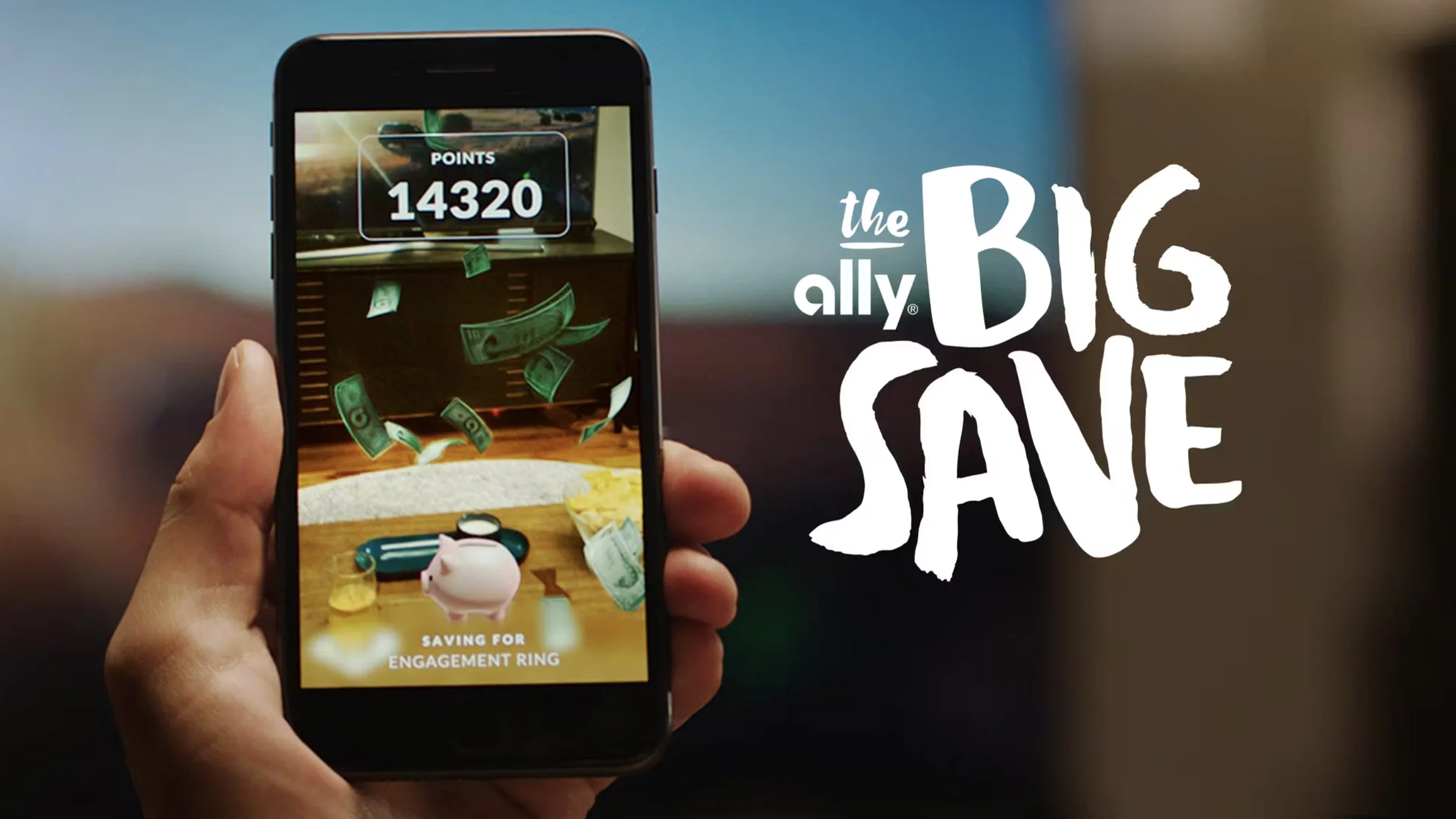
Result: More than 211 million impressions and more than 600,000 games played during the breaks, according to the portfolio of Jamie Shin, the campaign's art director. American Banker reported 69,000 app downloads, an average of 24,000 active players per commercial break and 31,000 contest submissions.
Deforestation Field — Lavazza (2022)
Agency: We Are Social, production by Dubit · Platform: In-Game
On Roblox, players enter Lavazza Arena, a bare football pitch cut into the Amazon rainforest. After dressing their avatar in a kit inspired by endangered Amazonian animals, they choose a 20-player match, a training pitch, the café or a learning area about deforestation. The more matches are played, the more grass and trees grow back around the pitch, and players earn beans, an in-game currency, for power-ups and gear. The experience is still listed on Roblox.
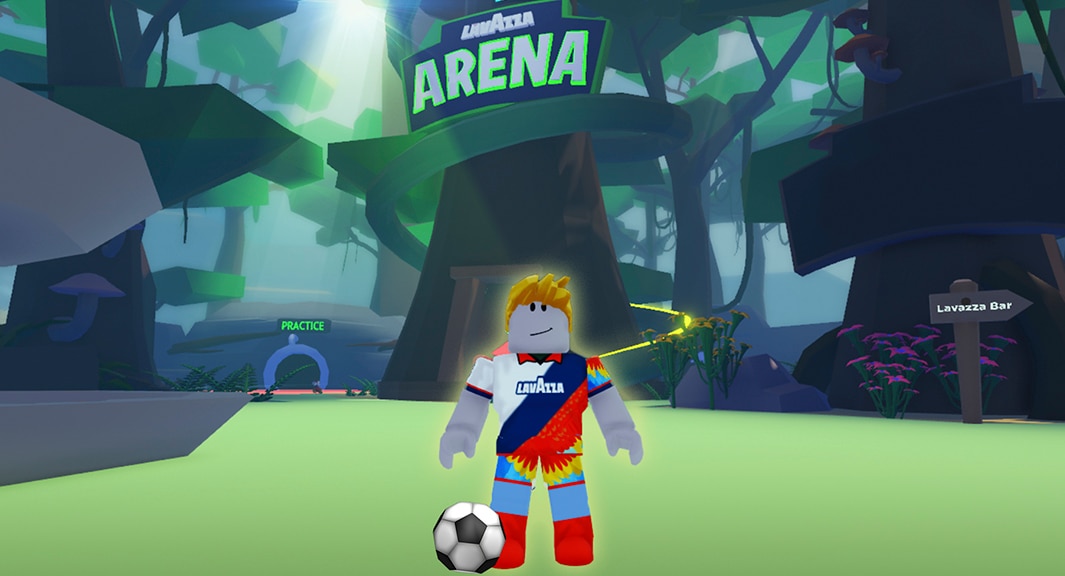
Result: 252 million impressions, 9.6 million gamers impacted and 570,000 users in the first week, plus 2.5 million minutes of streaming watched, according to the One Show entry, which won a Merit in 2023. One entry gives three different counts: displays, people reached and first-week players.
FAQ
What is the difference between impressions and reach?
Reach counts people; impressions count displays. If 250,000 people each see an ad four times, reach is 250,000 and impressions are 1,000,000. Google Ads counts unique reach as users, "not cookies", and uses statistical models so one person on several devices is not counted twice.
Is an impression the same as a view?
No. An impression means something was displayed; a view usually means someone watched or opened it. On YouTube, a thumbnail shown in a feed is an impression, and impressions click-through rate measures how often viewers watched after seeing one. For a game, the matching step is from impression to first play.
What do impressions mean in business?
In everyday English an impression is the effect something has on someone's opinion, as in "make a good impression"; Wiktionary also lists the advertising sense of a single ad display. In marketing reports it is the display count. The count tells you how often the brand appeared, not what impression it left.