

An idle game is a game that keeps making progress with little or no input: you click or tap to earn a first resource, spend it on upgrades that earn for you, and come back later to collect. Clicker games are close relatives. For brands, the loop is built for return visits.
How it works
Most idle games open with a click. In Cookie Clicker (2013), each click on a giant cookie bakes one; cookies buy cursors and grandmas that bake on their own. Wikipedia's entry on incremental games splits the family in two: clicker games stress active input, idle games stress automation, and many combine both. Later titles added offline progress, so the counter keeps rising while the game is closed, and "prestige": you reset your run in exchange for a permanent bonus.
Researchers who analysed 66 idle games for the CHI 2018 paper "Playing to Wait" describe a game "left running with little player interaction", one that moves players from playing to planning. A brand version swaps cookies for its own currency, often a product, and hangs rewards on milestones.
Where brands use it
Three patterns recur in our library. On Roblox, whose genre list files Idle and Incremental Simulator under Simulation, brands build simulators: in Aquaman Simulator for Warner Bros., coins from defeated henchmen bought ever stronger tridents and the next underwater zone. On the web and in apps, care games grow a plant or a pet: Dunkin' Donuts' MIB3 Capture levelled up an alien fed on virtual iced coffee and donuts. Then there is the clicker contest: in the Batman v Superman Visa Challenge for Société Générale's DC-branded cards, every click pulled a live tug-of-war towards your hero. We tag nine library games as idle or clicker games; more simulators sit in our Roblox collection and in brands on Roblox.
When it fits
An idle loop suits a brief about coming back: a campaign that runs for weeks, a product with a natural growth story (a plant, a recipe, a business), an audience that plays on phones or Roblox in short, frequent sessions. It works best when the brand can call people back. L'Occitane's game had reminder emails such as "Your seed is waiting", and McDonald's Italy gave a daily bonus to returning players. Put the reward at the end of the wait: a voucher, a draw entry, an avatar item. Plan the reminders before launch, and judge the game on retention and return visits, not on one session.
When not to use it
Skip it when people get one go. At an event stand or in a playable ad there is no tomorrow; an instant win game or a prize wheel pays out in seconds. Skip it, too, if the product has nothing to grow or count: a counter of generic coins teaches nothing about the brand. Commercial idle games can earn from paid boosts and from ads that reward players, for example by doubling offline earnings (Wikipedia); a brand game usually has neither, so the prize or content must bring people back. With children, the UK Children's Code lists reward loops and notifications among "sticky" features and suggests pause buttons that let children take a break without losing progress; check with counsel before targeting under-18s.
Examples from the library
The Crispy Tattoo Island — McDonald's (2023)
Agency: Fuse, Leo Burnett, OMD · Platform: Roblox
McDonald's Italy put players in a branded tattoo shop where they clicked to earn "burgers", the island's currency. Burgers bought power-ups and opened new areas such as Crispy Mountain while the player grew a tattoo business, with rarer Crispy McBacon tattoos for the avatar further in. A daily bonus rewarded return visits. A screenshot of the tattooed avatar, uploaded to the McDonald's app, entered a prize draw. The map can no longer be played.
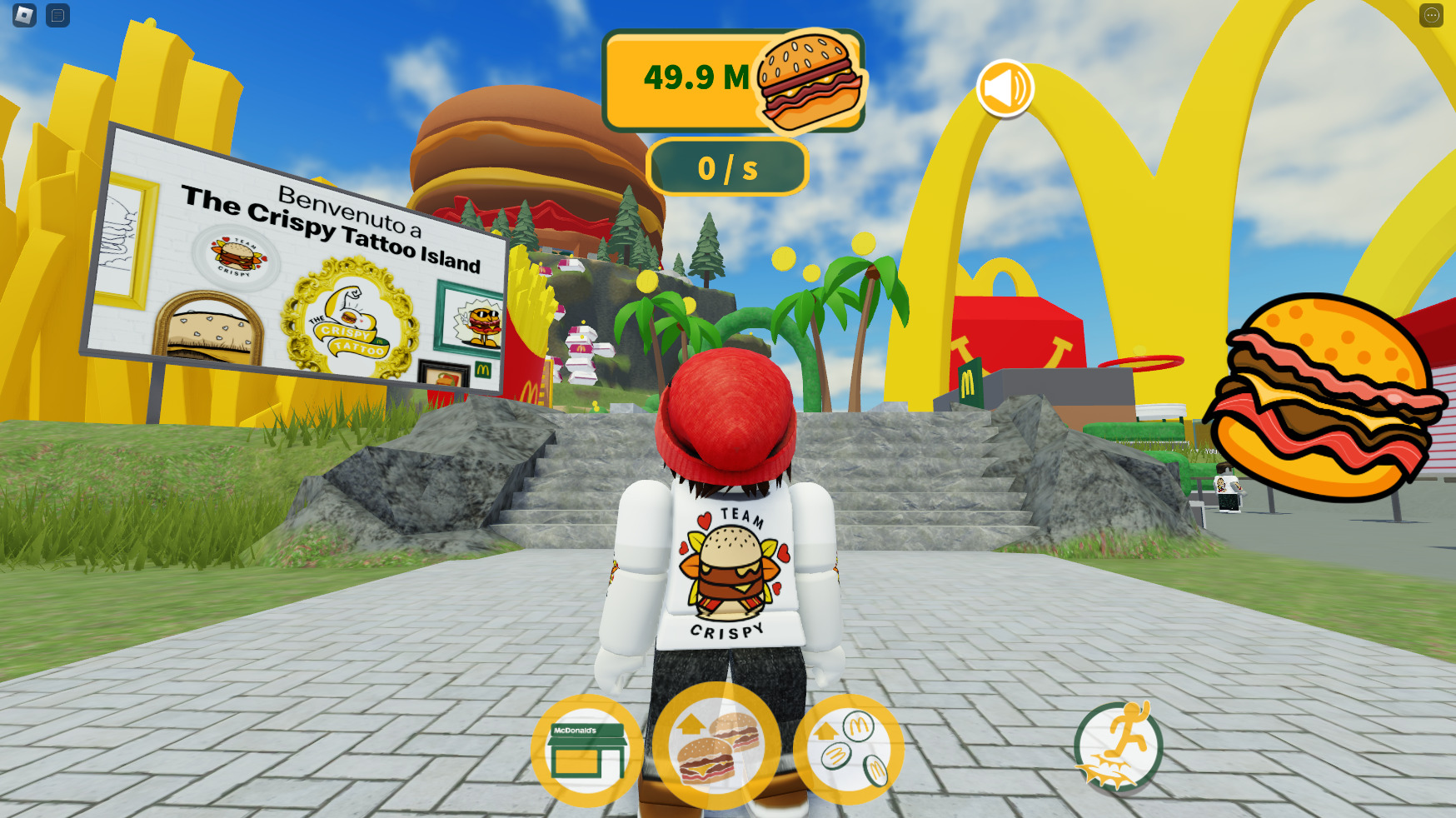
Result: More than 7,000 people took part in the Crispy Tattoo activation, the island drew over 81,000 visits and over 6,000 users took selfies in the game (Brand News, May 2023). MGNT, which says it built the map, reports 143,000+ visits in total and a 94% satisfaction rating.
Seeds of Dreams — L'Occitane (2019)
Agency: Tribal Worldwide, Merci-Michel (production) · Platform: Web (phone, tablet, desktop)
Players picked a seed from one of L'Occitane's signature plants and planted it in their own garden. The tutorial told them to click the sun until the seed was happy and the water until it was replenished; mini-games earned extra water and sun. Seeds levelled up over time, one unlocked only after two days of care, and level 4 brought a chance to win L'Occitane gifts. A preserved build still runs on Merci-Michel's site.
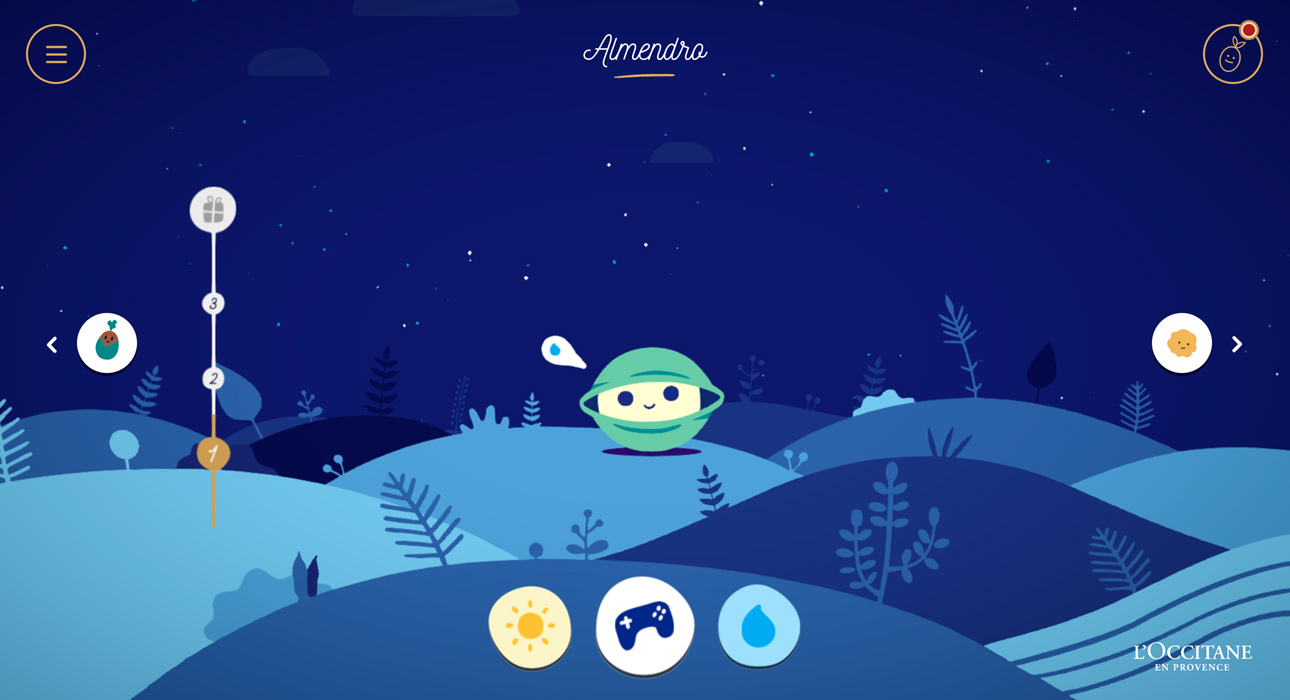
Result: The game ran in 21 countries on desktop, mobile and tablet, and players spent an average of 24 minutes playing, according to its ADC Awards entry, a Merit in 2020.
The Magic Sakura — JNTO (2016)
Agency: Circul8 · Platform: Facebook (desktop and mobile)
The Japan National Tourism Organization gave each player a sakura tree in an origami-style world to look after like a Tamagotchi, checking back to keep it healthy. As the tree matured, mythical creatures appeared and lanterns lit up along its branches. Each lantern scored points and revealed a fact about a Japanese city or landmark, and 50 lanterns entered a draw for a trip to Japan in cherry-blossom season. The game is no longer playable.
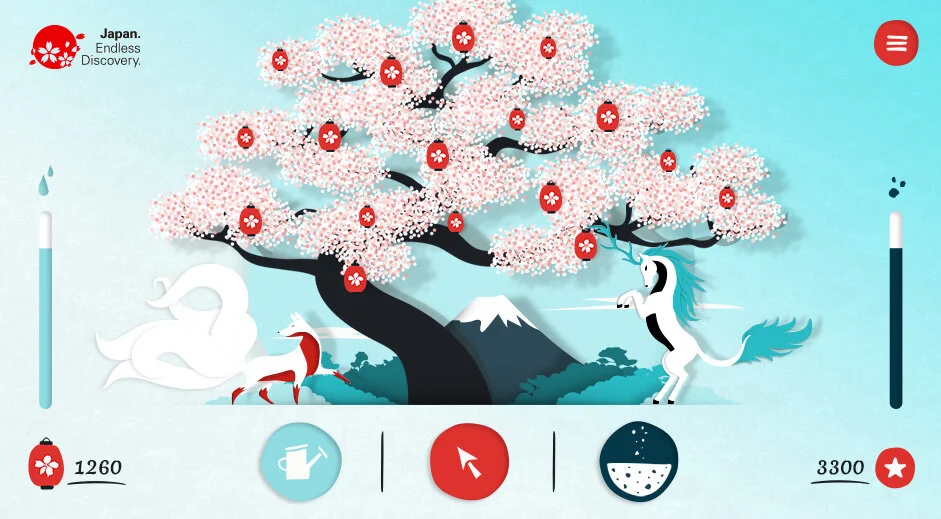
Result: The campaign reached 4 million people, drew over 3,000 organic players in its first few days and averaged 17+ minutes per session, while JNTO's Facebook fans grew 31%, according to the agency (Circul8).
FAQ
Is a clicker game the same as an idle game?
They overlap. A clicker game rewards active input, an idle game automation, and many titles use both: you click for the first resources, then buy helpers that earn without you. A tycoon game adds a business or base you watch grow.
Is RuneScape an idle game?
No. The idle take on it is Melvor Idle: in October 2021 Jagex, the company behind RuneScape, announced it would publish the game, which takes inspiration from RuneScape's setting, skills, combat and mechanics and distils them into an idle game.
What are the best-known idle games?
Wikipedia counts Progress Quest (2002) as the first and Cow Clicker (2010), Ian Bogost's satire of Facebook games, as the first to draw mainstream media attention. IGN credits Cookie Clicker (2013) with a major role in establishing idle gaming. In AdVenture Capitalist (2014), hired managers keep a lemonade-stand empire earning "even when offline".