

A memory game is a matching game in which cards lie face down and the player turns over two at a time, remembering what each one showed, until every pair is found. Brands put their products, faces or symbols on the cards, so every turn is another look at the range.
How it works
Every card shares the same back, often the brand's logo. The player turns two over: matching faces stay up and score, others flip back, and the player has to remember what was where. The round ends with the last pair, usually scored on time or moves.
The paper original is the card game Concentration, also called Memory, Pairs, Pelmanism or Pexeso, usually a 52-card deck laid face down in four rows of 13 (Wikipedia). Ravensburger presented its matching card game, memory, at the Nuremberg toy fair in 1959 and says it has sold more than 80 million copies worldwide (Spielwarenmesse).
Brand builds bend the deck. Finland's football association had fans pair national-team players with their shirt numbers.
Where brands use it
Memory boards turn up wherever a brand has a picture worth repeating. Sports bodies use faces and moments: The FA added a stadium-moments memory game to its Club Wembley members' area. Banks and energy suppliers use them for loyalty: Jyske Bank keeps one in the children's section of its site for kids waiting while parents meet an adviser, and it is still playable. Food brands hide them behind the pack: QR codes on the Golocard trading cards in Negroni's Golosino multipacks led to mini-games, memory matches among them. At event stands a touchscreen board can collect leads, and for a Christmas greeting, GAR's Merry Match reveals a short story or fact with each pair. Browse more under puzzle games.
When it fits
Pick a memory game when the brief is to show a range of products, faces or symbols several times in a minute or two. The rules are familiar from the card game, so there is little to explain, and children can play. It runs on a stand touchscreen, behind a QR code, from an email or in an app, and a short form turns a finished board into a lead. Players finish: 63% at Bilstein's stand and 70% per run of Enerwave's Easter game, according to Drimify. On Drimify's template a level holds up to eight pairs on a 4×4 grid, with an optional pop-up per pair, so a match can carry a product fact. And a board can return each season, as Enerwave's has for three Easters.
When not to use it
Skip it when the product needs explaining: a pair shows a picture, not a benefit, so a trivia game teaches more. For weeks of return visits, a match-3 level map or an advent calendar works better: a board is over in minutes. For a bare prize moment, an instant win game is faster. Plays don't turn into sign-ups on their own: Finland's football association logged 4,000+ memory-game sessions and 225+ registrations (Playable).
Cards that differ only by colour, such as lipstick shades, fail colour-blind players; WCAG 1.4.1 asks that colour not be the only visual cue, so print a name or number on each face. Under WCAG 2.2.1 a countdown should be adjustable, extendable or switchable off unless the limit is essential. Scoring by moves needs no countdown.
Examples from the library
Memory Game — Bilstein (2024)
Agency: Drimify · Platform: Installation, plus QR code
Bilstein's stand at the Goodwood Festival of Speed had a touchscreen, and printed QR codes put the same game on visitors' phones anywhere on the grounds. The card faces were Bilstein parts, some on their own and some fitted to cars. Every finisher earned a free cup of tea at the stand and the top three scorers a £200 mystery backpack; a short dropdown form asked about their main automotive interests.
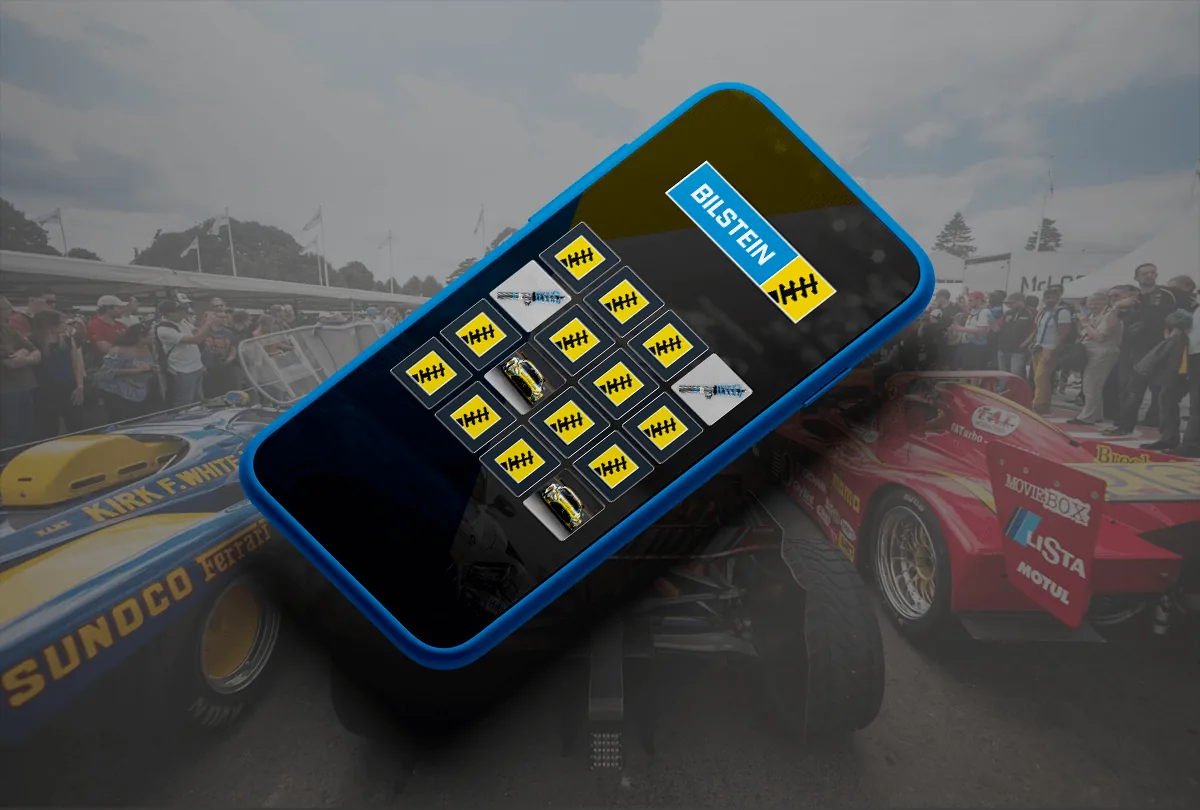
Result: 1,560 plays, 983 finishers (a 63% completion rate) and more than 1,100 leads over the festival, according to Drimify.
Seasonal In-App Games — Enerwave (2025)
Agency: Drimify · Platform: App
The Greek energy supplier keeps a games hub inside its myEnerwave app, open only to registered customers. At Easter it becomes a timed memory board of branded Easter eggs, flowers and baskets, and matching the pairs enters the player into a draw for energy-bill vouchers or an electric bike. Other occasions bring a scratch card, and December brings a 24-day advent calendar, all without leaving the app.
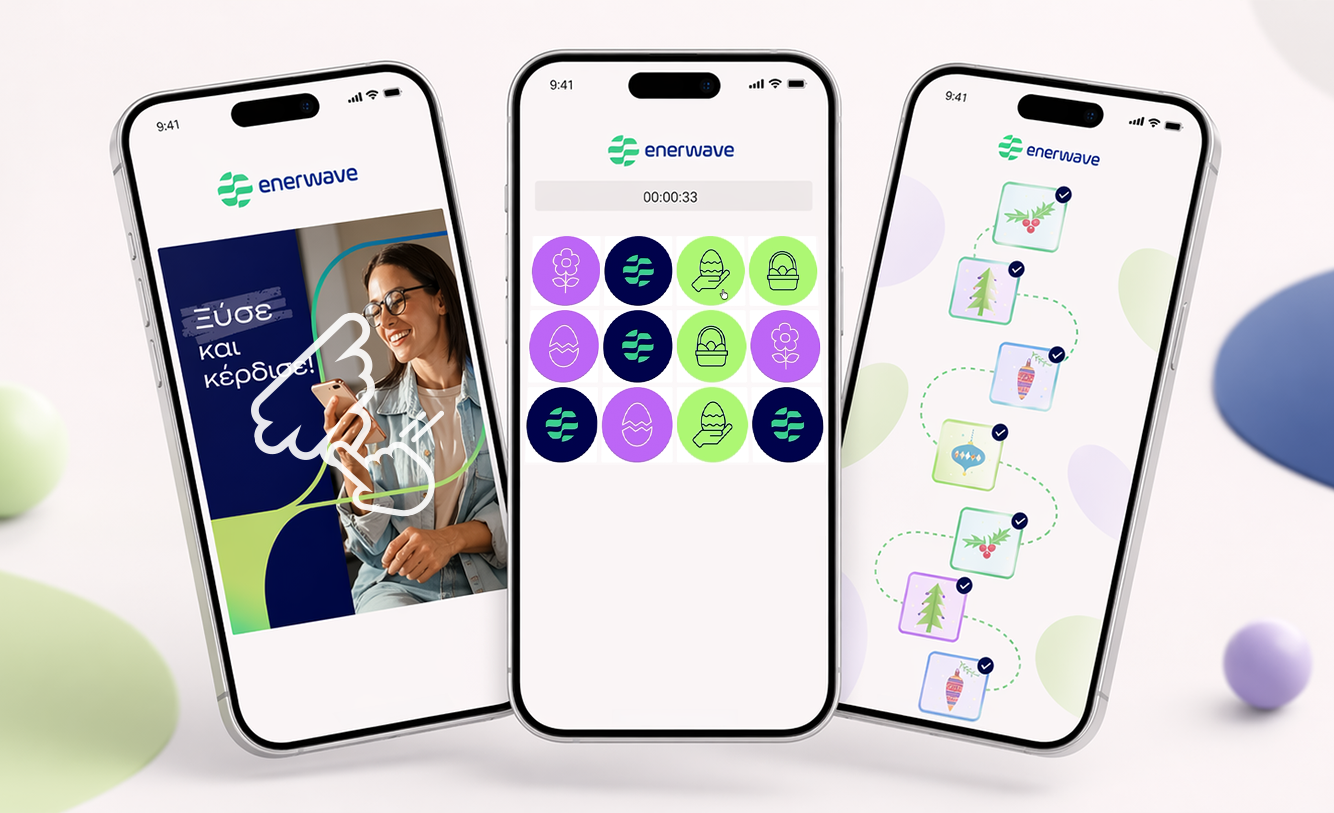
Result: According to Drimify, the Easter memory game has run every Easter for three years, and each run brings in around 10,000 leads with a 70% completion rate. The hub as a whole reports a 75% engagement rate.
My Lip Stylo — DG Beauty (2024)
Agency: AQuest · Platform: Web
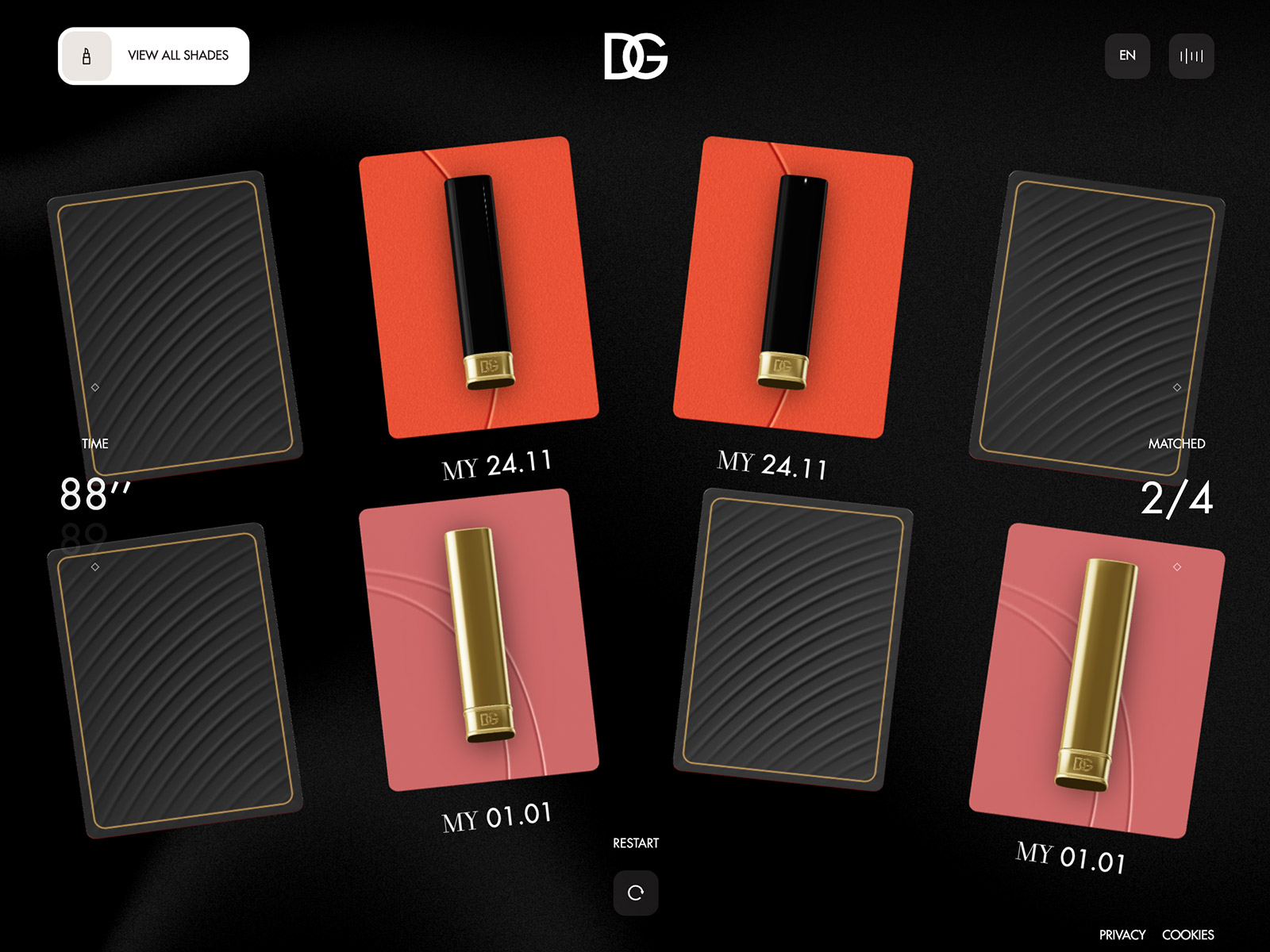
Dolce&Gabbana Beauty launched 54 lipstick shades, each named after a date or number from the house's history, such as MY 1981 for the year Domenico Dolce and Stefano Gabbana met (Red-Eye). Players picked a difficulty, then turned cards two at a time to find matching tubes; each pair revealed a shade's name and its story. Registering at the end opened the meanings of all 54. The site, an Awwwards Site of the Day in December 2024, is now offline.
FAQ
Is a memory game the same as Concentration?
Yes. Concentration, Memory, Matching Pairs, Match Up, Pelmanism, Pexeso and Pairs are names for the same card game, in which players turn over two face-down cards at a time looking for pairs (Wikipedia). Ravensburger's edition, presented at the Nuremberg toy fair in 1959, is sold as memory. Branded versions follow the same rules on a screen.
How is a memory game different from match-3?
Both are about matching, but they test different skills. In a memory game the faces are hidden, the challenge is recall, and the round ends when the last pair is found. In a match-3 every piece is visible, the skill is spotting and planning swaps, and new pieces keep dropping in, so a level map can run for weeks.
How do you make a branded memory game?
Template builders cover a standard board. Drimify takes up to eight card images per level and adds a data form. On Easypromos the brand sets card faces and backs, the time limit and an entry form before or after play, and can attach a prize draw or instant wins. For a bespoke 3D board, brands commission a studio, as DG Beauty did with AQuest. With prizes, check the sweepstakes rules.