

An escape room is a timed puzzle game: a team searches a themed space, physical or on screen, for clues and solves linked puzzles to reach a goal, usually escaping, before time runs out. Brands use it to make people handle a product or enter a story rather than watch an ad.
How it works
Game researcher Scott Nicholson defines escape rooms as live-action, team-based games where players find clues, solve puzzles and complete tasks in one or more rooms to reach a goal in limited time. Wikipedia counts Real Escape Game, developed in 2007 by Takao Kato of Kyoto's SCRAP, among early commercial rooms; the format drew on escape-the-room video games.
A briefing by video, audio or a game master sets the story, then the clock starts. You hunt for numbers, symbols and hidden objects, and each answer opens something: a padlock, a drawer, a door, the next screen. Stuck teams can ask for hints, sometimes at a time penalty. Teams usually have two to ten players and 45 to 60 minutes. A digital escape room moves the same elements onto a computer, phone or VR headset.
Where brands use it
We tag 25 library games as escape rooms, mostly puzzle games built for engagement or awareness. Entertainment leads: film and TV launches, often horror. Lionsgate shackled players in pairs in a Saw room at New York Comic Con; Channel 4 gave Murder Island viewers cases to crack on their phones between episodes. Tech brands use the puzzles to prove a feature, as OnePlus did with Crackables. Migros tied M-Escape to loyalty: each new chapter cost a digital stamp earned for every 10 francs spent in store. KFC built The Hard Way, a VR escape game meant, according to KFC's US head chef, as a training device for new cooks.
When it fits
The format works best when the product is the key to the lock: in Echo Escape, every move was a voice command to Alexa. It also suits story-led launches with fans who will queue, play as a team and talk about it.
Brand rooms can run much shorter than commercial ones: about 20 minutes in Echo Escape and, according to Wildlife, 7 minutes on average in The Joker's Escape. Build physical rooms for trade shows, conventions and flagship stores, where the queue is content, and stream them to reach everyone else. Go digital for reach: a no-app browser link, as Channel 4 chose, or a QR code on pack. Fanta combined both in a phygital campaign: a physical room in Madrid and an app version opened from the can.
When not to use it
A physical room serves few people: Lionsgate's Saw room took over 1,200 players across four days, with queues up to four hours, and Echo Escape reset every 15 minutes. Their reach came from press, influencers and a livestream: budget for those, or build online.
Stuck players often leave, so for mass audiences with seconds to spare, an instant win game, quiz or prize wheel gets more plays and data. If the brand is only set dressing, the room sells the story, not the product. For play across a city or several weeks, try a scavenger hunt or an alternate reality game. Physical rooms carry safety duties too: after a 2019 escape-room fire in Koszalin killed five teenagers, Poland ordered nationwide checks and closed 13 more venues (Wikipedia).
Examples from the library
Echo Escape — Amazon (2017)
Agency: AKQA, UNIT9 · Platform: Installation, Twitch
Teams of up to six moved through five rooms on the New York Comic Con floor as operatives in a CIA plot from Tom Clancy's Jack Ryan. There were no screens or buttons: wearing wireless mics, players talked to Alexa to kill the lights, run a search or pull up a video feed. Three Twitch streamers later played the room live while viewers helped or sabotaged them.
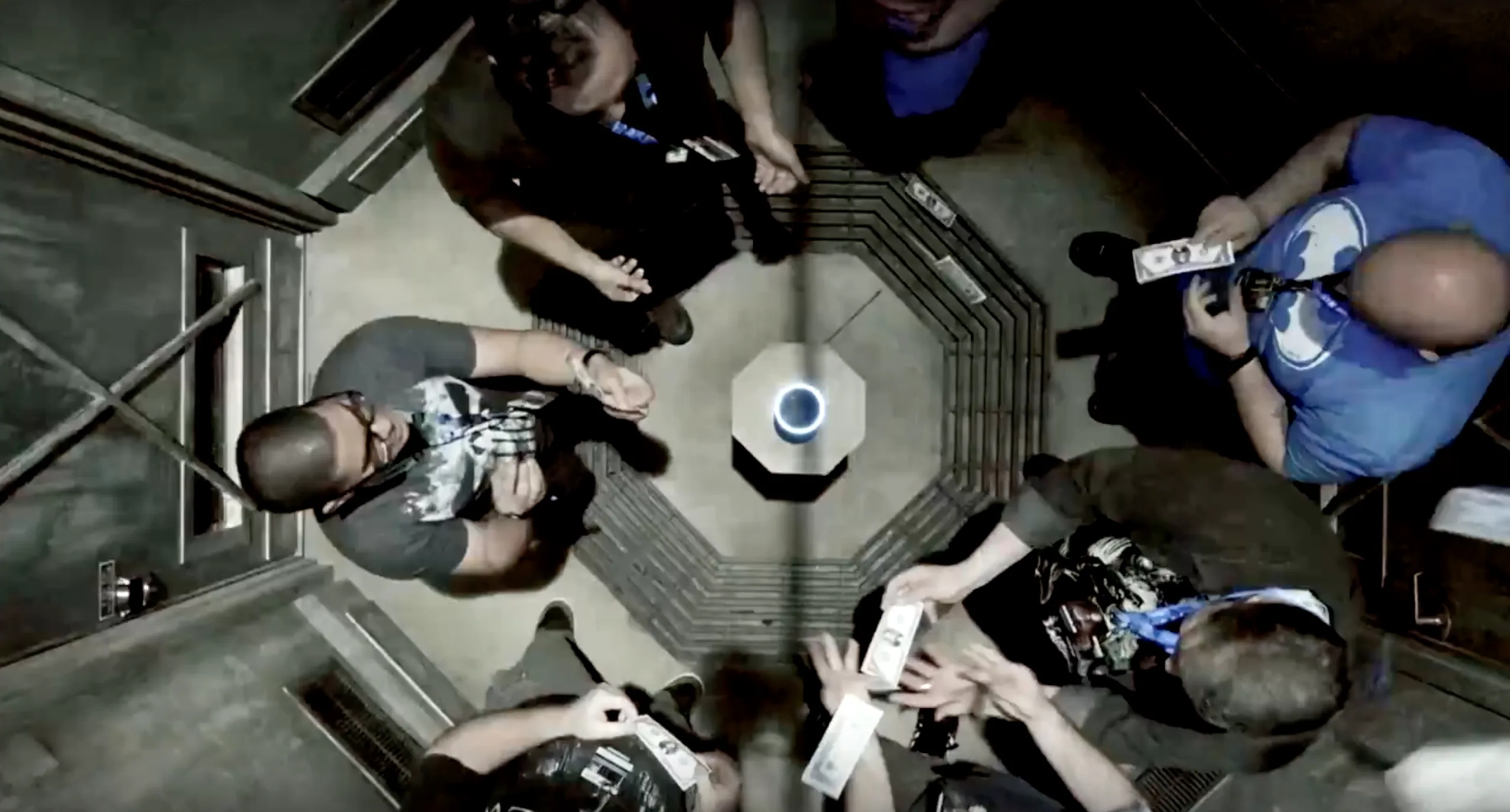
Result: According to AKQA, more than 5,000 people queued for a chance to play and reservations were claimed within the first hour of opening. Over 1.5 million people joined the three-hour livestream, more than 1 million of them helping or hindering the players, with over 43,000 gameplay comments and engagements.
The Joker's Escape — DC (2020)
Agency: Wildlife, Digital Kitchen, Sid Lee · Platform: Web
Made for DC FanDome, the 24-hour virtual fan event of 2020, this browser escape room dropped fans into a 360° fun house inside the Joker's head. Three trials followed: an audition delivering their own maniacal laugh, a card duel tapping out foes while sparing allies, and a five-minute race to defuse five bombs. Survivors joined the Wall of Villains; everyone else landed on the Wall of Victims.
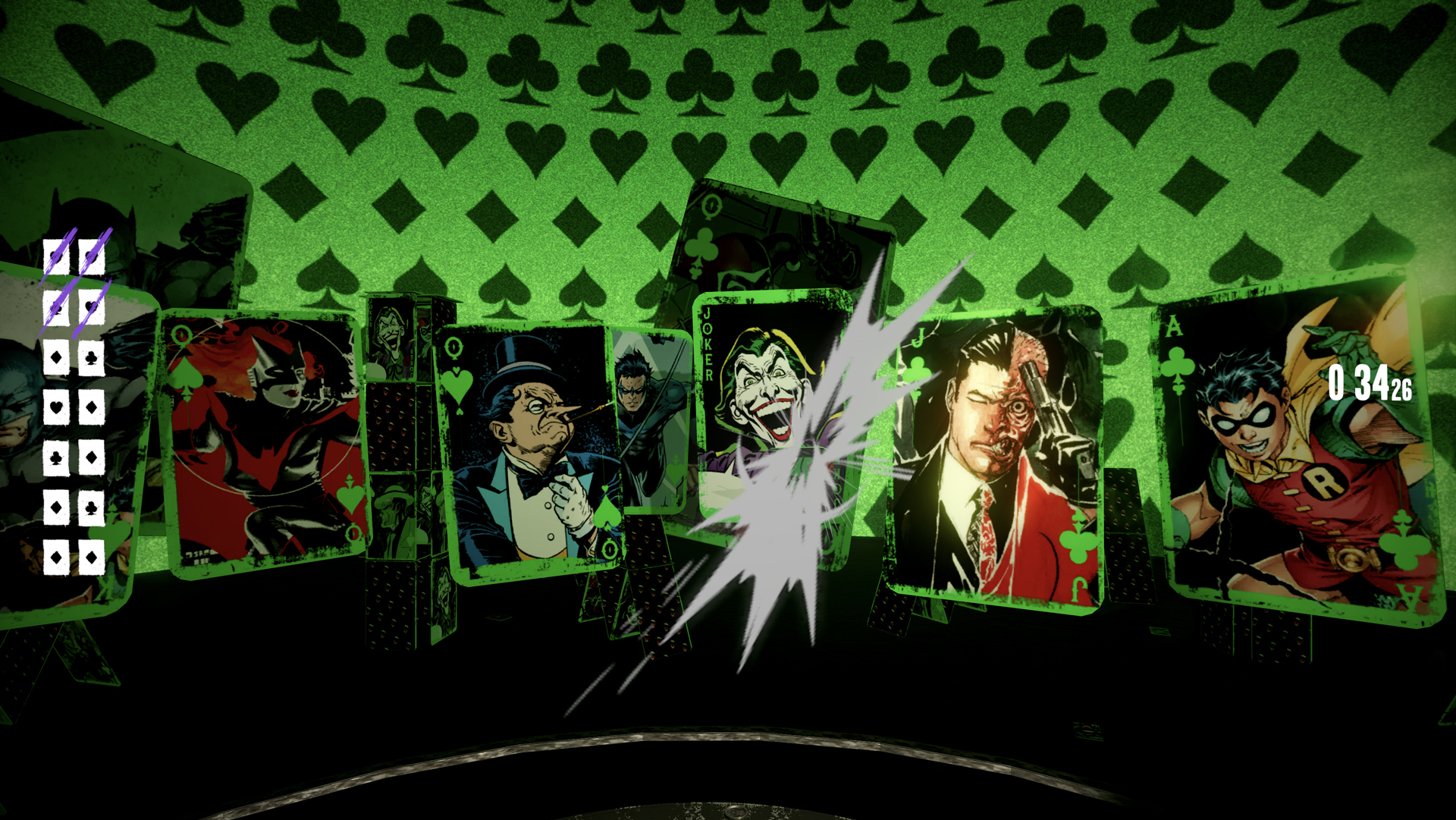
Result: More than 2 million fans from 144 countries came in over the 24 hours, according to Digital Kitchen; Wildlife lists 4M+ impressions and an average of 7 minutes spent.
Escape The Afterlife Train — Fanta (2024)
Agency: UNIT9 · Platform: App
Players scanned a QR code on a limited-edition can, an outdoor ad or a cinema screen and landed in the Coca-Cola app at a ghostly subway station. Each of three carriages from Beetlejuice Beetlejuice, among them the Deetz attic and a graveyard, hid glowing hotspots and one puzzle, from tracing a drawing to finding hidden objects. Puzzles paid out gems and Beetle coins redeemable for prizes, and clearing all three earned a Beetlejuice AR filter.
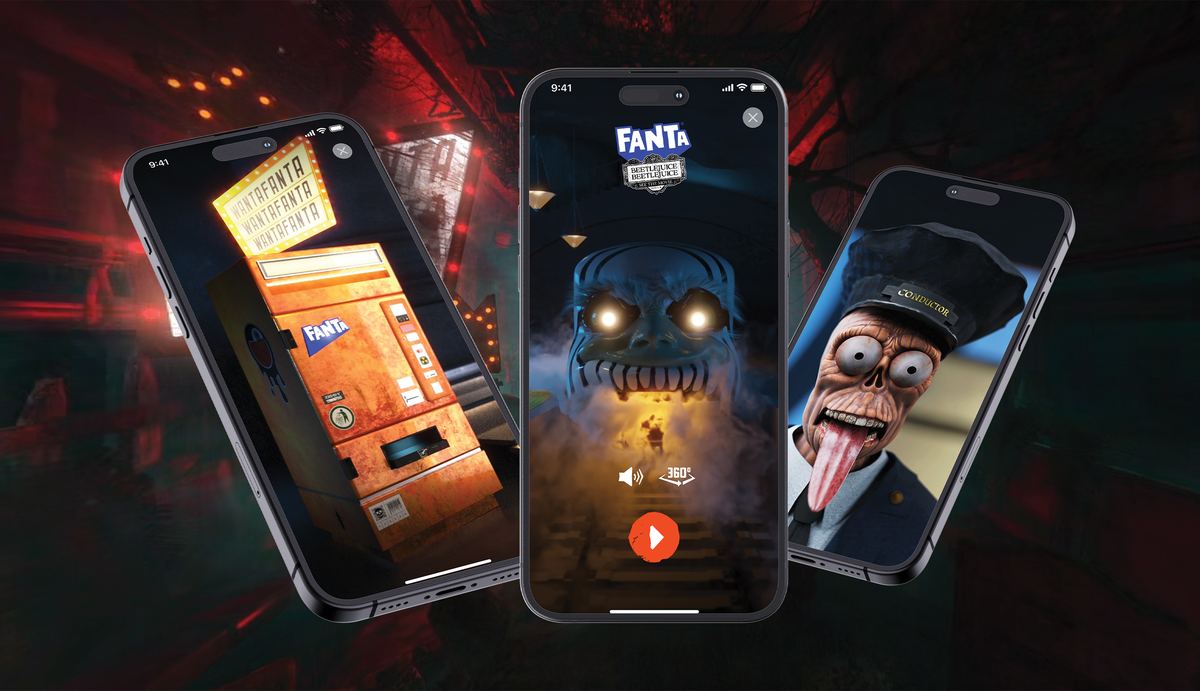
Result: A senior copywriter on the campaign reports 7.9B impressions, a 54% rise in Halloween limited-edition sales and 4.2B PR reach without saying which activities they cover, so read them as campaign figures, not the game's alone. The same source describes a physical Afterlife Train escape room at Madrid's railway museum; scanning a can could win a ticket to it or open the app version.
FAQ
What do you actually do in an escape room?
You search, decode and combine. After a short briefing, the team hunts for clues such as numbers, symbols and hidden objects, then uses them to open locks or reach the next stage. In a branded room the product is often one of the tools, as Alexa was in Echo Escape.
What happens if you can't escape an escape room?
When time runs out, the team has failed the room. Some rooms stage a "bad ending", and some venues allow extra time or walk players through the remaining puzzles, according to Wikipedia. Operator The Escape Game says its players are never actually trapped and can step out at any time. A brand room can make failure shareable too, as The Joker's Escape did with its Wall of Victims.
Is an escape room very scary?
Only if the theme is. Horror is one option among many, but common in brand rooms, as so many are film and TV tie-ins: Lionsgate's Saw room chained players by the wrist, and Fanta's Halloween train in Madrid asked riders to dodge jump scares. For a broad audience, pick a gentler theme or say clearly what to expect.