

A hidden object game is a puzzle in which the player searches a busy picture for items on a list, clicking or tapping each one to find it. For brands it turns a product, logo or mascot into the thing people hunt for, so they look at it closely and on purpose.
How it works
Wikipedia defines it as a subgenre of puzzle video games in which the player finds items from a list hidden within a scene; it is also called a hidden picture game. The format began in print, in the I Spy books and Highlights for Children, and Big Fish Games' Mystery Case Files: Huntsville (2005) set many of its conventions on PC.
The player sees one crowded picture, often bigger than the screen, and a list of things to find, given as words or clues. Clicking one ticks it off the list. A timer, hints and a cost for wrong clicks stop it turning into random tapping: in Red Bull's Play Hard, a wrong guess cost points and one of three lives. In a brand version the hidden things are the product, the logo or a mascot, and each find pays out a fact, points or a prize-draw entry.
Where brands use it
Food and drink brands hide the product itself. Absolut's Search (2006) worked 82 bottle silhouettes into a New York street scene, and Red Bull's Find The E-Shot (2010) hid a new 60 ml bottle in YouTube clips. Retailers hide the range: Dick's Sporting Goods' Get Winter Ready had players find jackets, boots and goggles to kit out four friends for a ski trip (more in our retail games guide). Film tie-ins hide targets: Become A Kingsman asked players to spot a target in a Street View scene of London against the clock. Employers use it too: Ubisoft hid references to 42 of its own games in one illustrated room for the 1,500 employees at its 2022 convention. Most of these sit under puzzle games.
When it fits
It suits a brief about looking: getting people to notice a new pack, browse a range or learn a place. By its publishers' own figures, the genre's casual audience skews female and older. G5 Entertainment said in May 2016 that women made up as much as 90% of the audience of some of its hidden object and adventure games; Wooga said in November 2023 that 90% of dedicated June's Journey players were women, most of them over 55. Rounds can be short, such as the 60-second office search in IKEA's A Business That Can Do It All, and a fresh scene each week gives players a reason to return. A browser link, a social post or a code in the pack is enough to distribute it.
When not to use it
Skip it when the product needs explaining: a find shows a pack or a logo, not what the product does, and a trivia game explains more. A picture search shuts out blind and low-vision players unless you design for them, as Google did with alt text and sound clues in its Most Searched Playground, according to its Shorty Awards entry. Big scenes shrink on phones: E.Leclerc's beer cellar split into three panels on mobile. Many players stop short: in Google's Paris 2024 edition the average player found five of the 20 objects, so reward each find. Answers to a prize hunt can be shared, so rotate scenes or cap daily finds as Mentos did. To get people moving, run a scavenger hunt; for a longer story, an escape room.
Examples from the library
M&M's Join The Hunt — M&M's (2009)
Agency: BBDO Toronto, Proximity Canada; production by Firstborn · Platform: Web, with PIN codes in packs
Players panned through a park, a backyard pool, a candy shop and a playground, clicking the M&M's eggs hidden in each; an egg's colour set its points. PIN codes inside specially marked Speck-tacular Eggs packs added more eggs, and eggs were also hidden on about 260 other websites, Media in Canada reported. The more points a player earned, the better their chance of an instant prize or one of three grand-prize getaways.
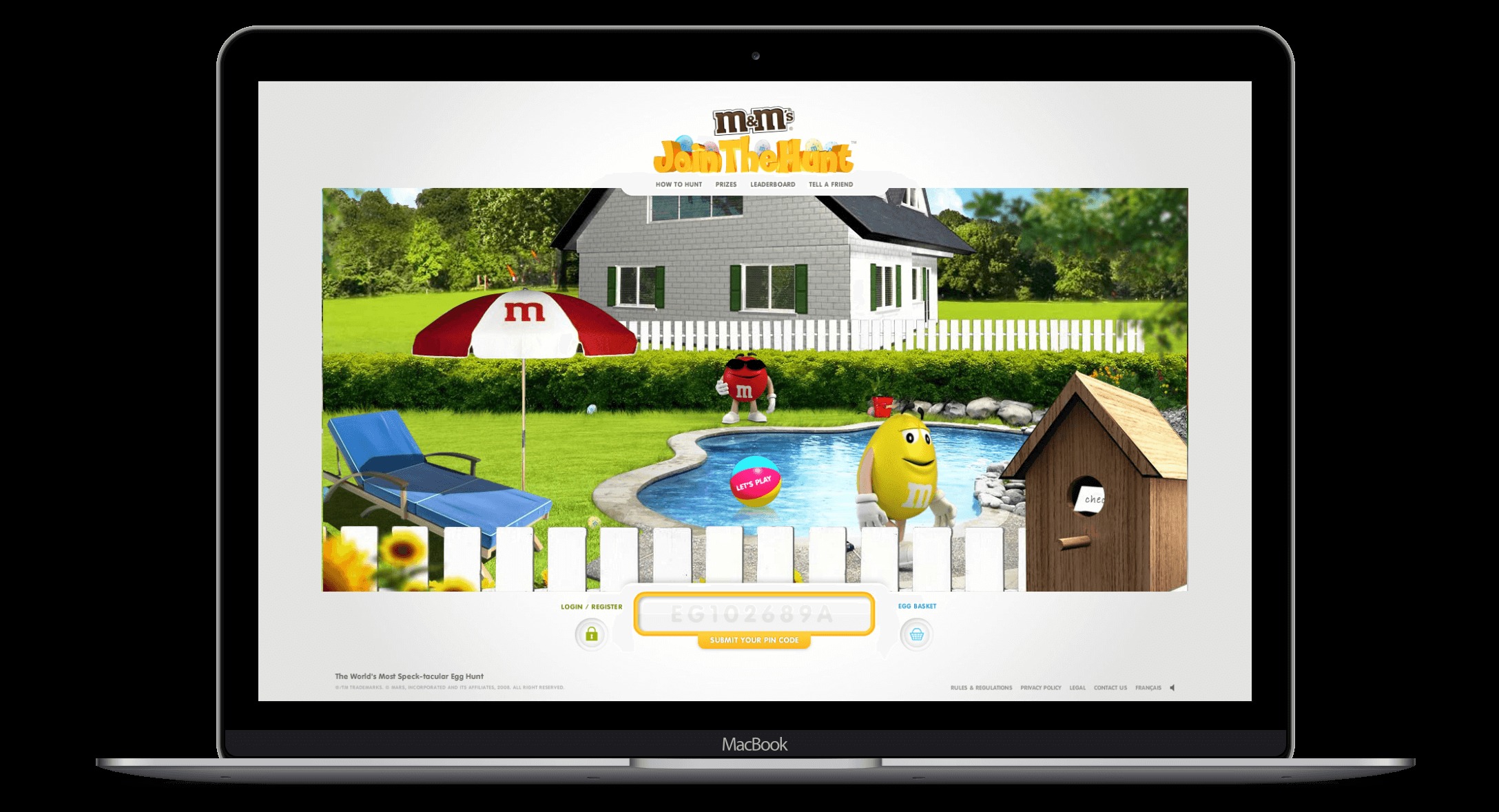
Result: More than 3,000 unique visitors a day, an average of 7 minutes per visit and over 150,000 PIN codes submitted, according to the portfolio of the campaign's art director.
Instazoom — Canon (2016)
Agency: Dentsu, Miracle Factory · Platform: Instagram
The game lived on Instagram. The first post showed a wide photo of the Singapore skyline; tapping a tag opened a linked account with a tighter crop, and so on across 33 accounts, so the chain of taps worked like the camera's 65x zoom. Twenty-four quirky scenes, such as a mermaid on a rooftop, were hidden in the picture and only showed up close. Players who found all 24 were entered in a draw for a PowerShot SX60 HS.
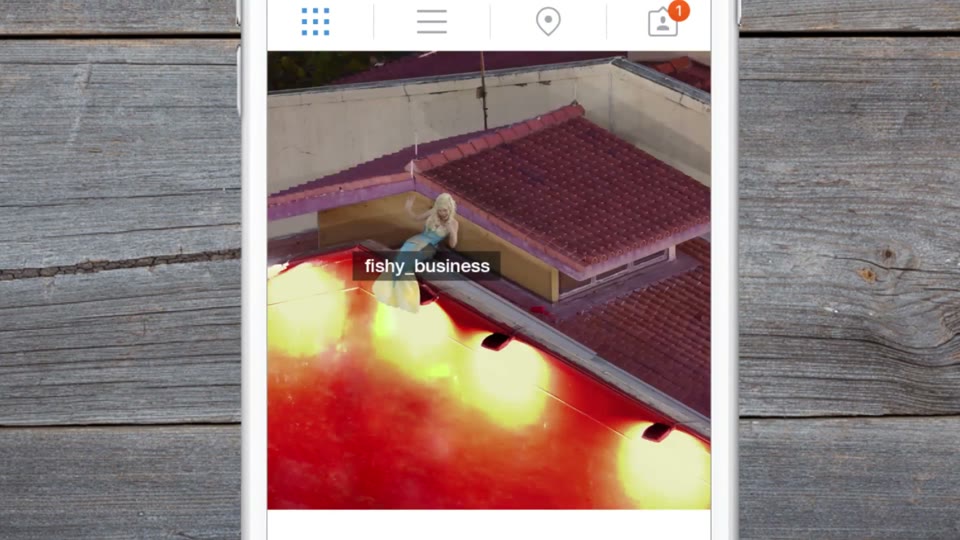
Result: 1.3 million impressions in three days, with social engagement up 947% and viral reach up 475%, Marketing-Interactive reported.
Aloha From Above — Hawaiian Airlines (2020)
Agency: MullenLowe U.S., Superhero Cheesecake · Platform: Web, on phones
On a site co-branded with the Hawaiian Airlines World Elite Mastercard, the airline put players above an aerial map of one island. Panning and pinching to zoom, they followed glowing hints to the letters of ALOHA, hidden at the airline's favourite spots. Pressing and holding a letter collected it and opened a card about the place, such as a 1950s-style café on Maui. The full word opened an entry form for that week's draw of 160,000 HawaiianMiles, and a new island replaced the last each week for six weeks.
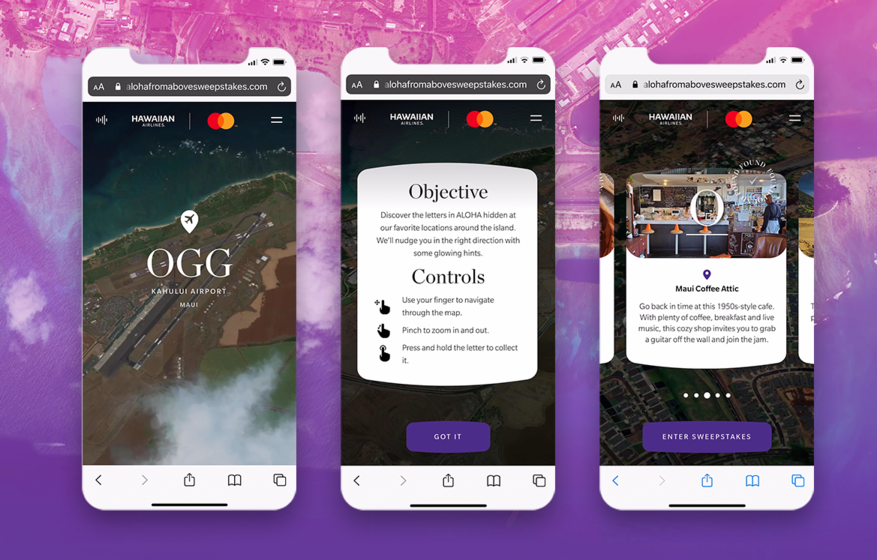
Result: Over 350,000 plays across the six-week run, according to the campaign's case figures.
FAQ
Is a hidden object game the same as a scavenger hunt?
No, though both are about finding things. A hidden object game keeps everything in one picture on a screen, and a find is a click or a tap. A scavenger hunt spreads a list of items across places, real or virtual, and asks for proof such as a scan or a photo. Campaigns often mix the two, as M&M's did.
What does HOPA mean?
Hidden object puzzle adventure. Wikipedia uses the label for games that focus on puzzles and point-and-click adventure play alongside the hidden object scenes. Plain hidden object games stick to finding items from a list. Many brand games sit at the simple end: one scene, one list, one prize.
Are hidden object games still popular?
Yes, by their publishers' figures. Wooga said in November 2023 that June's Journey had passed $1 billion in lifetime gross revenue, counting in-app purchases and ads, and G5 Entertainment reported more than $100 million in aggregate revenue from its hidden object games by May 2016. For a brand, that means a large audience already knows the rules before your game loads.