


Retail and ecommerce gamification puts game rules on the path to a purchase or a store visit: a code picked up in store, a voucher redeemed at the till, a checkout that is itself a contest. These eleven campaign games, from Coop and SPAR to Kenzo and IKEA, show what shoppers did and which results were actually published.
Many guides to ecommerce gamification list pop-up wheels with no results attached. The examples here come from the retail section of the library and from shops filed under other industries, such as Sephora and Kenzo. Each ties play to a sale, a visit or a hire. Every figure was checked against its linked source; where nothing was published, we say so.
How does retail gamification bring shoppers into the store?
The best in-store examples flip the usual logic: the store or the till becomes the way into the game.
Virtual Kids Workshops — The Home Depot (2023)
Agency: BBDO · Mechanic: Simulation & Strategy · Platform: In-Game (Roblox)
In the Roblox game Redcliff City RP, players enter a Home Depot store, pick one of three builds (a birdhouse, a mini flower garden or a small car), hunt the aisles for parts and assemble the project in a Kids Workshops area. The catch: the codes that unlock each build were handed out only at the real in-store Kids Workshops, on the first Saturday of every month from 4 March 2023 (The Home Depot).
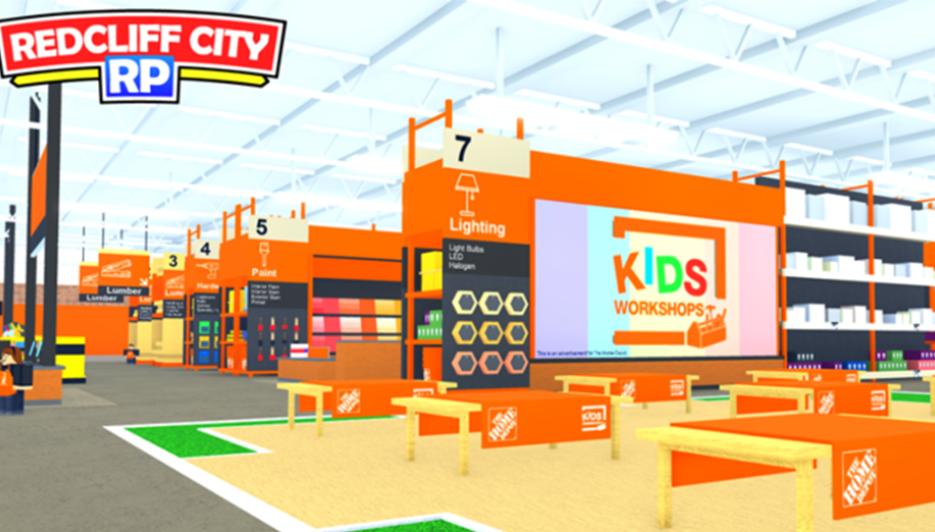
Result: 7 million users entered the activation (Adweek). How many came through a store workshop was not published.
Tough Cookies: The Game — IGA (2022)
Agency: Sid Lee · Mechanic: Adventure & Quest · Platform: Web
The Quebec supermarket chain sold sheets of temporary tattoos at its checkouts to fund paediatric cancer research, with characters created by young cancer survivors. In the 2022 edition, scanning the code on the back opened a side-scrolling browser platformer, and every sheet a family bought added its character to the playable cast. A small impulse buy at the till became a reason to buy the next one.
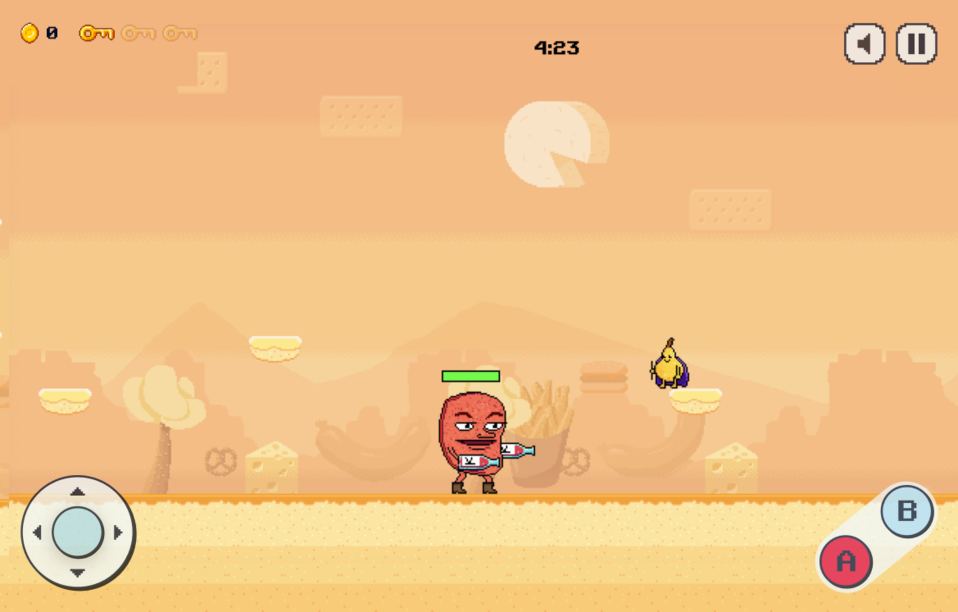
Result: the 2022 game attracted more than 20,000 players; across four editions the campaign raised more than $1.7 million and drew over 80,000 players, according to the agency (Sid Lee).
What does gamification in ecommerce look like?
Online, the best examples make the game part of the buying flow rather than a banner in front of it.
Shopping League — Kenzo (2018)
Agency: Merci-Michel, Artefact · Mechanic: Simulation & Strategy · Platform: Web
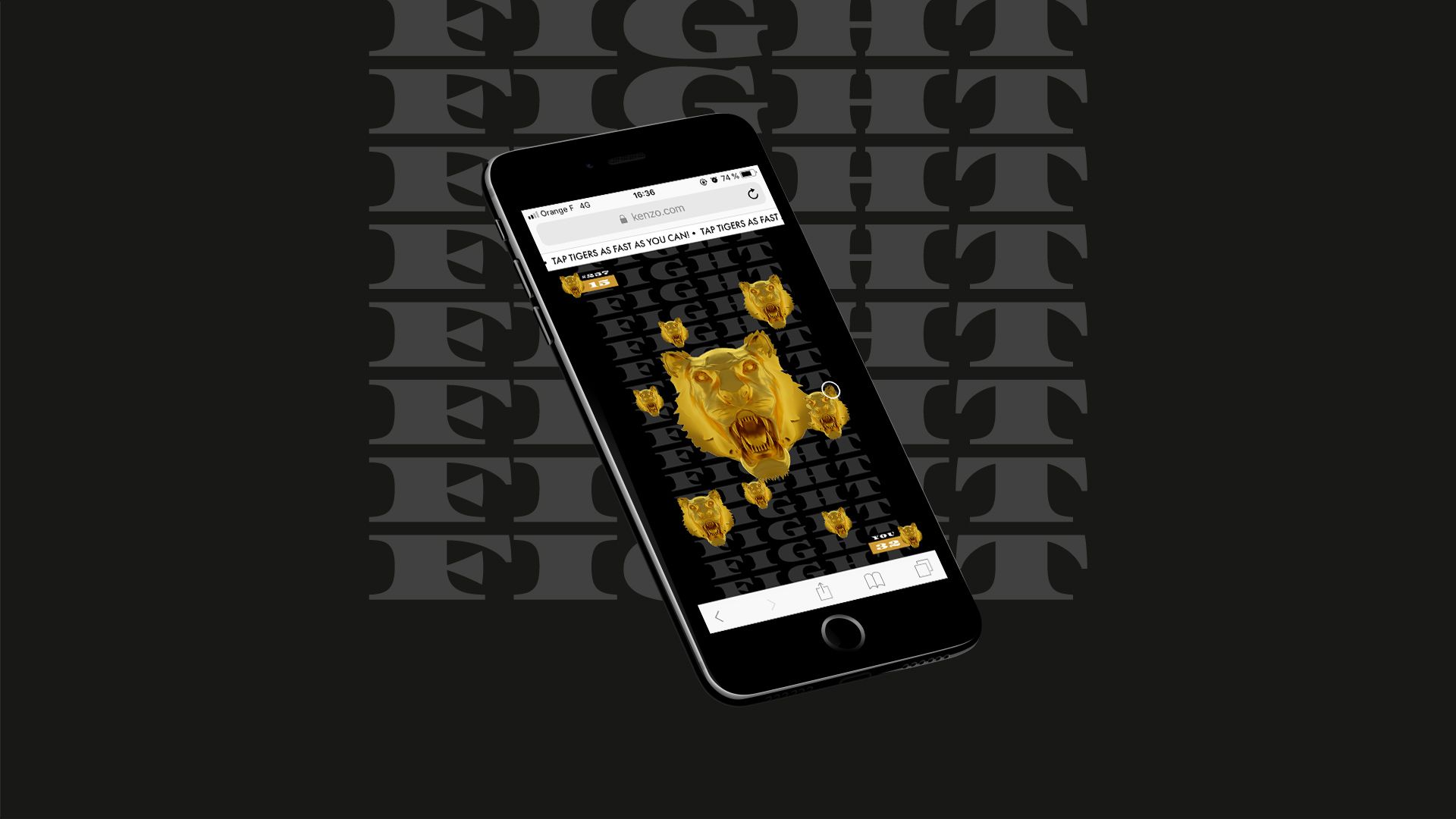
Kenzo put 100 pairs of its Sonic Sneakers on sale in an e-shop that only a limited number of players could enter at once, with everyone's moves visible in real time (Creative Review). Grab the same pair as someone else and you fight a duel first; for that single day, shoppers could also steal shoes from each other's baskets before paying (Merci-Michel). The game is the checkout. No sales figures were published.
Shoe Paradise — ALDO (2012)
Agency: Kokokaka, VITRO · Mechanic: Puzzle · Platform: Web
For ALDO's spring/summer 2012 collection, players ran a tropical obstacle course, grabbing shoes from the new line against the clock. Sharing earned extra time, each shoe linked to its page in the online store, and collecting the whole line gave a 15% discount code plus entry to a draw for an in-store shopping spree.

Result: a portfolio page by a creative on the project says the game helped lift sales by 20% (Jonas Hallberg). It gives no period, channel or baseline, so treat it as a claim.
Slice It, Spin the Bottle & Kinky or Vanilla — Sinful (2023)
Agency: Playable · Mechanic: Arcade & Action · Platform: Web
Meta blocks standard product ads for most of this online retailer's catalogue, so Sinful runs short games in its ads, emails and homepage instead (Playable). Each one ends with an email field and a code to use at checkout. In the 2025 birthday game, Slice It, players had 15 seconds to slice open 20 gifts.
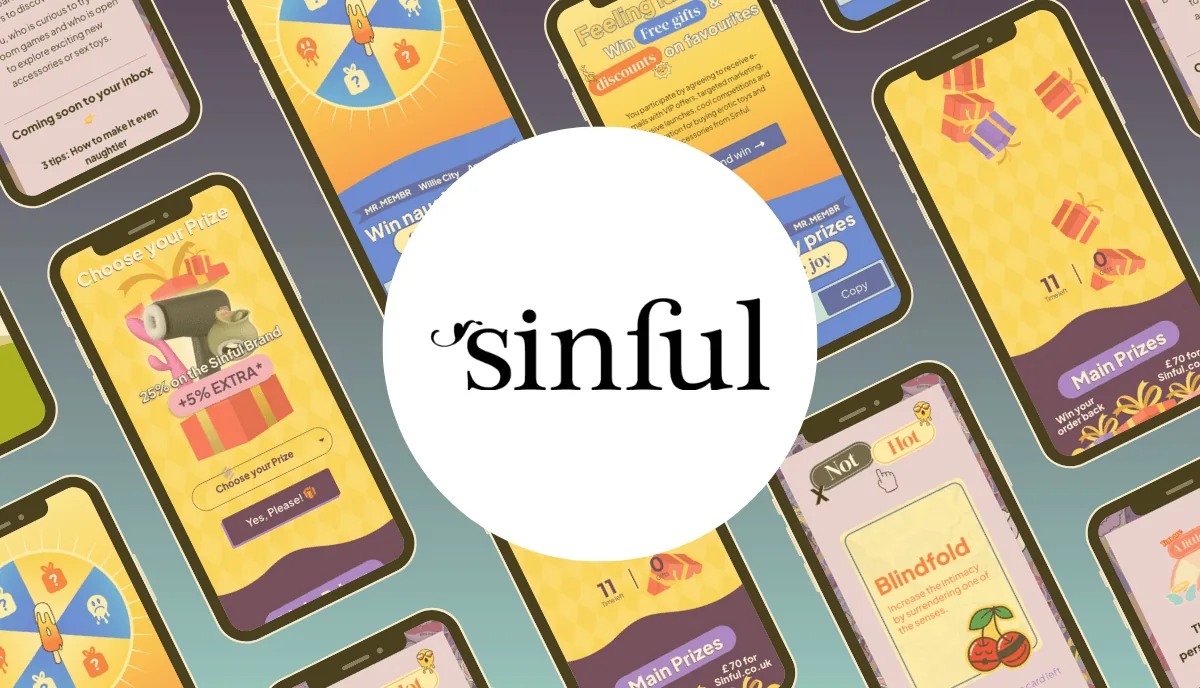
Result: Slice It logged more than 41,000 sessions and more than 32,000 registrations, and players' average purchase conversion rate was 1.2 percentage points higher than non-players', according to the agency (Playable).
Loyalty and app games: where retail gamification pays its way
The clearest numbers in the library come from grocers that put a game in front of their regular customers and paid most prizes out in store.
Today's Word Hunt — Coop Denmark (2018)
Agency: Playable · Mechanic: Arcade & Action · Platform: App
A game tile sits on the Coop app's home screen next to scan-and-pay. It loads quick luck games such as scratch cards, slot machines, spin-the-bottle and a wheel (Playable), and most wins are products collected on the next store visit. Suppliers sponsor the bigger prizes, which turned the games into a retail media product. A daily five-letter word game adds a puzzle to return for.
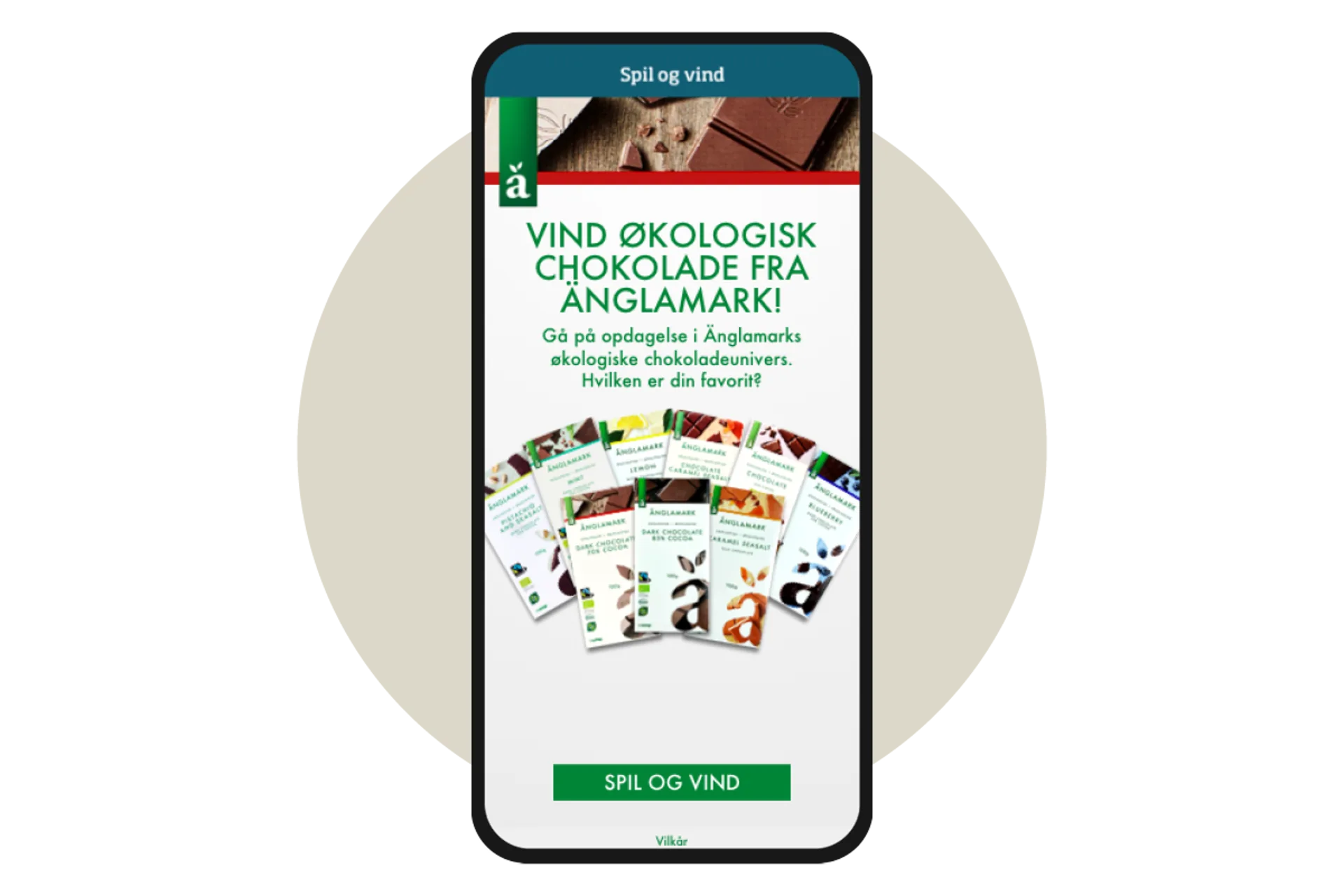
Result: in 2023 about one million winners redeemed prizes in Coop stores; customers redeeming a prize spent 9% more per basket (baseline not stated), and shoppers who play visit 15% more often, according to the agency (Playable).
Winter Wins — SPAR (2026)
Agency: Abraxas Marketing (technology) · Mechanic: Arcade & Action · Platform: Web
SPAR's North of England wholesaler James Hall & Co. ran this against the post-Christmas slump. Shoppers register, then tap a block of ice once a day to crack it and see whether they have won; a bonus spin opens every three days. Wins arrive as vouchers for participating SPAR stores.
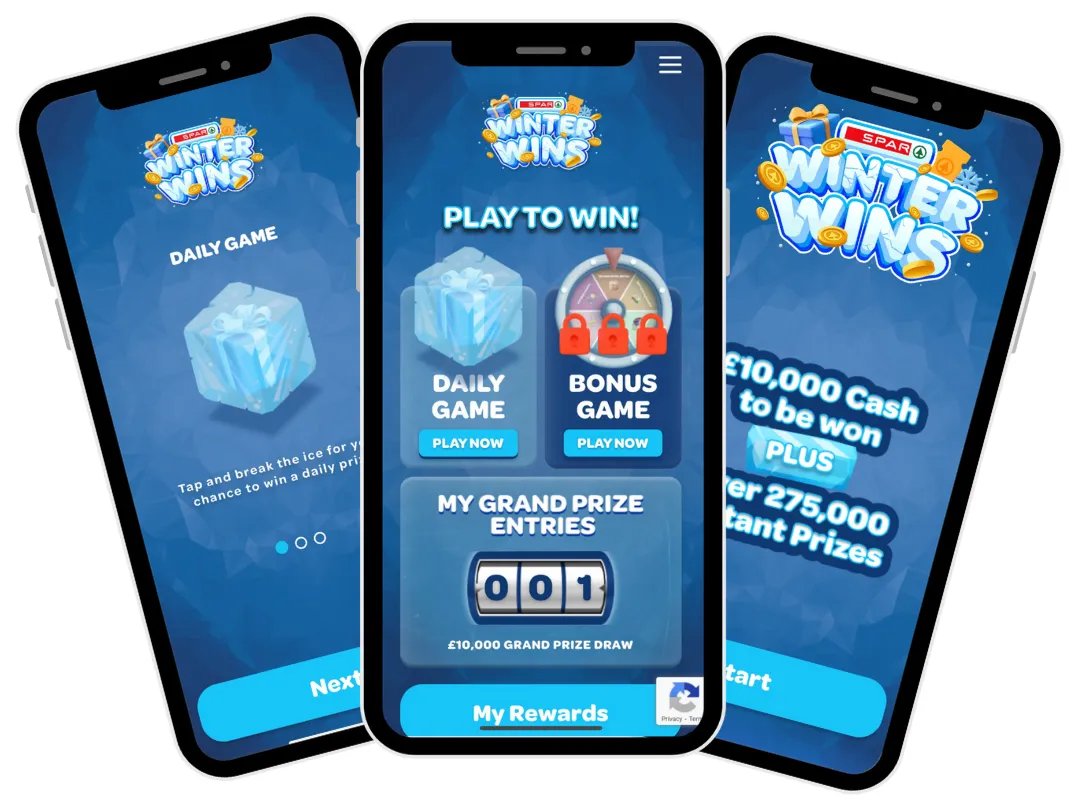
Result: over the 42-day campaign, 60,000 customers took part, with 750,000 plays of the daily game and 210,000 bonus spins; 32% of instant rewards were redeemed in stores, and £3-off SPAR vouchers reached 67% redemption (Grocery Gazette, Wholesale Manager).
Play & Win — Migros (2024)
Agency: ESE Media GmbH · Mechanic: Puzzle · Platform: Web
Migros built its loyalty game on a puzzle rather than pure luck: match-3 in the phone browser. Players sign in with the account linked to their Cumulus loyalty card, and each purchase fills a stamp card that brings prizes closer, so a receipt and a cleared level feed the same progress (ESE). We found no published results.
Pinball — Sephora (2024)
Agency: Cosmic Shelter, Press Play On Tape · Mechanic: Arcade & Action · Platform: Web
A pinball table built around the Cream Lip Stain runs inside the Sephora Southeast Asia app, tied to the loyalty programme. A high score earns a discount code that works in store (Cosmic Shelter). The studio gives no redemption figures. The game can still be played in a browser.

Retail brand and recruitment games
Games also do retail jobs other than selling. Apart from IKEA's application count, the figures below come from The Gang's own case studies.
The Co-Worker — IKEA (2024)
Agency: Mother, The Gang · Mechanic: Simulation & Strategy · Platform: In-Game
IKEA UK & Ireland rebuilt a store in Roblox, with departments where players clock in for mini-games based on real co-worker tasks, earn XP and get promoted. Ten paid virtual roles were on offer, with applications open from 3 to 16 June 2024. Our IKEA case study goes deeper.
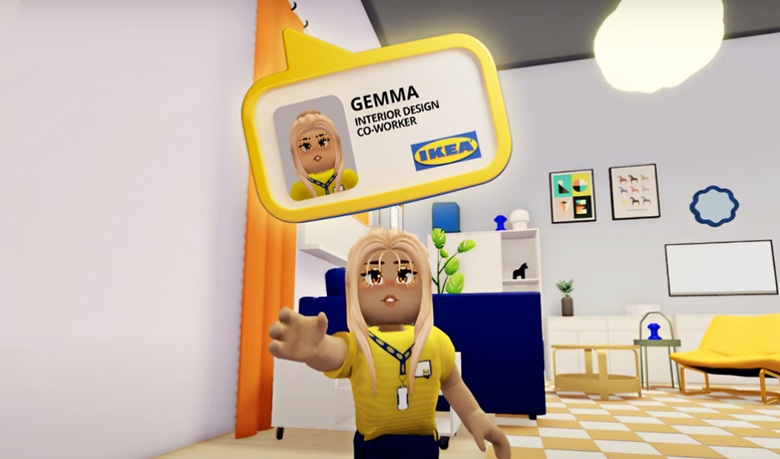
Result: more than 178,000 applications for the ten roles in two weeks (IKEA). According to the agency, the Roblox store had 6.7 million visitors and real-world job applications rose 50% (The Gang).
Holiday Dash — Amazon (2023)
Agency: The Gang · Mechanic: Mini-Games · Platform: In-Game
Amazon turned its mailed Holiday Kids Gift Book into a Roblox lobby of racing mini-games; the 2024 book carried a QR code straight into the game (The Gang). Points and tickets bought avatar items, and players voted on which item would be released next.
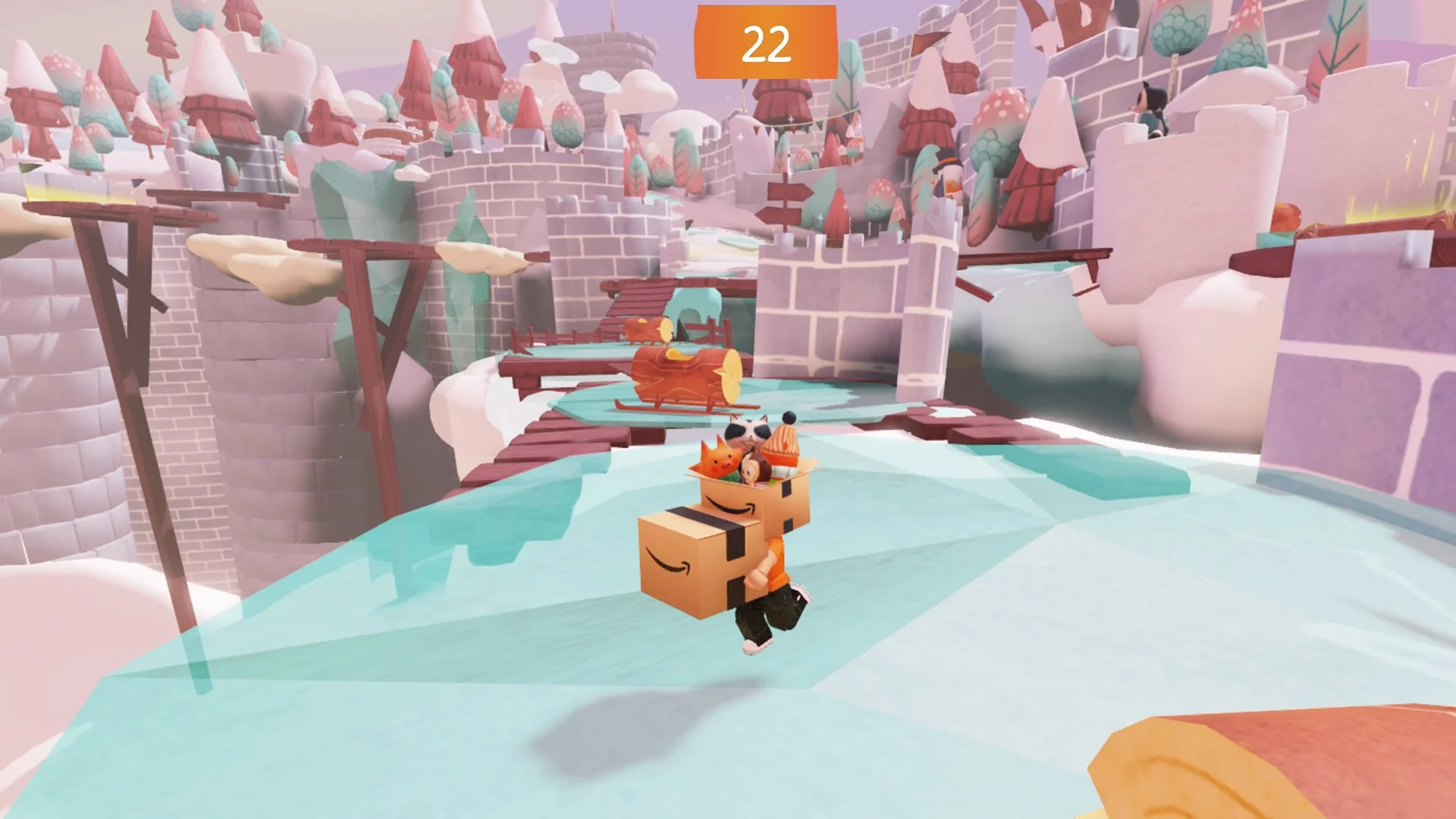
Result: more than 7.7 million visits in three months, 30.8 million votes and 778,000 user-generated items claimed (The Gang).
Retail gamification examples compared
| Game | Brand | Year | What it did | Result |
|---|---|---|---|---|
| Virtual Kids Workshops | The Home Depot | 2023 | Store workshop gives the code to a Roblox build | 7 million users |
| Tough Cookies | IGA | 2022 | Tattoo bought at checkout adds a character | 20,000+ players (2022); more than $1.7 million over four editions |
| Shopping League | Kenzo | 2018 | Buying is a live duel | No sales figures published |
| Shoe Paradise | ALDO | 2012 | Runner with shoppable shoes | Sales up 20% (creative's claim, no baseline) |
| Sinful games | Sinful | 2023 | Short games ending in a checkout code | Slice It: +1.2 points conversion vs non-players |
| Today's Word Hunt | Coop Denmark | 2018 | App games, prizes collected in store | About 1 million winners redeemed in store (2023) |
| Winter Wins | SPAR | 2026 | Daily instant win, store vouchers | 60,000 players; 32% of instant rewards redeemed |
| Play & Win | Migros | 2024 | Match-3 fed by purchases | None found |
| Pinball | Sephora | 2024 | High score earns in-store code | No redemption figures |
| The Co-Worker | IKEA | 2024 | Roblox store for recruitment | 178,000+ applications; real applications up 50% |
| Holiday Dash | Amazon | 2023 | Catalogue QR code into Roblox | More than 7.7 million visits in three months |
What the strongest retail games have in common
The reward lands where the money is. The Home Depot's code came from the store, IGA's characters from the till, Coop's and SPAR's prizes mostly from a shop. Kenzo went furthest: the prize was the right to buy.
There is a reason to come back tomorrow. SPAR allowed one play a day; Coop added a daily word game; Migros adds a stamp with every purchase.
They count the business step, not the play. SPAR's 32% in-store redemption says more than its 750,000 plays, and IKEA's telling figure is the 50% rise in real applications, not the 6.7 million visitors.
Read "players versus non-players" carefully. Sinful's 1.2-point lift and Coty's claim of a 92% higher basket value than "normal" shoppers (Drimify) compare people who chose to play with people who did not; Coop's figure of 15% more visits does not name its comparison group at all. Keen customers play more. To see what the game itself added, hold back a random group.
Quick format or deeper game? Choose by goal
Sign-ups and repeat orders: a quick format is often enough. Wheels and scratch cards are fast to build. Klekt's Black Friday wheel, emailed to customers after a purchase, saw 1,600 codes claimed within a month, 16% of which led to a second order, and average order value rose 17% (Playable). Test a format like that against a plain discount email before building anything bigger.
Store visits: a daily instant win, paid out in store. SPAR's ice block and Coop's scratch cards and wheels are pure luck, yet they carry the biggest redemption figures in this list. The prize location and the daily rhythm did the work, not the mechanic.
Time with the product: a deeper game. When the product is the message, give players something to master: Migros ties match-3 levels to its stamp card, Sephora builds a pinball table around a lip stain, and The Home Depot sends players down its virtual aisles for parts.
When is a game the wrong tool?
No audience, no players. Coop and SPAR worked because the game sat in front of members and store customers who were already there. A microsite with no media behind it rarely gets played.
No till integration, no in-store prizes. If staff cannot scan the voucher, redemption numbers never appear. Prize draws and instant wins can also fall under local promotion rules, so budget for legal review.
Roblox reach is not a sales channel by itself. IKEA and Amazon got applicants and holiday attention, not baskets. If you need sales, build a route back to the store, as The Home Depot did with its workshop codes. More in our guide to brands on Roblox.
FAQ
What is gamification in ecommerce?
Ecommerce gamification adds game rules to the online buying journey: a score, a challenge or a contest whose outcome changes what the shopper gets. The strongest examples tie that outcome to the purchase itself, as in Kenzo's Shopping League, where a duel decided who could buy one of 100 pairs. Quick formats such as a discount wheel or scratch card count too: they are cheaper to run and suit sign-ups and repeat orders.
What companies use gamification in retail?
Retailers with campaign games in our library include IKEA, Amazon, Sephora, SPAR, Migros, The Home Depot, Coop Denmark and IGA. Grocers tend to run daily loyalty games with in-store prizes; the fashion examples are limited drops and shoppable runners. The retail section has the full list.
What are the main types of retail gamification?
Retail campaign games fall into four broad patterns: in-store and checkout games, where a visit or purchase opens the game (The Home Depot, IGA); shoppable ecommerce games, where playing is part of buying (Kenzo); loyalty and app games with prizes redeemed in store (Coop); and brand or recruitment games, such as IKEA's The Co-Worker.
Does Gen Z like retail gamification?
The best-documented youth results in the library come from games placed where young people already are. IKEA's Roblox store, aimed at 18-to-25-year-old applicants, ran alongside a 50% rise in real-world job applications, according to its agency. Sephora built its pinball partly to test whether play engages Gen Z shoppers in its app, though no redemption figures were published.
For more, browse the sales objective and the loyalty collection, and if you have run a retail game with numbers to show, send it to us.