

An AR (augmented reality) game is played through a phone camera: it places digital characters, objects or targets on the real room, street or pack in front of the player. For brands it turns a product, poster or place into the playing field, through an app, a browser link (WebAR) or a social lens.
How it works
You open the camera and point it at the world. Google's ARCore, for example, combines camera images with motion-sensor data to track the phone, finds horizontal and vertical surfaces, and pins virtual objects to anchors so they stay put as you walk round them.
Brand AR games tie play to a surface (money raining onto your living-room floor), an image (a pack, a poster, a rival's ad), your face, or a spot on a map, as in a location-based game. You move the phone to aim, tap to catch, hit or shoot, and finish with a score, a prize or a code.
There are three ways in: an app; WebAR, which opens in the phone's browser from a link or QR code with nothing to install; or a lens inside Snapchat or TikTok, which lives in someone else's app (see AR lens).
Where brands use it
Food and drink brands made the largest share of the AR games in our library, followed by entertainment; the most common objective is engagement. The pack is a common trigger. Red Bull's Augmented Racing (2011) turned the 12 cans of a multipack into a race track around a room; M&M's Take Home the Fun gave extra rounds for a barcode from a real pack. Toy brands bring characters out: LEGO's Hidden Side app recognised a built set and sent ghosts creeping out of it. Sports bodies use places: the Premier League's Trophy Hunt hid 20 AR trophies around landmarks in each of five US host cities. Browse AR in the wild and the AR and VR facet; our QR code games roundup covers more pack-led AR.
When it fits
Use AR when the real object or place is the point: a pack you want picked up, a poster you want looked at, a city you want people to walk. It suits launches, seasonal pushes and live moments; Ally Bank's game ran only during Super Bowl ad breaks. Keep rounds short: Trophy Hunt averaged 47 seconds per session, according to its Shorty Awards entry.
Choose WebAR for reach and data. A code on the pack opens the game at once, on your own domain, so entry forms work inside it; in a lens, sign-ups move to a separate page. Trophy Hunt's Shorty entry reports 95% form completion for sweepstakes entries. Choose an app when the game should run for months with new content, as LEGO planned for Hidden Side.
When not to use it
Skip AR when the camera adds nothing: if the game would play the same on a flat screen, a web game loads faster. AR needs space, light and a reason to raise the phone; for people scrolling a feed, a playable ad travels further.
Check devices and hosting: Google lists the phones certified for ARCore; Safari on iPhone does not support WebXR, the web's AR and VR standard. 8th Wall, the engine behind several WebAR games in our library, ended platform access on 28 February 2026 and now continues as open source; projects already published on its hosting run until 28 February 2027. Apps close too: Hidden Side left the stores in January 2023. In the US, COPPA treats a photo or video of a child as personal information: check with counsel before aiming a camera game at under-13s.
Examples from the library
The Big Save — Ally Bank (2018)
Agency: Grey (agency of record), with MediaMonks (production) · Platform: Mobile app
Players downloaded the app and typed in what they were saving for, such as a home or college. The game came alive only during Super Bowl LII commercial breaks: with the camera open, dollar bills rained over the player's own living room, and they swiped them into a virtual piggy bank before the break ended. A best score and a short savings story went into a judged contest.
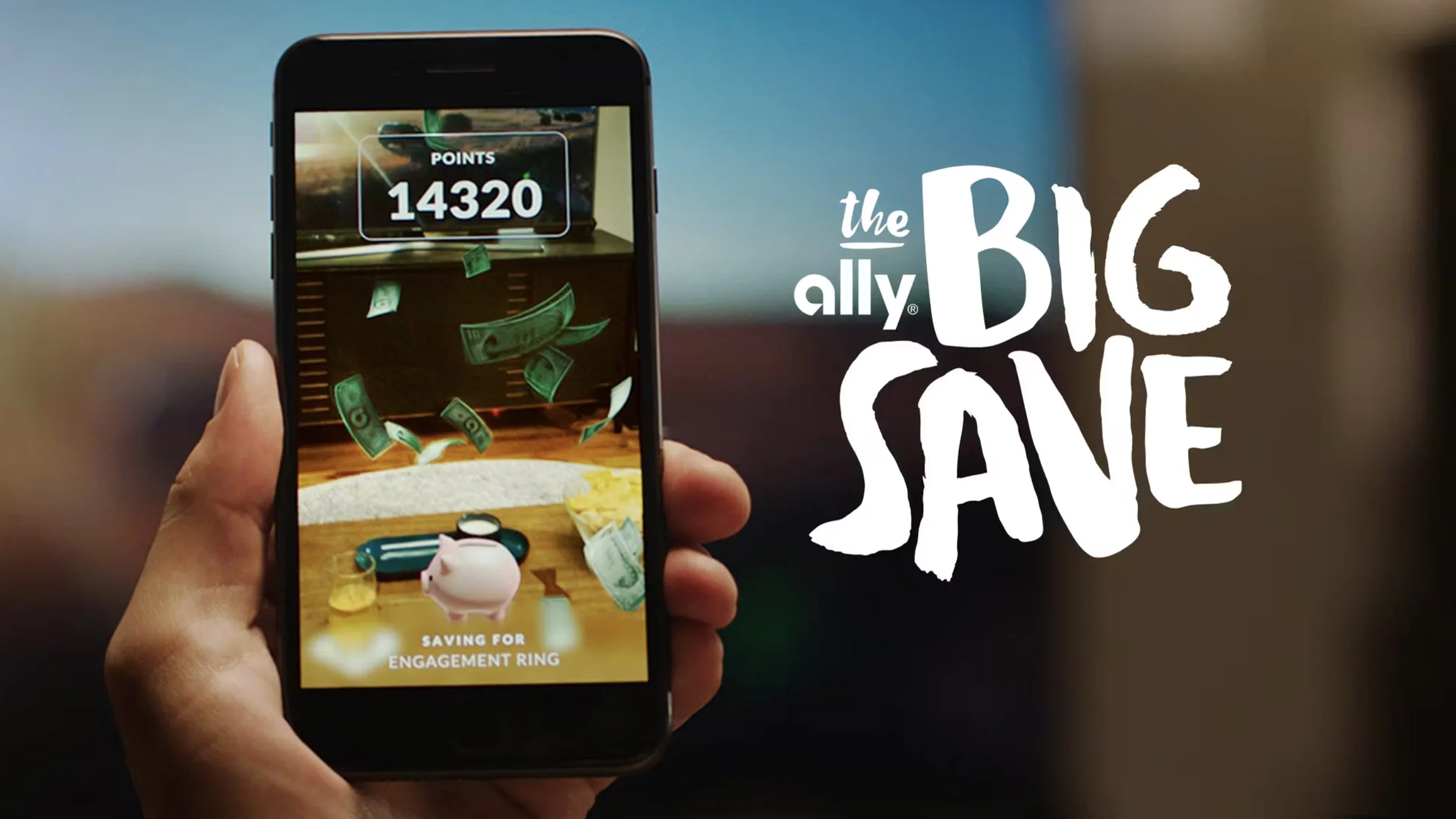
Result: American Banker reports 69,000 downloads, an average of 24,000 active players per commercial break and 31,000 contest submissions; the art director's portfolio counts 600K+ games played live and 211M+ impressions.
Burn That Ad — Burger King (2019)
Agency: DAVID São Paulo · Platform: Burger King app, Brazil
A banner in Burger King's Brazilian app opened the camera for a guerrilla raid on a rival's advertising. Players pointed it at one of the rival's ads (a billboard, a magazine page, a coupon leaflet, even a picture on a computer screen); the app recognised it, set it alight and burned it away to reveal a Burger King ad. Each burn earned a free Whopper coupon, dropped straight into the BK Express order cart, one per person.
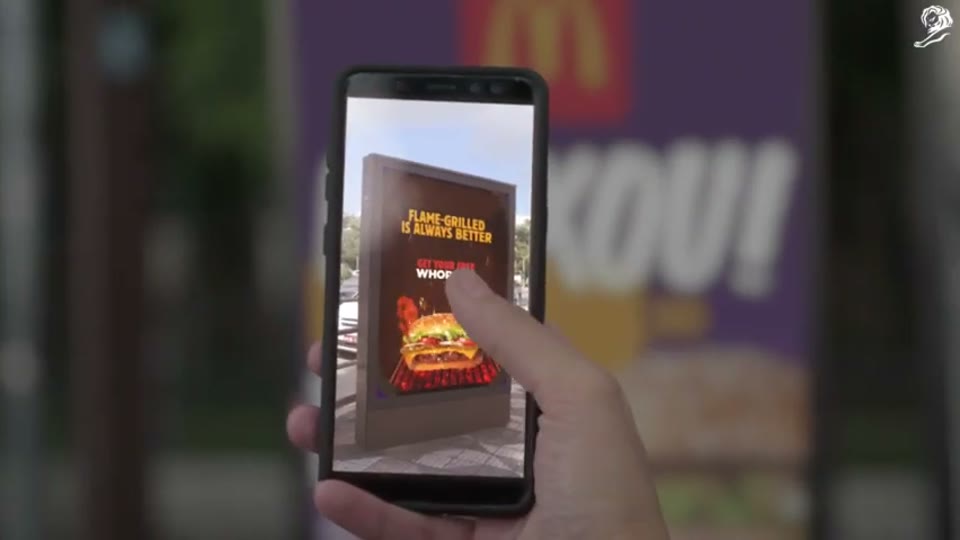
Result: WARC's case study reports one million app downloads in one month and a 54.6% increase in in-app sales; Valens Research counts over 400,000 rival ads burned and about 1.5 million free Whoppers over the three-month campaign.
Data Piñata — 2degrees (2022)
Agency: TBWA New Zealand, designed and built by TBWA's Digital Arts Network; Unbound was technology partner for the 2023 Armada season · Platform: Mobile web (WebAR)
New Zealand telecom 2degrees ran it as a mobile website, not an app. Players confirmed their number by SMS, picked a whacker and pointed the camera at the sky to find Polly, a giant pink piñata, then whacked her for free mobile data. Anyone could play; only 2degrees customers could claim the data, within 24 hours of a win. The 2023 Armada season brought 20-plus piñatas; location, weather, date and time of day decided which one each player met daily.
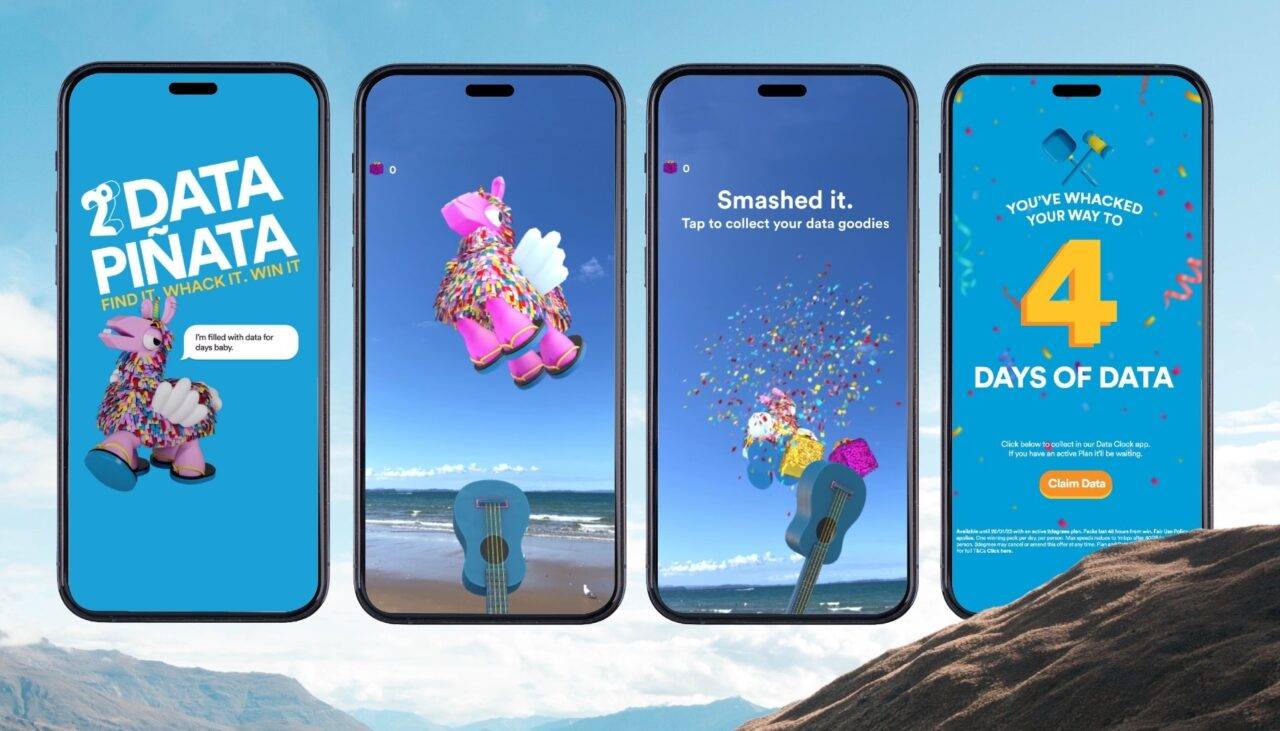
Result: 2degrees says three million piñatas were whacked in the first season and more than 280,000 people won over four million hours of data; Digital Arts Network counts 816k players to date.
FAQ
What does AR mean in a game?
AR stands for augmented reality. MDN's WebXR guide puts the difference simply: in AR the player sees rendered imagery on top of the real-world environment around them, while in virtual reality the app creates the entire image, background included. Brand AR games mostly run on an ordinary phone held up to a room, a street or a pack.
What is WebAR?
WebAR is augmented reality that runs in the phone's web browser: tap a link or scan a QR code and the camera opens, with no app to install, as in Trophy Hunt and Data Piñata. Before you commission one, ask which engine it runs on and how long the host will keep it online; 8th Wall, used by several games in our library, stops hosting projects after 28 February 2027.
Is an AR game the same as an alternate reality game?
No, though the names are easy to mix up. An alternate reality game presents its story as real and spreads clues across websites, phone lines and posters for players to solve together; it needs no camera. An AR game is defined by the technology: graphics placed over the live camera view.