

A web game, or browser game, is a video game that runs in a web browser on a phone or computer, opened from a link with nothing to install. Brands favour it because one link works from an ad, a pack, a TV spot or a social post, with no app store in between.
How it works
You tap a link, scan a code or click an ad, and the game starts on the page. That matches Wikipedia's definition of a browser game: one played in a web browser, typically without dedicated hardware or software installation.
Many open on a Play button, which also switches the sound on: under Chrome's autoplay policy, a Web Audio context created before the player's first tap or click starts suspended. Then comes a run, a level or a round, ending in a score, a leaderboard, a prize form or a link to the shop.
Behind the page sit HTML, CSS and JavaScript, the core technologies MDN lists for games on the web. For 3D, browsers use WebGL, which the Khronos Group describes as a royalty-free web standard for a low-level 3D graphics API.
Where brands use it
The browser is the most common home for campaign games: 661 of the library's 1,114 games are web games. In the 2000s, the browser era in our history of advergames, it was almost the only one: 87 of the 96 games from that decade.
Entertainment, food and drink, tech and fashion and beauty brands have commissioned the most, chiefly for engagement or awareness. The same link can sit behind a QR code game on a pack, a TV spot that sends viewers to their phones, or a social post. Meta's Instant Games are web games too: "lightweight, HTML5-based games" played inside the Facebook app with no downloads required.
When it fits
A web game fits a campaign of weeks that needs reach across devices and channels. MDN puts the case plainly: games built with HTML work on smartphones, tablets, PCs and smart TVs, and you are not limited to promoting them in someone else's app store.
It suits briefs that end on your own domain: a sign-up, a coupon, a careers form or the product page. Plan the session in minutes: Nissan's racer below averaged 2.54 minutes a play, while the U.S. Air Force's mission game averaged over 34.
Book the traffic before the build. With no store listing, people arrive from paid social, a code on the pack, a TV spot or press.
When not to use it
Skip it when the plan is a daily habit over months. Unless people add it to their home screen, a web game has no icon on the phone, and players return only when something sends them back; a mobile game app suits that better. If your audience already spends its evenings in Roblox or Fortnite, build where they already play: a Roblox experience or a Fortnite island.
Keep heavy 3D off slow phones: Google's web.dev cites the BBC losing an additional 10% of users for every extra second of load time. For one gesture inside a feed, a playable ad is lighter.
Plan for afterwards. Campaign sites go offline and plug-ins die: only 87 of the library's 661 web games are confirmed playable today. Budget for hosting, or an archive copy.
Examples from the library
Airman Challenge — U.S. Air Force (2012)
Agency: GSD&M, Blockdot (production) · Platform: Browser, on airforce.com
Players signed up, picked one of eight squadron emblems and chose from a map of 16 missions modelled on real operations, such as humanitarian relief in Bolivia and fighting cyber attacks. Each mission had to be staffed with real Air Force specialists first, and the wrong team failed. Then came a short skill game; success earned experience points and promotion through real ranks, with an option to request career information or apply. The original address no longer serves the game.
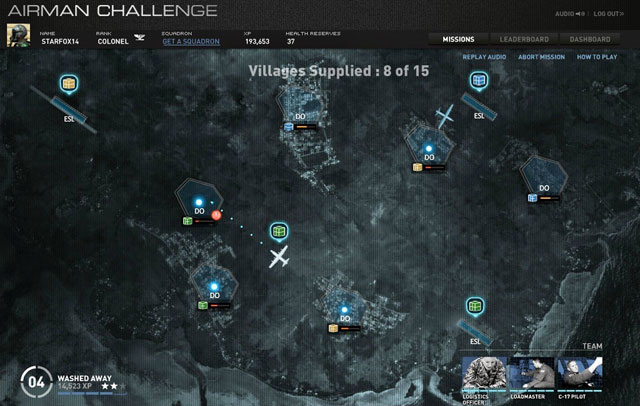
Result: The game drew over 600,000 visitors, who completed over 225,000 missions. Of the users, 62% were in the 16–24 target group against a 40–60% goal, average game time was 34 minutes 11 seconds against a 20–30 minute goal, and 22% registered via Facebook Connect against a 10% goal, according to Dan Ferguson's case page.
Playfully Wimbledon — Ralph Lauren (2019)
Agency: Lostmechanics, with Facebook Creative Shop · Platform: Facebook Instant Game and browser
Ads in Facebook and Instagram feeds and Stories invited people to play, and the game opened inside the app with nothing to download; it also ran in phone and desktop browsers at wimbledon.ralphlauren.co.uk. Players picked a ball boy or ball girl in Polo Ralph Lauren kit and ran down the court, steering, jumping and sliding past umpire chairs and benches while scooping up tennis balls. Scores went to a global leaderboard, with a link to challenge friends.
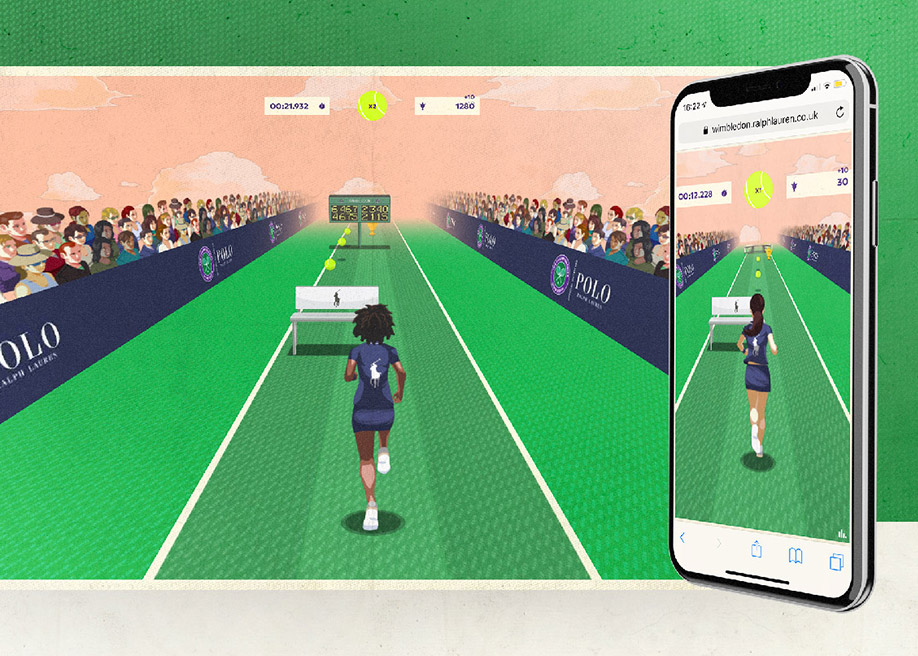
Result: Over 130,000 individual players completed over 210,000 game sessions, purchase intent rose 6.3 points and the campaign returned 4.2 times its ad spend, according to a Meta case study published on The Drum. The game drew more 18- to 24-year-olds than any other age group.
Electric Racer Tokyo — Nissan (2025)
Agency: Dark Horses, with illustrator Kentaro Yoshida, Electric Studios (design and animation) and RAW.digital (game development) · Platform: Browser, desktop and mobile
A Play Now button on nismo.com opens the game straight in the browser, no install. You pick Nissan Formula E drivers Oliver Rowland or Norman Nato and race a pixel-art Tokyo circuit past Mount Fuji and cherry blossoms. Lightning bolts trigger an Attack Mode boost, but drive too slowly and the game ends, a nod to energy management in Formula E. Scores go on a public leaderboard where the real drivers have set the bar. The game is still online.
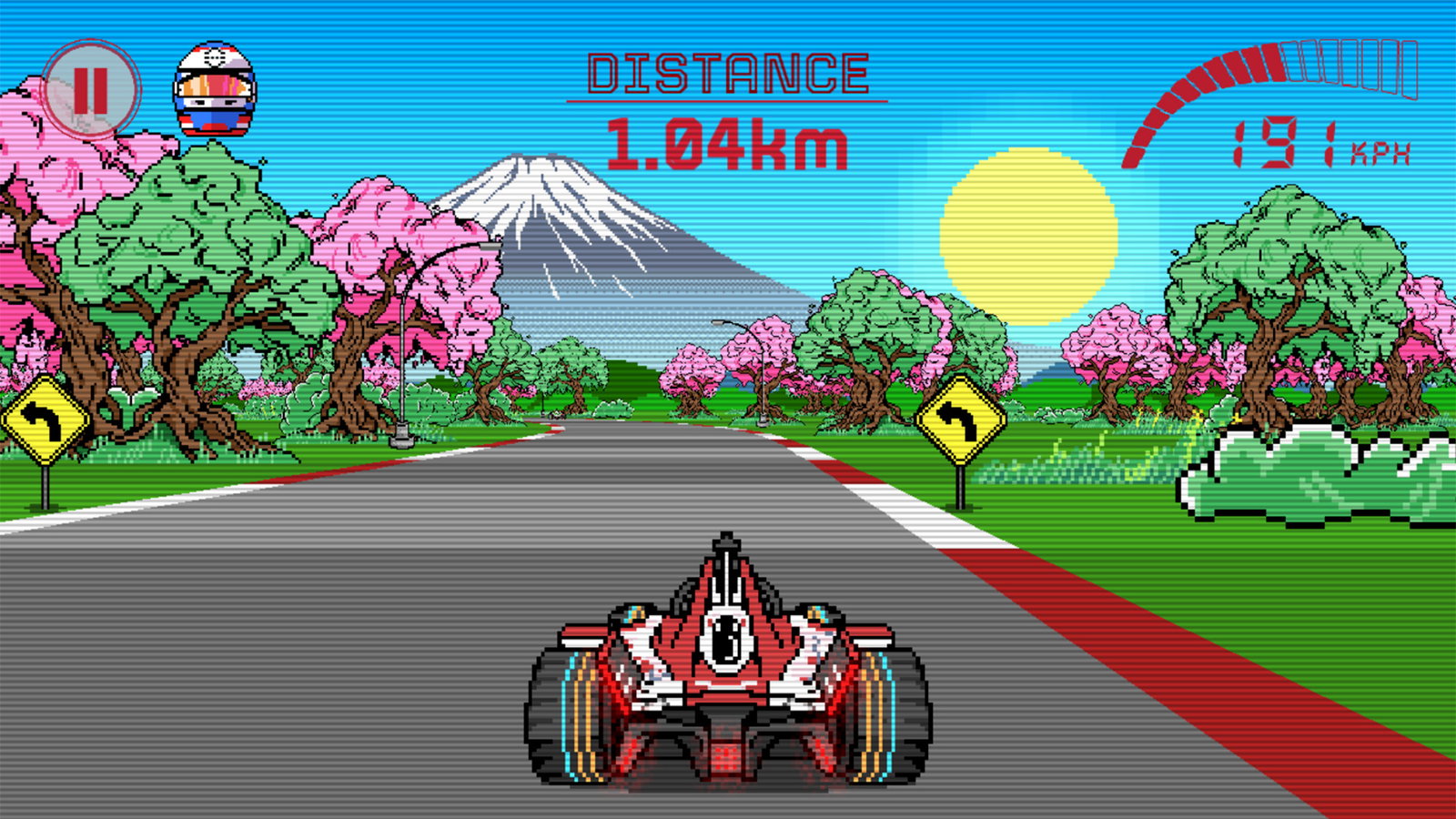
Result: The promotional material hit 23 million views against a 15 million target, and the game logged 94,000 plays averaging 2.54 minutes. The activation generated over $3 million in earned media value, 25 times the budget, and 84% of people exposed to the race activations saw Nissan as "exciting", against 43% of those who weren't, according to the campaign's Clio Sports entry.
FAQ
Is a web game the same as an HTML5 game?
Mostly. "Web game" and "browser game" say where you play; "HTML5 game" names the technology most of them use today. Older browser games ran in plug-ins such as Flash Player or Java. A playable ad is built in HTML5 too, but it lives in paid ad space rather than at its own address.
Should a brand build a web game or a mobile app?
For a campaign of a few weeks, usually a web game: one link, no download, and it runs on phones and computers alike. An app earns its place when people should come back daily for months, or when the game is the product itself. See mobile game.
Can you still play old Flash games?
Not through Flash Player itself. Adobe stopped supporting Flash Player on 31 December 2020 and blocked Flash content from 12 January 2021. Some games run again in Ruffle, an open-source Flash Player emulator, but only two of the library's 96 games from the 2000s are confirmed playable today. The still playable collection lists the ones you can open.