Global Gladiators
- Brand
- McDonald's
- Year
- 1992
- Objective
- Awareness
- Industry
- Food & Drink
- Mechanic
- Arcade & Action
- Platform
- In-Game
- Agency
- Virgin Games
- Added
- October 2026
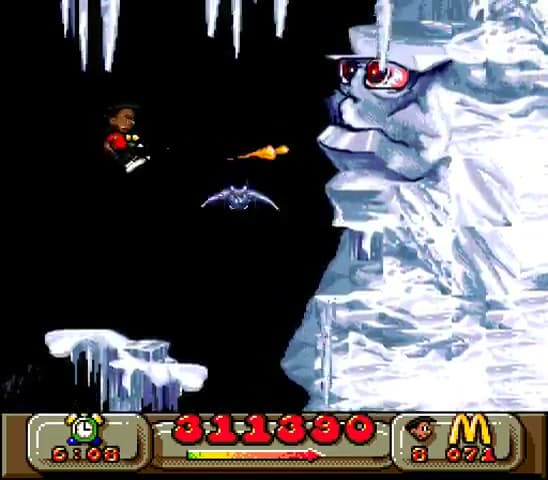
- 1
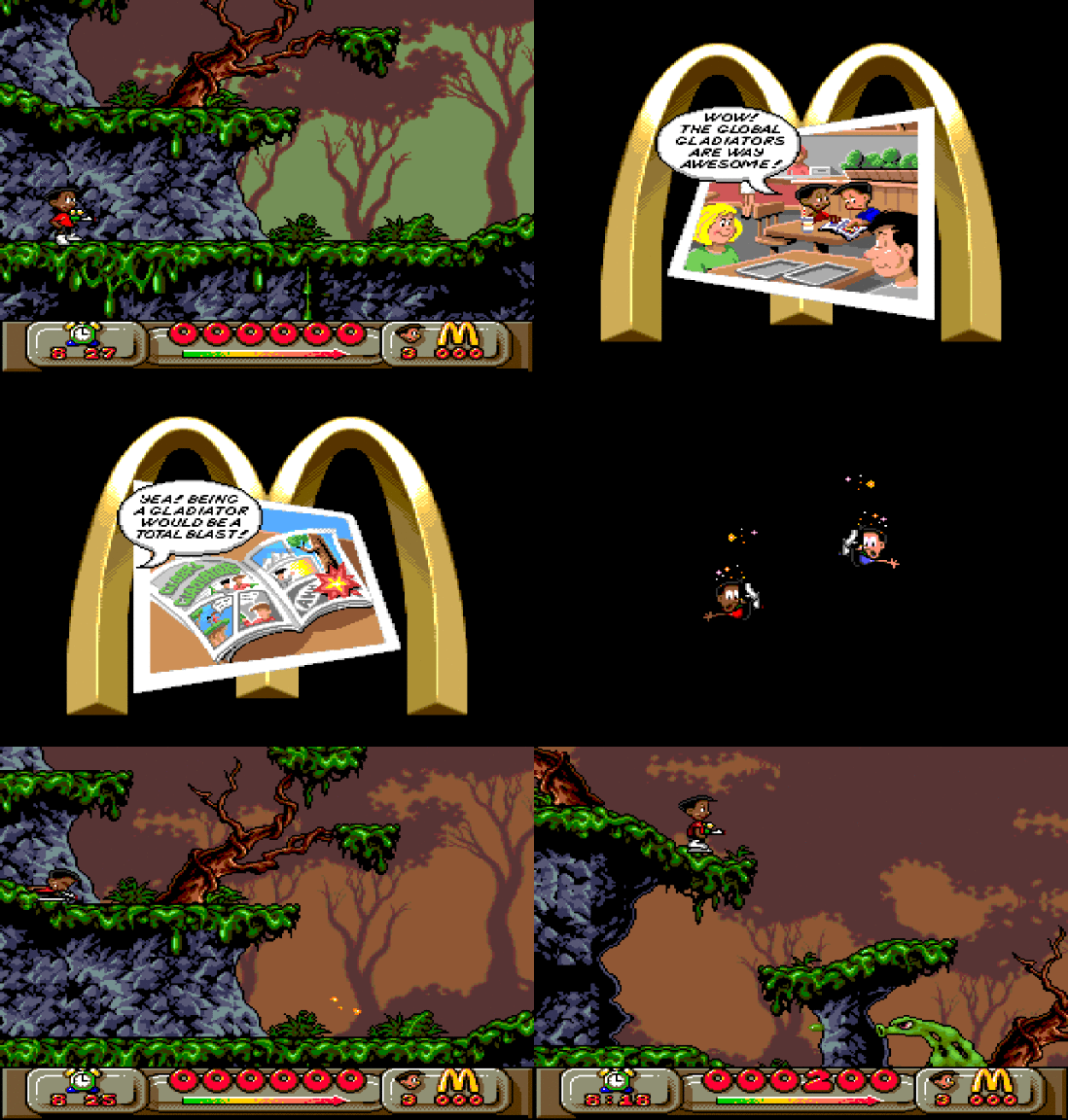
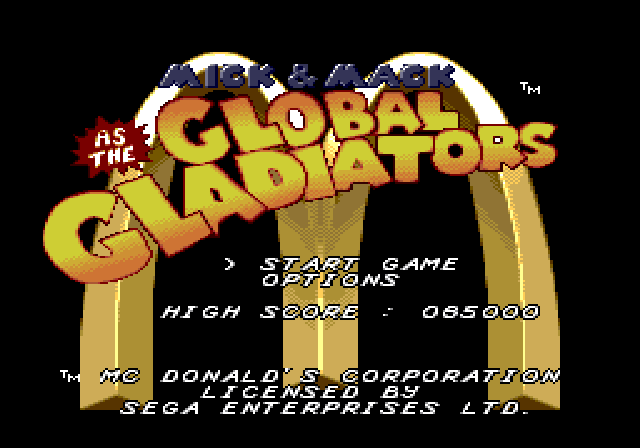
The player starts the cartridge at a Virgin splash and title screen, then watches an intro cutscene where two teens, Mick and Mack, are magically sent by Ronald McDonald into the world of a comic book they were reading; the player then picks Mick or Mack, a cosmetic choice only, since both control identically in this single-player platformer.
- 2
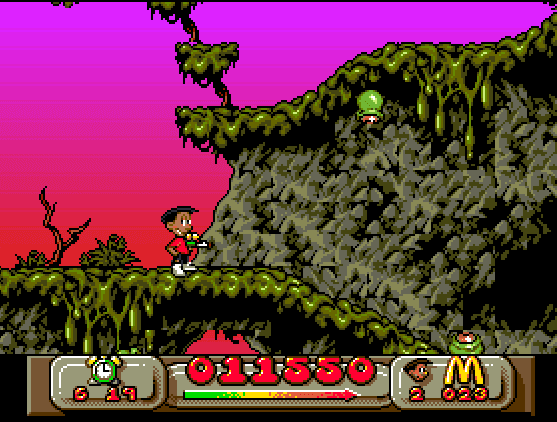
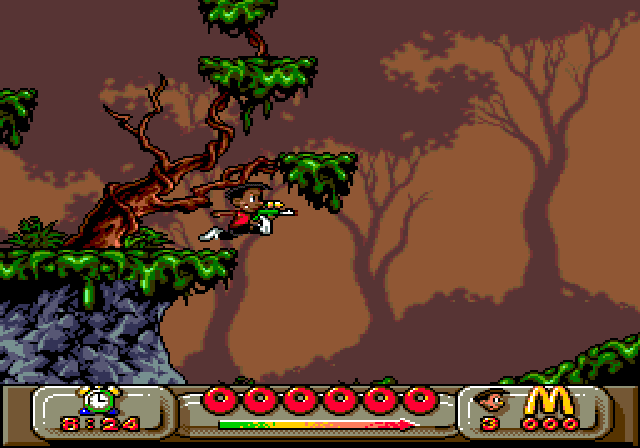
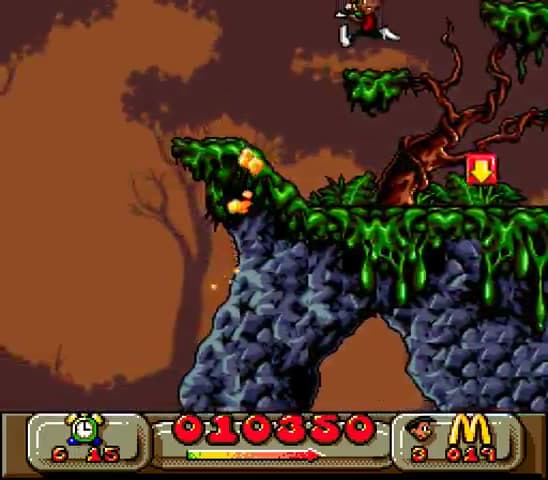
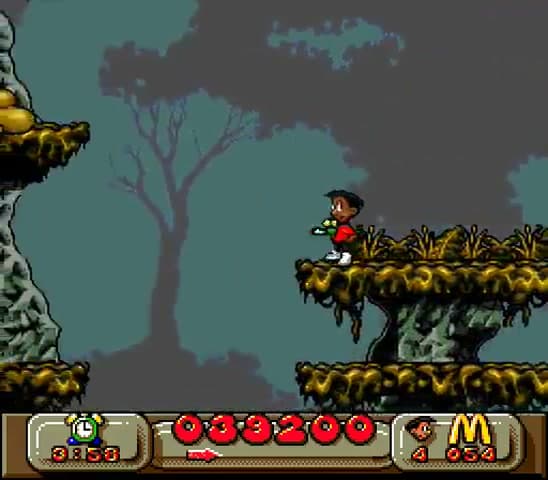
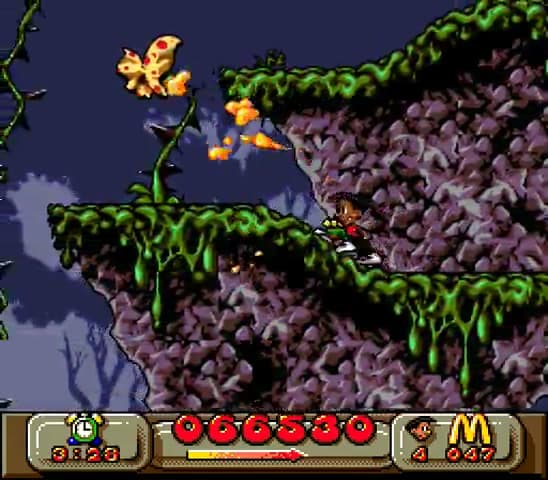
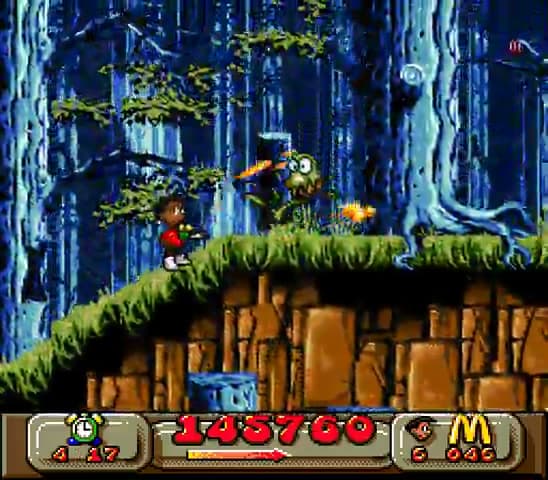
Each level is a side-scrolling run to the right through platforms and hazards, combining running and jumping with a water-pistol shot of orange slime that kills most enemies in one or two hits; the shot has recoil that pushes the hero back, so firing near a ledge risks knocking oneself into a pit, and the player can also aim up or down to hit enemies on upper tiers or below.
- 3
Scattered across each level are 100 collectible miniature golden arches; the exit stays blocked until the player gathers at least 30 of them (75 on later stages of the Master System, Game Gear, and Amiga ports), at which point Ronald McDonald appears at the far end to close out the level — the only branded character in the game.
- 4
Collecting 75 arches unlocks a bonus stage where falling trash must be caught and sorted into one of three correctly typed bins; the round ends if trash sits too long or an anvil is caught, and surviving long enough rewards an extra life or continue.
- 5
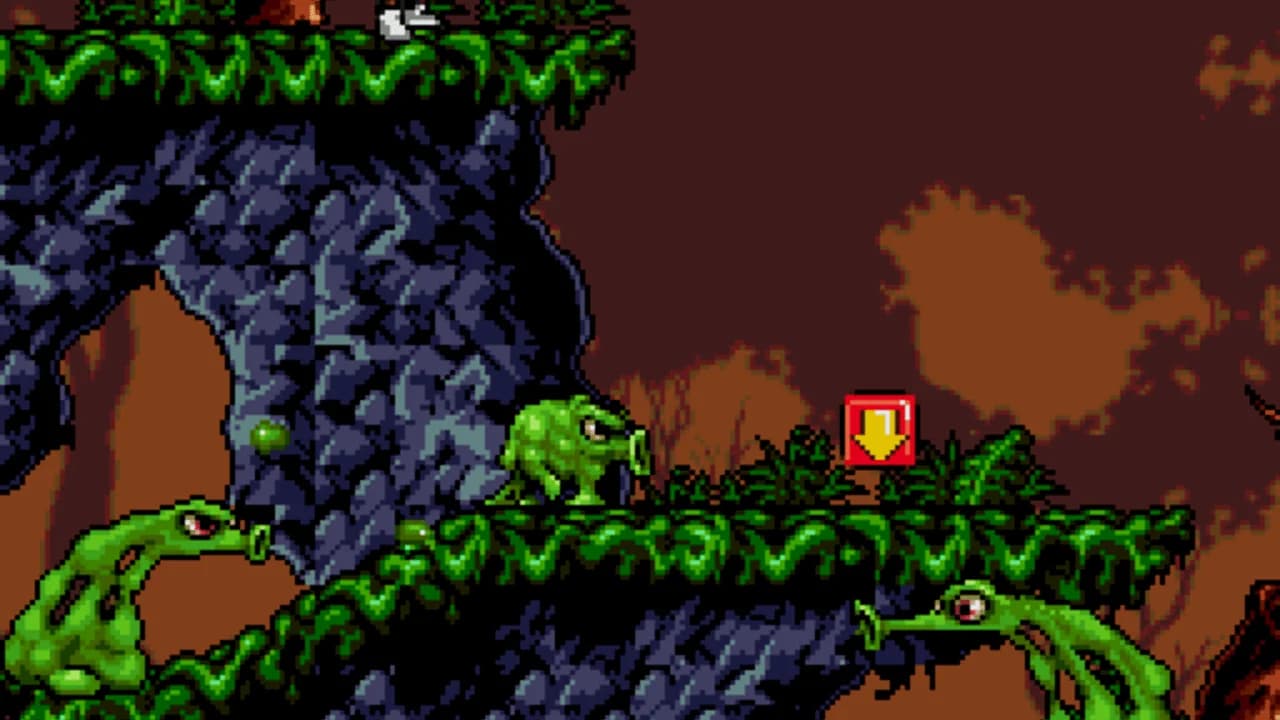
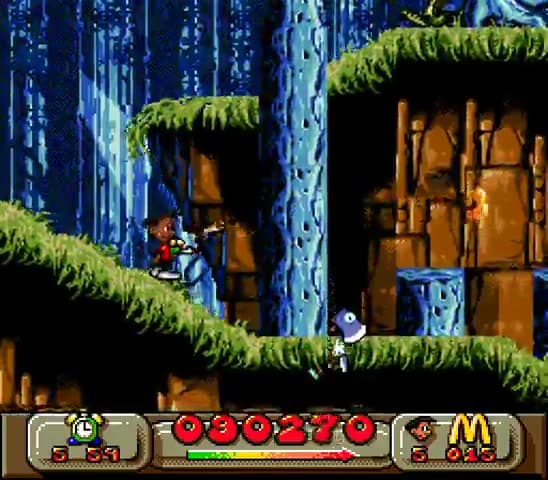
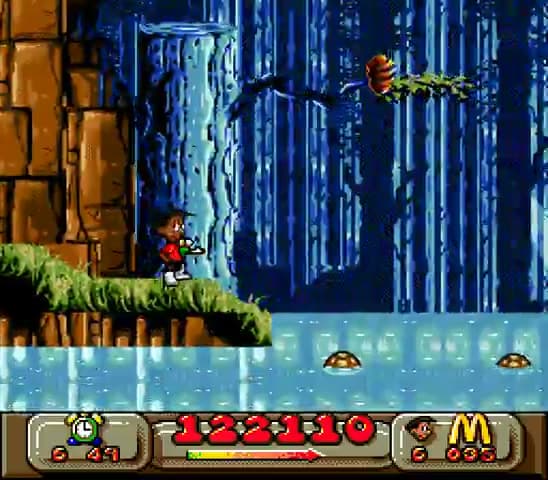
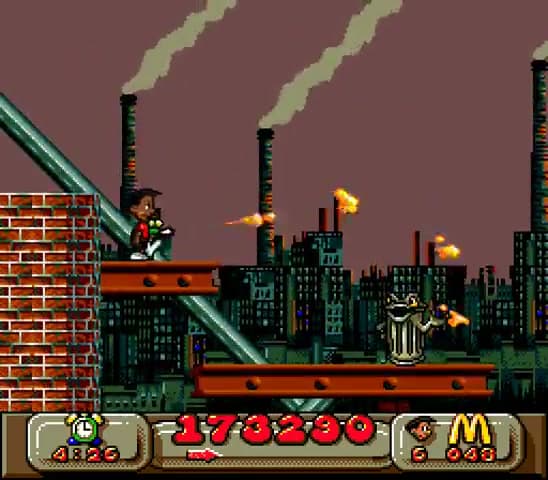
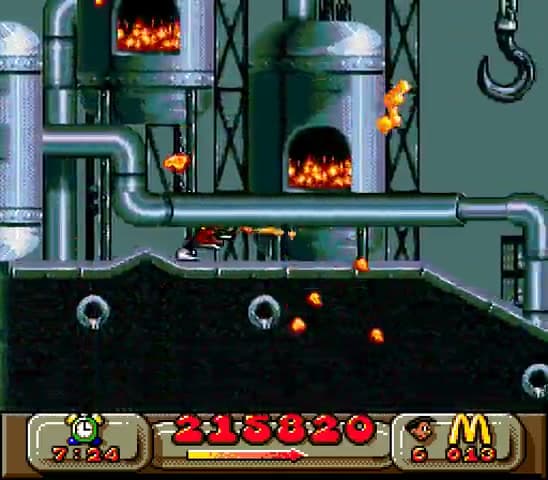
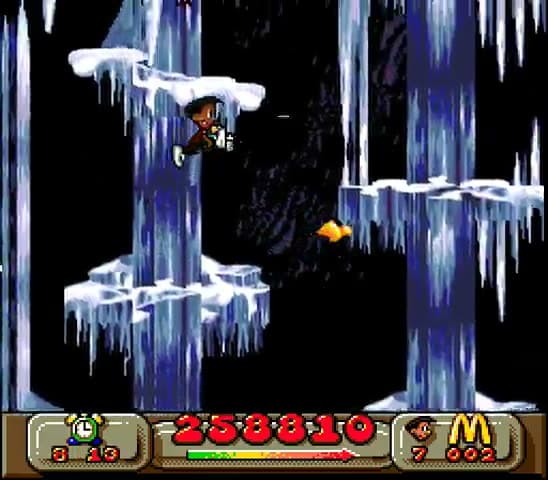
Damage comes from touching enemies in crowds (which also hurts them) or ranged shooters, while bottomless pits and spikes are the main environmental hazards; each world layer adds its own obstacle, from slick slime and launching Jet Pipes in Slime World, to moving log platforms with fish and beavers in Mystical Forest, fireballs and rolling tires in Toxi-Town, and thick flowing oil and a pursuing polar bear in Arctic World.
- 6
The game is structured as four visually distinct worlds of three levels each, with levels inside a world looking nearly identical aside from palette changes; a single boss fight, whose main danger is falling into a pit, caps the very last level, after which Ronald McDonald returns for a closing cutscene that bookends the story he opened.
- 7
Left idle, the hero chews gum or looks around in confusion on an invisible platform, small idle animations that stand out as the game's visual flourish; 8-bit versions swap the health bar for a facial-expression indicator, feel floatier to control, and on Amiga map jump to the up direction, which removes the ability to shoot upward.
Objective
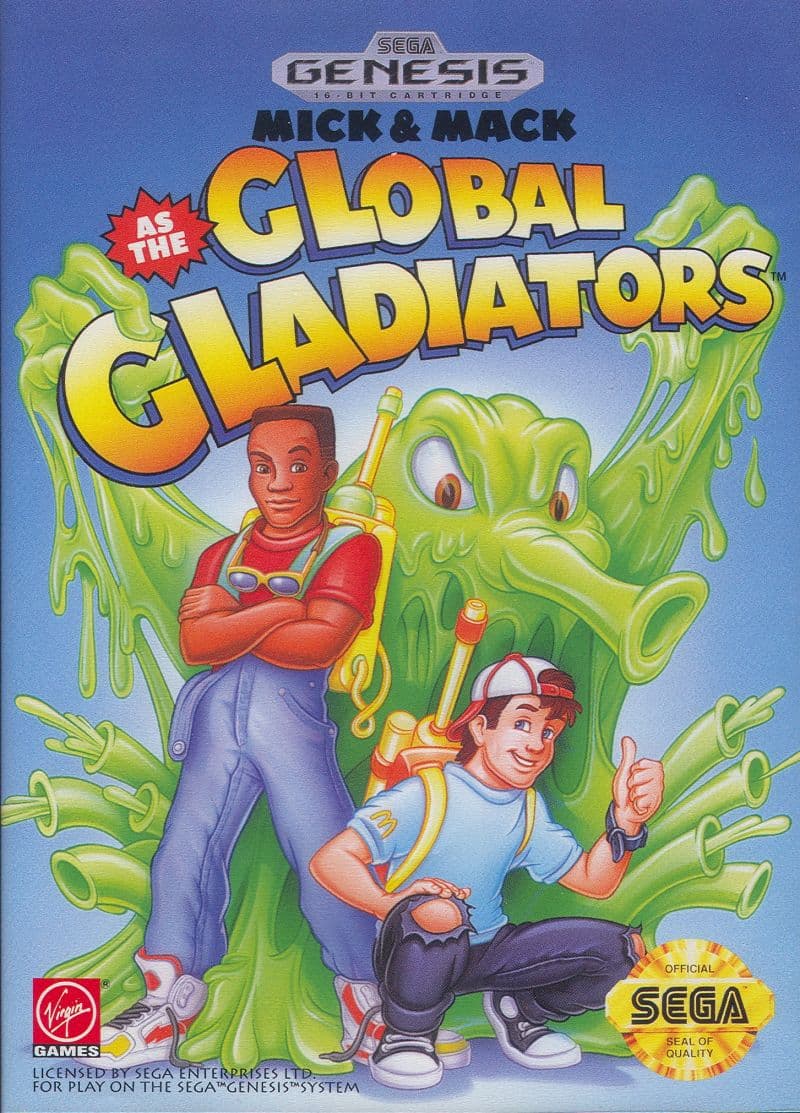
In the early 1990s McDonald's wanted to put its environmental messaging in front of kids on the consoles they already owned, folding the company's anti-litter, anti-pollution stance into a format its young customers actually played rather than watched. The game extended Mick and Mack, the mascots McDonald's had already introduced on NES in M.C. Kids, into a new platform. For Virgin Mastertronic, licensing a globally recognized brand was the lever to break into the US console market and launch its new Irvine, California studio.
Solution
Players pick Mick or Mack and run and jump through four worlds of three levels each — Slime World, Mystical Forest, Toxi-Town, and Arctic World — in a side-scrolling platformer. The core move is firing an arcing blast of orange slime from a Super-Soaker-style water gun at polluter enemies, whether standing, running, or mid-jump; the shot has real kickback that shoves the hero backward and can knock them off a ledge if they're not careful. Scattered across each level are gold arches to collect: gather enough and the exit opens, collect more than the minimum and a bonus stage unlocks where falling trash has to be sorted into the right one of three bins. Ronald McDonald bookends the experience, introducing each level and waiting at its end, with a final appearance closing out the game.
Can you still play it?
Sources
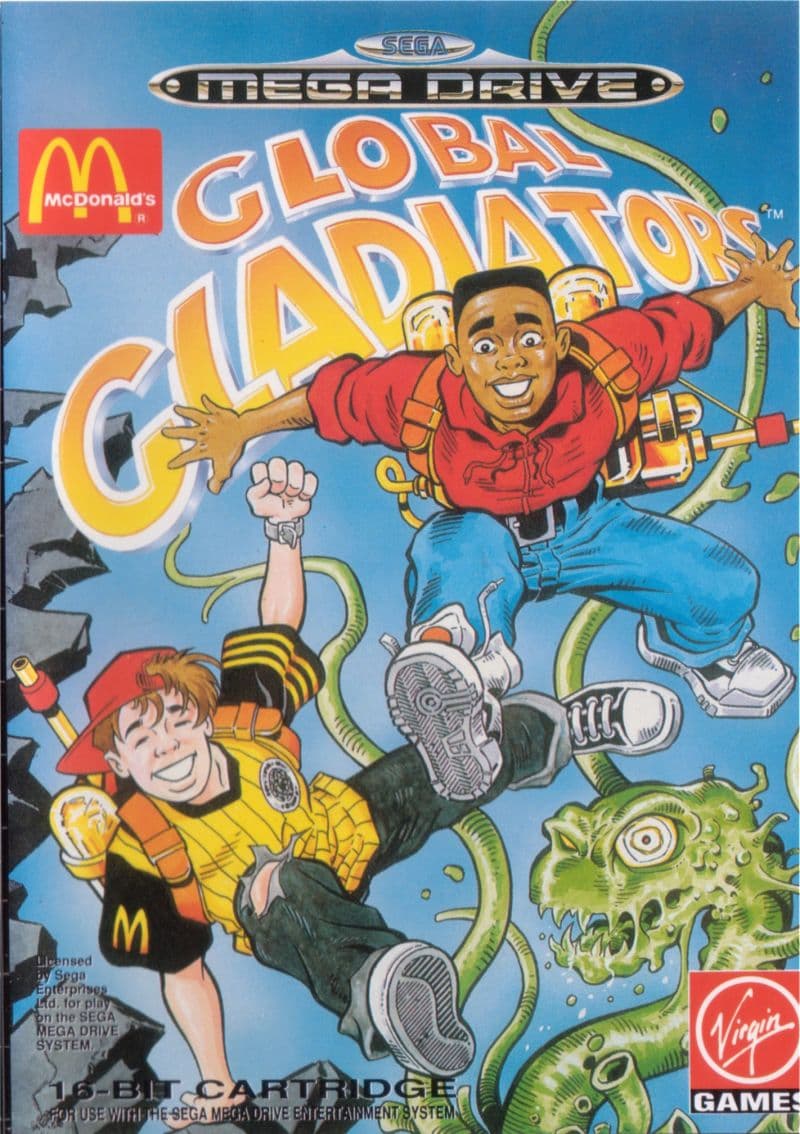
No, there's no official way to play it today: the game was never re-released on any Sega compilation, digital storefront, or McDonald's own site after its original 1992–93 cartridge run. An emulated copy of the Genesis version runs directly in-browser in the Internet Archive's Console Living Room collection, alongside the manual, box art, and longplays of the Master System, Game Gear, and an unreleased SNES prototype.