
Time To Fly
Open the game- Brand
- OpenAI
- Year
- 2026
- Objective
- Awareness
- Industry
- Tech & Telecom
- Mechanic
- Puzzle
- Platform
- Web
- Agency
- Alto
- With
- Smuggler
- Published



- 1
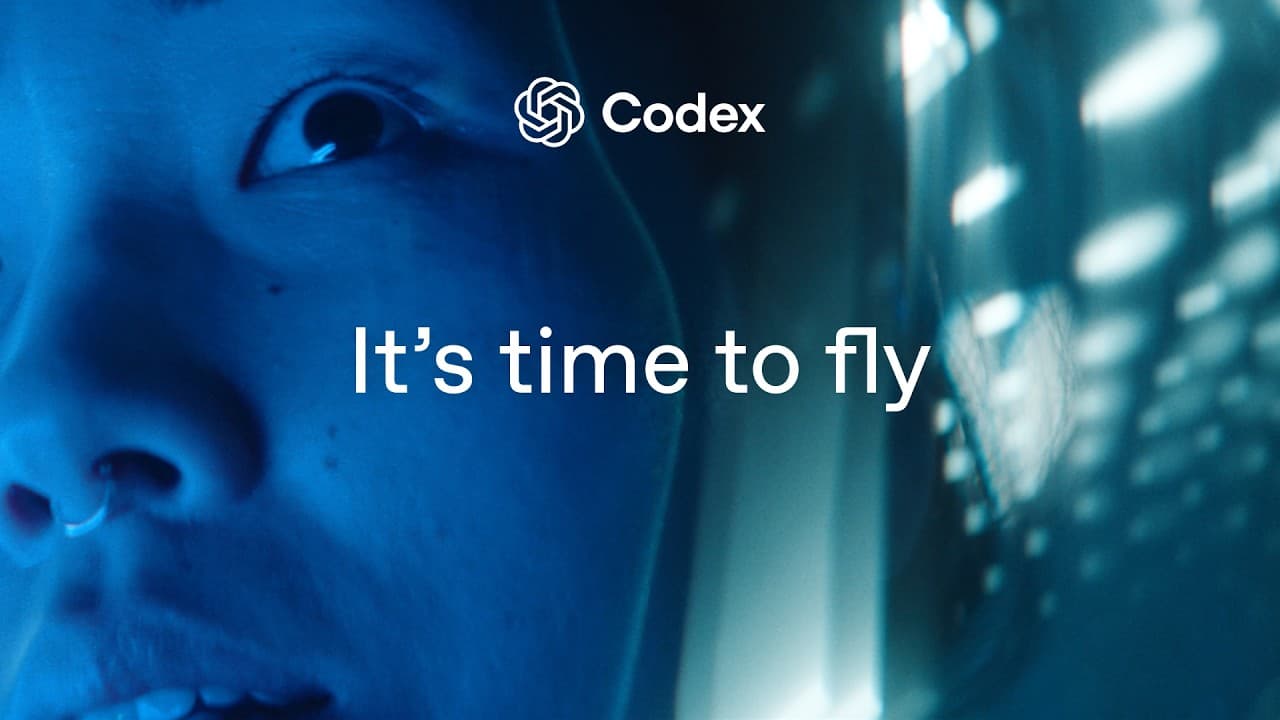
The game is a browser-based space puzzle, "Time to Fly," surfaced as an Easter egg inside OpenAI's Codex ad campaign: a character in the ad is seen developing a game of the same name, and viewers can find and play the real thing at codextimetofly.com with no install or signup.
- 2
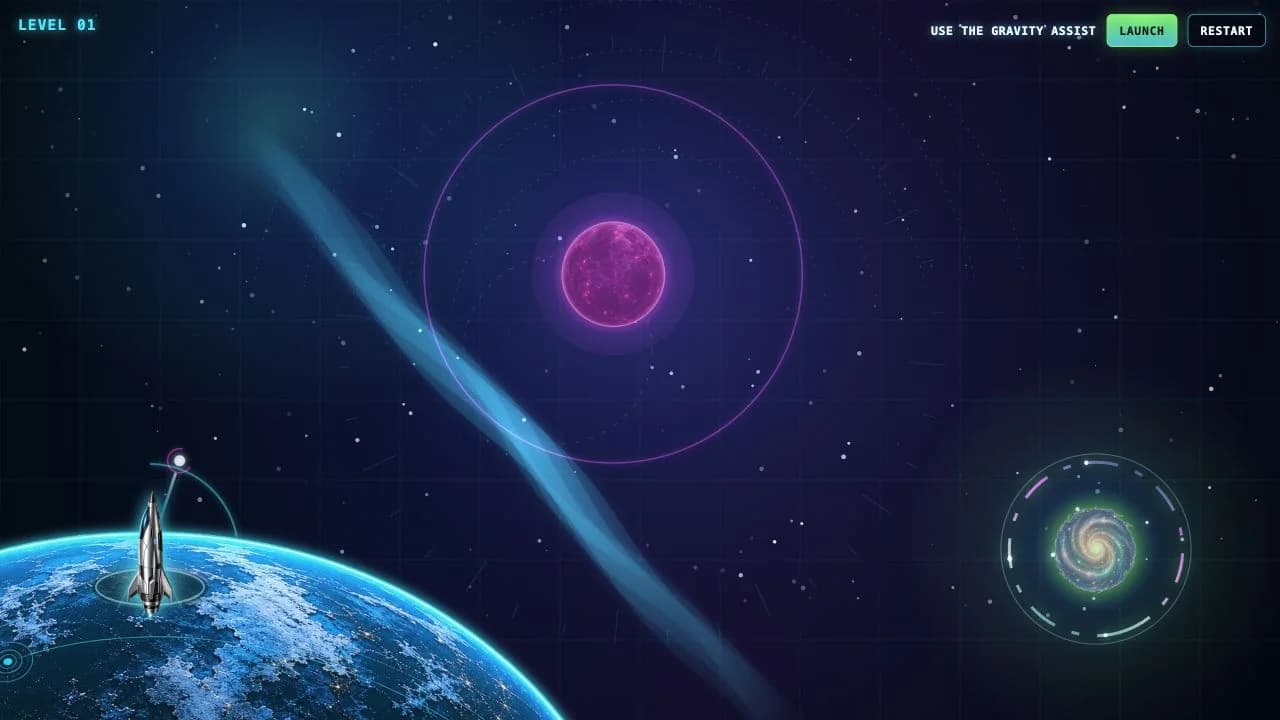
Each level opens on a constellation of glowing planets with visible gravity fields, surrounding a distant galaxy that serves as the target; the interface stays minimal so the play field is unobstructed, and planet positions are randomized at the start of a new game.
- 3
The core loop: the player drags each planet onto its fixed circular orbit (planets can't be placed freely), reads each planet's gravity field to judge the strength and reach of its pull, sets a launch angle for the rocket with no trajectory preview, and fires.
- 4
The rocket flies freely and its path bends through the gravity field of every planet it passes, with the outcome depending on entry angle, distance, and each planet's pull; reaching the galaxy triggers a cinematic arrival animation and clears the level, while missing sends the rocket into open space with an unlimited, instant retry.
- 5
On retry, planet placement stays exactly as the player left it, so a level can be fine-tuned rather than rebuilt from scratch; moons also appear on some boards as obstacles the trajectory must avoid.
- 6
Difficulty escalates across five levels by adding one planet at a time (one through five), requiring the player to use every planet on the board to clear a level, with later levels demanding precise multi-planet routing and, on the final level, exact use of all five planets in the right order.
- 7
The game tracks score, asks for a pilot identity, and compares the run against the player's personal best and a server-verified global leaderboard that can't be tampered with.
- 8
A win screen reads "MISSION ACCOMPLISHED" with the score, and while promo codes last, winners also see an offer of $1,000 in OpenAI tokens/credits with a redeemable code; once all 150 codes are claimed, the same screen instead tells players the codes are gone but the leaderboard competition continues.
Objective
OpenAI wanted its Codex ad to prove, not just claim, that the tool could build something real: rather than pitch performance specs, Alto set out to capture a feeling — the energy and flow one of the campaign's developers described as feeling like flying. To back that up, the agency hid a fully playable, Codex-built game behind clues in the 90-second film, turning the ad itself into proof of the product.
Solution
Watching the OpenAI Codex ad, viewers spot the name of a game one of the on-screen developers is supposedly building; following the clues leads to codextimetofly.com, where that game turns out to be real and playable. It drops the player into a miniature solar system: you drag planets along their fixed circular orbits, set a launch angle for a rocket, and fire it toward a distant galaxy, using the planets' gravity to bend the rocket's path toward the target. There's no trajectory preview and no limit on attempts, so each shot is trial and error. Five levels escalate in difficulty — level one has a single planet, level five has five — and a session ends with a score, a named "pilot" entry on a leaderboard, and, early on, a win screen with a promo code for $1,000 in OpenAI tokens.
Results
5,000 people followed the clues to find the hidden game, and all 150 promo codes for $1,000 in OpenAI tokens were claimed within hours of launch.