





Kiddi World
- Brand
- Pharmaton
- Year
- 2020
- Objective
- Lead Gen & Recruiting
- Industry
- Other
- Mechanic
- Puzzle
- Platform
- App
- Agency
- Monks
- With
- VMLY&R






Objective
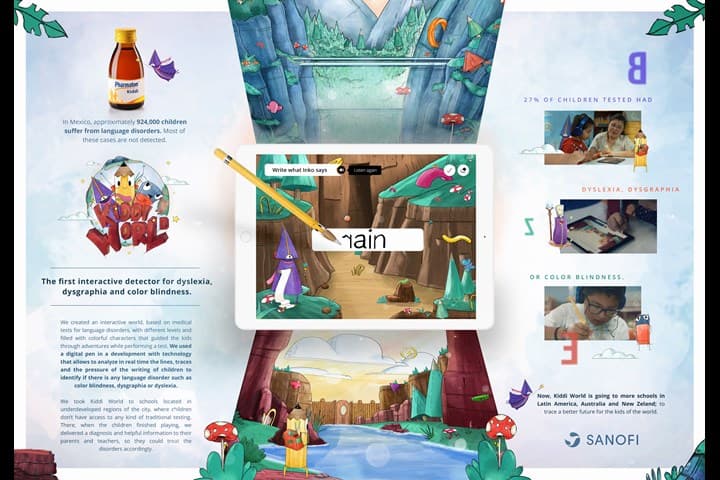
Pharmaton Kiddi wanted to own the territory of child development, but the developmental issue it chose was one Mexico rarely diagnosed: an estimated 924,000 children have learning-related speech and writing disorders, and most go unnoticed because clinical testing is expensive, hard for schools to access, and stigmatizing for the child. The brand set out to give schools a free, non-clinical way to catch these cases early and, in doing so, position itself as a genuine partner in kids' learning and development.
Solution
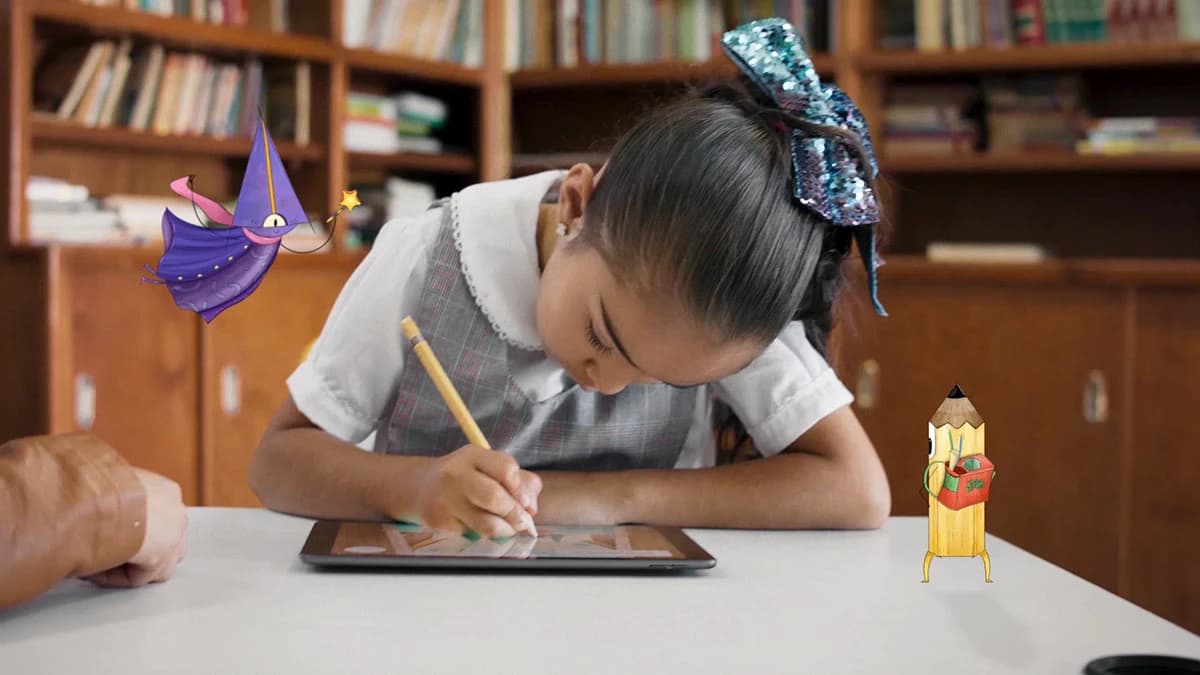
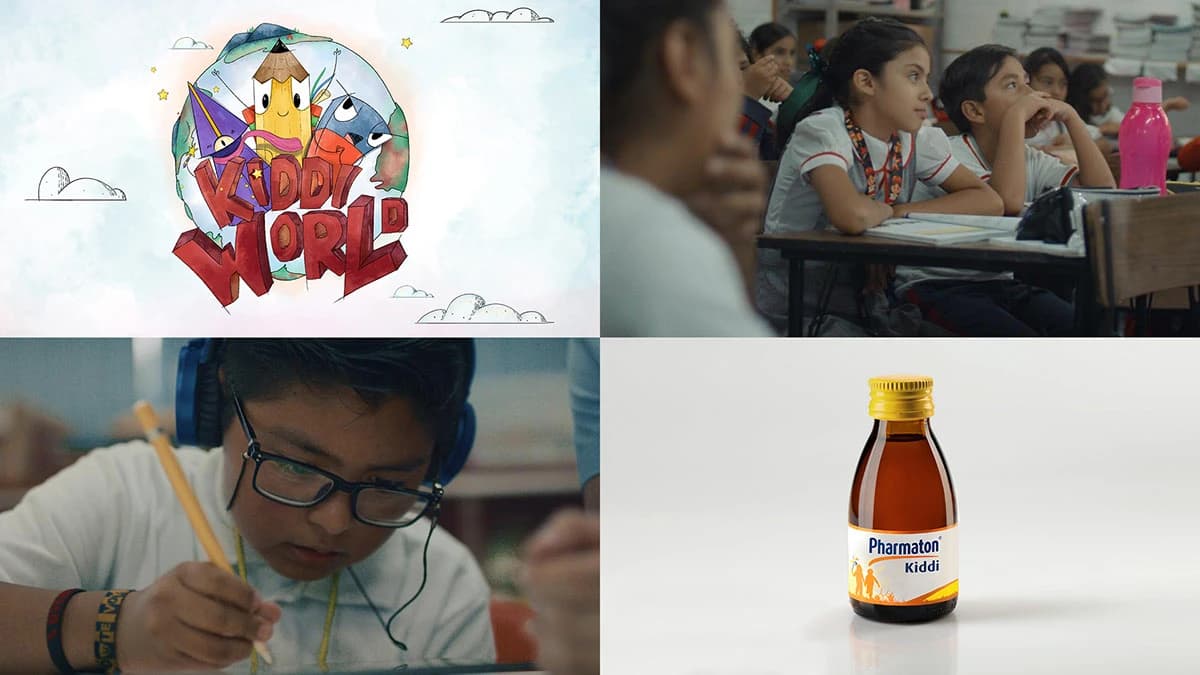
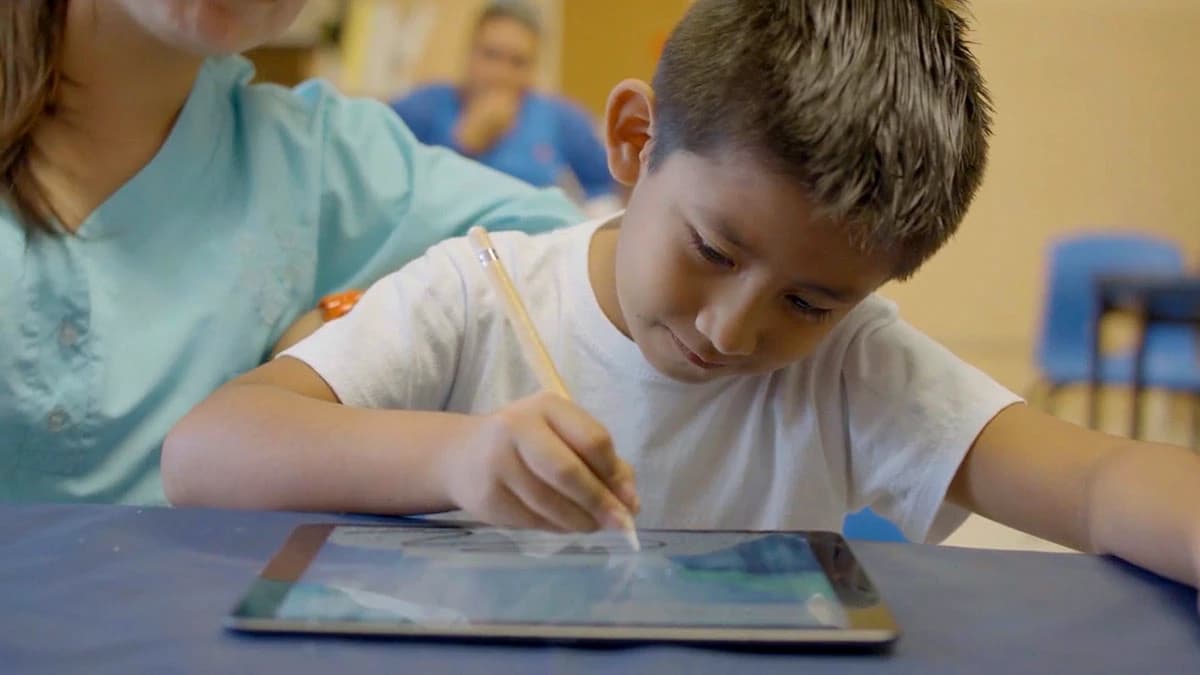
On a school tablet, a 9-to-12-year-old opens a hand-drawn storybook world built from living school supplies and takes the role of a pencil named Lapi, chasing an eraser named Gomba who keeps wiping out pieces of the world and scrambling letters inside words. A narrator carries the story forward, and every scene asks the player to write or draw something directly on the screen with the stylus to fix what Gomba broke. One stretch has them trace a pattern made of dots, playing out like a simple color-spotting puzzle. The session ends with the story resolved and, unseen by the child, a report generated for the school recommending whether the child should see a specialist.
- 1
The game opens in a classroom setting on a tablet: launching the app reveals an illustrated "World of Words" populated by animated school supplies, with a voiceover narrating the setup.
- 2
The player takes on the role of Lapi, a sharp, brave pencil who stands in for the child's own everyday handwriting.
- 3
An eraser villain, Gomba, drives the conflict by wiping out parts of the world and scrambling the letters in words, setting the player's goal of catching up to him and restoring what he erases.
- 4
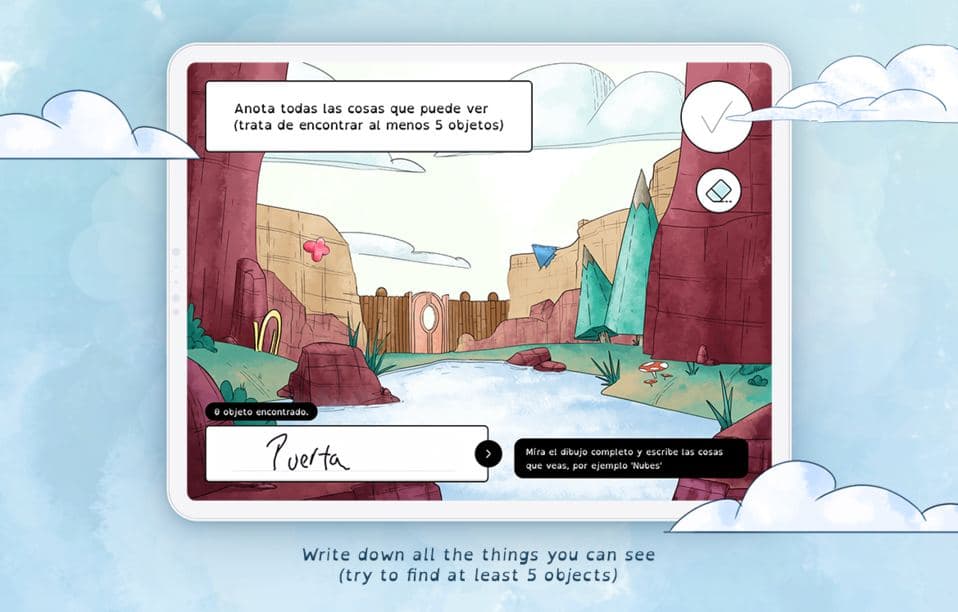
The game plays out as an interactive picture book: narration carries the story between levels, but progress halts until the player writes or draws directly on the page with the stylus, so every step forward requires a mark left by hand.
- 5
Word-based tasks show words Gomba has jumbled and ask the player to write or restore them by hand; the game reads the resulting handwriting for signs of dysgraphia.
- 6
Other levels swap words for numbers and images, built on standard clinical tests for speech and learning disorders but presented as adventures with bright characters.
- 7
One challenge has the player trace a path through a field of dots to rebuild a road Gomba erased — the same dot-pattern layout used in clinical color-blindness testing.
- 8
Throughout, the app quietly logs how the player writes and draws — line quality, pressure, and speed — in real time, invisible to the child, who experiences it as ordinary play.
- 9
At the end, the game produces a results report and, where signs of a disorder are detected, recommends the child be seen by a specialist for proper diagnosis.