




Ganzenleverbord (Game Of The Goose Liver)
View the case- Brand
- Wakker Dier
- Year
- 2023
- Objective
- Awareness
- Industry
- Other
- Mechanic
- Puzzle
- Platform
- Installation
- Agency
- Mutant

Objective
Wakker Dier campaigns against foie gras in the Netherlands, where production is banned but tens of thousands of kilograms are still imported and eaten each year, mostly in restaurants. The organization's own November 2023 survey found foie gras on the menu at 54 of the country's 125 starred restaurants — 43%. With demand peaking over the holidays, the campaign set out to get restaurants to drop the dish and diners to skip it, by starting the conversation at the family dinner table rather than with more shock imagery.
Solution
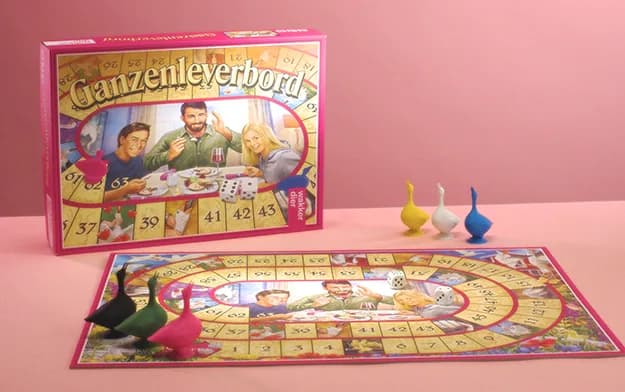
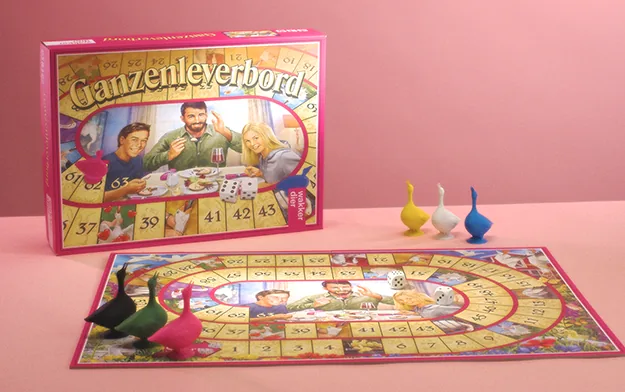
The player unwraps a box that looks like a charming vintage family board game, unfolds the spiral board, and rolls the dice to move a goose piece across 63 numbered squares — the same format as the centuries-old Dutch original, Ganzenbord. Every square lands with a line read aloud, and that's the trap: instead of "land in the well, skip a turn," the text describes the steel tube used to force-feed the goose six times a day, a ruptured esophagus, or a whole flock gassed after a bird-flu outbreak. The game mechanics keep working exactly as they should — skipped turns, forced retreats, sends back to start — so the familiar rhythm of play is what keeps delivering the facts, square after square, until someone reaches the end. A small print run went out to Dutch animal-welfare influencers, who played it with their followers, and to starred restaurants together with a letter from Wakker Dier, while a companion film carried the same message on the organization's social channels.
- 1
The game is not sold; it arrives unsolicited by mail, sent by Wakker Dier in small runs to animal-rights influencers and to star-rated restaurants that serve foie gras, together with an explanatory letter.
- 2
Unfolded, the board reads as a classic Game of the Goose: a spiral of numbered squares in warm retro colors with cheerful, nostalgic illustrations typical of a family board game. The twist only becomes visible on closer inspection.
- 3
Each player takes a token and learns who they are playing: a goose on a foie gras farm. The squares are illustrated with geese, beaks open, awaiting force-feeding.
- 4
Play follows the traditional format — roll the die, move the token forward by the number shown — but the classic hazard squares (well, bridge, prison) are replaced with printed text describing conditions on a foie gras farm, which players read aloud at the table.
- 5
Landing on certain squares triggers a setback tied to that reality: a square marking the goose as female sends the player back to start as useless for foie gras; a set of squares repeating every ten spaces represents force-feeding and costs a turn; another square breaks the goose's wing and costs three turns; and one square depicts a bird flu outbreak that sends every player, not just the one who landed there, back to start.
- 6
Two squares describe a switch to a supposedly more humane feeding tube and reward the player with an extra roll of the die — the game's only positive-sounding outcome, delivered as sarcasm rather than relief.
- 7
Later squares escalate the damage and push the token backward: a ruptured esophagus sends it back to square 19, legs splayed by a diseased, swollen liver send it back by the number rolled, and — almost at the finish — a liver judged not large enough sends it back nearly to the start.
- 8
The game has no prize for finishing; it functions as a conversation piece meant to raise the subject of foie gras at a holiday dinner table, aimed at getting a restaurant chef who receives it to drop the dish from the menu.