






Puzzle Party
Open the game- Brand
- Google Arts & Culture
- Year
- 2020
- Objective
- Engagement
- Industry
- Tech & Telecom
- Mechanic
- Puzzle
- Platform
- Web
- Agency
- Gael Hugo




Objective
Google Arts & Culture built Puzzle Party during the first COVID lockdown to give families separated by distance — kids and grandparents especially — a shared activity, and to draw people into its museum collections through play rather than browsing.
Solution
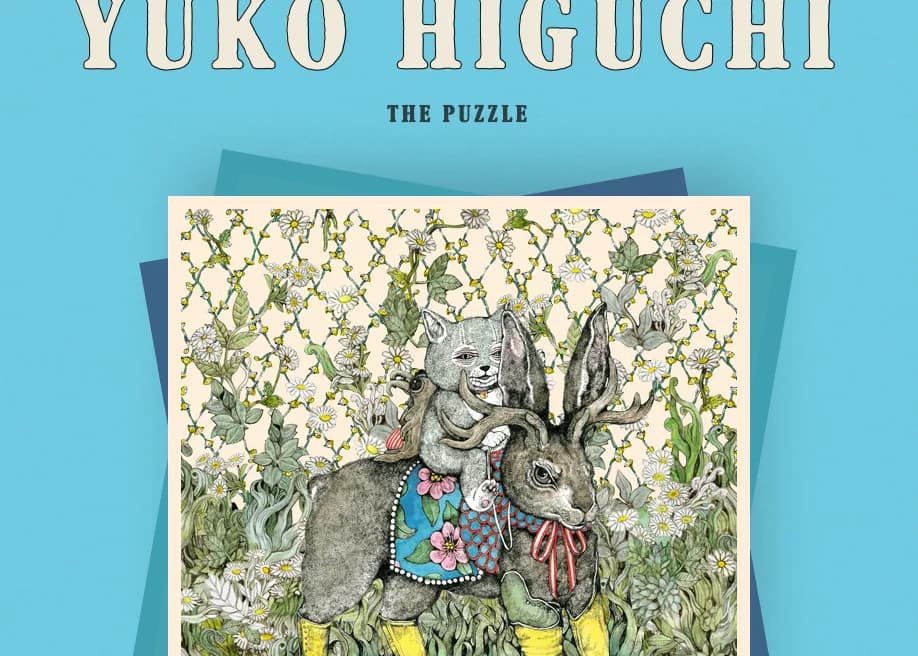
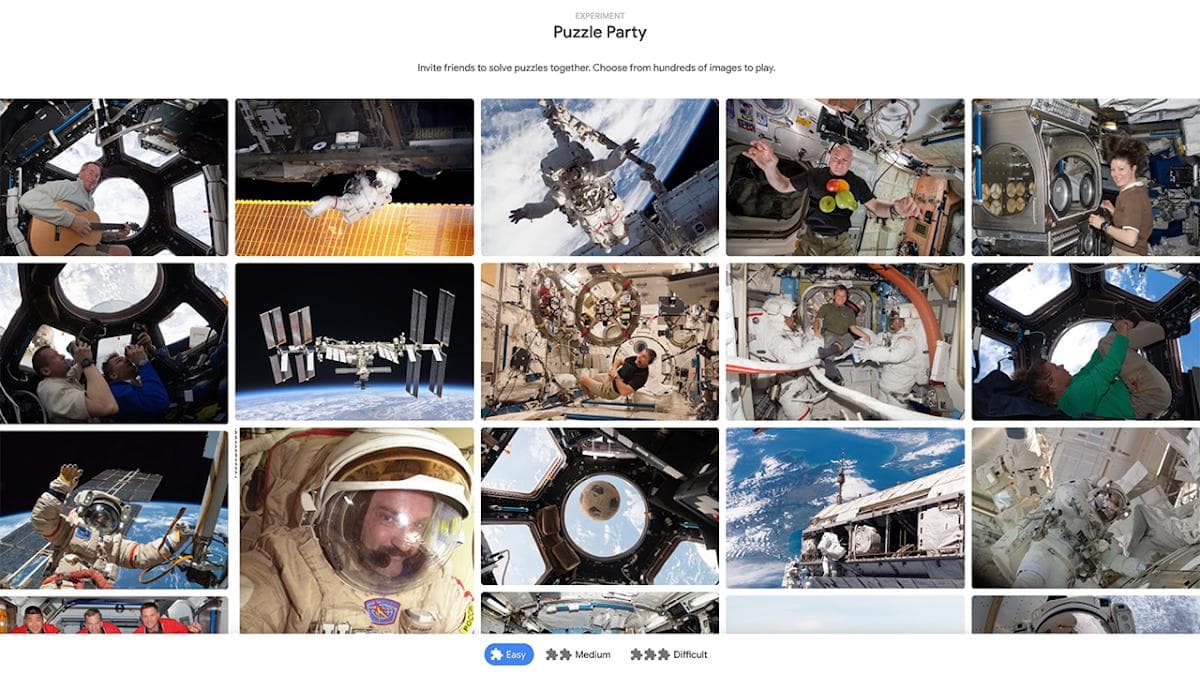
The player scrolls a gallery of hundreds of artworks, from Warhol's Flowers to Vermeer's Girl with a Pearl Earring, picks one, and sets a difficulty that decides how many pieces the puzzle breaks into. Playing solo or with others, they either start fresh or share an invite link so anyone who opens it joins the same virtual table, no player limit. Pieces sit scattered like on a real tabletop; the player drags them one at a time or as clusters already joined, watching everyone else's pieces move in real time, with a background-darkening control to help spot hard-to-see pieces. There's no login and no tutorial to click through. When the last piece clicks into place, the full artwork appears along with information to read about it.
- 1
The player opens the game at g.co/puzzleparty, landing on the Puzzle Party page inside Google Arts & Culture, or reaches it in the mobile app via the Games tab.
- 2
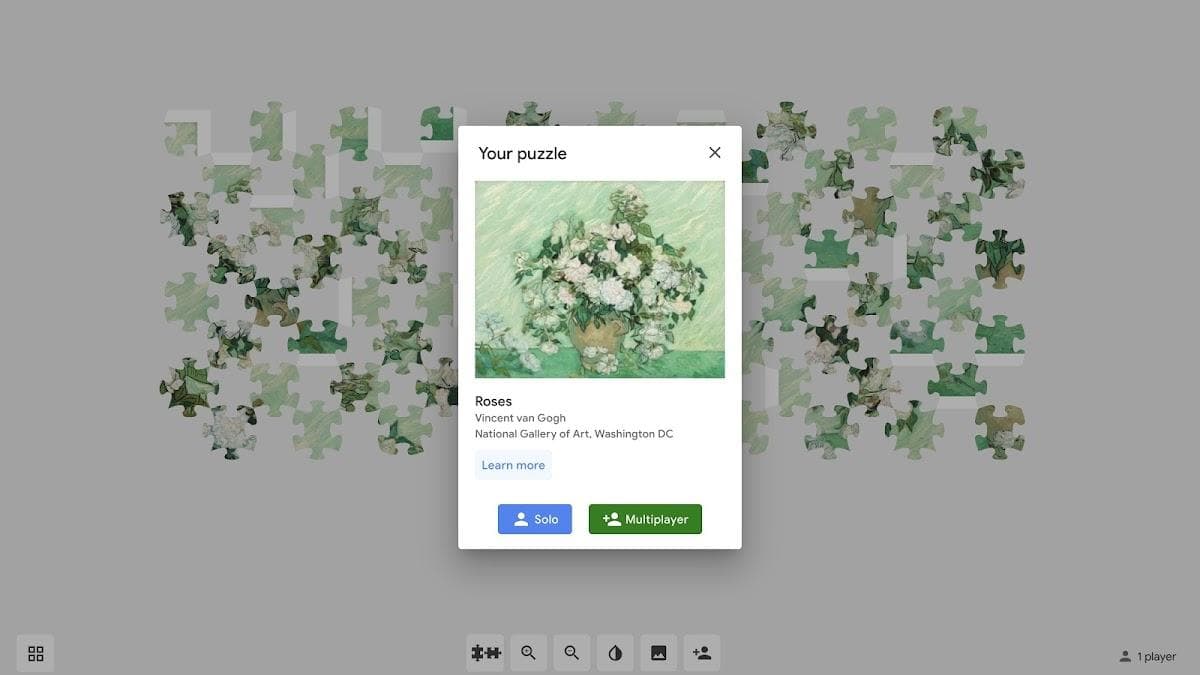
Before play, the player picks a difficulty (which sets piece size and count) and chooses an artwork to be cut into pieces from a gallery of over 500 pieces drawn from Google Arts & Culture's museum collections.
- 3
The player then chooses Solo, which starts the board immediately, or Multiplayer, which generates an invite link to share via plain link, Facebook, Twitter, email or Google Classroom.
- 4
Anyone with the link joins the same board without registering, with no cap on participants; players drag scattered pieces into place, and pieces that fit lock together into a group that can then be dragged as one unit.
- 5
In a shared session, players watch everyone else's pieces move on the board in real time, which is the core draw of playing together.
- 6
If pieces are hard to distinguish, the player can darken the background behind the table to raise contrast.
- 7
Placing the last piece reveals the artwork in full detail and lets players read about it and its museum; the puzzle can't be saved and resumed later, so it has to be finished in one sitting.