
Kool-Aid Man
- Brand
- Kool-Aid
- Year
- 1983
- Objective
- Sales
- Industry
- Food & Drink
- Mechanic
- Arcade & Action
- Platform
- In-Game
- Agency
- Mattel Electronics
- Added
- October 2026

- 1
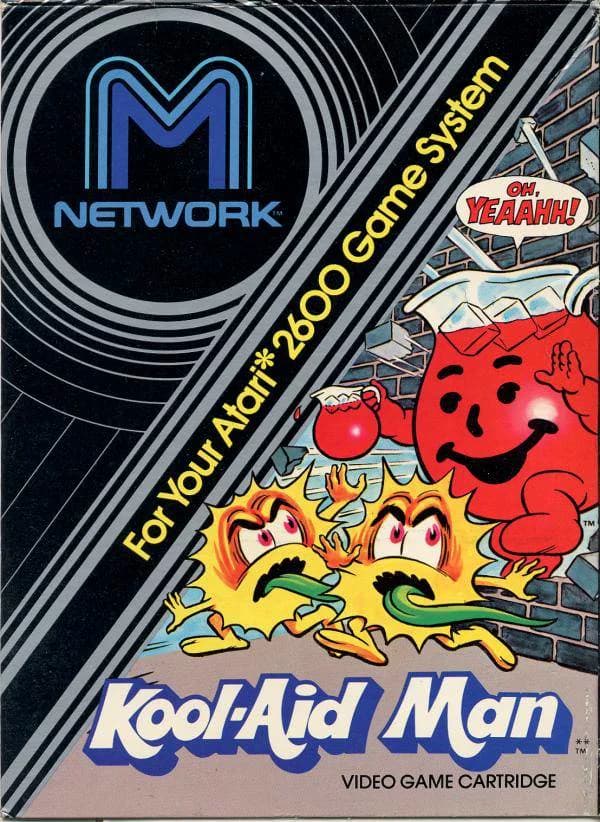
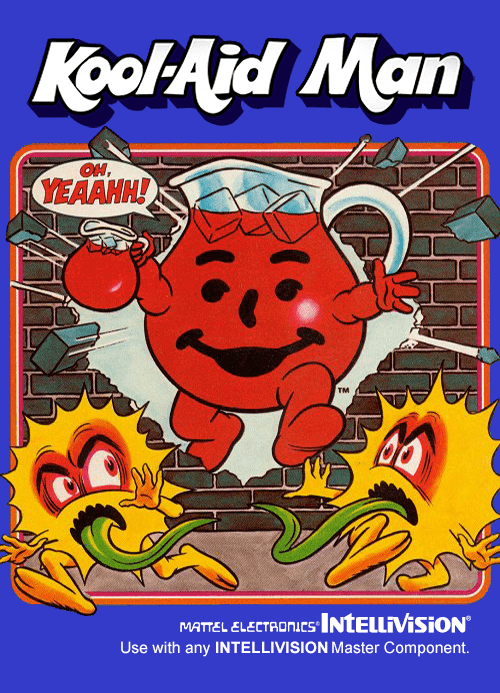
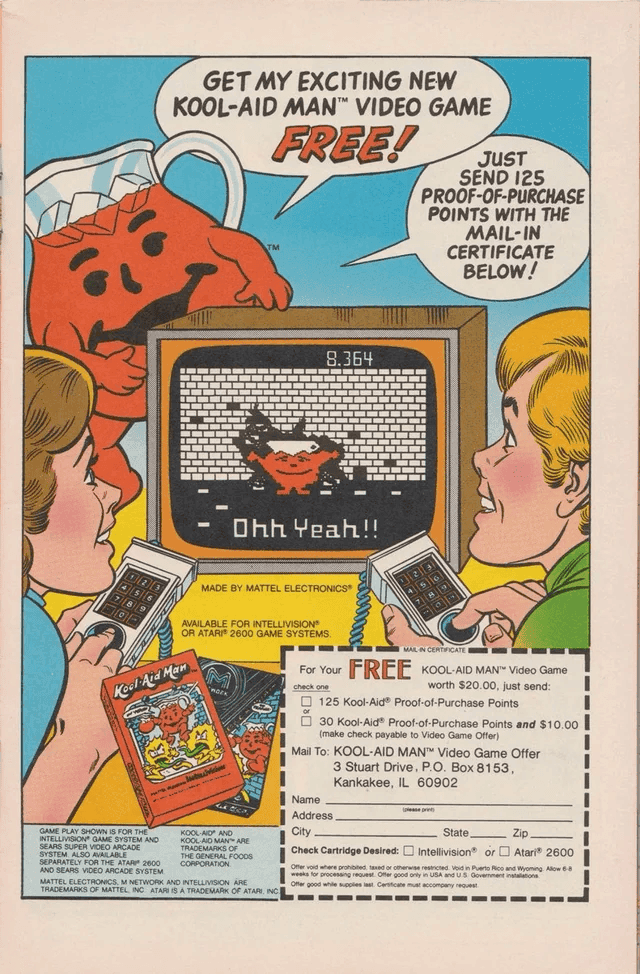
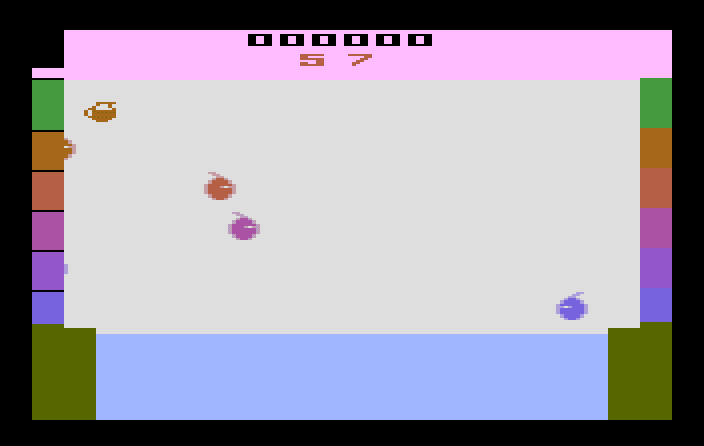
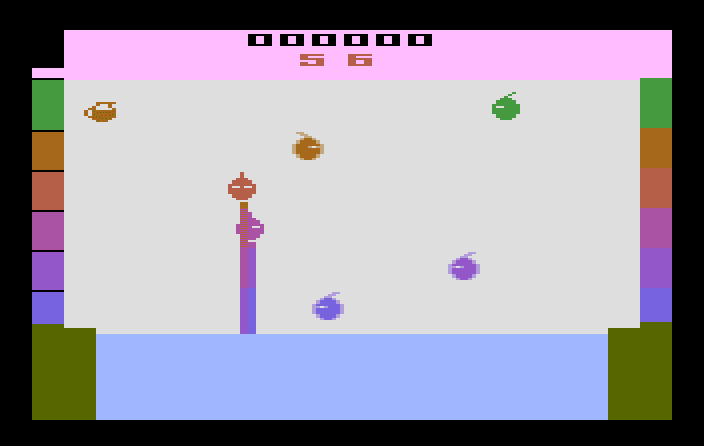
Two separate cartridges share the same marketing mascot: an arcade game for the Atari 2600 (released as M Network) and a distinct adventure game for the Intellivision, both built around Kool-Aid Man defending a backyard pool from water-draining creatures called Thirsties. Originally obtained by mailing in Kool-Aid Proof of Purchase points (or fewer points plus cash), the cartridges later reached retail as well.
- 2
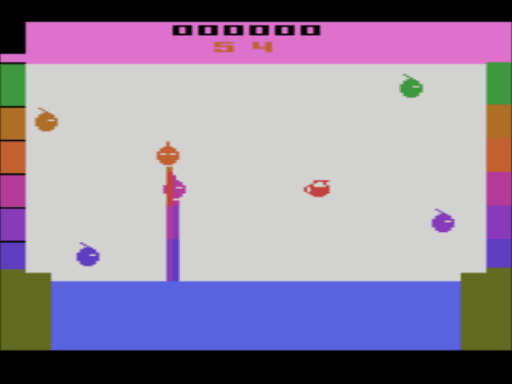
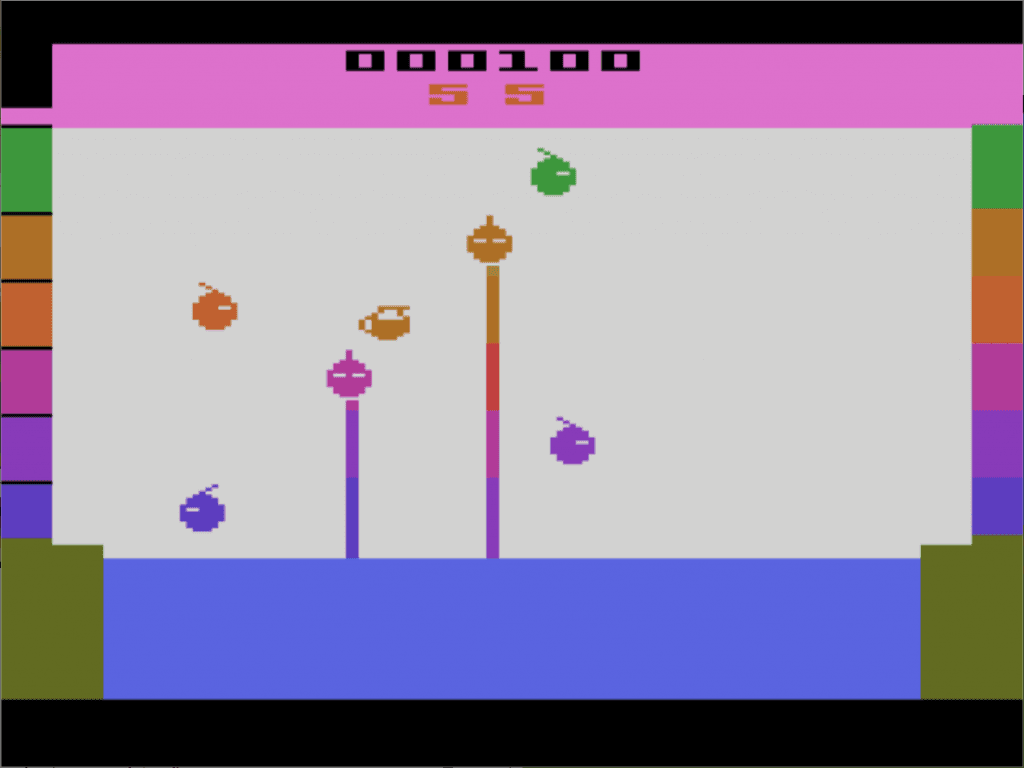
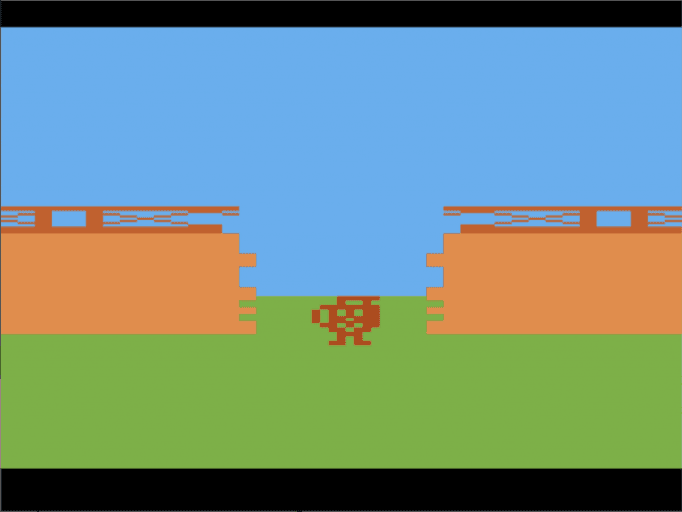
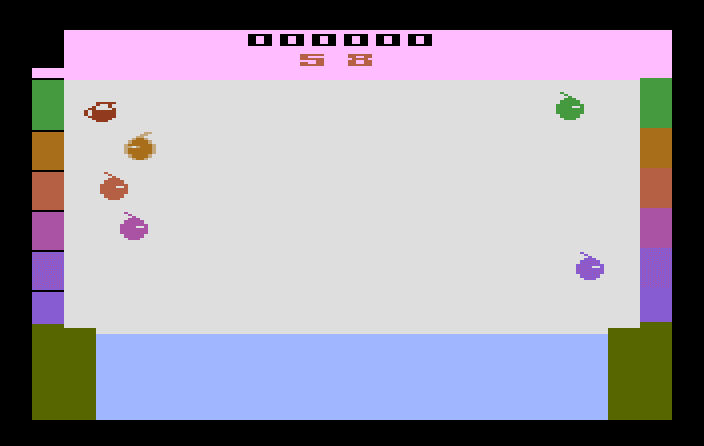
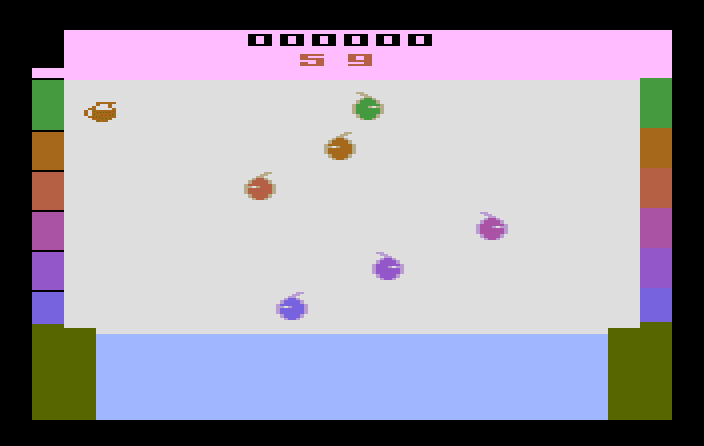
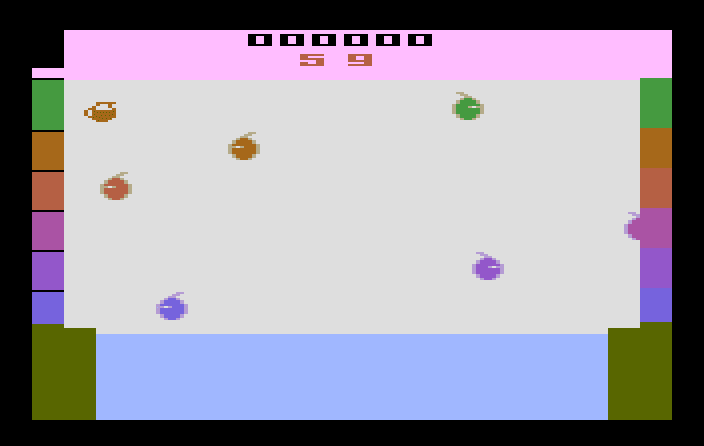
On Atari 2600, the game opens straight into a cutscene of Kool-Aid Man bursting through a brick wall, then drops the player onto a backyard pool screen with a hole already in the wall; the joystick alone moves the pitcher in four directions.
- 3
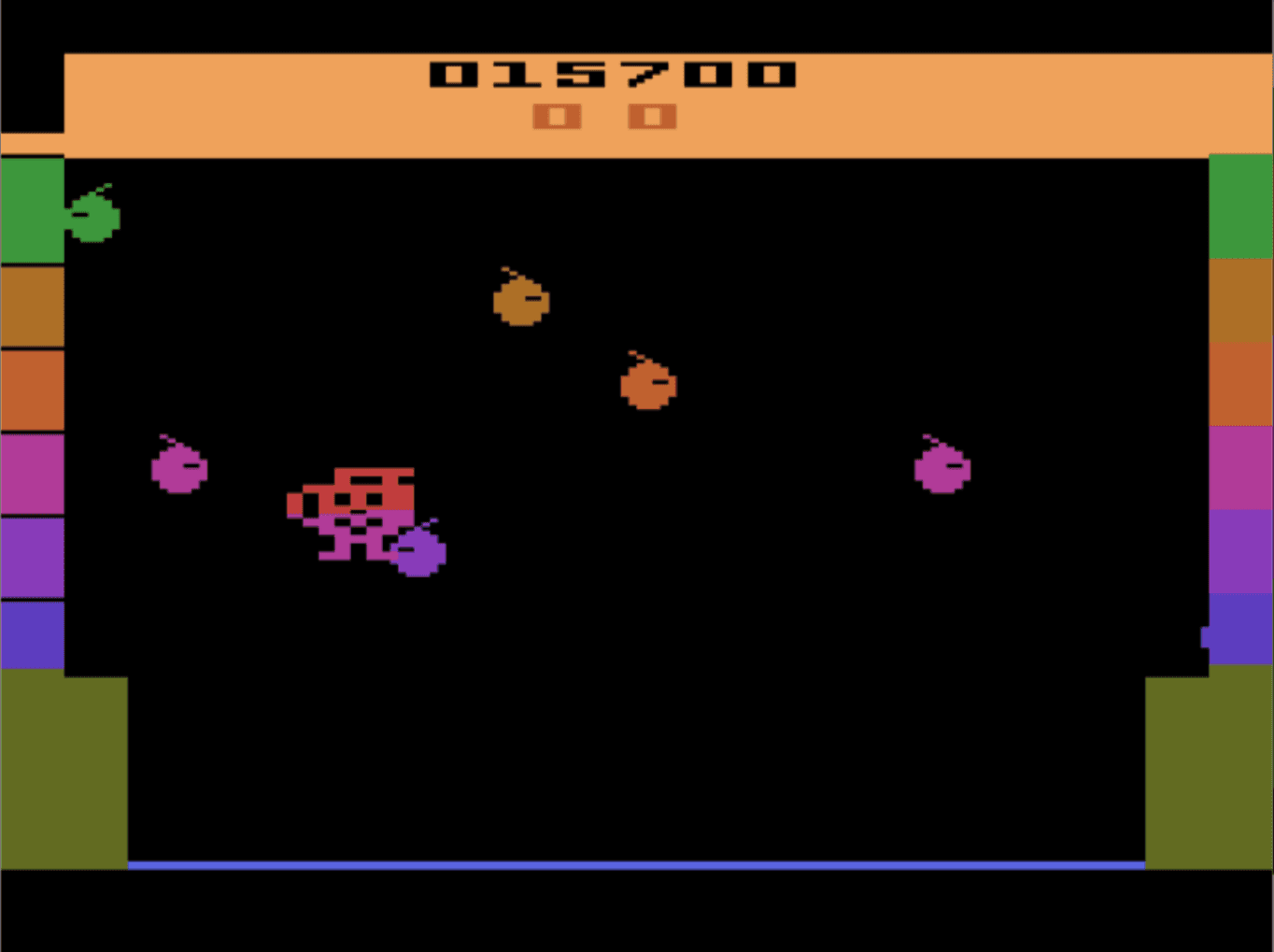
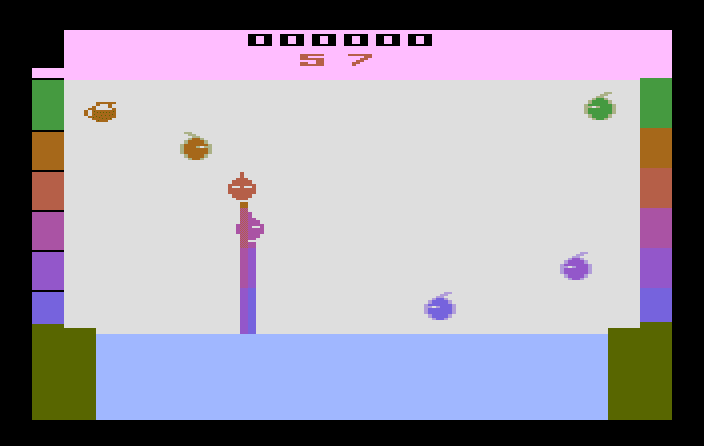
Thirsties wander the yard and periodically stop at the poolside to lower a straw and drink, which is the only moment they're vulnerable; the player steers the pitcher into a drinking Thirsty to catch it for points, needing 30 catches to clear a round.
- 4
Colliding with a moving Thirsty, the wall, or the pool itself sends the pitcher spinning out of control for a few seconds while enemies keep draining the pool; collecting drifting letters W, S, and K (water, sugar, Kool-Aid) grows the pitcher, grants temporary immunity to knockback, and tops up the pool to slow the clock.
- 5
Each round runs about a minute: clearing all Thirsties in time banks a bonus and advances to a faster, harder round, while console difficulty switches let players set enemy speed or freeze the action; letting the pool run dry ends the game, freezing score and controls while enemies keep harmlessly pestering the pitcher.
- 6
The Intellivision version is a different design entirely: the player picks one of 13 skill levels (including a child-friendly mode with no difficulty ramp) and begins controlling two children trapped in a scrolling three-story house, whose floor plan changes with the chosen level.
- 7
The children search the house for a pitcher, sugar, and Kool-Aid mix (needing a stepladder to reach the sugar), carrying each to the kitchen sink while avoiding two patrolling Thirsties that give chase and freeze a child on contact; freezing both children or running out a ten-minute timer ends this phase.
- 8
Delivering all three items triggers a cutscene where Kool-Aid Man smashes through the wall and takes over control, switching the game into a timed chase phase where the player hunts down both Thirsties while also collecting Phantom Flavors.
- 9
Clearing both the house phase and the Kool-Aid Man phase advances the player to the next, harder round, climbing through all 13 skill levels.
Objective
Kool-Aid Man cartridges turned the drink's loyalty scheme into a reward worth collecting: kids redeemed Kool-Aid Points for the game instead of cash, which meant buying and saving packet after packet. The game also kept the brand's mascot — Grey Advertising's wall-busting Kool-Aid Man, with his trademark "Oh Yeah!" — in front of kids on home consoles, pitting him against the water-stealing Thirsties.
Solution
Players didn't buy the game — they mailed in 125 Kool-Aid Proof of Purchase points (or 30 points plus $10) and waited weeks for a cartridge to arrive. On Atari 2600, after an intro of Kool-Aid Man smashing through a wall, the player steers a giant pitcher around a backyard, crashing into Thirsties just as they dip a straw into the pool, while grabbing W, S and K letters (water, sugar, Kool-Aid) for temporary invincibility and to refill the pool. The Intellivision version runs in two stages: first the player guides two kids at once through a three-story house, gathering the pitcher, sugar and drink mix at the sink while dodging Thirsties, then — after the same wall-smash cutscene — takes direct control of Kool-Aid Man to chase down Thirsties and Phantom Flavors. Both versions can still be played free in-browser today via Internet Archive's Console Living Room.
Can you still play it?
You can't play Kool-Aid Man through any official channel today: the mail-in promotion that originally distributed the cartridge for Kool-Aid proof-of-purchase points is long closed, both the Atari 2600 and Intellivision versions were pulled from sale, and no re-release ever followed. Both cartridges survive and can be played in-browser through the Internet Archive's emulation collections, and physical copies still circulate secondhand.