


The first advergames that people actually played date from 1983, according to Game Developer's history; an earlier game, for a 1978 Polo campaign, was never finished. Three of them were Atari 2600 cartridges you got by post for proofs of purchase: Kool-Aid Man, Purina's Chase the Chuck Wagon and Johnson & Johnson's Tooth Protectors.
We compare the three from their original manuals, a period comic-book advert and the Mattel programmers' own history. 1983 is still the earliest year in our catalogue; the classic advergames collection holds 27 console, arcade and PC brand games.
Why did advergames start in 1983?
Atari's VCS console began shipping to American shops in August 1977, according to Atari Archive. Herman Tulleken's history for Game Developer starts with Polo, which Carol Shaw was developing for a 1978 Polo campaign; the promotion was cancelled and the game never finished. He dates the first advergames in actual use to 1983.
By then Mattel published Atari 2600 cartridges under its M Network label. On 6 December 1982 its programmers were shown the new Kool-Aid TV commercials and told that marketing had signed a tie-in for Intellivision and Atari 2600 cartridges, due in about six months (Intellivision Lives).
The timing was bad. Wikipedia's account of the video game crash has US home video game revenue falling from around $3.2 billion at its peak (dated 1983 in its summary, 1982 in its body) to around $100 million in 1985. Mattel Electronics itself was dealing with a massive layoff in July and August 1983, its programmers recall (Intellivision Lives). The three cartridges reached homes in that window: Atari Archive's press listings place Tooth Protectors in August 1983, Kool-Aid Man in September and Chase the Chuck Wagon in October.
| Game | Brand | Made by | How you got it | First listed |
|---|---|---|---|---|
| Tooth Protectors | Johnson & Johnson | DSD/Camelot | Proof-of-purchase stamps by post | August 1983 |
| Kool-Aid Man | Kool-Aid (General Foods) | Mattel Electronics | 125 points, or 30 points and $10 | September 1983 |
| Chase the Chuck Wagon | Purina | TMQ/ICOM for Spectravision | Proofs of purchase from dog food bags | October 1983 |
Kool-Aid Man — Kool-Aid (1983)
Developer: Mattel Electronics (M Network label on the Atari 2600) · Mechanic: Arcade & Action · Platforms: Atari 2600 and Intellivision, two different games
How did you get the Kool-Aid Man game?
A comic-book advert of the time, reproduced by csanyk.com, offered the cartridge free for 125 Kool-Aid proof-of-purchase points, or for 30 points plus $10.00, and valued it at $20.00. A tick box chose Intellivision or Atari 2600, the order went to a post office box in Kankakee, Illinois, and the small print asked for six to eight weeks. Wikipedia says the game was at first available only by mail order and later sold in shops (Wikipedia).
Who made Kool-Aid Man?
Mattel Electronics, using the characters under licence from General Foods. Steve Tatsumi designed and wrote the Atari game, while Vladimir Hrycenko and Mark Kennedy designed the Intellivision one, with graphics by Monique Lujan-Bakerink (Intellivision Lives).
What do you do in Kool-Aid Man?
On the Atari 2600 you steer Kool-Aid Man around a backyard swimming pool. Moving Thirsties bounce him away if he touches them. When one stops and dunks its straw in the pool, you bump into it for 100 points. Letters W, S and K (water, sugar, Kool-Aid) make him bigger and immune for a while, and each adds a little water back. If the 30 Thirsties drink the pool dry before you catch them all, the game is over (AtariAge manual).
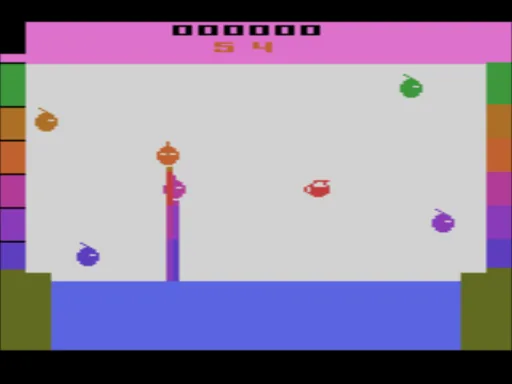
On the Intellivision, two children search a three-storey house for a pitcher, sugar and drink mix while two Thirsties chase them. Once everything is at the kitchen sink, Kool-Aid Man breaks through the wall and you take control of him to catch the Thirsties. Critics were unkind: in October 1983 The Video Game Update did not recommend the Atari version, according to Wikipedia, and one magazine called Kool-Aid Man the "stupidest video game of 1983", the Mattel programmers recall.
Result: General Foods was reportedly delighted with the games and the response to the promotion and expressed interest in a Kool-Aid Man II, which apparently got lost in Mattel's 1983 layoff and restructuring (Intellivision Lives). We found no figure for cartridges redeemed or for Kool-Aid sales.
Chase the Chuck Wagon — Purina (1983)
Developer: TMQ/ICOM, programmed by Mike Schwartz · Publisher: Spectravision · Mechanic: Arcade & Action · Platform: Atari 2600
How did you get Chase the Chuck Wagon?
You could not buy it. Customers redeemed proofs of purchase from bags of dog food for the cartridge (Wikipedia), a mail-order offer for buyers of Purina products such as Puppy Chow, says AtariHQ. We found no period advert stating how many proofs it took or whether there was a fee. The game borrowed the TV idea behind Chuck Wagon dog food: dogs chasing a tiny horse-drawn wagon through the house, in commercials from the early 1970s to the early 1990s (Remind).
Who made Chase the Chuck Wagon?
The programmer, Mike Schwartz, later recalled that a friend who ran TMQ/ICOM badly needed the game written over a weekend. With code from his first game, Artillery Duel, to look at, he took three days. "I apologize for the weak gameplay, but I was rushed!" he said, as quoted by Old School Gamer.
What do you do in Chase the Chuck Wagon?
You move Chuckie the dog through a maze and out of the opening at the top, under the wagon. A dogcatcher costs you a life if he catches you; bouncing objects freeze Chuckie for a moment and take points off. You start with three lives, and on the expert setting you get 30 seconds per maze. Between mazes comes the reward: press the button when the dog dish lines up with Chuckie and he eats, for 100 points (AtariAge manual).
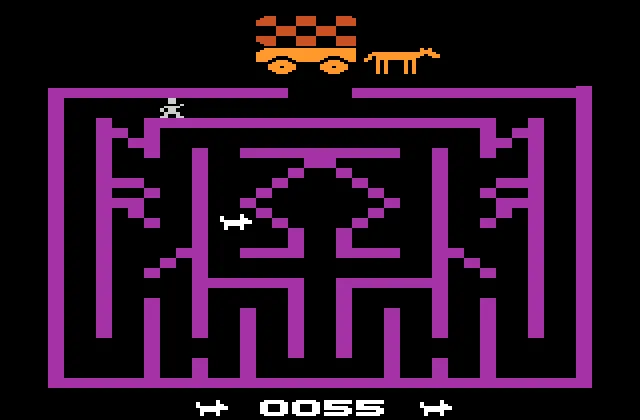
Result: None that Purina published. Wikipedia calls the promotion relatively unsuccessful and says the unshipped cartridges were destroyed; AtariAge reports that Ralston-Purina, asked about the game many times, found that all unsold copies had been destroyed (AtariAge).
Tooth Protectors — Johnson & Johnson (1983)
Developer: DSD/Camelot · Mechanic: Arcade & Action · Platform: Atari 2600
What is Tooth Protectors?
A Johnson & Johnson cartridge that never went on sale in shops: customers who mailed in proof-of-purchase stamps got it (Wikipedia). It came with no box, only a foam case (AtariAge). The title screen shows "from" above the Johnson & Johnson logo and "© 1983 DSD Inc.", and Atarimania lists Michael Doherty and Clyde Hager as its programmers.
You are T.P., the Tooth Protector, a smiling face holding dental floss above a row of teeth. Snack Attackers drop snack-food cubes; each one you deflect is worth 100 points. A tooth hit by three cubes starts to blink. Press the button in time and a toothbrush, dental floss and fluoride rinse pass over the teeth and clean off the plaque; you start with three of these clean-ups. You lose when three teeth are gone or the Snack Attackers carry off all three T.P.s (AtariAge manual).
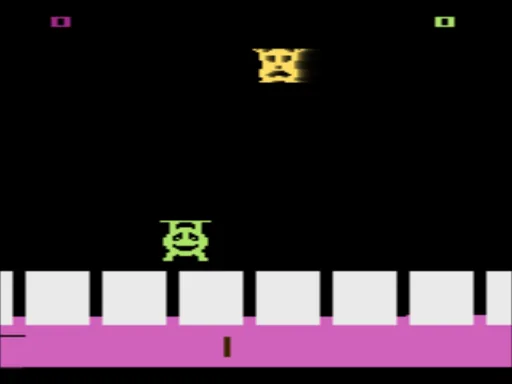
The brand sits in the clean-up and in the manual, whose last page, headed "The Real Tooth Protectors", advertised Johnson & Johnson dental floss, the Reach toothbrush and Act fluoride rinse.
Result: We found no published figures on stamps redeemed or on sales of the three products.
Tapper and what came next
The other route ran through arcades. Tapper, which we catalogue as 1984, is a Bally Midway cabinet developed by Marvin Glass and Associates: you slide mugs of beer to customers under a Budweiser sign, and early machines used real Budweiser tap handles as controllers. Wikipedia says its commercial release date has not been conclusively established: two databases give December 1983 for North America, Cash Box described it as new in February 1984, and Japan got it in March 1984. A Root Beer Tapper followed because the original was seen as advertising alcohol to minors (Wikipedia).
In 1989 a mascot went the same way: a computer game, Avoid the Noid, came out as part of Domino's campaign around the Noid, a character the agency Group 243 created in 1986 (Wikipedia). Our history of advergames follows the line into Flash and Roblox, and the Cool Spot case shows a 1990s mascot game that players paid for.
- August 1977The Atari VCS reaches shopsAtari Archive dates the first consoles shipping to stores to August 1977.
- 1978Polo, never finishedCarol Shaw works on a game for a Polo campaign; the promotion is cancelled, according to Game Developer.
- 6 December 1982Mattel sees the Kool-Aid adsMattel Electronics shows its programmers the new Kool-Aid commercials and announces a tie-in for Intellivision and Atari 2600.
- August 1983Tooth ProtectorsJohnson & Johnson's mail-order cartridge, made by DSD/Camelot, first appears in a newspaper listing.
- September 1983Kool-Aid Man on the Atari 2600M Network's cartridge, offered free for 125 Kool-Aid points or 30 points and $10. The Intellivision version follows in November.
- October 1983Chase the Chuck WagonSpectravision's maze game for Purina, swapped for proofs of purchase from bags of dog food.
- 1984TapperBally Midway's bar cabinet for Budweiser (our catalogue year; North American sources range from December 1983 to February 1984); a Root Beer version follows because the original was seen as advertising alcohol to minors.
- 1989Avoid the NoidDomino's takes its 1986 Noid campaign into a computer game.
Can you still play them?
We found no official re-release of any of the three. Original cartridges turn up on the collector market, at very different rarities. AtariAge rates the Atari Kool-Aid Man 4, "Scarce+", and INTV Funhouse calls the Intellivision version relatively easy to pick up. Chase the Chuck Wagon is rated 8, "Very Rare+", and is outside AtariAge's top 40 rarest, yet often called the most sought-after Atari 2600 game. Tooth Protectors is rated 9, "Extremely Rare". We could not open a dated price source, so we quote no prices.
What marketers can learn from the 1983 cartridges
- Tie the reward to repeat buying. Kool-Aid set the price at 125 points and sold a cash shortcut to families with fewer points.
- Put the product inside the loop. Catching water, sugar and Kool-Aid tops up the pool; Chuckie's prize is a dog dish; the clean-up is brush, floss and rinse.
- Count what you send out. None of the three brands published redemptions, so nobody can say whether the offers paid.
When not to copy them:
- When the build is rushed. Chase the Chuck Wagon took three days, and its programmer apologised for it.
- When you cannot forecast demand. Purina's unshipped cartridges ended up destroyed.
- When the platform is shaky. General Foods' interest in a sequel got lost in Mattel's 1983 layoff and restructuring.
FAQ
What was the first advergame?
There is no settled answer. Game Developer's history starts with Polo, a game for a 1978 Polo campaign that was cancelled before release, and dates the first advergames in actual use to 1983. That year Kool-Aid, Purina and Johnson & Johnson all mailed out Atari 2600 cartridges for proofs of purchase. See our history of advergames.
Was there a Kool-Aid Man video game?
Yes, two. Mattel Electronics made separate Kool-Aid Man games in 1983 for the Atari 2600, under its M Network label, and for the Intellivision. A comic-book advert offered either free for 125 Kool-Aid proof-of-purchase points, or for 30 points plus $10. In the Atari game you catch Thirsties drinking from a pool. View the case.
What is Tooth Protectors?
A 1983 Atari 2600 game commissioned by Johnson & Johnson and made by DSD/Camelot. You guard a row of teeth from falling snack cubes and call in a toothbrush, floss and fluoride rinse to clean them. It was available only by mailing in proof-of-purchase stamps, and AtariAge rates it extremely rare. View the case.
Can you still play Kool-Aid Man on Atari?
Only with an original cartridge and console, as far as we found: there is no official re-release in any store or collection. The Atari cartridge has the lowest AtariAge rarity rating of the three 1983 brand games, "Scarce+", and it turns up on the collector market.
For more early brand games, browse the classic advergames collection, and if you know a mail-in cartridge we are missing, send it to us.