






Underworld: Evolution Game
- Brand
- Underworld Evolution
- Year
- 2005
- Objective
- Product Launch
- Industry
- Entertainment
- Mechanic
- Simulation & Strategy
- Platform
- Web
- Agency
- Big Spaceship




Objective
To build anticipation for Sony Pictures' Underworld: Evolution ahead of its January 2006 release, Big Spaceship turned the film's central rivalry into something fans could join rather than just watch, letting them pick a side and fight it out with other fans in real time. As the agency put it, the goal was to give fans "vampires, lycans, Kate Beckinsale, and Flash multiplayer" — and, for the studio, a showcase of what the newly launched Flash 8 could do.
Solution
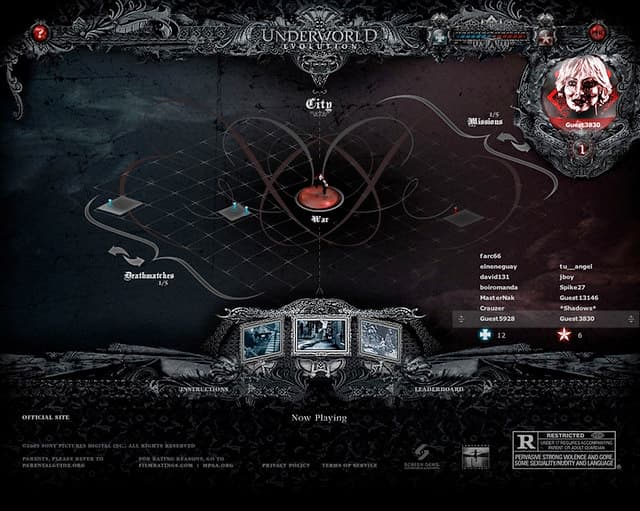
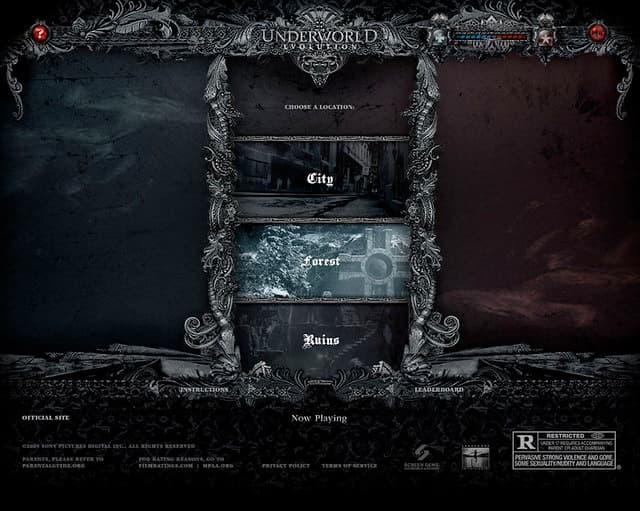
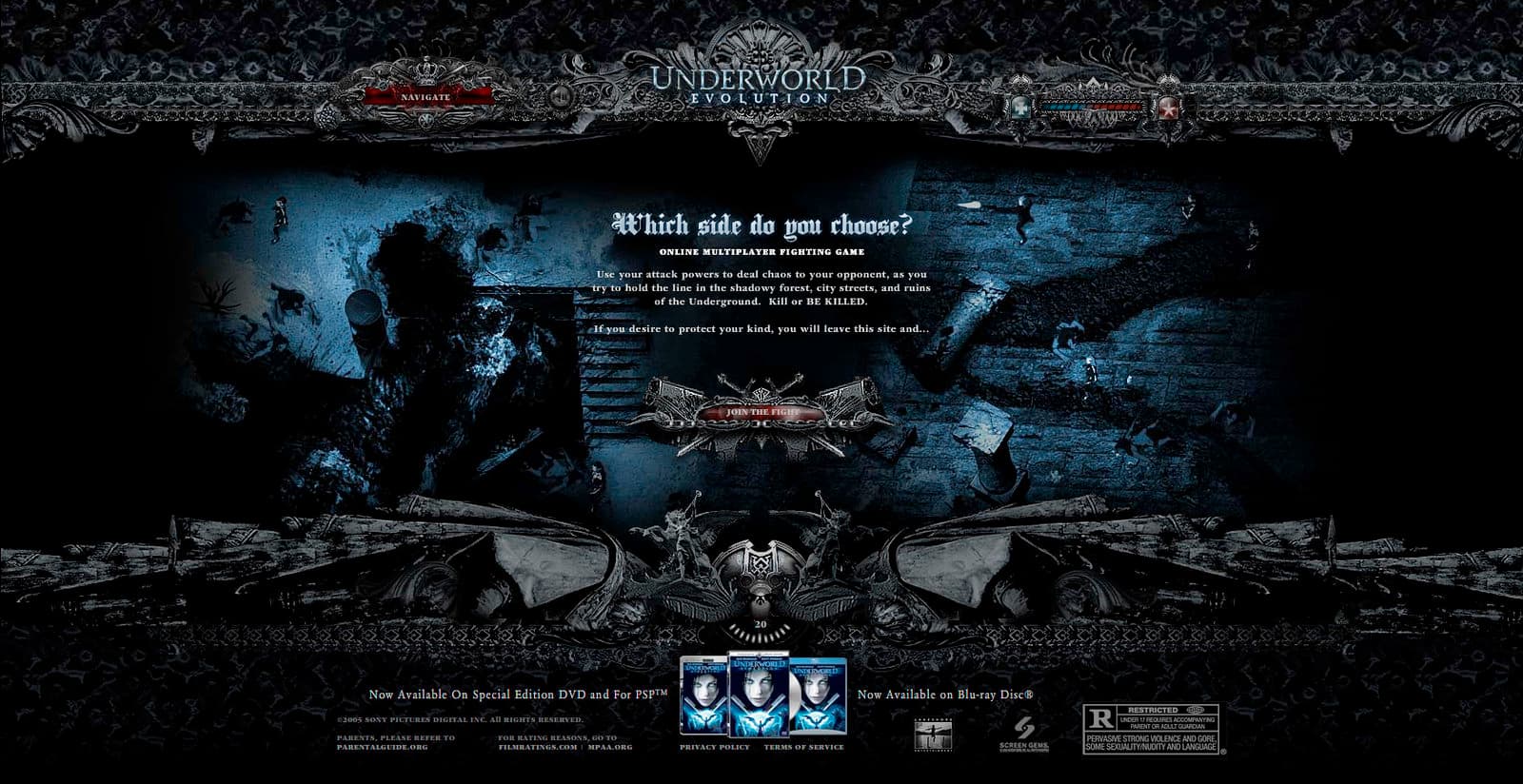
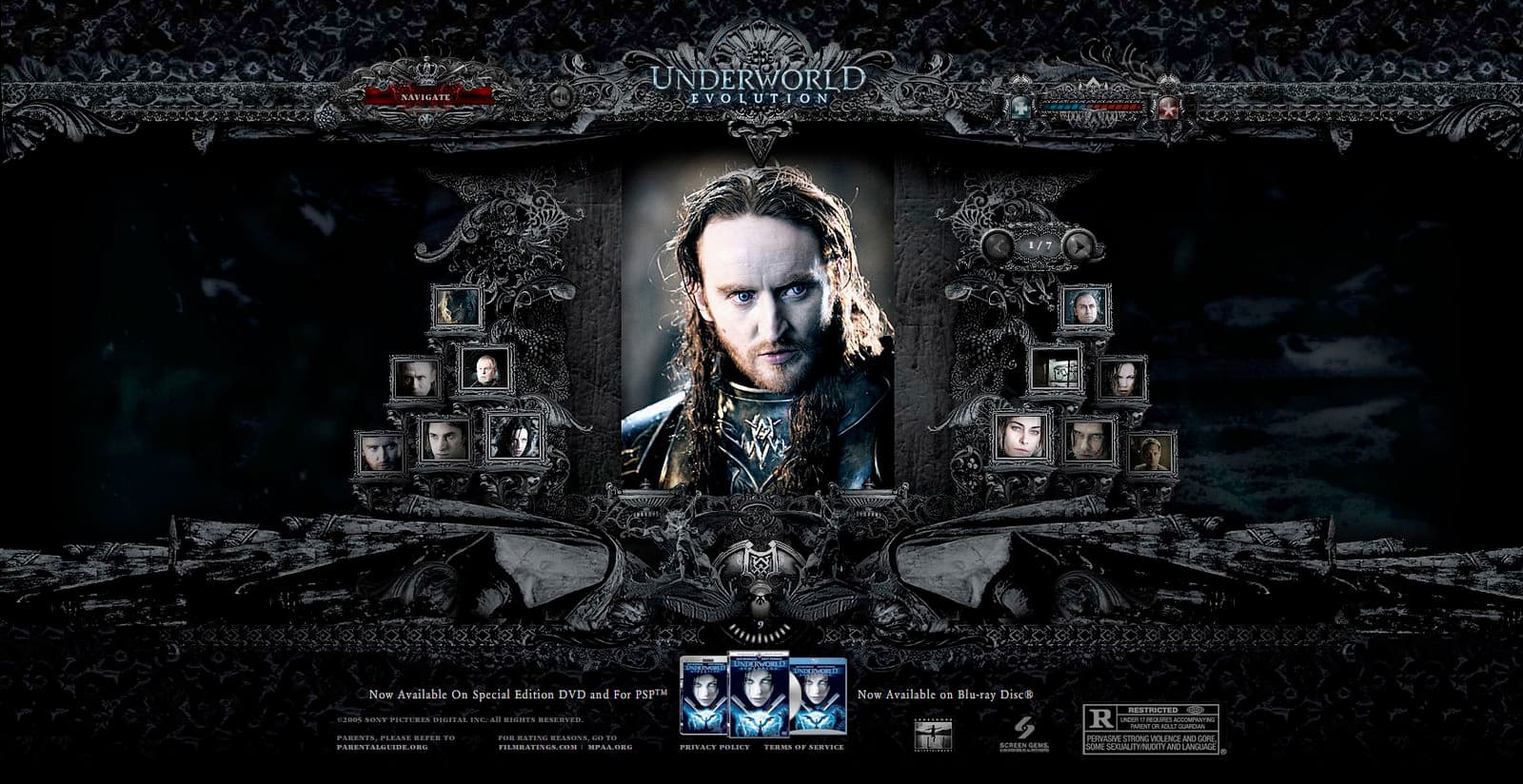
On the film's promo site, players first choose an allegiance — lycans in blue or vampires in red — then pick one of three arenas (City, Forest, or Ruins) and a mode: one-on-one Deathmatch (or solo practice against the computer), 8-versus-8 team War brawls with up to 16 players, or two-player story Missions backed by computer-controlled allies. Once a match starts, every fighter moves on the same five-second clock: in that window, the player drags their hand-drawn avatar into a highlighted zone to move it, or selects an attack and a target to strike. All the turns then resolve at once across the grid before the next five-second countdown begins, and the match continues in that rhythm until one side is wiped out.
- 1
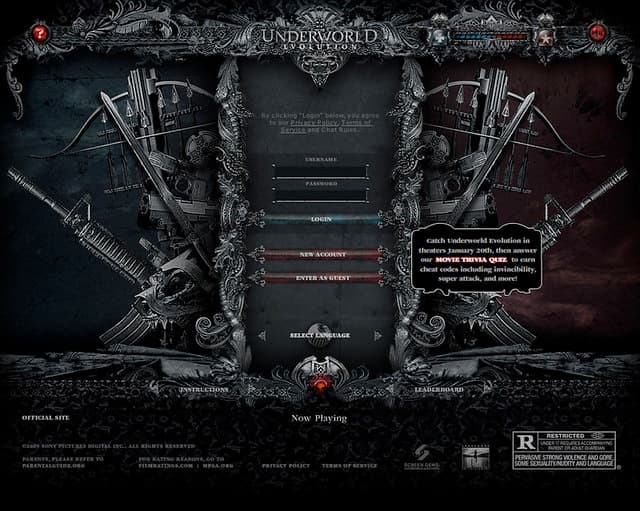
The player launches the game directly in a browser via Flash from the film's promo site, with no client install required.
- 2
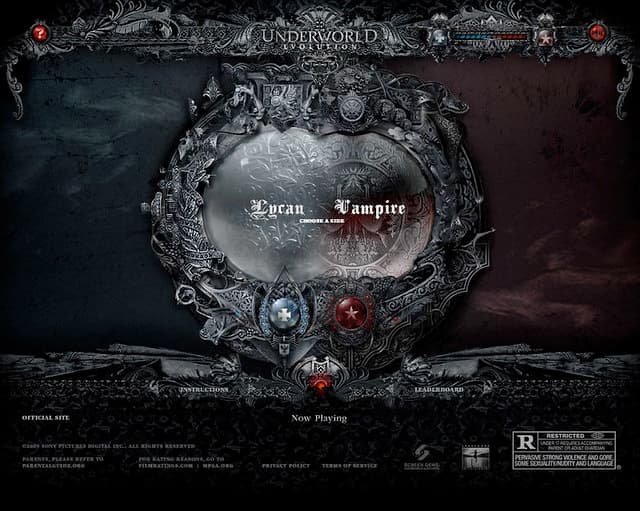
The player's first choice is a faction drawn from the film's central conflict: Lycans (the blue team) or Vampires (the red team).
- 3
The player then picks a battleground from three arenas: City, Forest, or Ruins.
- 4
A mode menu offers three formats: Deathmatch, one-on-one fights against the CPU or a live opponent; War, a team battle for up to 16 players split 8 per side; and Missions, objective-based fights for two human players with CPU-controlled allies filling out the rest of the map.
- 5
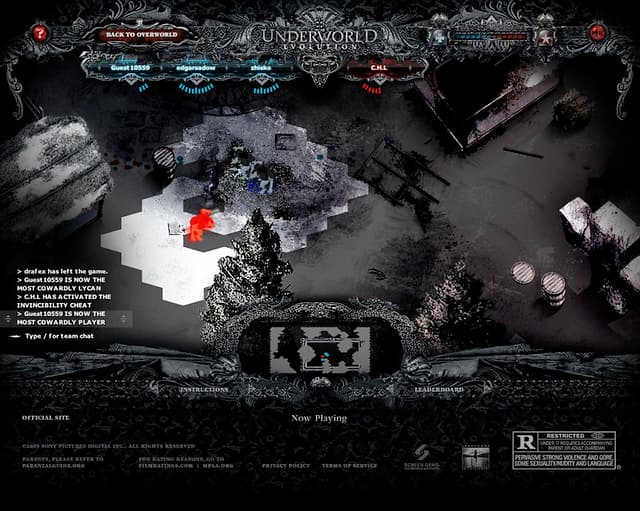
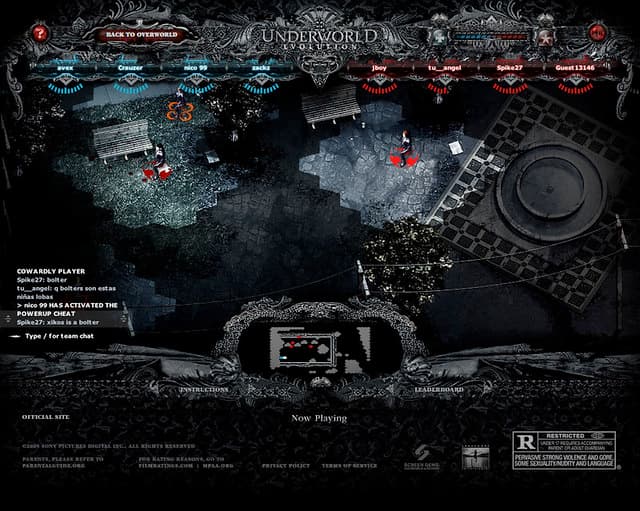
In a match, characters are arranged on a grid-based arena map, with the player controlling their own avatar from an overhead view.
- 6
Combat runs on a 5-second countdown: every participant issues one command before time runs out and all moves resolve simultaneously; a player who doesn't act in time simply has their character skip that turn and stay in place.
- 7
To move, the player drags their character onto a highlighted cell, with the highlighting marking every square reachable that turn.
- 8
To attack, the player clicks one of the white attack icons beside their character, which lights up a red zone on the grid showing that attack's range, then selects a target inside it.
- 9
On death, the player returns to the main menu with no penalty beyond exiting the current match, and can immediately queue into a new fight.