






The End
- Brand
- Channel 4
- Year
- 2011
- Objective
- Engagement
- Industry
- Entertainment
- Mechanic
- Puzzle
- Platform
- Web
- Agency
- Preloaded


Objective
Channel 4 Education was working from research showing that two-thirds of British teenagers are agnostic or atheist, leaving them without a religious framework for making sense of death. The broadcaster wanted a positive, engaging way to get 14-to-19-year-olds talking about mortality and philosophy, and to shape their own view of life — taking that conversation out of the classroom and into somewhere teens would choose to spend time.
Solution
Players build their own avatar and drop into a world after the end of the world, split into three realms — Body, Mind and Spirit. Each realm is a side-scrolling platformer built around physics puzzles, where a light-and-shadow power turns the avatar's own cast shadow into temporary platforms to jump across. Clearing a realm means beating its guardian in a card-battle called Death Cards, then answering a run of yes/no philosophical questions. Those answers plot the player on the Death Dial, a four-quadrant map showing which great thinkers their outlook resembles and how it compares to their friends on Facebook. Progress saves by email code or Facebook login, so a session can end mid-journey and pick up later.
Results
Since launch, the game logged over 1 million questions answered and 2.8 million levels played, with an average session of 30+ minutes and an average saved game lasting more than two hours. Total play time across all players adds up to 4,658 days — the equivalent of 11 years of non-stop gaming.
- 1
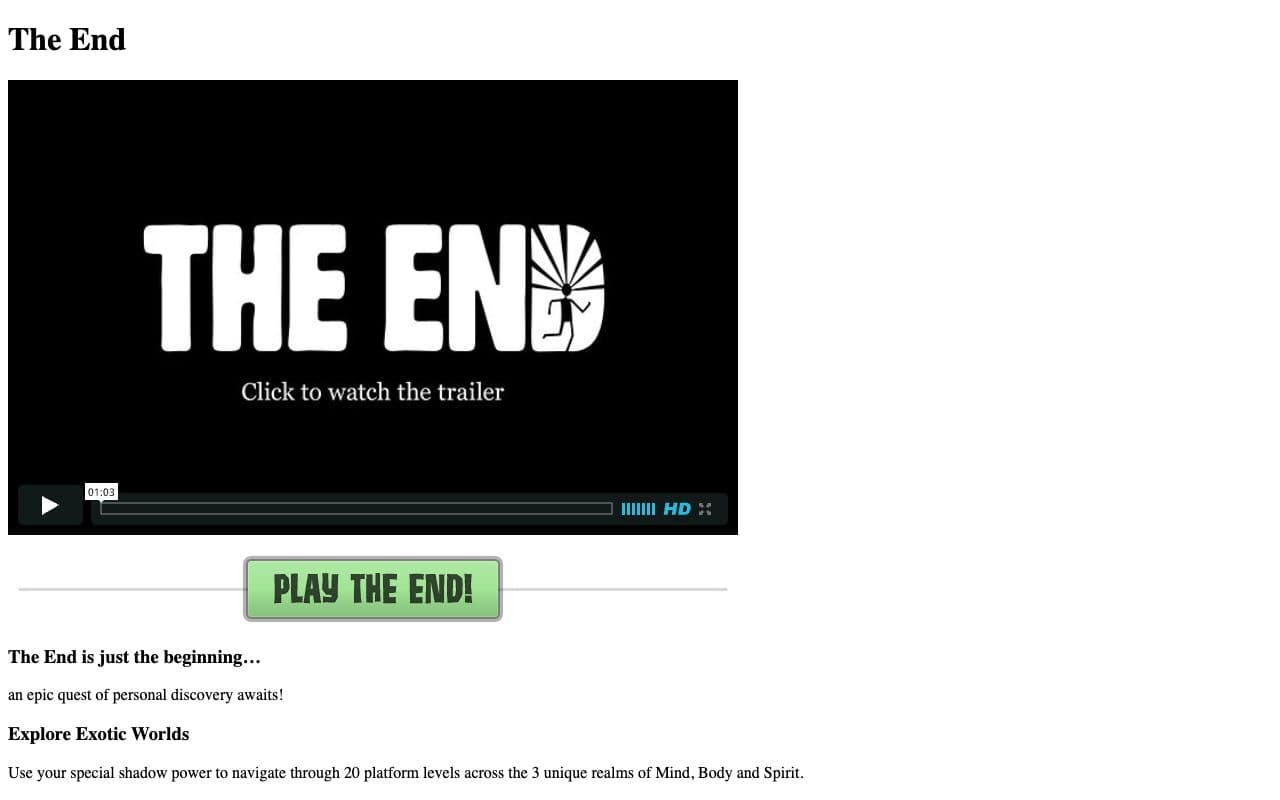
Players open the free browser Flash game at playtheend.com and start playing with no download or registration, though the initial load takes some time.
- 2
Players first build a personal avatar in a detailed character creator, then land on a home-screen lobby where they see other players' avatars alongside each one's stated views on mortality.
- 3
The story frames the game: a sunny world abruptly ends, and the player's character is trapped in a shadow realm watched over by giant otherworldly beings.
- 4
Players move with arrow keys, jump with space, use a shadow ability with E, and interact with levers, doors and ladders with the up key, progressing through three themed realms — Body, Mind and Spirit, each with about six levels — plus a final level, unlocked in sequence through gates.
- 5
Each level is a 2D platformer puzzle: players run, jump, pull levers and open doors, and can toggle a light-and-shadow ability that turns cast shadows into temporary walkable surfaces; along the way they collect stars and can race the clock for bonus rewards.
- 6
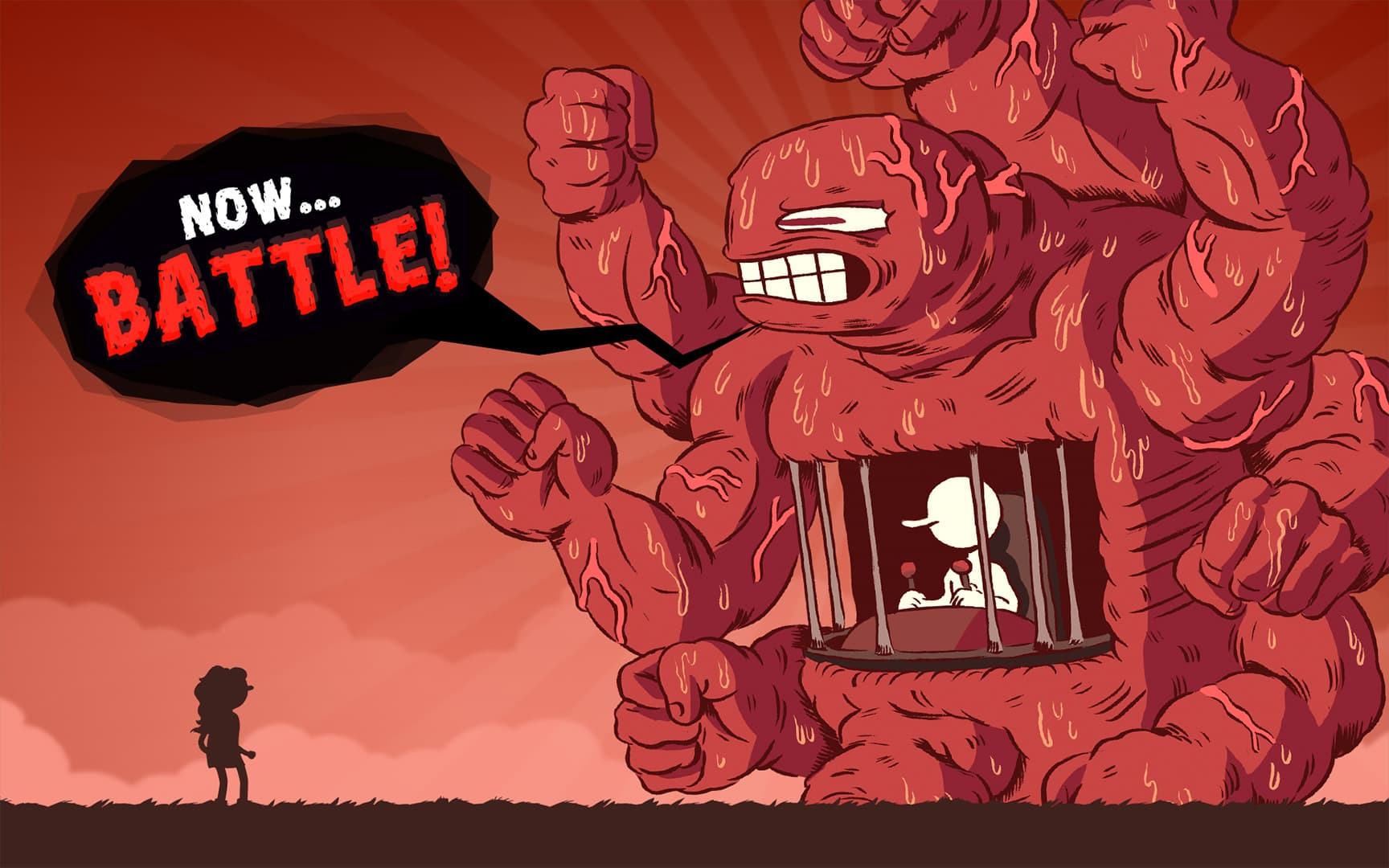
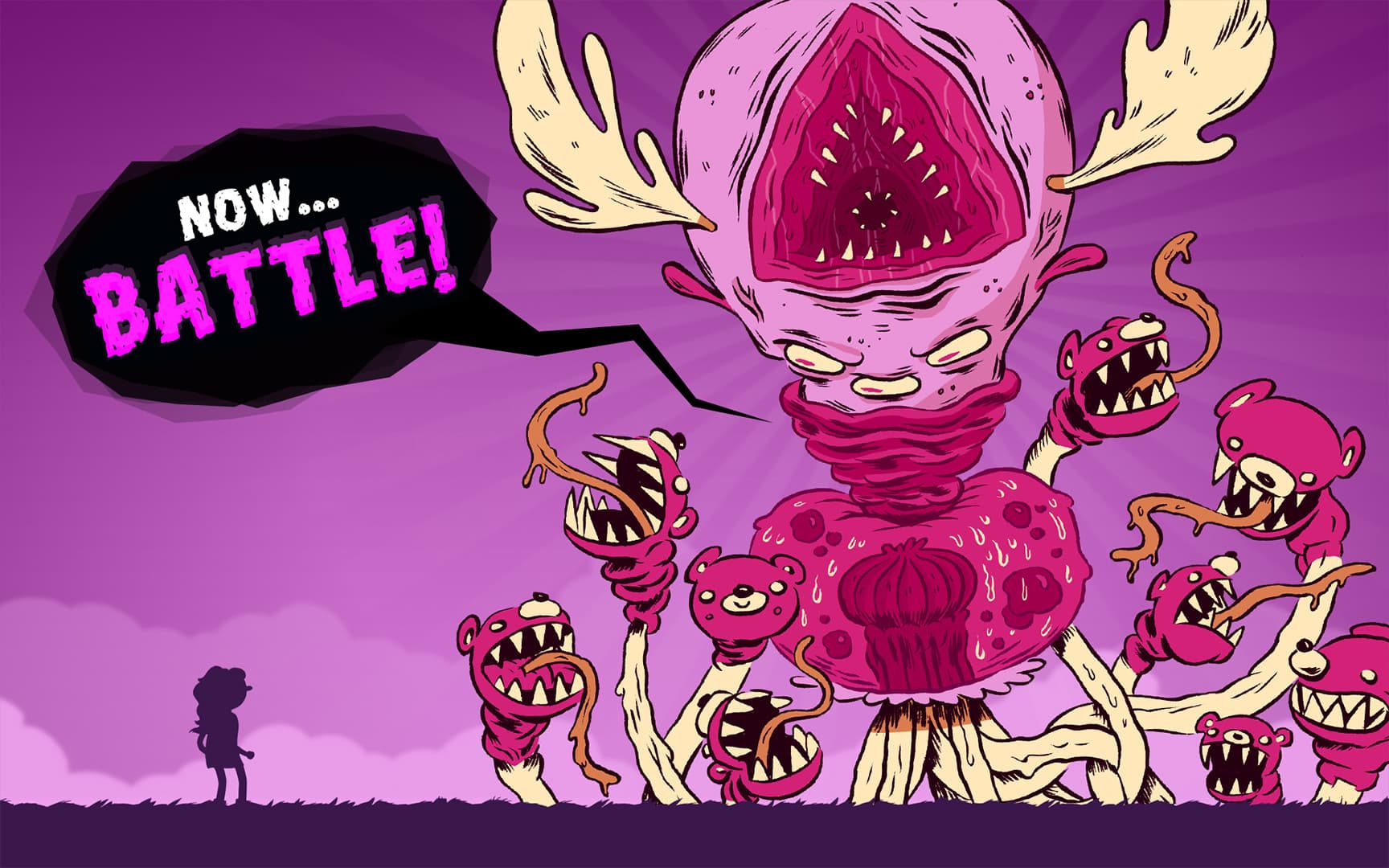
At the end of a level, players face that realm's Guardian in Death Cards, a grid-based card game where higher numbers flip an opponent's pieces; a win yields a symbolic item and opens the path forward, while a loss sends the player back to replay the match.
- 7
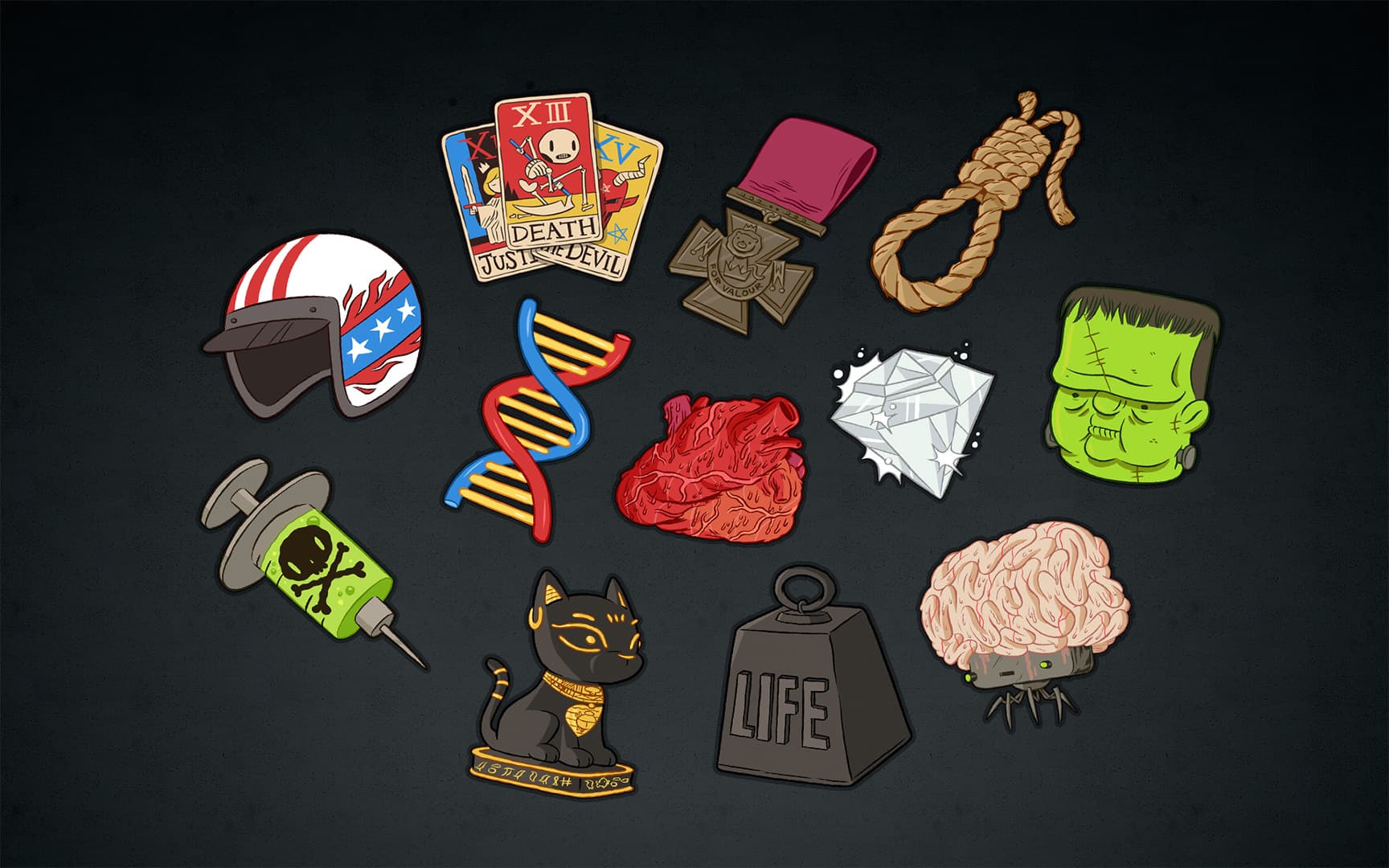
Across the game players amass 19 "Death Items," from a Memorial Diamond to a Daredevil's Helmet, each attaching a piece of knowledge about death and enabling further progress.
- 8
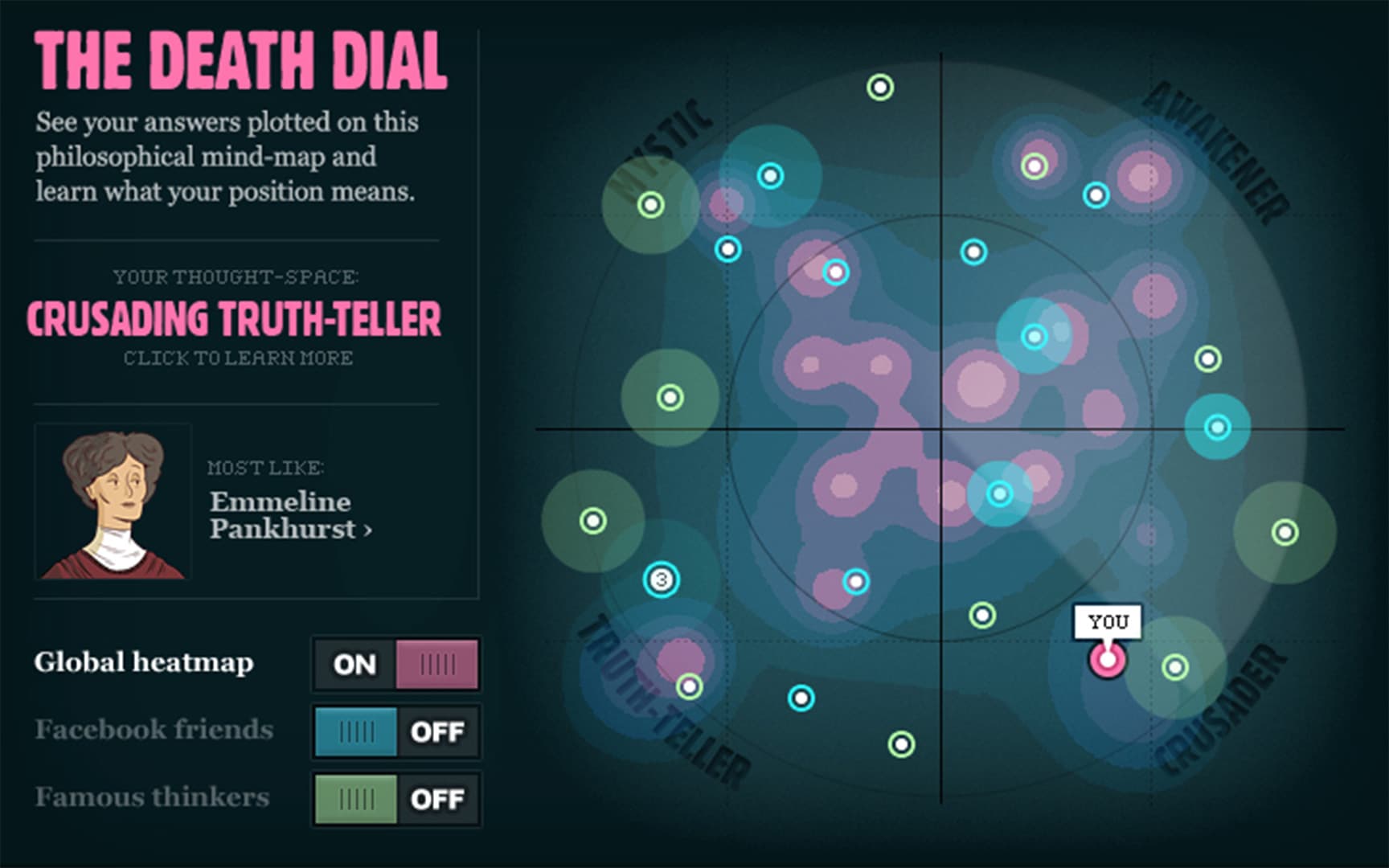
After each card battle, players read a quote from a thinker or poet and answer a personal binary question about death, then get a short explainer with further reading and related philosophers; each answer shifts their position on the Death Dial, a map of four quadrants — Truth Teller, Mystic, Awakener and Crusader — showing which famous thinkers (such as Gandhi, Marie Curie or Ayn Rand) they resemble most, and, notably, how they compare to their Facebook friends.
- 9
Players save their progress either by connecting Facebook for its social comparison features or by leaving an email address for a unique resume code, and the game closes with "The End," a final level built from timed segments with sparse checkpoints.