










How To Survive A Nuclear Bomb
View the results- Brand
- BBC
- Year
- 2016
- Objective
- Awareness
- Industry
- Entertainment
- Mechanic
- Adventure & Quest
- Platform
- Web
- Agency
- Jollywise & BBC


Objective
BBC History wanted to make Cold War nuclear-preparedness history land with 16–24-year-olds who don't read history longreads and had little grounding in the standoff. The brief called for an awareness and education piece that let a young audience feel the logic of decisions and consequences in a post-nuclear scenario, grounded in declassified government material — and it had to be produced cheaply, as a stylish but cost-effective way to tell the story. BBC Taster gave it a live pilot audience to rate and react to.
Solution
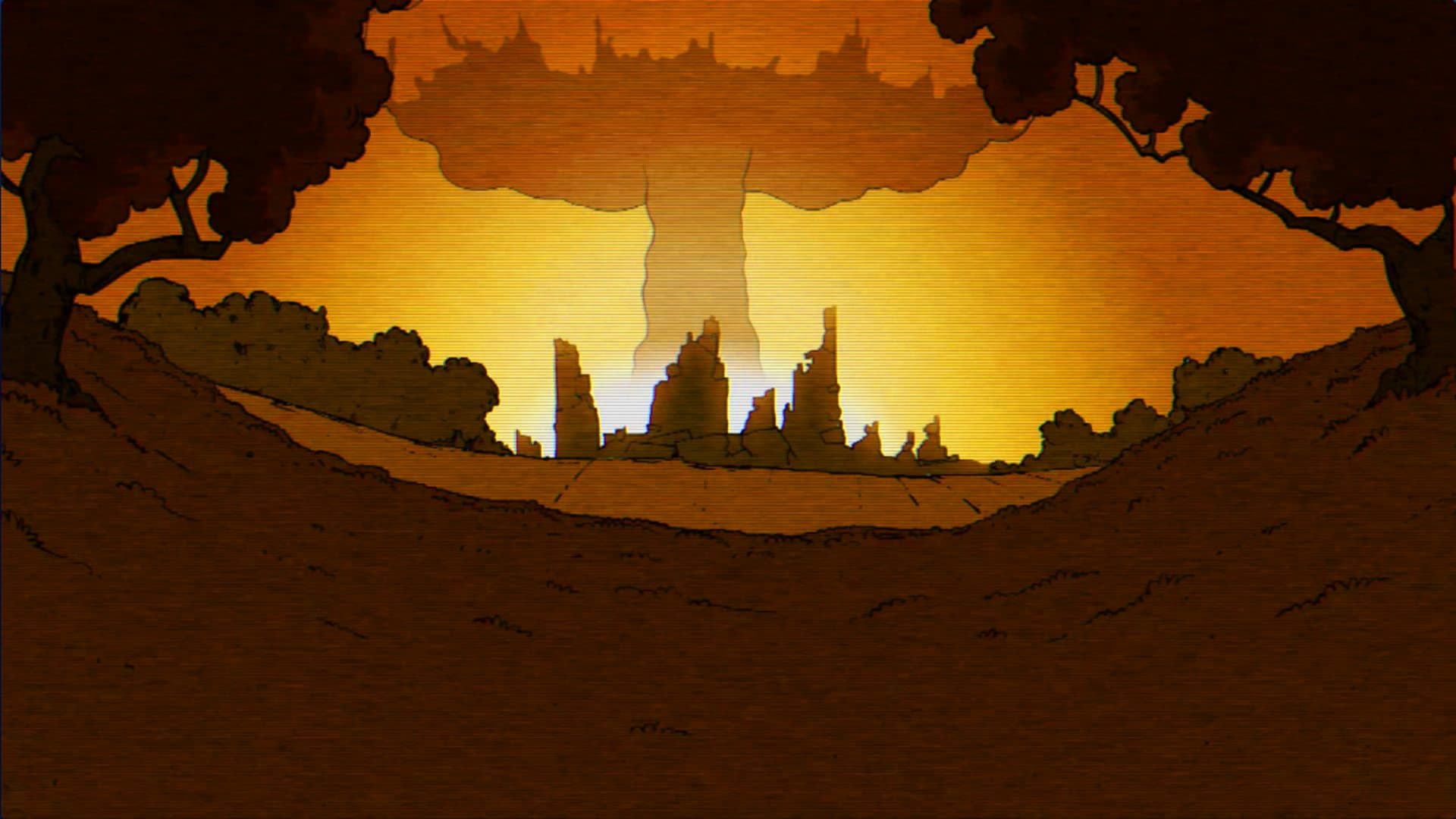
The player opens a vertical graphic novel in the browser, on desktop or mobile, and scrolls through illustrated panels that shift with a parallax effect as the story advances, occasionally cutting to live-action video. The action starts right after the bomb has already hit: three days of trying to survive in a wrecked city where the authorities are gone and help isn't coming. Every screen ends on a fork with two options, and the player picks one. Two meters, health and morale, sit on screen throughout and shift with each choice; if either hits zero, the character dies and the story ends there. The goal is to keep both above zero for three days until regional government is restored, at which point the player gets an ending and the option to start over.
Results
The BBC Taster pilot ran until 14 October 2016, drawing 7,104 ratings and 10 shares.
- 1
The player lands on the pilot's page, reads the premise — an interactive story built from declassified government documents asking whether they can survive a nuclear strike — and taps to begin.
- 2
The experience unfolds as an illustrated graphic novel: panels move with parallax scrolling and advance on the player's own input rather than autoplaying.
- 3
The player takes the role of an ordinary citizen in a British city in the strike's aftermath, navigating collapsed infrastructure, dead communications, and non-functioning services rather than the blast itself.
- 4
Two persistent meters, health and morale, stay onscreen throughout, giving the player a constant read on how close they are to failure.
- 5
At each branch point the story offers exactly two options for what to do or where to go; picking one moves the story forward and shifts both meters, often trading health against morale or vice versa, so every choice has a visible cost.
- 6
Illustrated scenes are interspersed with clips of live-action video, documentary or dramatized footage that punctuates the narrative.
- 7
The branching choices repeat across a three-day span, with the player needing to keep both meters above zero until regional authority is restored.
- 8
Letting either meter hit zero ends the run in the character's death, with closing text spelling out the failure.
- 9
Surviving to the end delivers a final outcome summary, and the player can restart to make different choices and reach a better result.