







Formula Brain
- Brand
- Vodafone
- Year
- 2018
- Objective
- Engagement
- Industry
- Tech & Telecom
- Mechanic
- Racing & Sports
- Platform
- AR & VR
- With
- Monks






Objective
VodafoneZiggo wanted a tangible way to prove what its 4G network could actually do with real-time data, while sharpening its image as an innovative carrier alongside the retail launch of the Samsung Galaxy S9. Making the experience exclusive to twelve physical stores also gave the campaign a built-in reason to pull people through the door.
Solution
At one of twelve Vodafone stores, a visitor puts on a Samsung Gear VR headset paired with an Emotiv Insight EEG band and runs through a short calibration so the system can read their focus. They then "drive" a car around a virtual 3D track using nothing but concentration: focus hard and the car speeds up, relax and it slows down — no wheel, no buttons. Each session is a single timed lap, and that lap time feeds a regional leaderboard running over about four weeks. The fastest driver from each store advances to a live final, where they strap on the same headset again — only this time it's steering the throttle of a real self-driving Formula Student race car, watching a live 4G video feed from the car's nose camera while their mind alone controls its speed.
Results
18M+ impressions and €500,000 in PR value; 3M unique visitors; a 30% rise in the share of people rating the brand as innovative.
- 1
A shopper at one of twelve Vodafone stores approaches the Formula Brain simulator kiosk, the sole entry point into the competition.
- 2
Staff fit the player with a Samsung Gear VR headset layered under an Emotiv Insight EEG headset with six electrodes, then calibrate the system to that player's neutral brain state as a baseline and run a short training session so the player learns how to make the car move.
- 3
In VR, the player sits behind the wheel of a Formula-style car on a 3D circuit modeled on an Austrian Formula 1 track, steering nothing — control is entirely mental: concentrating harder generates more "thrust" and speeds the car up, while relaxing back toward the neutral baseline slows it down.
- 4
Each lap produces a timed result that feeds into a regional leaderboard, where the player's time is ranked against other shoppers over roughly four weeks of qualifying.
- 5
The fastest player from each region is invited to a national final held on a real racetrack.
- 6
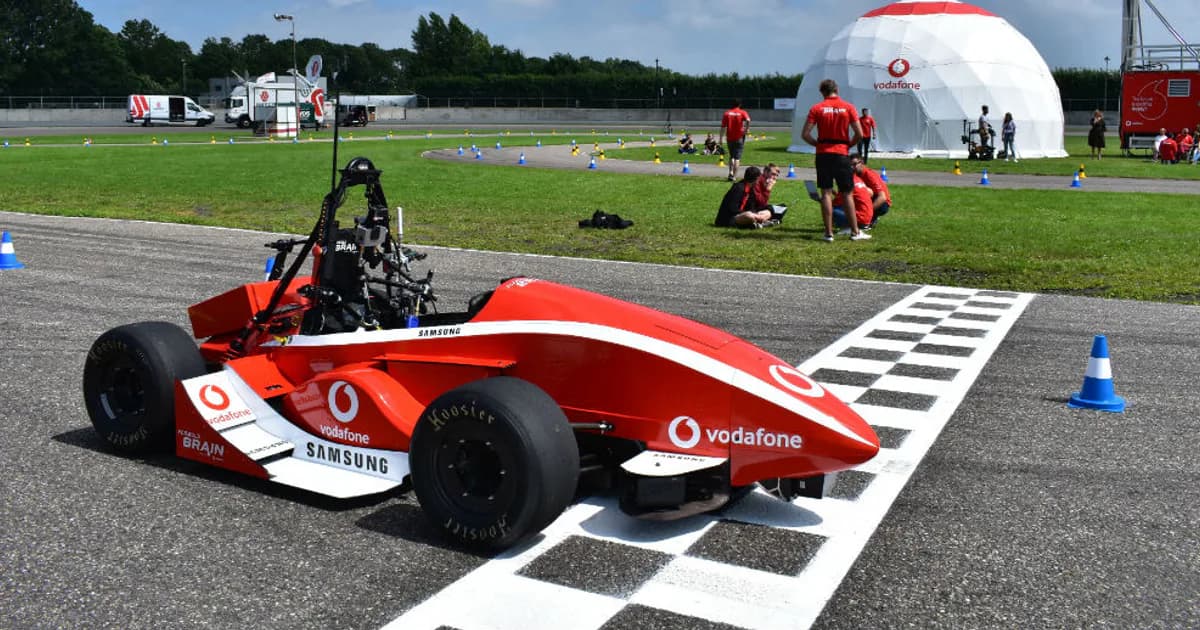
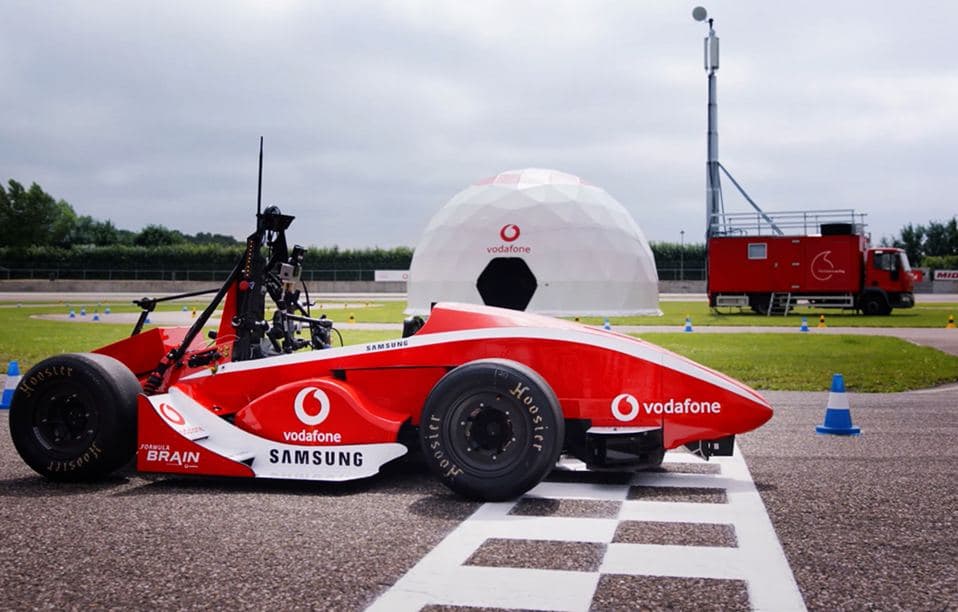
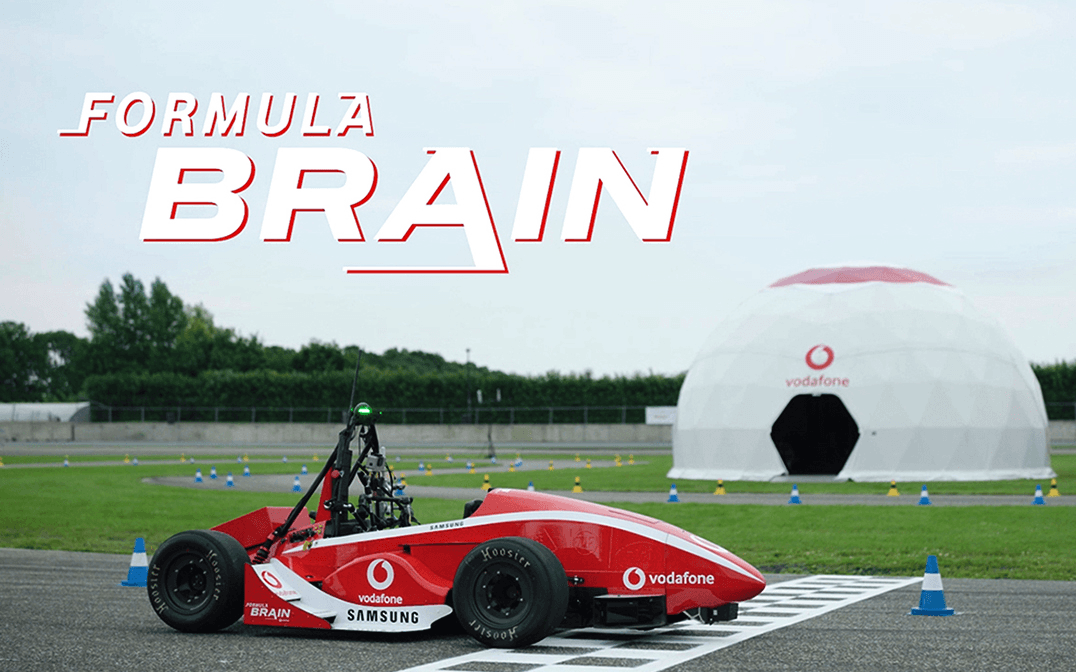
At the Midland Circuit final, a real self-driving Formula Student race car has been modified to take speed commands from a driver's brain activity.
- 7
Each finalist wears the same EEG headset trackside and watches a live 4G video feed from the car's front-facing camera to see where it is heading.
- 8
The finalist controls the real car exactly as in the store simulation — concentration accelerates it, relaxation brakes it — while an autopilot handles all steering, leaving the player in charge of speed only.
- 9
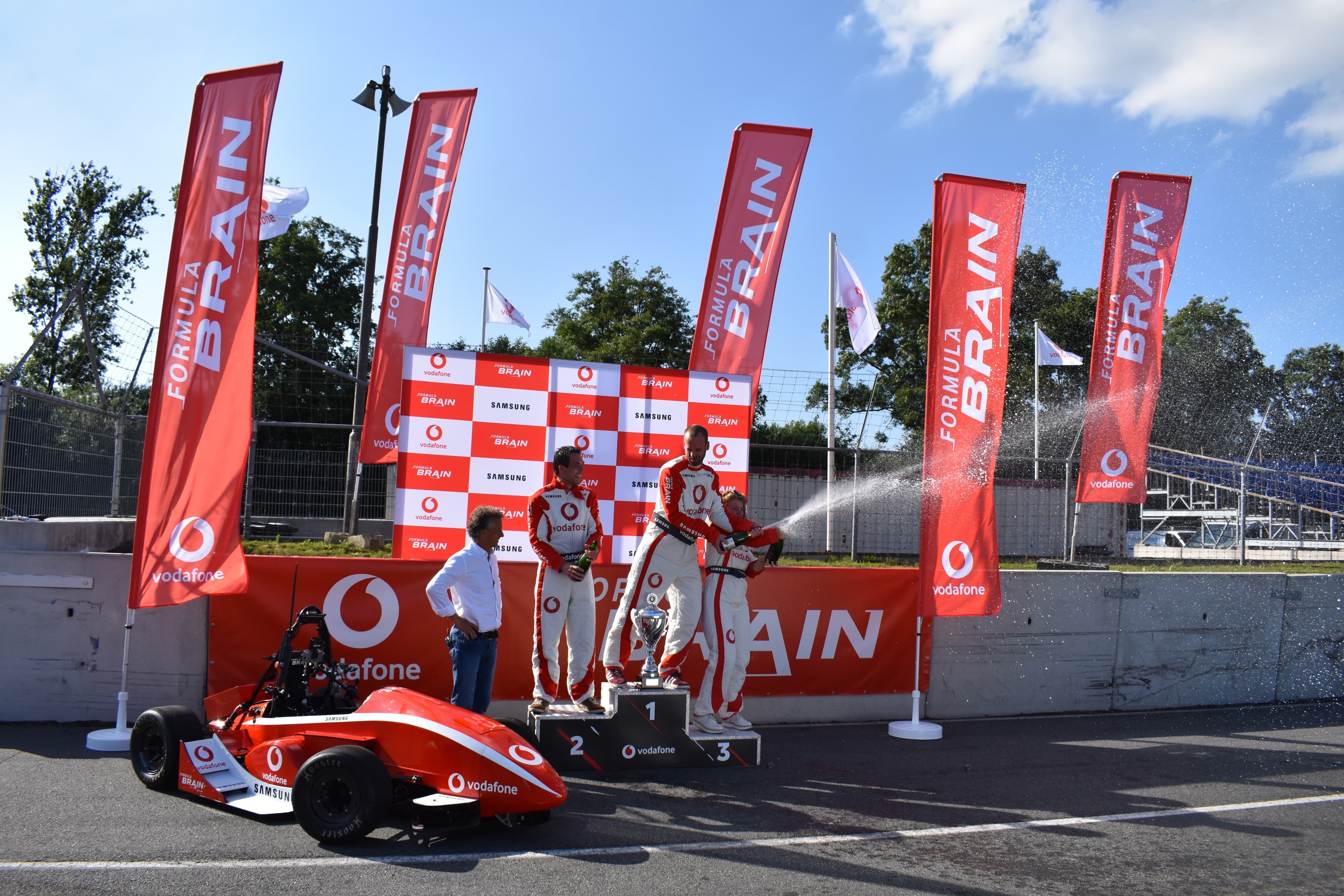
Finalists race head-to-head on lap times, and the fastest overall is crowned winner of Formula Brain.