











Workplace: The Game
View the case- Brand
- Workplace Systems
- Year
- 2013
- Objective
- Lead Gen & Recruiting
- Industry
- Tech & Telecom
- Mechanic
- Simulation & Strategy
- Platform
- Web
- Agency
- Playerthree


Objective
Workplace Systems wanted retail operations and HR leaders to feel first-hand how hard shift scheduling really is — juggling forecasted footfall, staff skills, overtime, and budget — and to tie that struggle directly to its Schedule Quality Rating, the five-star metric at the core of its workforce management platform. Rather than pitch the software cold, the game let prospects experience its central selling point before a single sales call.
Solution
Playable straight from the browser at workplacesystems.com/thegame, on any device with no download, the game drops the player into a pixel-art store seen from above, with customers and staff moving through the aisles. As the manager, the player hires staff with different skill sets and drags them onto a shift schedule, deciding who works which section and when. Publishing the schedule triggers the payoff: a five-star Schedule Quality Rating alongside a financial readout showing how those staffing calls played out on the books. Players can then rework the roster and republish, chasing a higher rating and a better bottom line.
- 1
The game opens directly in the browser on any device, with no install or plugins required; a title screen invites the player to begin a shift as an operations manager.
- 2
The player is cast as the operations manager of a fictional store, tasked with two goals at once: hold a five-star Schedule Quality Rating (SQR) while keeping the store profitable, objectives that pull against each other since a stronger schedule tends to cost more in labor.
- 3
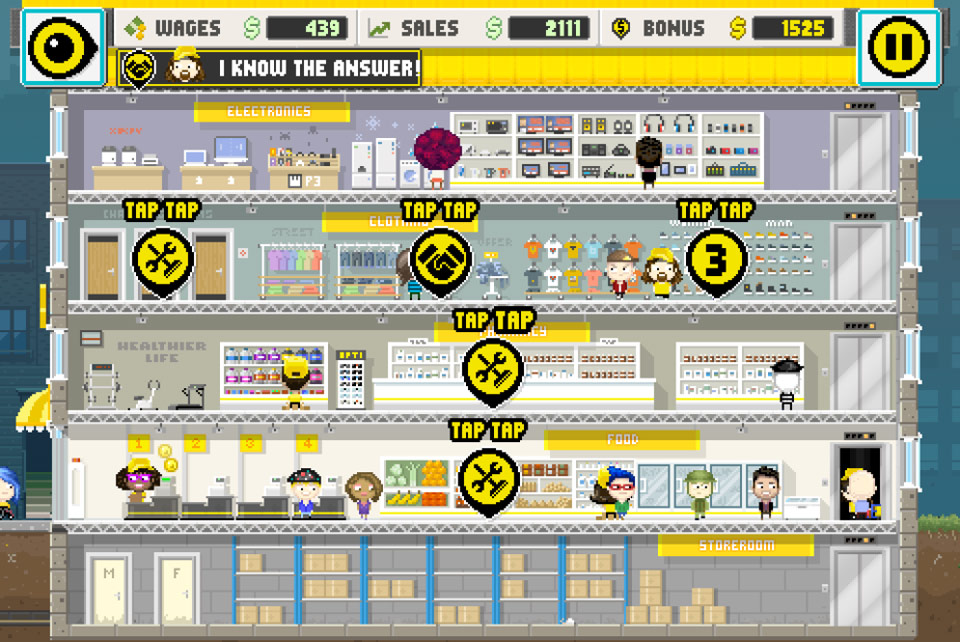
The main screen is a top-down pixel cutaway of the store floor, where customers move through the aisles and placed staff work their assigned stations, showing at a glance whether the current shift is keeping up with foot traffic.
- 4
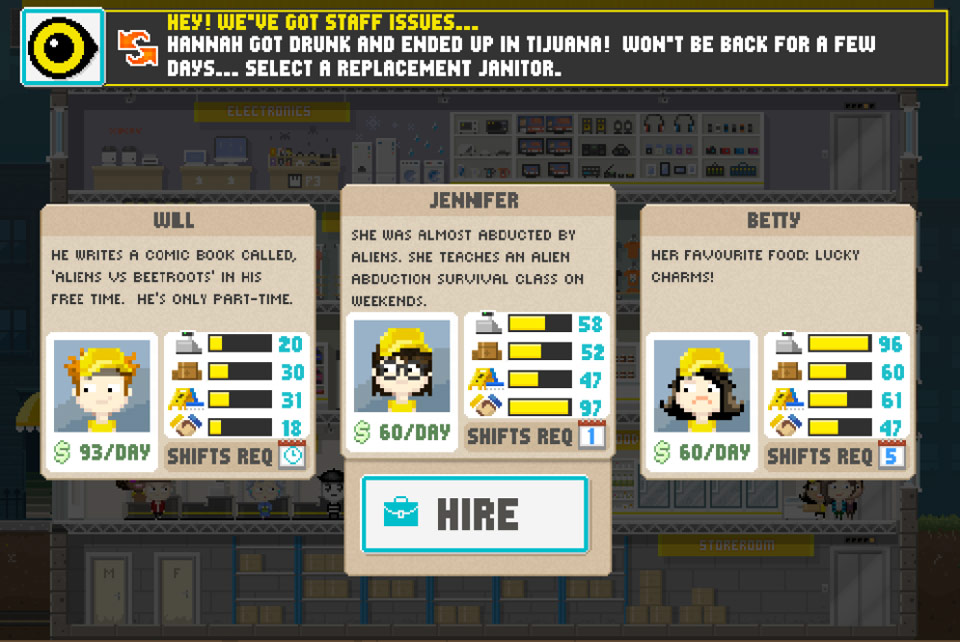
Players build a team by reviewing and hiring candidates, each with a skill set that determines which part of the store they are useful in.
- 5
The game supplies a forecast of expected customer traffic and the staffing hours it implies, giving players the baseline for deciding how many people to schedule during busy and slow periods.
- 6
Players build the schedule by assigning specific staff to shifts and store areas, matching each person's skill to where and when it is needed, while tracking everyone's hours to avoid overloading them or triggering costly overtime pay.
- 7
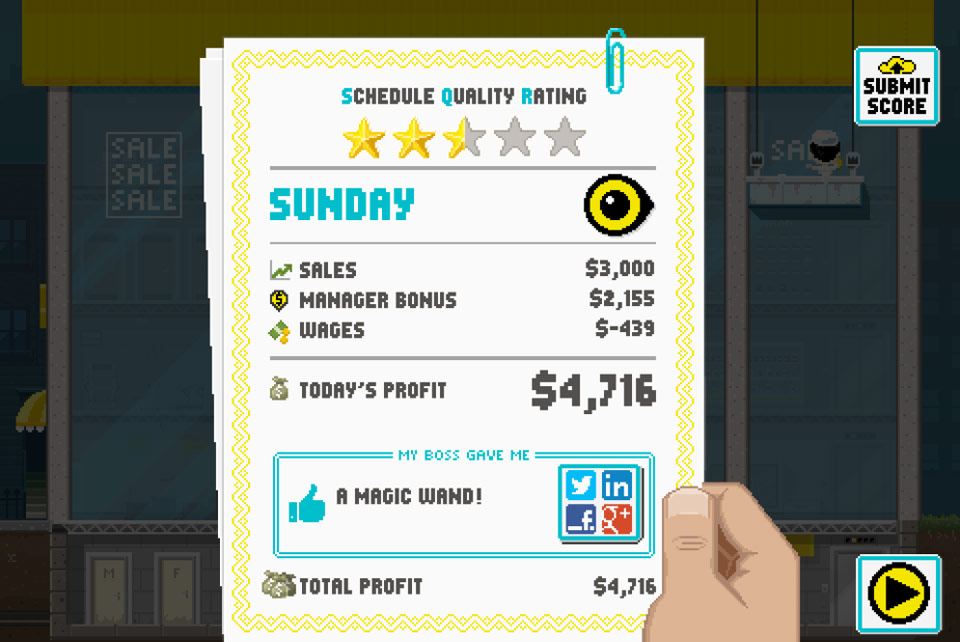
The finished schedule is graded by SQR, a one-to-five-star score; five stars is the target, and anything below three stars is treated as unfit to run.
- 8
Players run the shift and watch the results play out on the floor — whether staffing meets customer flow and what happens to profit — then adjust the team, forecast, and schedule and repeat the cycle toward five stars and healthy margins.