
Drone Racer
- Brand
- U.S. Army
- Year
- 2026
- Objective
- Lead Gen & Recruiting
- Industry
- Other
- Mechanic
- Racing & Sports
- Platform
- Installation
- Agency
- TBWA
- With
- TMA
- With
- Groove Jones
- Published



- 1
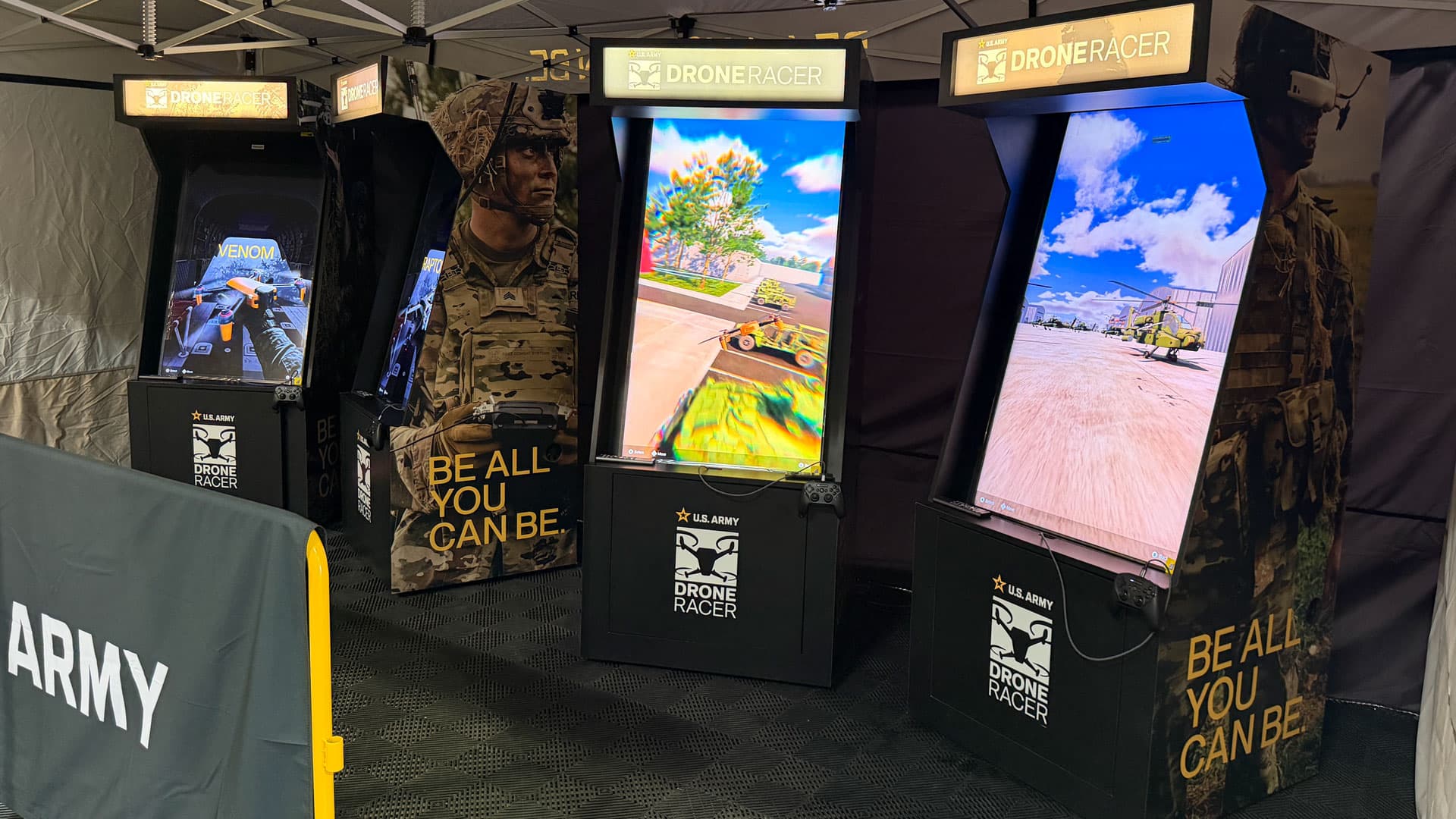
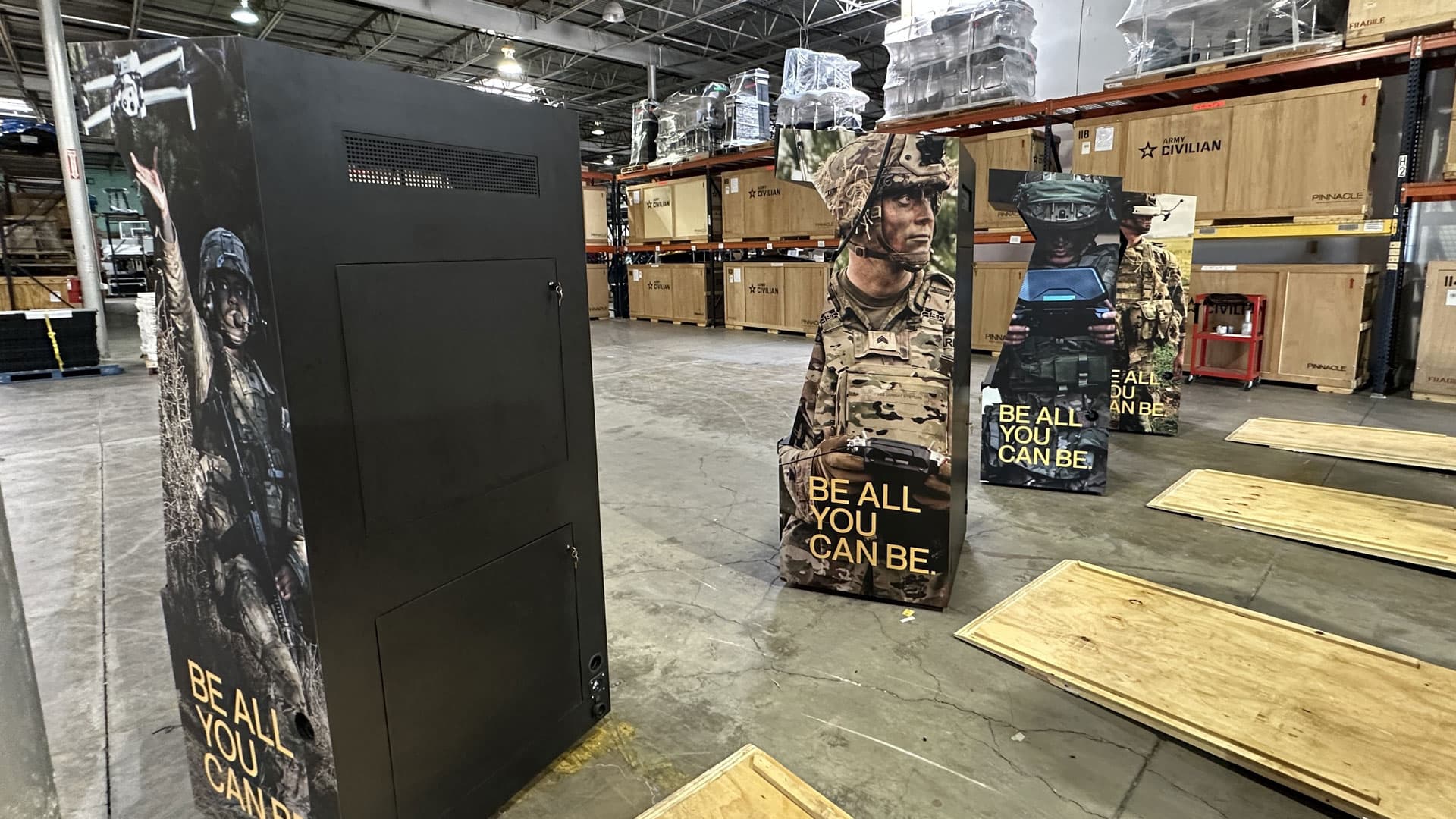
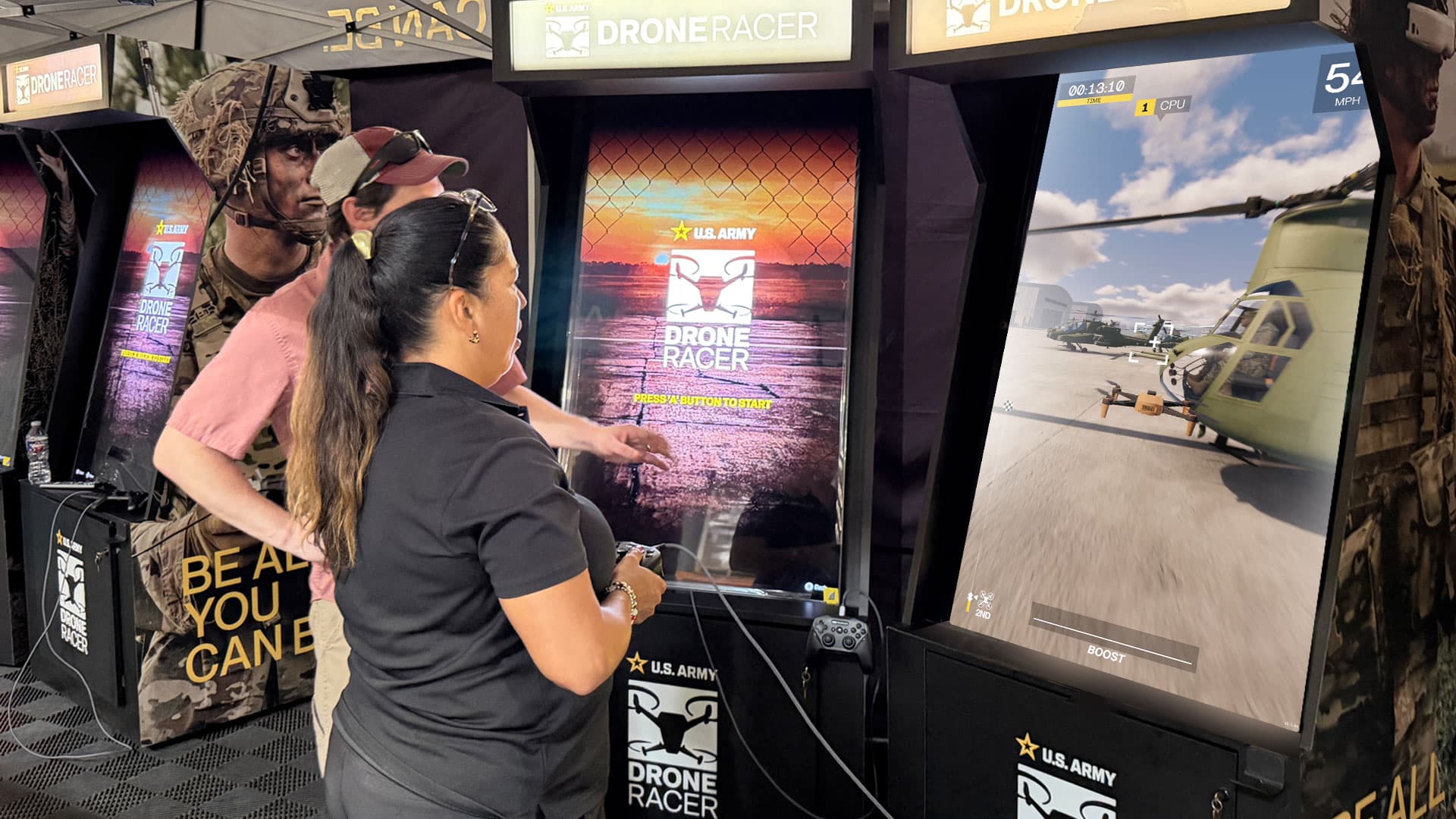
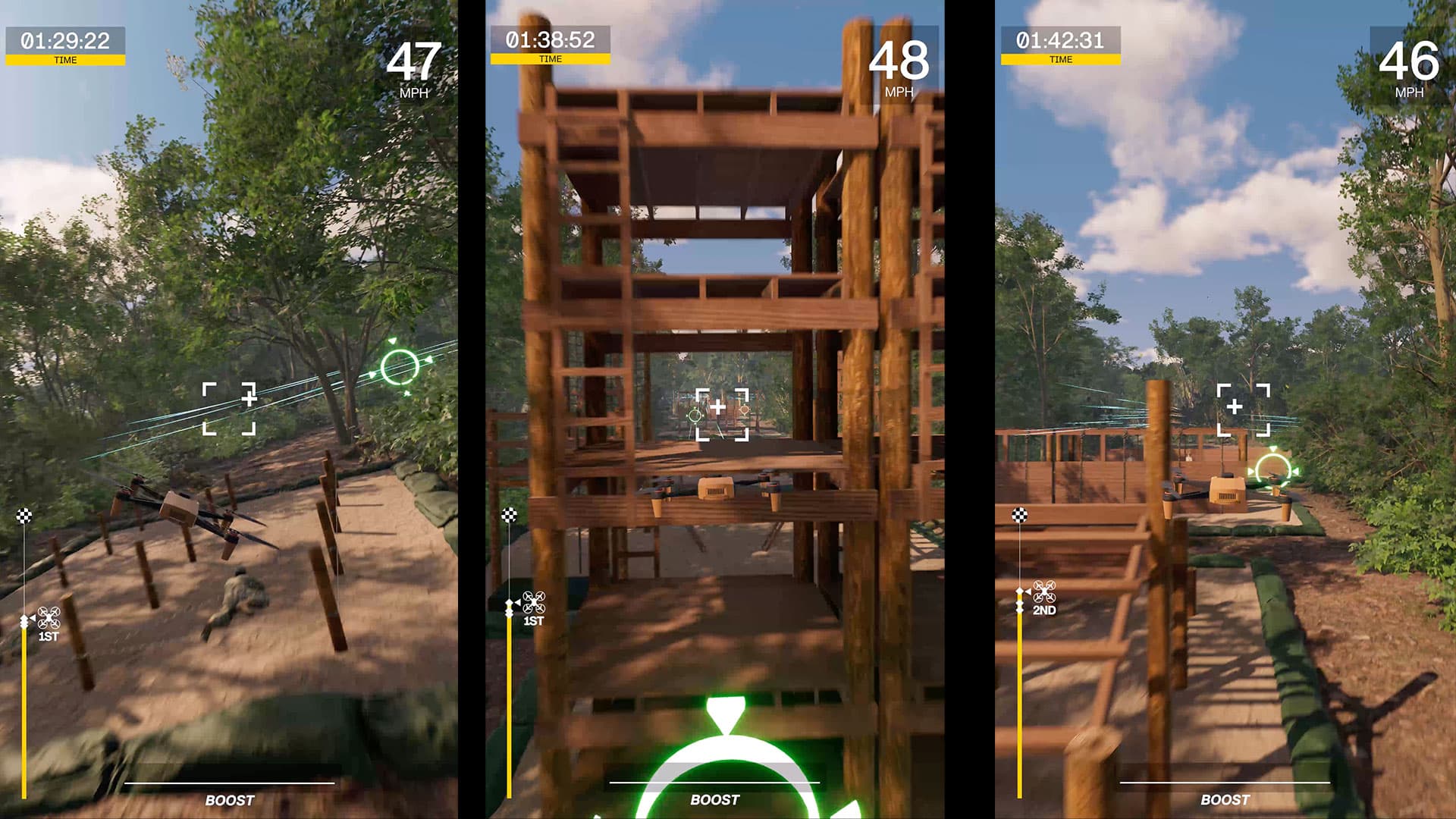
At a noisy event, the player spots the arcade cabinet by its vertical 4K screen, distinct from neighboring horizontal kiosks, and picks up a standard Xbox gamepad rather than a drone remote, keeping the entry barrier low. In a staged version of the activation, the cabinet sits at the end of a route that starts with hands-on drone hardware and an Army booth sign-up.
- 2
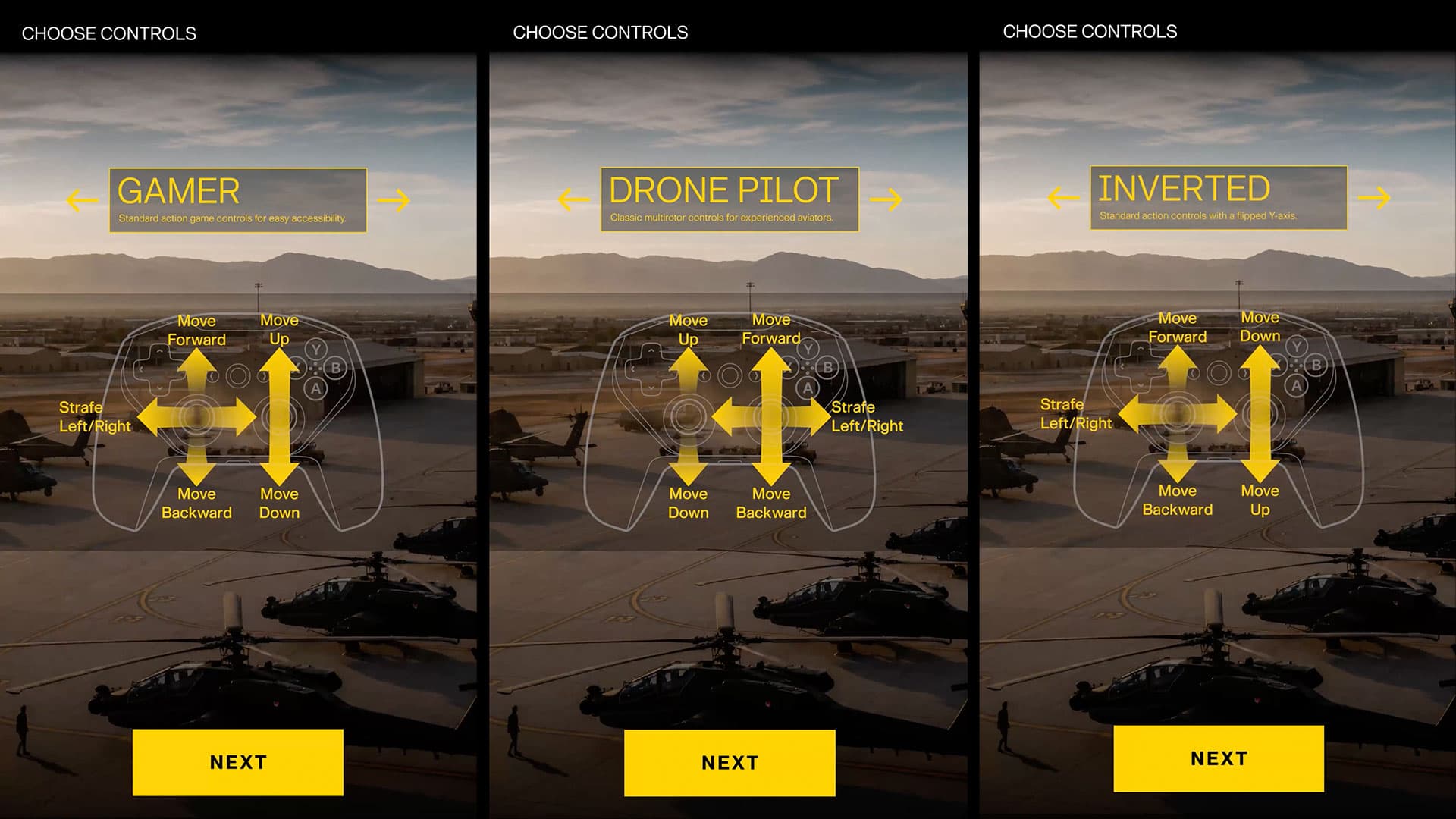
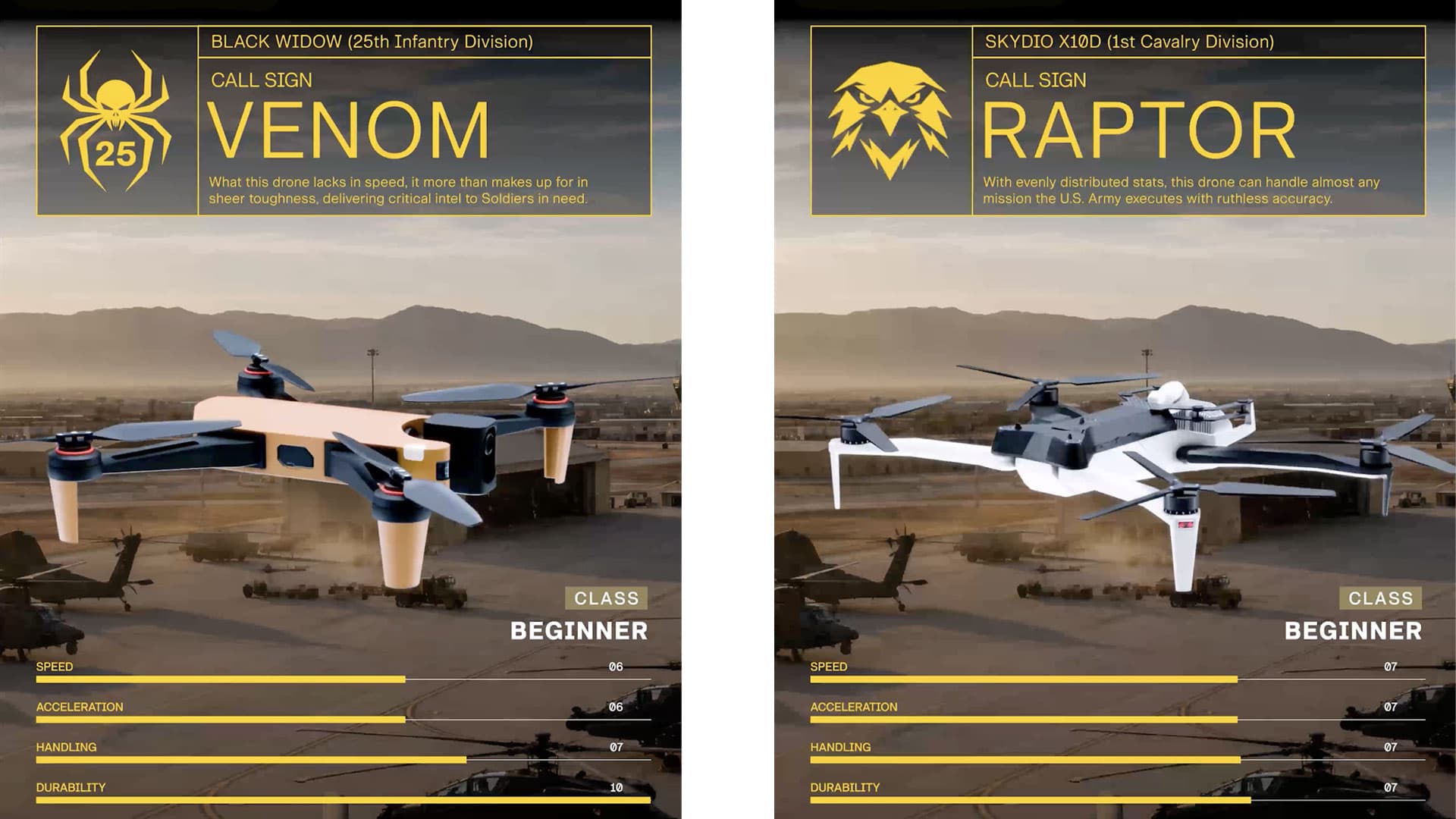
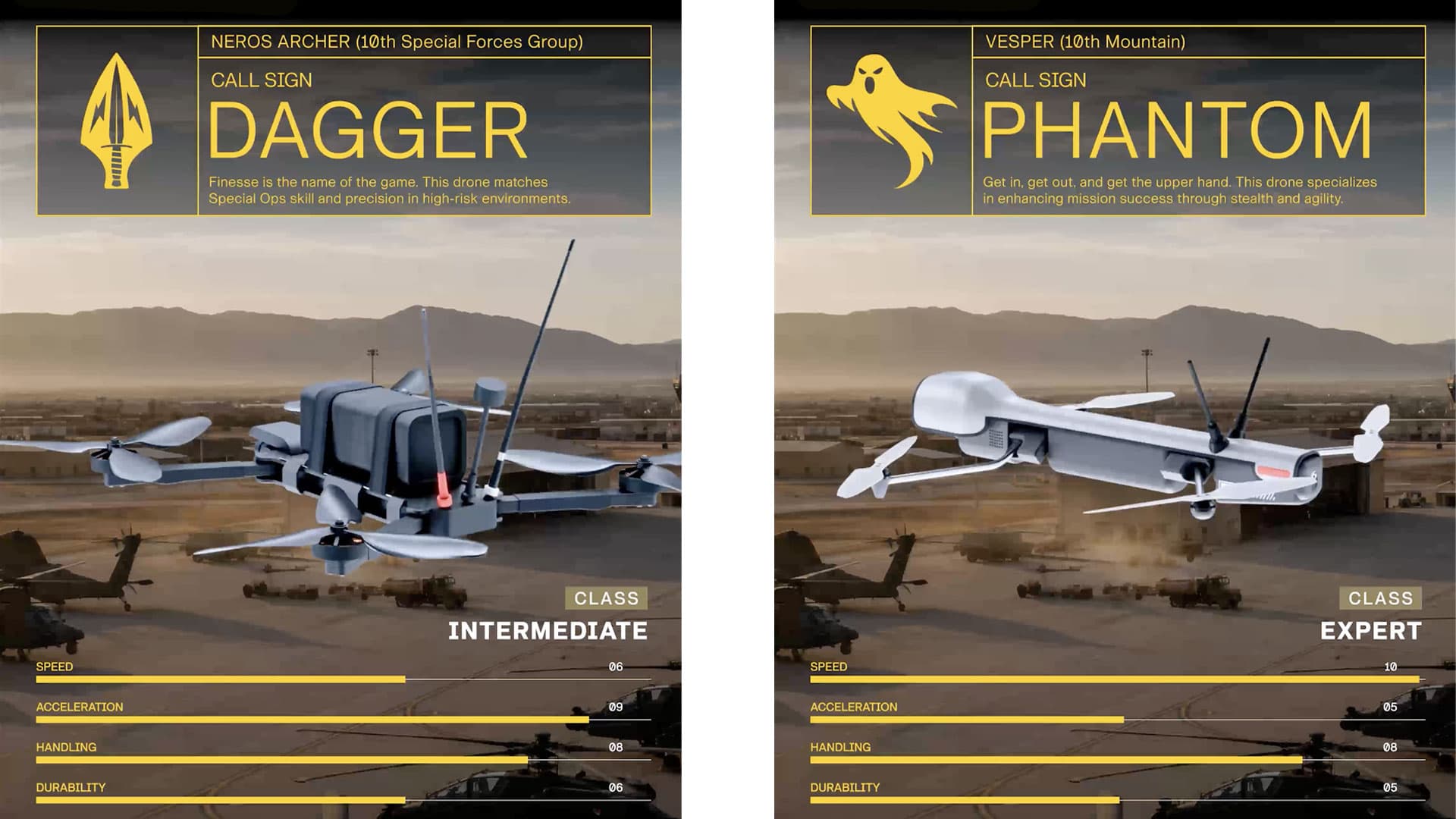
Before racing, the player tests three control schemes (Gamer, Inverted, Drone) to match a preferred stick layout, then chooses from four drones that trade off top speed against handling: the forgiving Venom suits beginners while the fast but twitchy Phantom rewards skilled players willing to risk harder control.
- 3
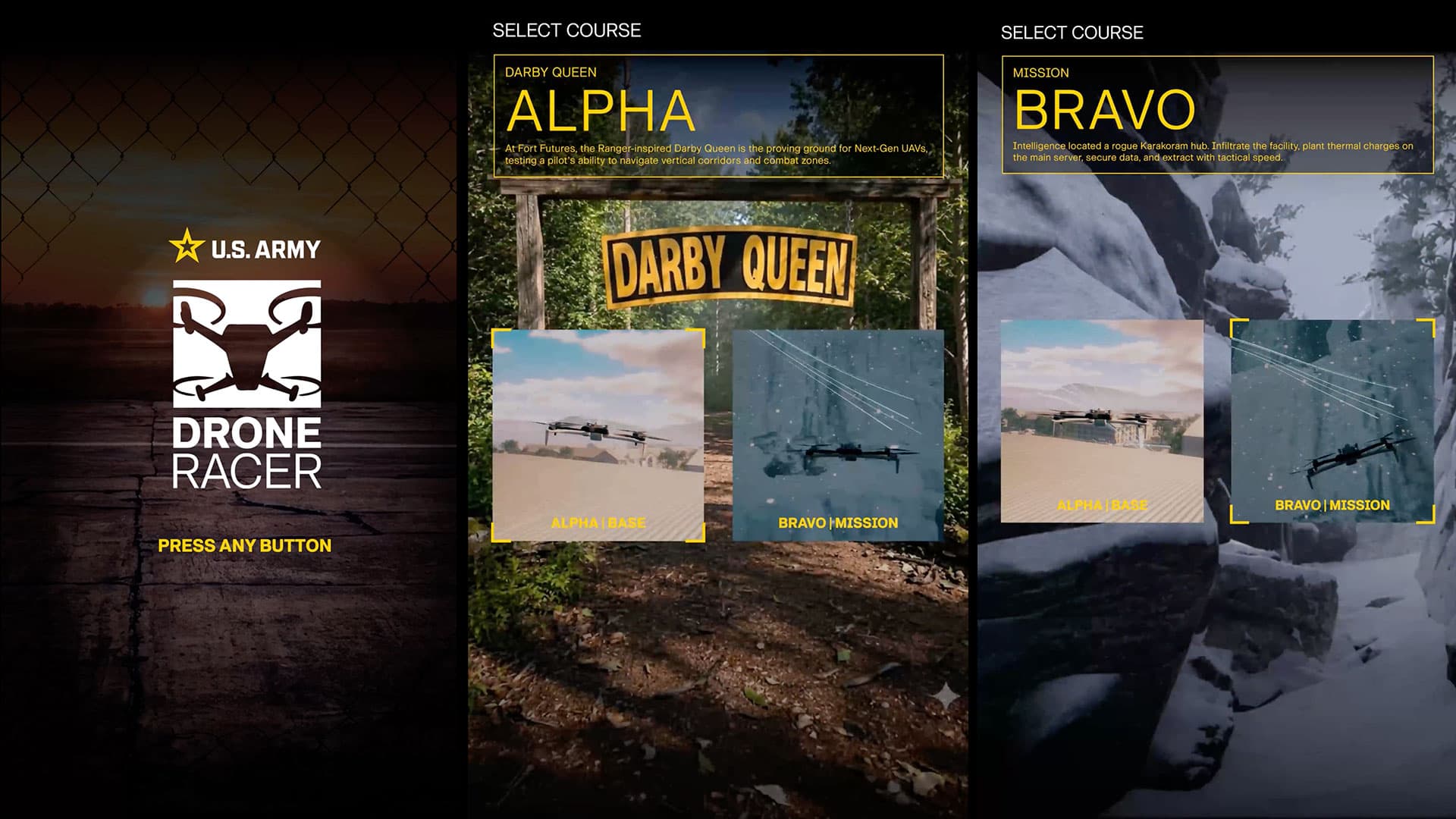
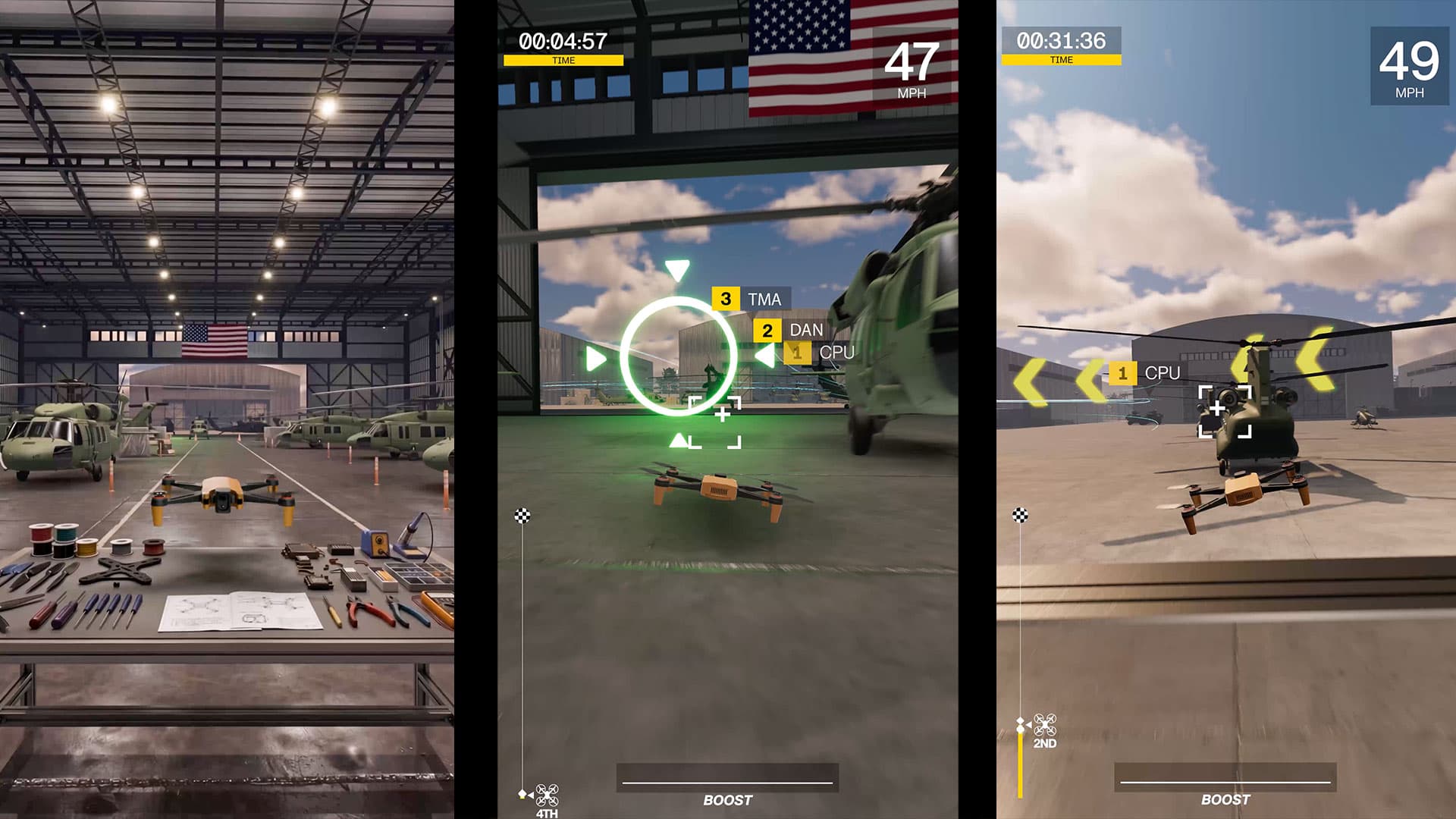
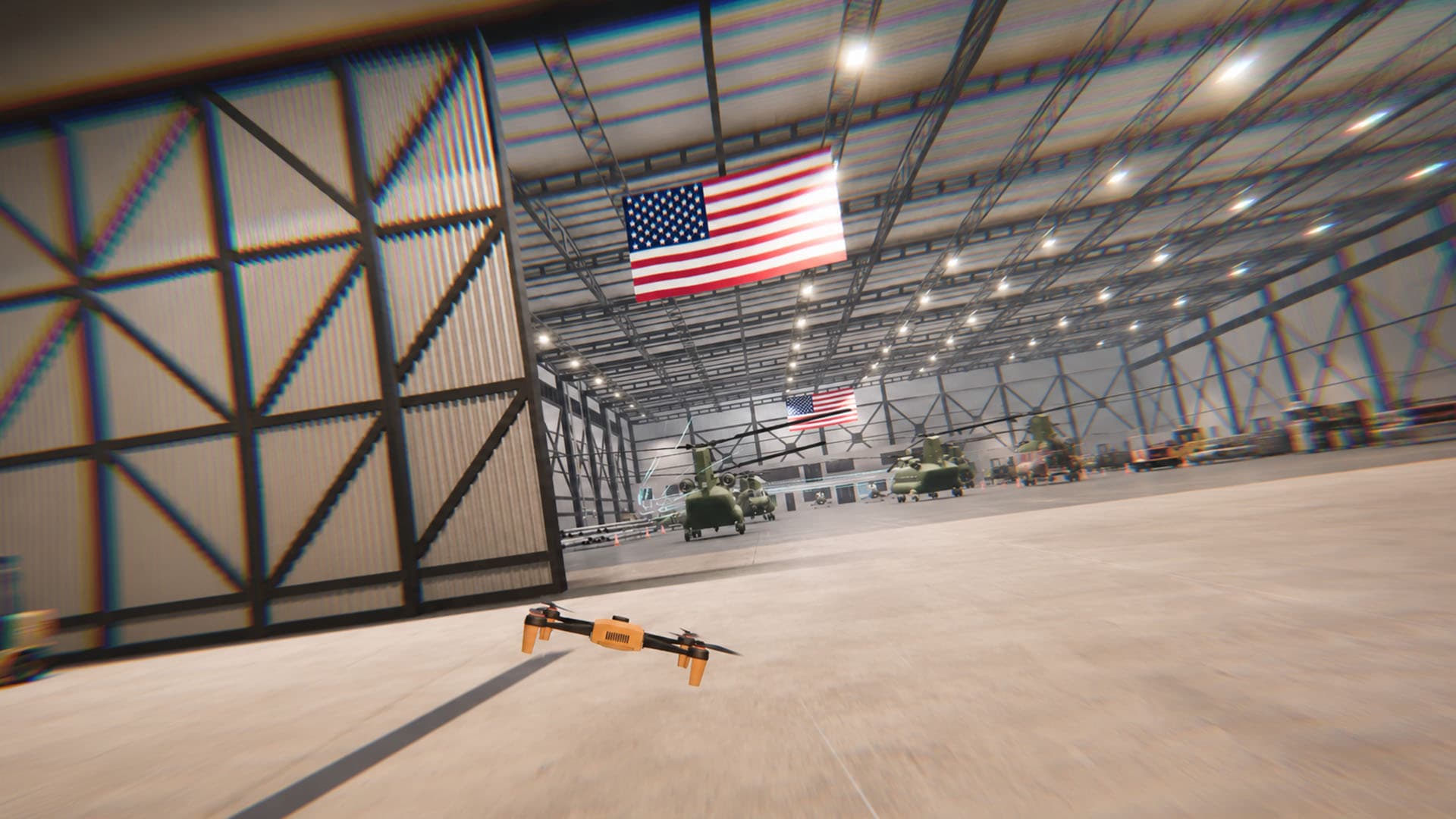
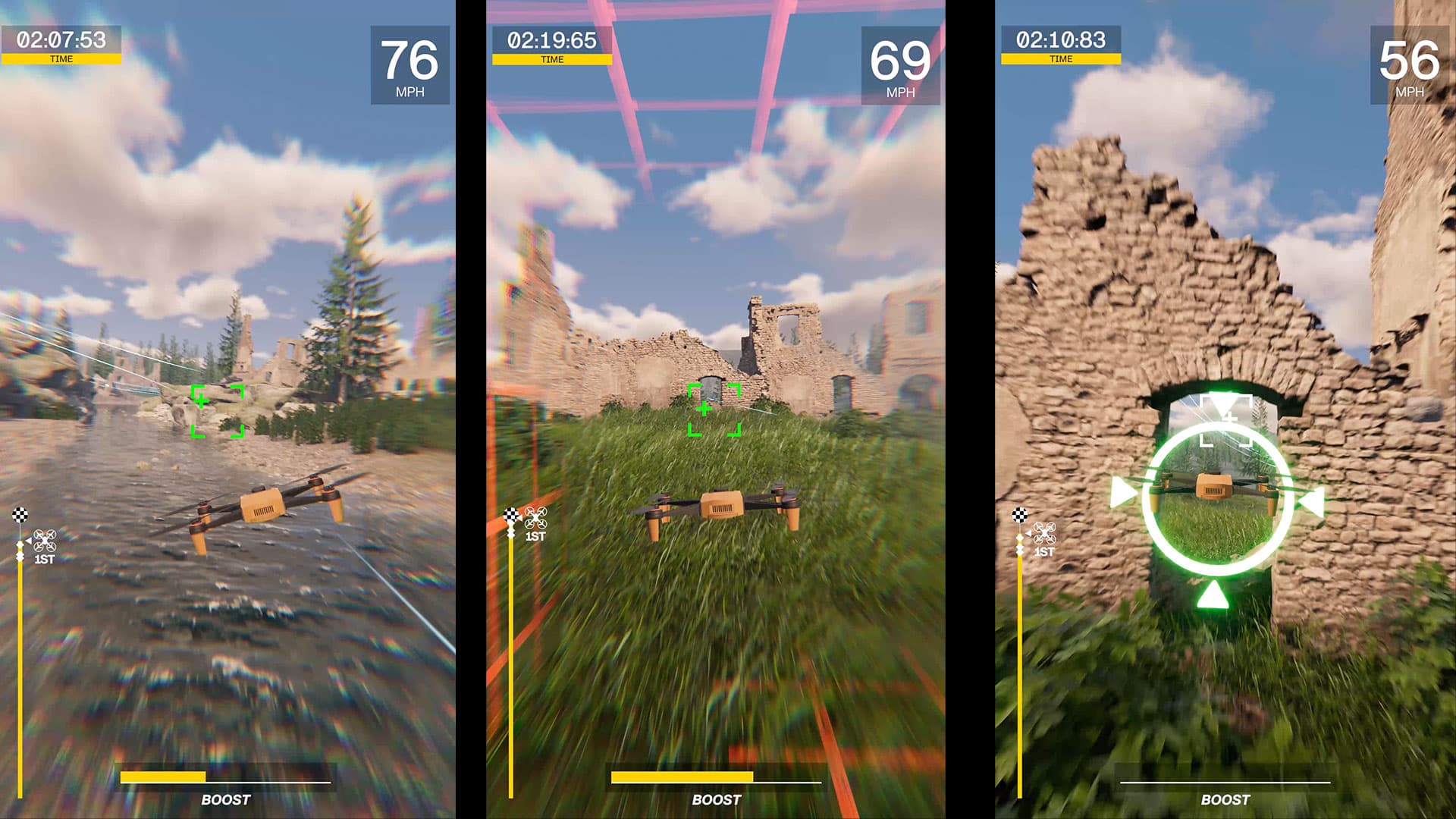
The player also picks one of two tracks: Alpha, a training course on an Army base, or Bravo, a mission-style run in the mountains. Each race opens with a cinematic launch of the drone from a hangar table or a hand.
- 4
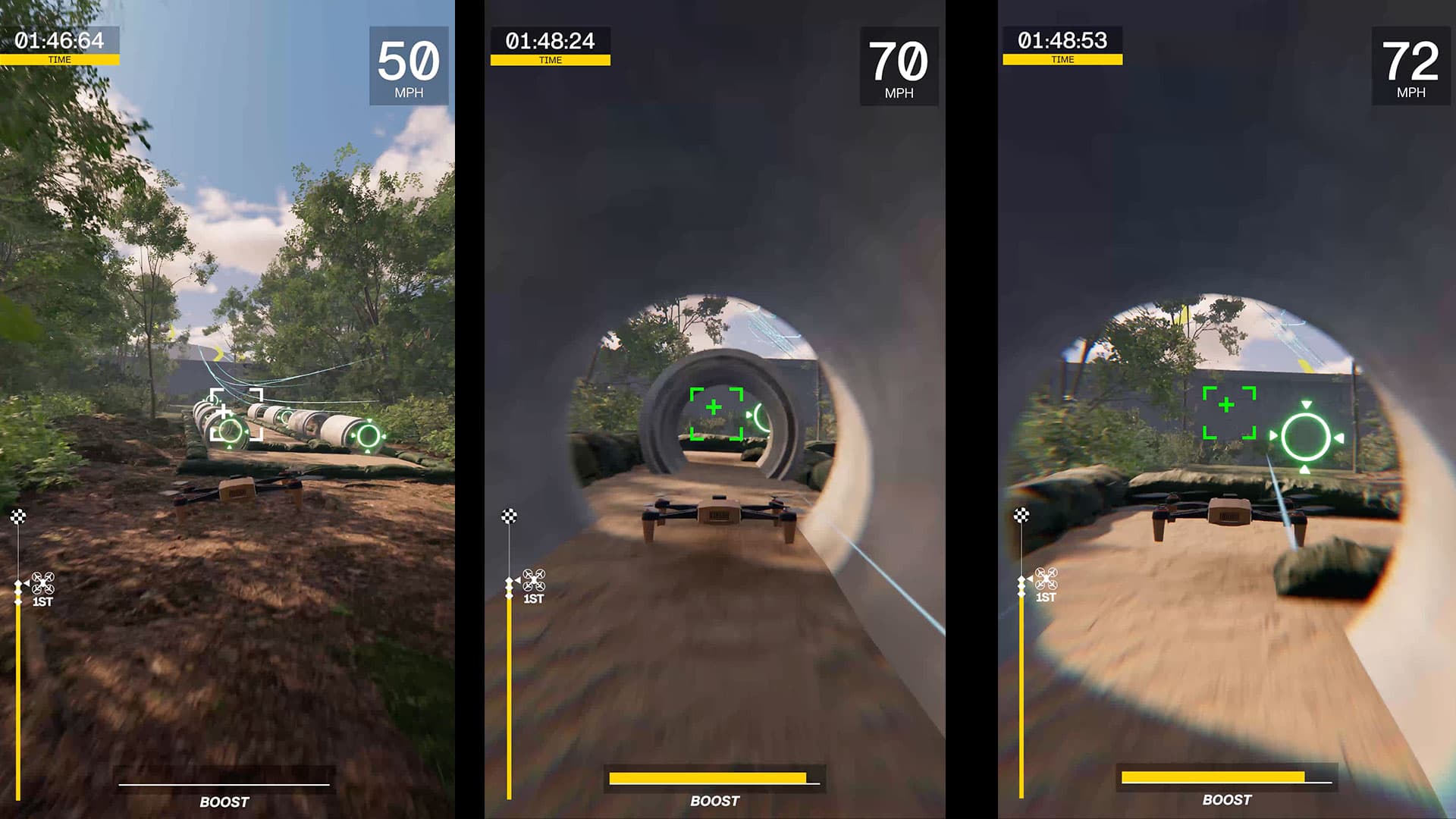
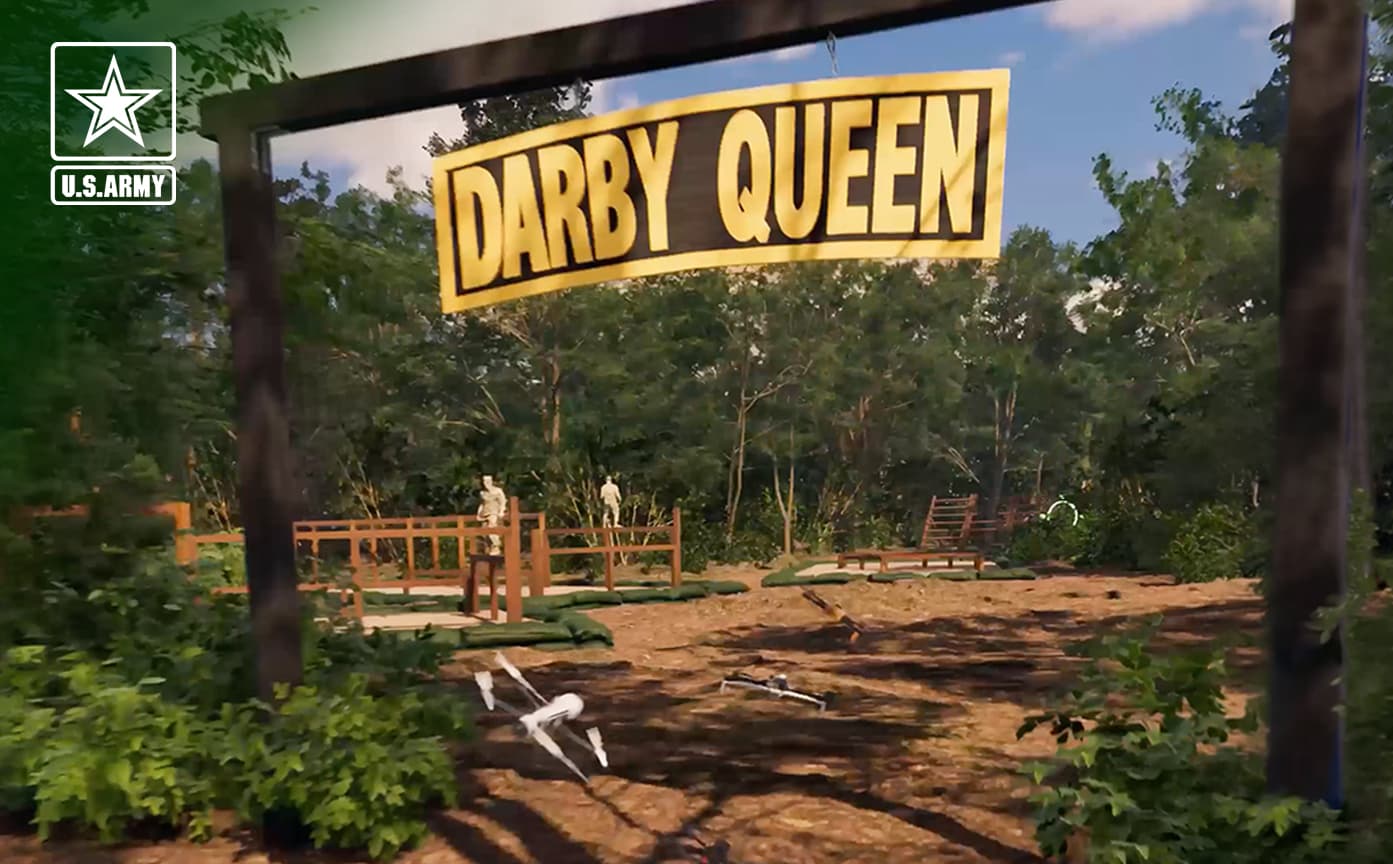
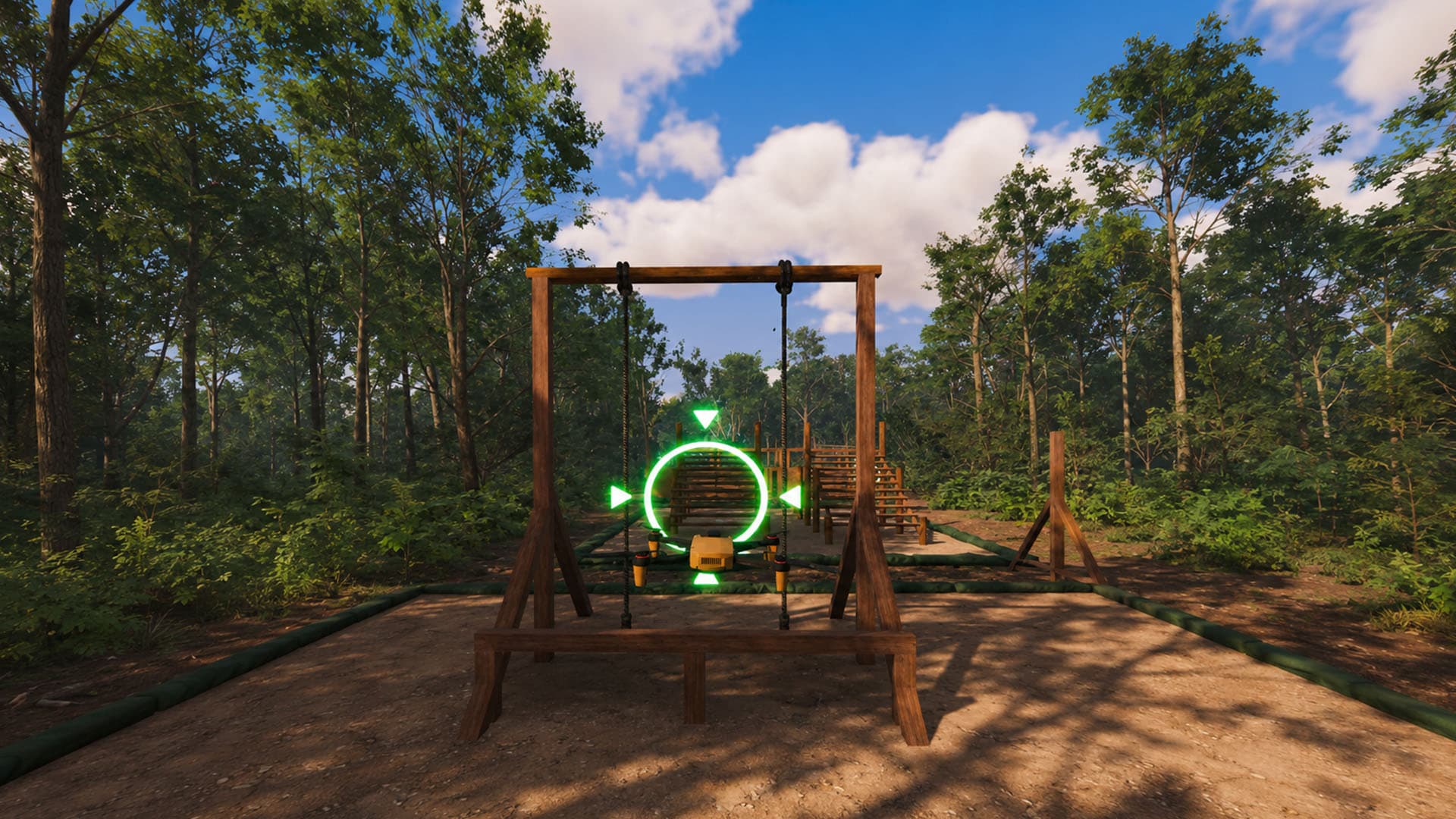
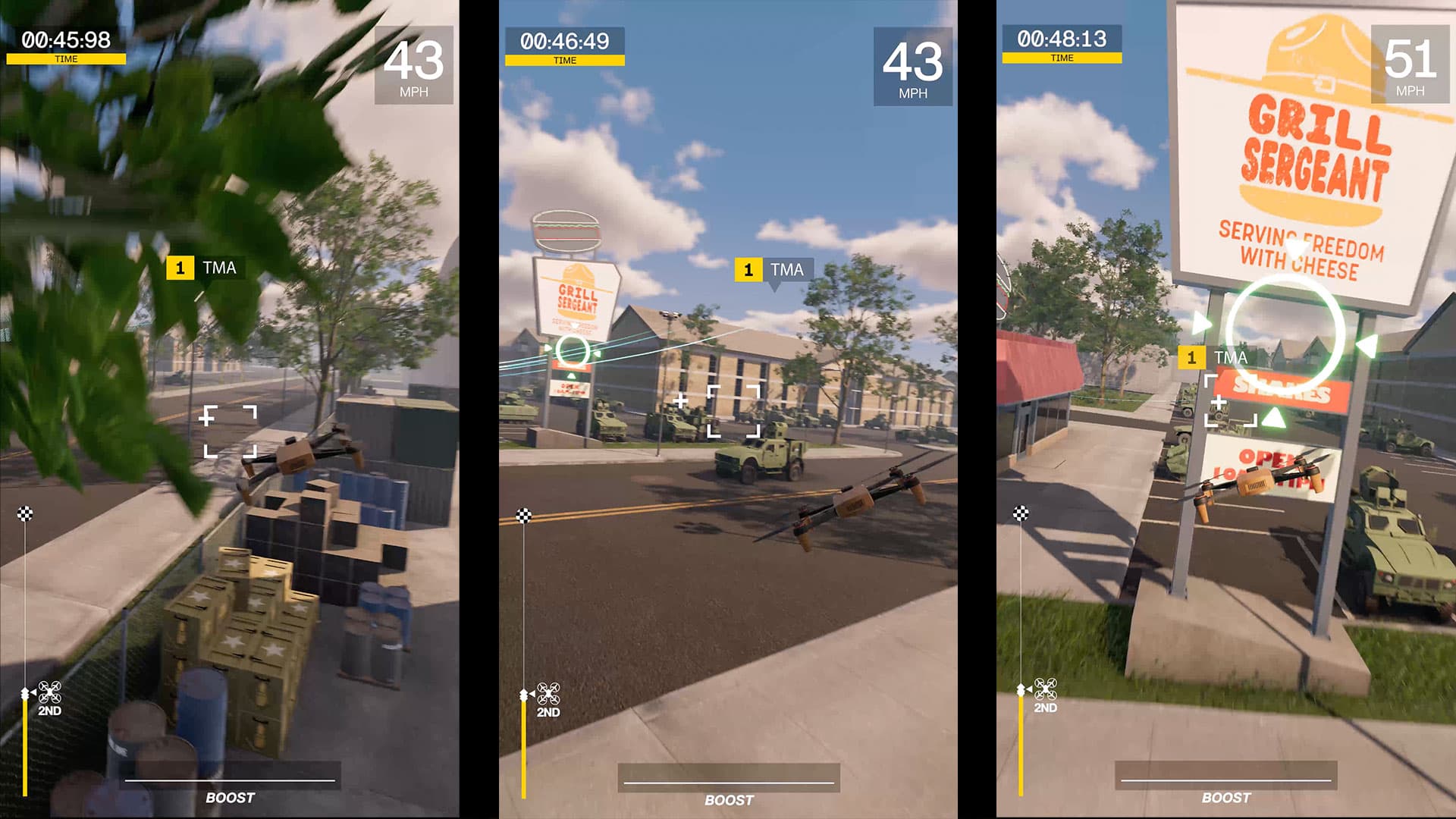
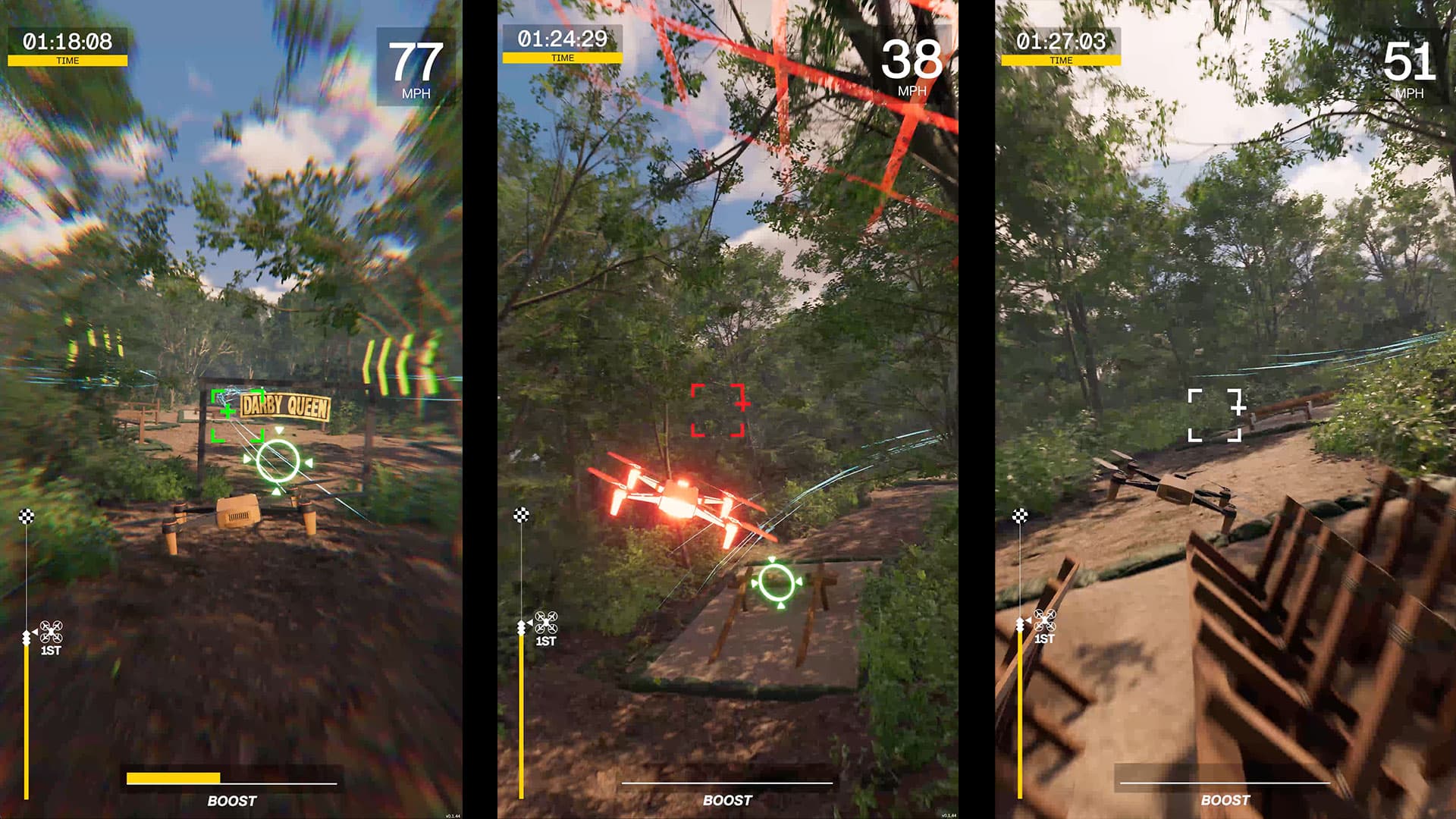
On Alpha, the player flies through base scenery — hangars, a fictional burger stand called Grill Sergeant, a marching parade ground — with an optional harder route through concrete tunnels that saves time but isn't required to finish. Risky, hard-to-reach boost pads along the way aren't needed to complete the course but are needed to rank near the top, and the track ends on an obstacle course modeled on Camp Darby's Darby Queen before a shooting range with tanks and explosions.
- 5
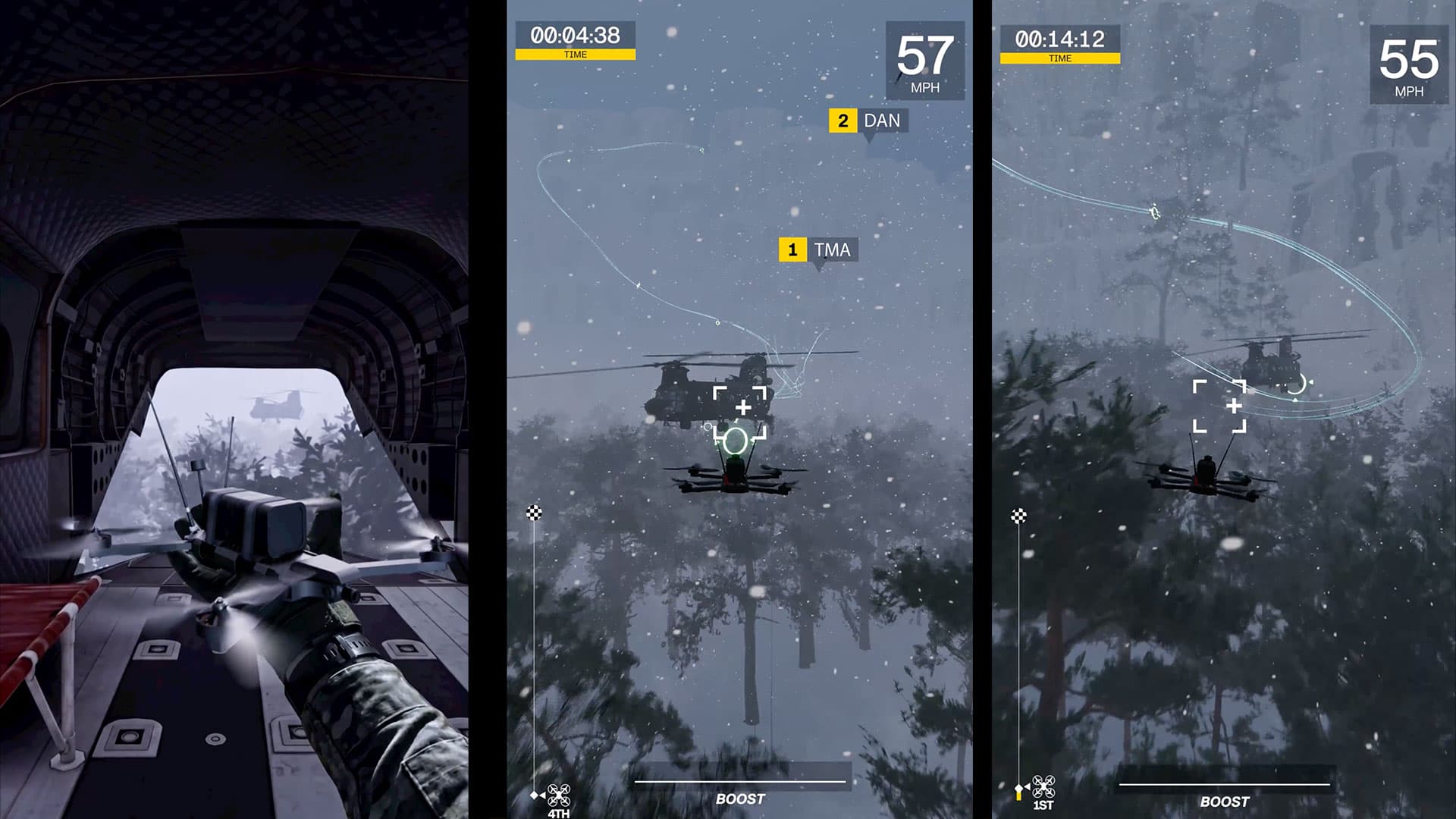
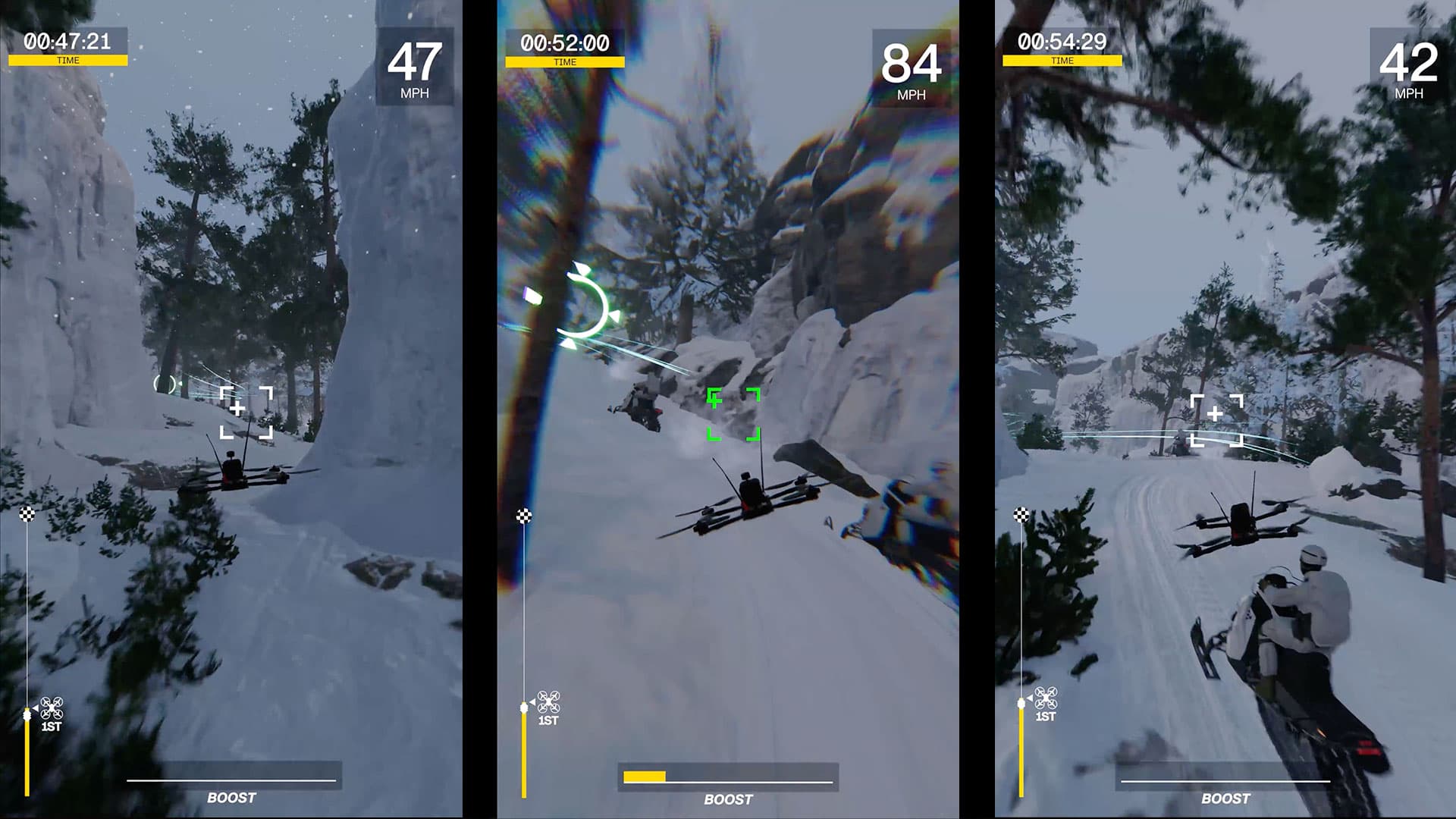
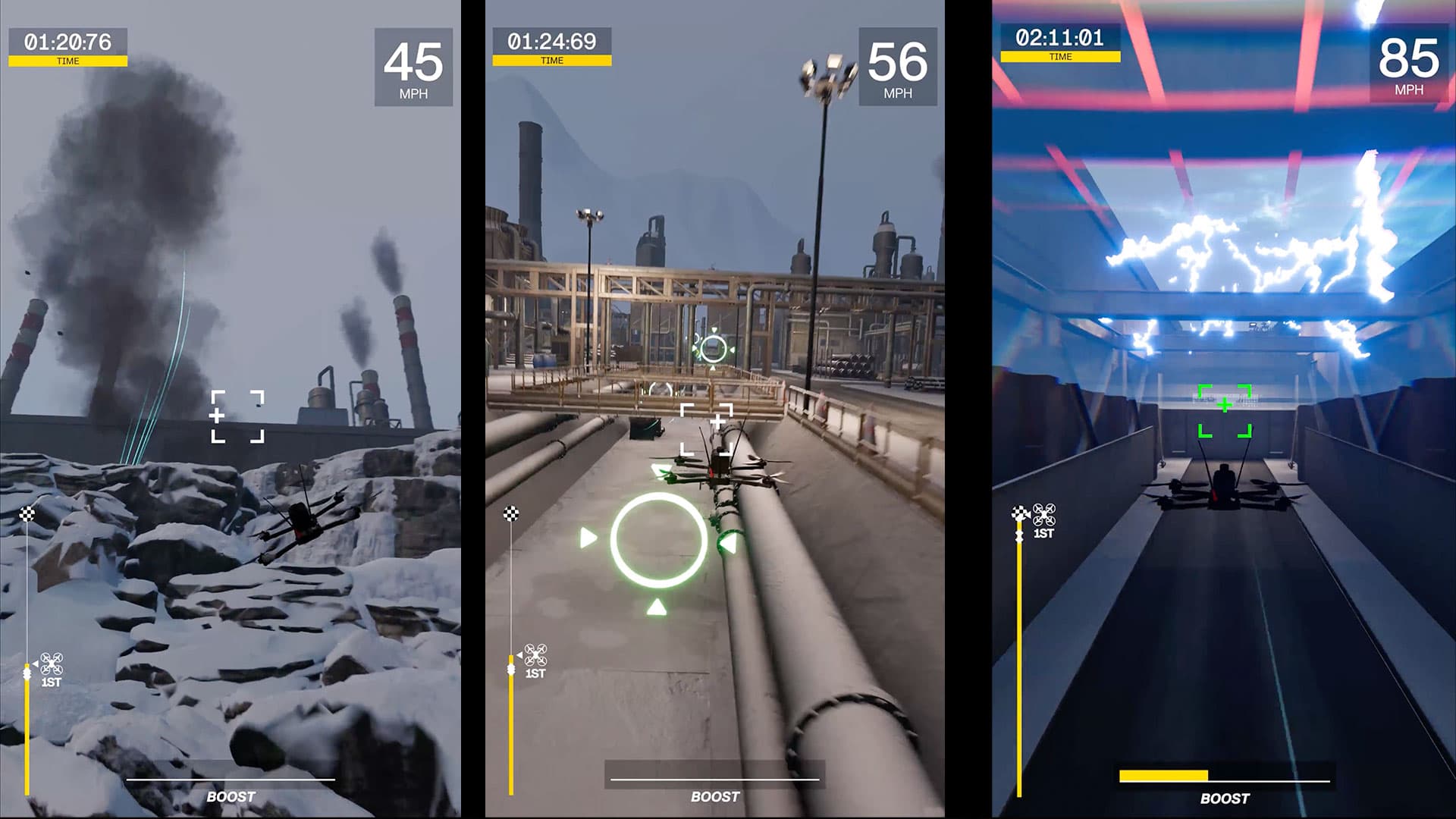
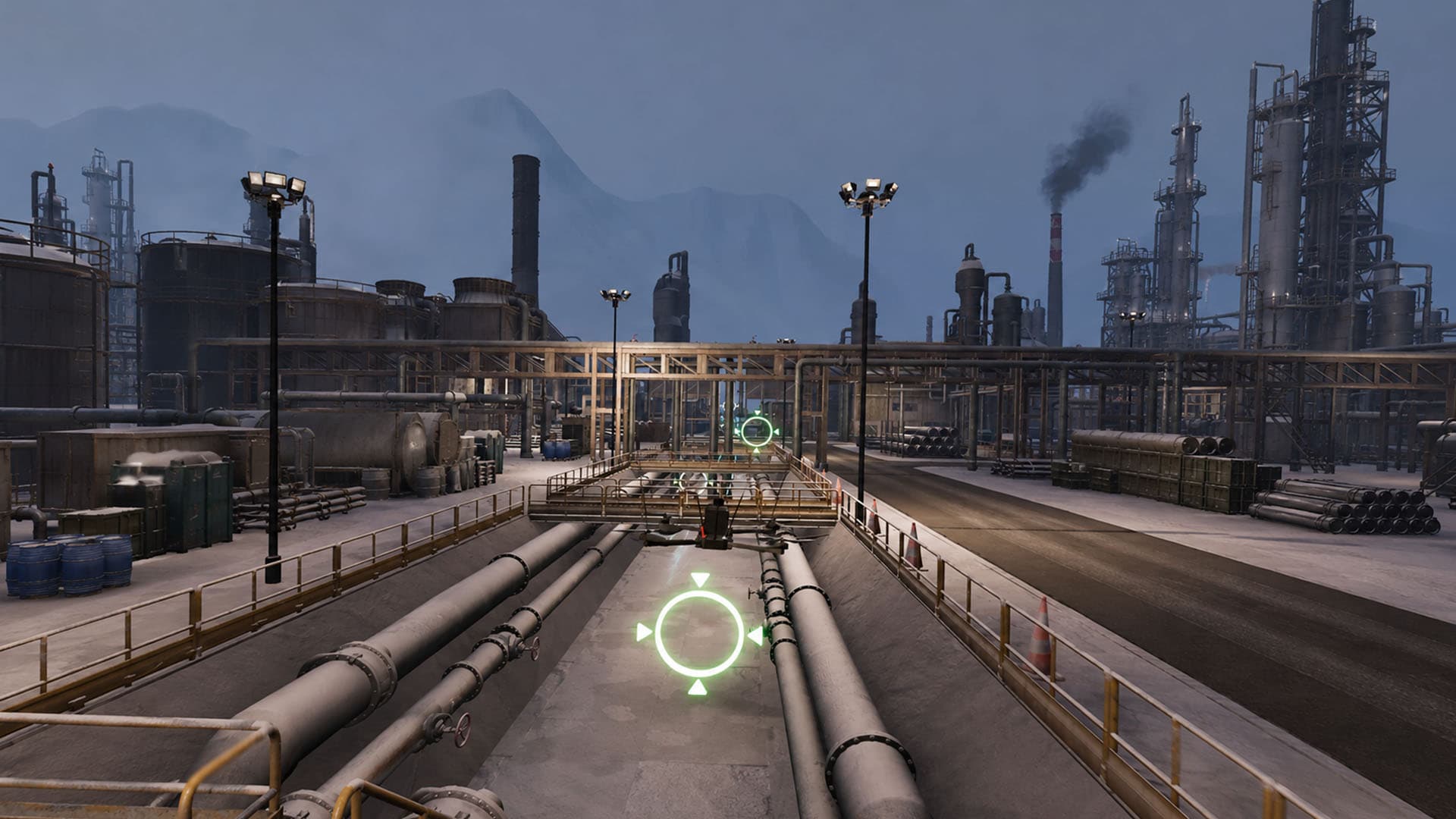
On Bravo, the player launches from a Chinook helicopter into a mountain mission to destroy an enemy power station, flying past troops rappelling into forest, a snowy ascent with snowmobiles, and an industrial site breach, then threads a series of lit gates to laser-target the station for an EMP strike that detonates behind the drone at the finish line.
- 6
In single-player races, an adaptive AI opponent paces itself to the player's skill level, keeping beginners in contention and experts challenged; in two-player mode, racers on adjacent cabinets compete head-to-head with shared physics for collisions and a synchronized finish.
- 7
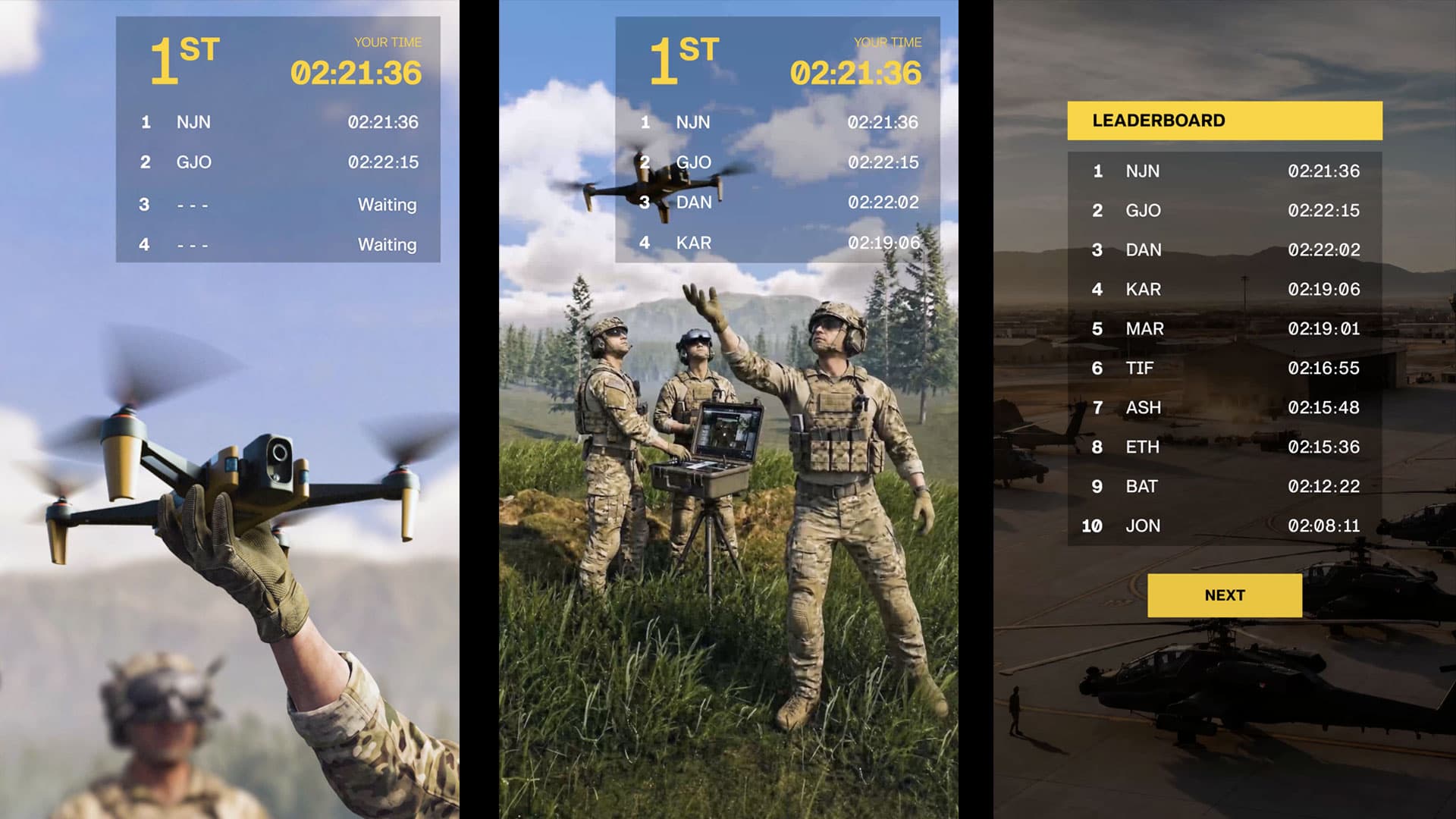
The player finishes with a time and ranking on a persistent leaderboard, tracked separately for each track-and-drone combination, showing standing against friends and the wider event. Seeing the result, players often re-queue to try a faster drone or riskier line and climb the board, with each full session lasting about five minutes.
Objective
The Army needed a fast, low-friction way to put drone-operator careers in front of teenagers at recruiting events, with an experience credible enough to feel respectful and real rather than cheap. The goal was to turn booth traffic into repeat play and a line of new recruits-to-be waiting for another turn.
Solution
A player walks up to a vertical 4K arcade cabinet, picks up an Xbox controller, and chooses one of four drones, each trading off speed against handling. Before the race starts, they can test-drive three control schemes — upright, inverted, or a mode that mimics a real drone remote — to find what feels natural. Then they pick a track: Alpha, a base-side course built to teach the basics, or Bravo, a mountain run that demands real skill, and race either a single lap against an AI opponent that matches their pace or head-to-head against a player on the neighboring machine. A run takes two to three and a half minutes, and finishing posts the player's time to a running leaderboard by track and by drone that stays live for the rest of the event, giving competitive players a reason to get back in line.
Results
Sources
At its first deployment, at EAA AirVenture Oshkosh, the installation logged 535 player sessions, averaging about five minutes each from walk-up to walk-away — roughly 45 cumulative hours of hands-on play.