


Quick, Draw!
Open the game- Brand
- Year
- 2016
- Objective
- Awareness
- Industry
- Tech & Telecom
- Mechanic
- Quiz & Trivia
- Platform
- Web
- Agency
- Google Creative Lab

Objective
Google needed to demystify neural networks for a mainstream audience at a time when AI still felt abstract and intimidating. Quick, Draw! was built as one of the first entries in the company's A.I. Experiments showcase, giving anyone a hands-on, playful way to see machine learning respond to them in real time. Running the game also let Google quietly build a labelled corpus of human drawings it could reuse to train its own tools.
Solution
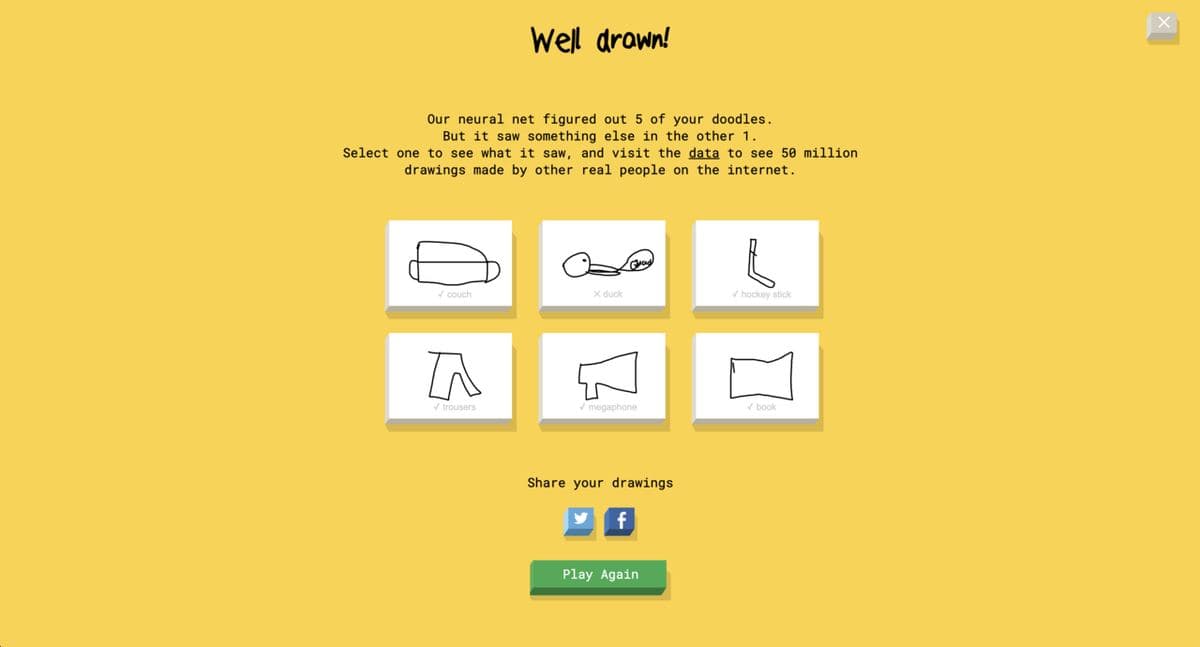
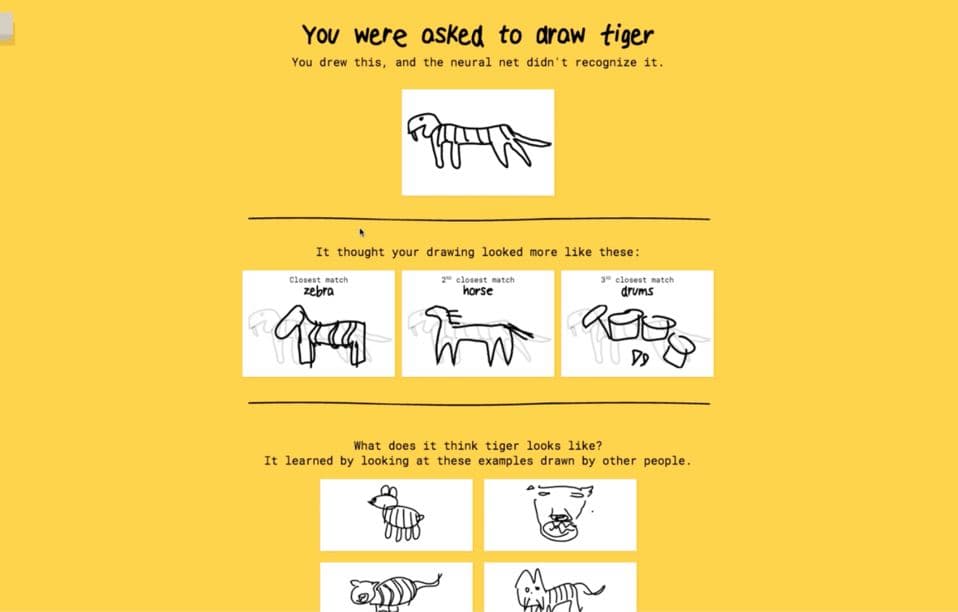
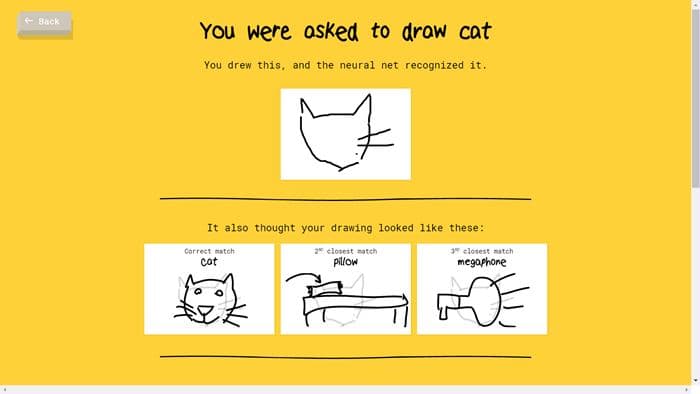
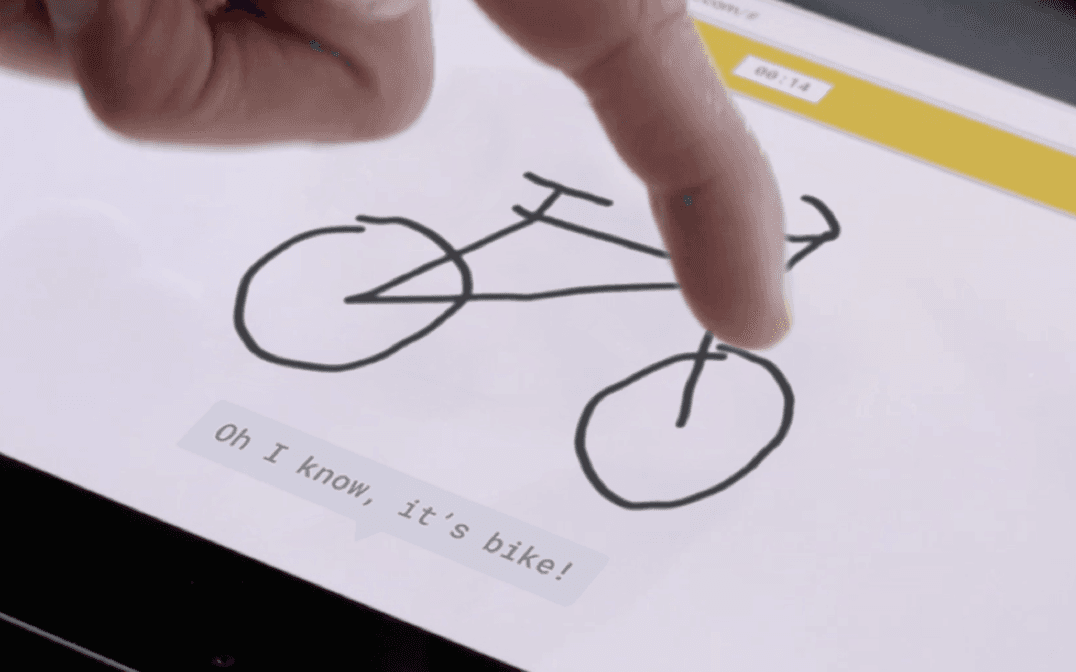
The player opens the game in a browser, no download or account needed, and is given a word to sketch on a blank canvas in 20 seconds. As they draw, a neural network calls out its guesses on the fly, and the round ends the instant it names the doodle correctly or the clock runs out. After six rounds, a scoreboard shows all six drawings marked recognised or not; tapping any one reveals what else the AI thought it looked like and how other players sketched the same word. From there the player can replay for a new set of words or share their results.
Results
The game drew over 1 billion doodles from more than 15 million players in its first ~13 months, at a peak of more than 30,000 simultaneous players, and Google released 50 million of those drawings publicly as an open data set spanning 345 categories.
- 1
The player opens a plain white page pitching a doodling game that feeds a neural network trained to recognize sketches, and starts with a single "Let's Draw!" button.
- 2
Each round opens with a brief naming an object to draw and a 20-second limit; the player draws freehand on a blank canvas with no tools, colors, or undo, and writing the word instead of drawing it does not register.
- 3
The neural network calls out guesses live as the strokes accumulate, ending the round the instant it names the object correctly; if time runs out first, the round is scored as missed and play moves to the next word.
- 4
A session consists of six such rounds, each assigned its own random word, with an optional short feedback survey offered between rounds and a confirmation prompt if the player tries to quit mid-session.
- 5
A results screen shows all six doodles in a grid marked recognized or not; clicking one opens a detail view restating the prompt, the recognition outcome, the network's alternative guesses, and other players' drawings of the same word for comparison.
- 6
From the results screen the player can start a new set of six words or share their drawings, and a companion page lets anyone browse the aggregated dataset and link out to the public data or back into the game.