HV-MTL Forge
- Brand
- Yuga Labs
- Year
- 2023
- Objective
- Engagement
- Industry
- Tech & Telecom
- Mechanic
- Simulation & Strategy
- Platform
- Web
- Agency
- Makemepulse



Objective
HV-MTL shipped as 30,000 NFTs with no purpose beyond collecting, and Yuga Labs needed a reason for holders to keep returning between major BAYC story beats. The studio built a companion experience that turns the token into a character that evolves through play, continues the Trial of Jimmy narrative, and gives $APE a reason to move inside the ecosystem rather than just the marketplace.
Solution
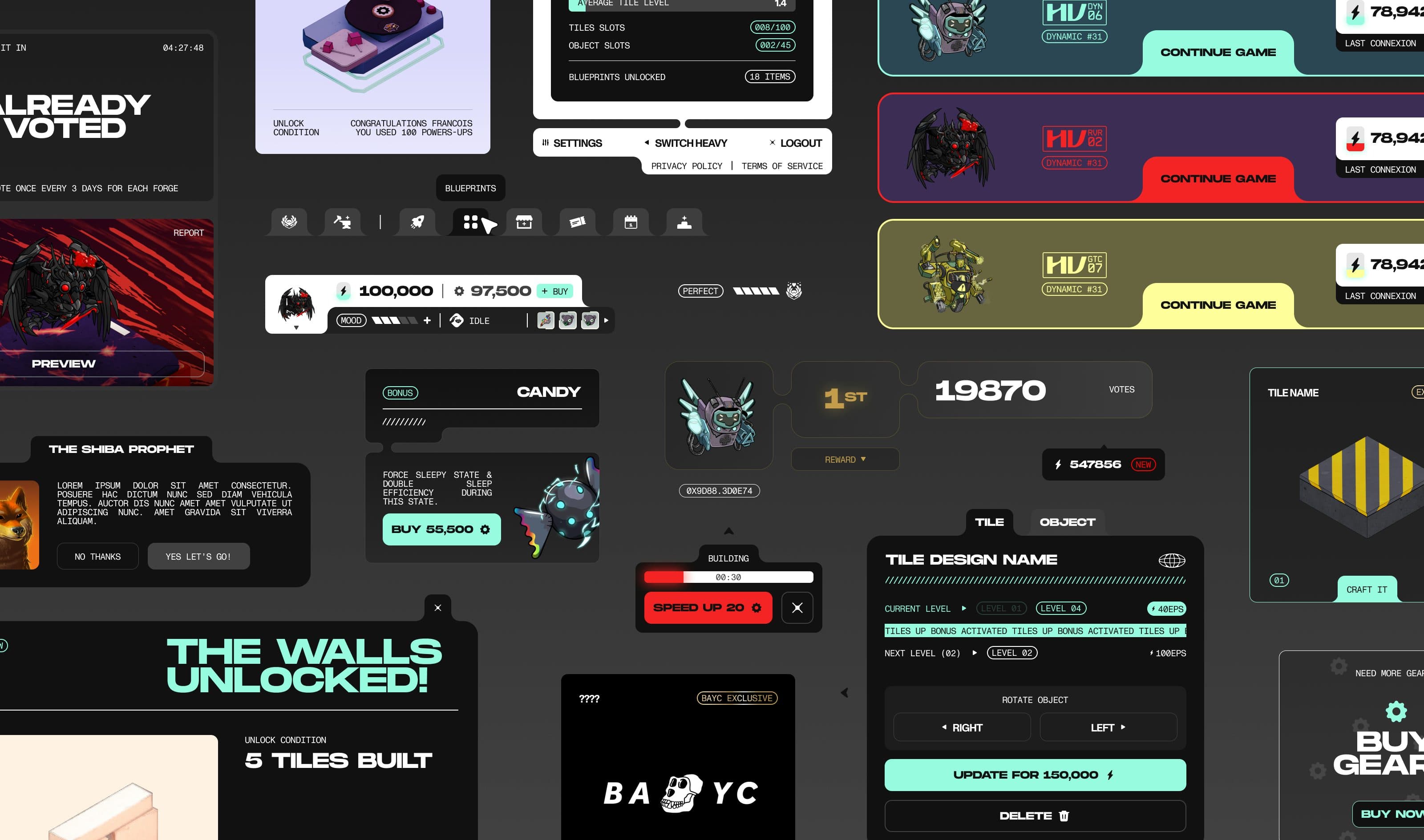
Connect the wallet holding your HV-MTL mech and you land in an isometric forge, its backdrop set by your mech's class. From there you tend to the mech directly — petting it, cleaning up after it, putting it to bed — and its mood decides how much energy it generates. That energy feeds a crafting station that hands back a random tile or piece of furniture each time, gradually filling out the base and unlocking hidden milestones. Once a day you step through a portal into another holder's forge to cast a single up-or-down vote, climbing a leaderboard that unlocks a new mech form every three-week season. Later seasons layer in a dungeon crawl called The Rift, where you run expeditions for materials, fight monsters, craft gear, and, in the closing season, chip away at a boss's shields for shards and a place on the prize leaderboard.
Results
Yuga reported 42% day-10 retention, twice the rate of its earlier game Dookey Dash. By mid-October 2023, about 6,700 active wallets were playing with 18,900 of the 30,000 HV-MTL NFTs, and in-game $APE spending reached roughly 700,000 tokens (an estimated $700,000 to over $1 million) over 90 days, averaging about $11,600 a day across no more than 100 wallets. Engagement was uneven, though: close to 2,800 holders never played and 9,300 NFTs sat idle, while HV-MTL's trading volume fell from nearly $19 million in March 2023 to $673,000 by September as the floor price slid toward $380. The closing Rift Boss event added 150,000 $APE to its top-10 prize pool and paid out the 1,000 highest-ranked players, with the top finisher earning 63,950 $APE.
- 1
Entry requires owning an HV-MTL mech NFT, obtained through a prior chain of items rather than direct purchase; the NFT can be delegated to one wallet at a time, and players without a mech get a limited version of the game.
- 2
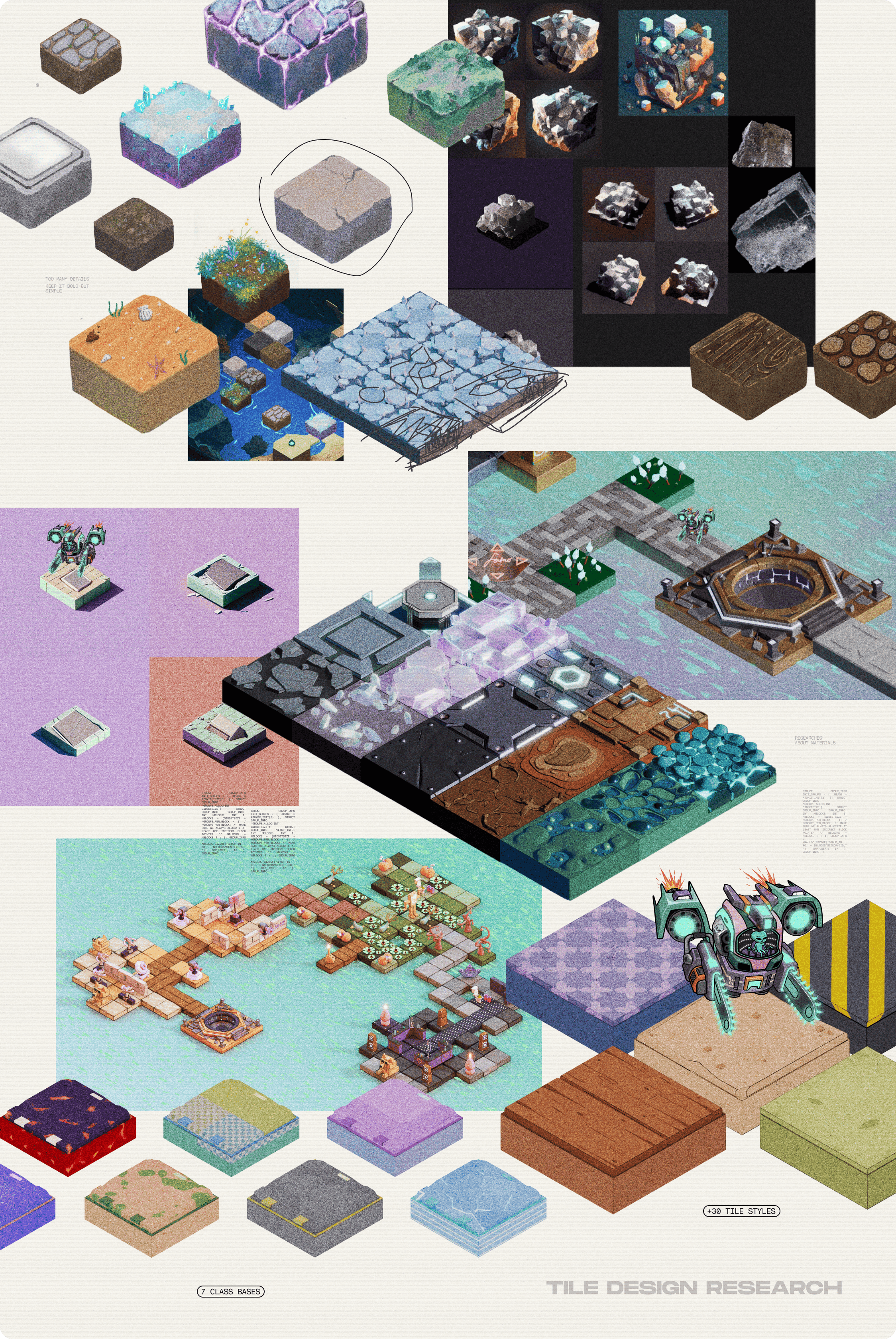
Players connect a wallet and land in their own isometric forge, whose starting backdrop depends on the mech's class; at its center sits a crafting station holding a small initial set of blueprints for tiles and decorative objects.
- 3
The core loop is crafting: pressing the craft button spends energy for a random tile or object, and energy — the game's only resource — builds up from the mech's mood, activity, and the tiles already placed, with no way to buy it directly.
- 4
Players can freely rotate a newly crafted piece before confirming it, but once placed a tile is permanent and can only be removed, not moved, and each tile holds only one decorative object at a time, forcing deliberate layout choices.
- 5
Alongside building, players tend to the mech like a virtual pet — petting it for an energy boost that scales with the tile it's done on, cleaning up after it, and letting it sleep (which pauses building); neglect lowers mood and energy output, while a happy mech moves faster and earns more from portal trips.
- 6
Hidden objectives surface over time, and completing them unlocks new blueprints from a pool of roughly 100 tiles and objects, including references aimed at the community.
- 7
Players build a portal to send the mech out for stored energy (upgrading it raises the energy cap and can summon other owned mechs), and also use it to visit other players' forges, rating one per day on a public leaderboard.
- 8
Players can link an X account so likes on a shared post earn bonus points toward premium items, and can also spend an in-game currency or $APE in a shop that restocks daily, to buy items, blueprints, or build-time boosts.
- 9
Every three weeks a new season introduces a themed set of tiles and objects to build with; season-end leaderboard placement awards Amps (needed, at least three of six total, to evolve the mech), and from the fourth season on, a parallel Rift mode lets players run expeditions, fight monsters, and ultimately face a boss whose defeat in fewer turns earns more leaderboard-ranking Shards, with top finishers paid out in $APE.
- 10
The game runs for a fixed 105-day run across six seasons; at the end, every mech permanently evolves into a new form shaped by everything the player did in the forge.